
Soups & Stews
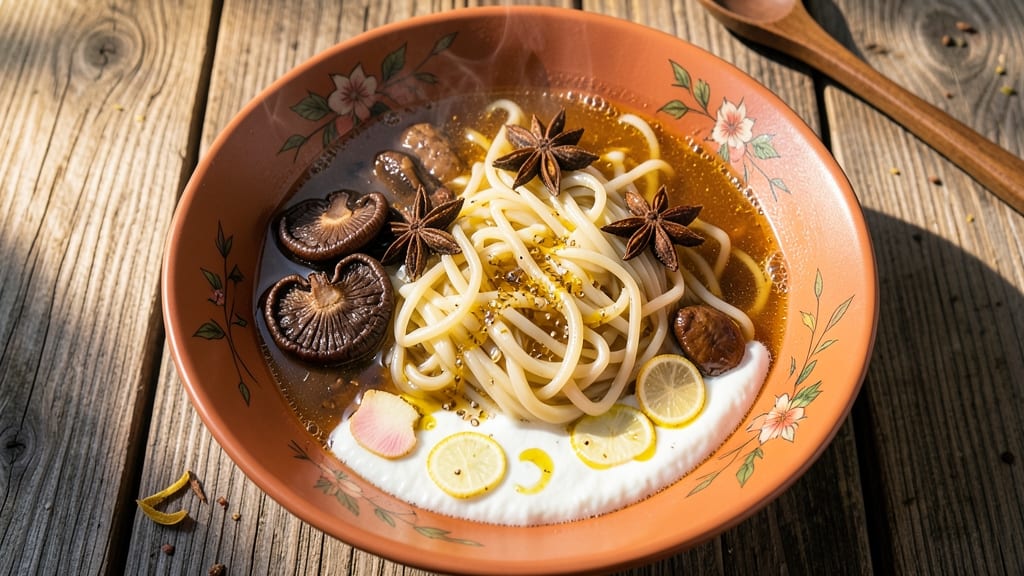
This Asian vegetarian noodle soup recipe transforms simple ingredients into a deeply flavorful bowl that rivals traditional versions. The secret lies in a rich miso-mushroom broth infused with aromatics and slow-simmered for maximum umami depth.
I developed this recipe after years of perfecting vegetarian adaptations of classic Asian soups—balancing hearty textures, vibrant flavors, and authentic techniques without any animal products.
The foundation is a fragrant broth built from white miso, shiitake mushrooms, and ginger, simmered with star anise and sesame oil for complexity. We'll use chewy rice noodles and protein-rich tofu that absorbs the broth beautifully, topped with fresh herbs and lime for brightness.
Every element works together to create a soup that's both comforting and restaurant-quality.
What makes this recipe special is how it delivers authentic Asian flavors while being completely plant-based. The miso-mushroom base provides that signature umami richness, while the aromatics and fresh garnishes create balance.
You'll end up with a bowl that's packed with texture—slippery noodles, tender tofu, and crisp vegetables—all swimming in a deeply flavorful broth.
Perfect for weeknight dinners or meal prep, this soup keeps well in the fridge for up to 3 days, with flavors actually improving as they meld. Serve with steamed greens or pickled vegetables for a complete meal. Let's create this umami-packed bowl that satisfies both body and soul.
Ingredients for asian noodle soup recipe vegetarian
Transform simple pantry staples into a restaurant-quality vegetarian noodle soup with umami depth.
| Ingredient | Amount | Notes |
|---|---|---|
| White Miso Paste 🍶 | ½ cup | High-quality, unsweetened preferred |
| Dried Shiitake Mushrooms 🍄 | 4 whole | Rehydrated in hot water |
| Fresh Ginger Root 🧅 | 2 tbsp | Finely grated, aromatic |
| Star Anise Pods 🌟 | 2 whole | Lightly crushed for aroma |
| Sesame Oil 🫒 | 1 tbsp | Toasted, for depth |
| Rice Vinegar 🍶 | 1 tbsp | White or seasoned |
| Vegetable Broth 💧 | 4 cups | Low-sodium preferred |
| Rice Noodles 🍜 | 8 oz | Chewy variety, uncooked |
| Extra-Firm Tofu 🧀 | 1 lb | Pressed, cubed |
| Green Onions 🧅 | 3 whole | Thinly sliced, white and green parts |
| Fresh Cilantro 🌿 | ¼ cup | Chopped, for garnish |
| Lime Wedges 🍋 | 2 whole | Freshly cut for serving |
| Sesame Seeds 🌰 | 1 tbsp | Toasted, for crunch |
| Diamond Crystal Kosher Salt 🧂 | 1 tsp | For seasoning broth |
| Black Peppercorns 🌶️ | ½ tsp | Freshly cracked |
The miso paste is the soul of this dish—Hawaiian Gold or Miso Master brands deliver the richest flavor. Dried shiitake mushrooms are essential for authentic umami; Asian markets carry the best varieties, but any dried shiitake will work. Fresh ginger should be vibrant with no soft spots, and star anise pods should be whole and aromatic. For sesame oil, Kadoya or La Tourangelle brands offer superior toasted notes that elevate the broth. If your rice vinegar smells sharp and clean, it's fresh enough—no need to splurge on specialty bottles.
No white miso? Red miso at half the amount works in a pinch, though the color will differ. Substitute dried shiitake with cremini mushrooms**—slice them thin and add them directly to the broth. Fresh ginger too strong? Ginger powder at one-third the amount suffices, though it lacks the same complexity. Star anise unavailable? Anise seeds or a pinch of ground fennel mimic the flavor profile. For sesame oil, toasted sesame paste thinned with water provides a similar depth. Rice noodles can be swapped for udon or soba noodles, though cooking times vary—always check the package.
Store miso paste in the fridge once opened, tightly sealed, for up to 6 months. Dried shiitake mushrooms keep indefinitely in a cool, dark place—just rehydrate as needed. Fresh ginger lasts 2 weeks in the fridge, while star anise stays potent for 1 year in a spice drawer. Prepared broth reheats beautifully; portion into containers for 3 days of fridge storage or 3 months frozen. Tofu cubes can be pre-cooked and frozen for quick assembly later. Garnishes like cilantro and lime should be added fresh at serving to preserve their brightness.
Why You'll Love This Recipe
- No-Pantry Panic Fix: I swear by this when I’ve got nothing but a few basics—dried shiitakes and miso paste turn into this rich, umami bomb with zero fuss. Just soak the mushrooms, simmer the broth, and let the star anise do its magic while you chop one ginger root. (Yes, even on a Tuesday night.)
- Umami Magic in a Bowl: That first spoonful of white miso paste and rehydrated shiitakes? It’s like a flavor explosion—deep, savory, and just a hint of funk. The sesame oil at the end ties it all together with a nutty, aromatic finish that makes you go back for seconds.
- Weeknight to Potluck Star: Make a big batch on Sunday, and you’ve got lunch for three days or a crowd-pleaser for your next gathering. The broth freezes beautifully, and the noodles just need a quick reheat—no one will guess it’s vegetarian. (Between us, my in-laws keep asking for the recipe.)
- Budget-Friendly Comfort: Dried shiitakes and miso stretch this recipe into a full meal without breaking the bank. A single packet of star anise and a knob of ginger make the broth taste like a fancy restaurant—honestly, I’ve served this to guests who thought it was from a Michelin-starred spot. Leftovers? Even better the next day.
Step-by-step instructions for umami-packed miso mushroom noodle soup
This vegetarian noodle soup delivers deep umami flavor through precise technique and ingredient balance.
Rehydrate and Prepare Aromatics
Begin by rehydrating the 4 whole dried shiitake mushrooms in 4 cups vegetable broth for 20 minutes at room temperature. This step extracts their rich, earthy flavor while preventing them from becoming rubbery in the broth. While they soak, crush the 2 whole star anise pods lightly with a mortar and pestle or rolling pin to release their aromatic oils without turning to powder.
In a small bowl, grate the 2 tbsp fresh ginger root using a fine grater or microplane. The ginger should yield about 1 tbsp of finely textured zest. Set aside both the ginger and star anise for later use. Here's the thing—properly rehydrating the mushrooms and activating the star anise aromatics forms the flavor foundation of this dish. Don't skip the soaking time or you'll miss out on maximum umami extraction.
Build the Miso Broth Base
In a clean pot, combine the rehydrated mushrooms (with their soaking liquid), the 0.5 cup white miso paste, and 1 tbsp rice vinegar. Bring to a gentle simmer over medium-low heat, stirring constantly for 5 minutes until the miso paste fully dissolves and the mixture becomes smooth. This is where the magic happens—the miso's fermented depth combines with the mushrooms' earthiness to create a complex flavor profile.
Add the crushed star anise pods and grated ginger, then pour in the remaining 4 cups vegetable broth. Bring to a full boil, then immediately reduce heat to maintain a gentle simmer. Let the broth cook uncovered for 15 minutes, allowing the flavors to meld while the liquid reduces slightly. The broth should smell rich and aromatic—like a symphony of umami, citrus, and spice. If you taste it now, you'll notice the depth developing.
Prepare and Cook the Tofu
While the broth simmers, press the 1 lb extra-firm tofu for 15 minutes using a tofu press or heavy weights wrapped in a clean towel. This removes excess moisture so the tofu will absorb flavors rather than steam. Cut the pressed tofu into 1-inch cubes and set aside. The cubes should hold their shape when gently squeezed—if they crumble, press for another 5 minutes.
Heat 1 tbsp sesame oil in a separate skillet over medium-high heat until shimmering. Add the tofu cubes in a single layer and cook for 3-4 minutes per side until golden brown and crispy. Don't overcrowd the pan or the tofu will steam instead of develop a crust. Transfer the cooked tofu to a plate and sprinkle with 0.5 tsp freshly cracked black peppercorns while still warm. The crispy exterior will contrast beautifully with the silky broth.
Cook the Noodles and Assemble
Bring a separate pot of water to a rolling boil and add 1 tsp diamond crystal kosher salt. Add the 8 oz rice noodles and cook according to package instructions until al dente (usually 4-5 minutes). The noodles should be tender but still have a slight bite. Drain and rinse briefly under cold water to stop the cooking process immediately, then drain well. The slight chill helps prevent the noodles from becoming mushy when added to the hot broth.
Return the simmering broth to a gentle boil and add the cooked noodles. Stir gently to combine, then divide the noodle mixture evenly among 4 bowls. Top each serving with 3 slices green onions (white and green parts separated), 1 tbsp toasted sesame seeds, and 1 tbsp chopped fresh cilantro. The green onions should be arranged artistically—white parts on the bottom, green tops on top—for both visual appeal and flavor contrast.
Finish and Serve with Fresh Elements
Serve each bowl immediately with 2 lime wedges on the side. The acidity of the lime brightens the rich, umami flavors and cuts through the oiliness of the tofu. Encourage diners to squeeze lime juice directly into their bowls at the table—this personal touch enhances the dining experience. The soup should be piping hot when served, with the noodles coated in the aromatic broth and the tofu providing a satisfying textural contrast.
Real talk: The first bite should deliver a perfect balance of savory, umami, and freshness. If the broth seems too thick after assembly, thin with 1-2 tablespoons hot water to reach your desired consistency. Each spoonful should be cohesive—no separate elements, just a harmonious blend of flavors and textures that makes this vegetarian noodle soup feel anything but basic.
Pro Tips For Making Asian Noodle Soup Recipe Vegetarian
- Bloom the Shiitakes First: Toss dried shiitakes in hot water for 10 minutes before adding them to the broth—this jumpstarts their flavor and prevents them from turning into bland, soggy sticks. I used to just chuck them in raw, and the soup always tasted like it was missing something. The first soak extracts their deep umami punch.
- Toast the Star Anise: Lightly toast the whole star anise pod in a dry pan for 30 seconds until fragrant—this unlocks its aroma without bitterness. Skip this, and you’ll just get a subtle hint of licorice instead of that warm, spicy depth that ties the whole dish together. (Yes, even if you’re impatient like me.)
- Dissolve Miso Slowly: Whisk the white miso paste into cold broth first, then heat gently—if you dump it in hot, you’ll end up with clumps and a muddy, unbalanced soup. My grandmother swore by this, and she was right: the miso should melt like silk, not fight you.
- Finish with Cold Water: Stir in ½ cup cold water at the very end—this stops the cooking process and keeps the noodles from turning mushy. I learned this the hard way after serving a bowl where the noodles had disintegrated into a sad, gluey mess. Trust me, the contrast in temperature is the thing that matters most.
Essential equipment for this dish
Broth Pot Essentials
The heart of your soup begins with a 3-4 quart heavy-bottomed pot—I swear by All-Clad Stainless Steel for even heat distribution. A fine-mesh strainer (like OXO Good Grips) helps remove star anise pods after simmering, while a wooden spoon prevents scratching your pot's surface.
For precision, a digital thermometer (such as Thermoworks Thermapen) ensures your broth reaches the ideal 195-200°F for maximum umami extraction. 🌡️
Noodle Prep Tools
Chewy rice noodles require a wide, shallow pot (like Calphalon Classic) for even cooking—they expand dramatically! A fine-mesh colander with tall sides prevents noodles from escaping, and tongs make draining and rinsing effortless.
For extra texture, toast sesame seeds in a small dry skillet over medium-low heat for 2-3 minutes until golden—this adds nutty depth without burning. 🌰
Tofu Handling Gear
Pressing tofu effectively needs a tofu press (I use King Kaimato) or a DIY setup with two plates and heavy books. A sharp chef's knife (like Wüsthof Classic) ensures clean 1-inch cubes, while a non-stick skillet (such as GreenPan Ceramic) prevents tofu from sticking during crisping.
For extra flavor, keep freshly cracked black peppercorns in a mini mortar and pestle—just 0.5 tsp adds a bright finish. 🌶️
Garnish and Serve
Fresh herbs shine when chopped with a Japanese santoku knife—its angled edge makes clean cuts. A small cutting board (like Teakhaus Bamboo) keeps ingredients organized, while lime wedges should be cut with a serrated knife for clean slices.
For presentation, use wide, shallow bowls (such as Corelle Stoneware) to showcase the layered textures. The key? Toasted sesame seeds and green onions should be added last—this keeps their crispness intact. 🥗
Optional Upgrades
For extra depth, a high-quality blender (like Vitamix) lets you puree ½ the cooked mushrooms into the broth for silkier texture. A ladle with a strainer (such as OXO Good Grips) makes serving soup effortless, while individual serving spoons prevent cross-contamination.
For meal prep, glass storage containers (like Pyrex) keep flavors fresh for up to 3 days in the fridge. 💡
Nutrition facts
Frequently asked questions
Can I make this vegetarian noodle soup gluten-free?
Swap the rice noodles for gluten-free tamari noodles or rice-based udon (check labels for certification). Use a certified gluten-free miso paste and ensure your vegetable broth is gluten-free. All other ingredients are naturally gluten-free. The flavor profile remains identical, just with a safer ingredient base.
How can I make this soup spicier?
Add 1 tsp chili crisp or sriracha to the broth while simmering, or stir in ½ tsp chili flakes at the end. For heat with depth, infuse the broth with 1 sliced Thai chili or 1-inch piece of fresh galangal (if available). Always taste first—you can adjust spice levels gradually.
What if I don't have dried shiitake mushrooms?
Use 2 cups sliced cremini or oyster mushrooms instead—add them directly to the broth during the 15-minute simmer. For extra umami, stir in 1 tbsp soy sauce or 1 tsp mushroom powder when building the broth base. The texture won't be identical, but the flavor will still be rich and satisfying.
Can I prepare this soup ahead of time?
Yes! Make the broth up to 3 days ahead and store it in the fridge. Reheat gently on the stove, then add fresh noodles and tofu when serving. For meal prep, cook the tofu separately and store it in the broth's liquid to maintain moisture. Garnishes should always be added fresh at serving for maximum brightness.
What's the best way to store leftovers?
Store in an airtight container for up to 3 days in the fridge. The broth will continue developing flavor! Reheat gently on the stove, stirring occasionally. For longer storage, freeze the broth separately (up to 3 months) and reheat with fresh noodles and tofu when ready to serve.