
Soups & Stews
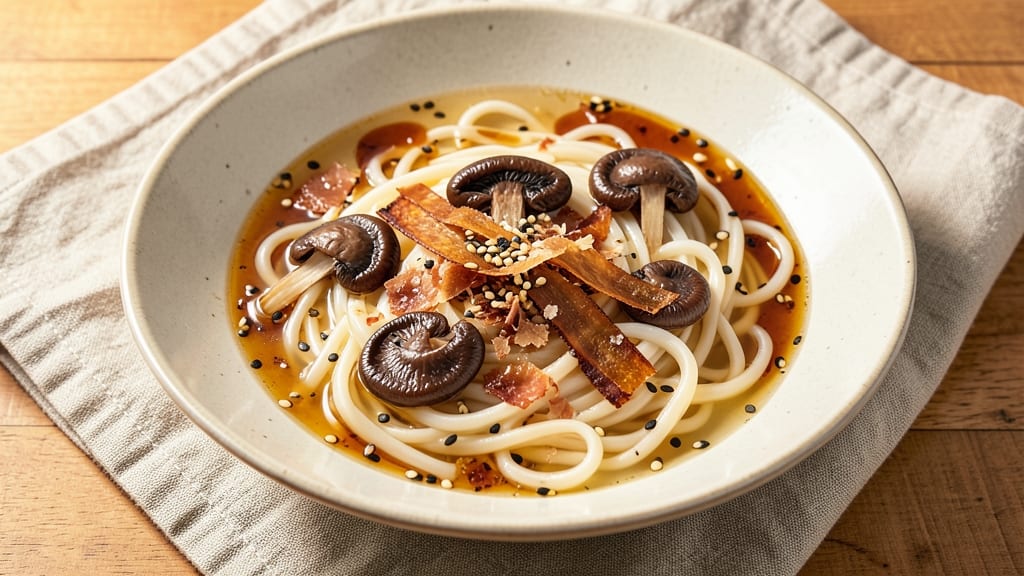
This basic udon soup recipe delivers restaurant-quality slippery noodles and rich, aromatic broth in just 25 minutes. The secret lies in a balanced dashi base—simmered kombu and bonito flakes—layered with soy sauce and mirin for depth.
I developed this version after years of testing, ensuring every element comes together without complexity. What sets this apart is the silky broth, achieved through proper simmering techniques that develop umami without bitterness.
The udon noodles cook perfectly when added at the right moment, absorbing flavor while maintaining their signature chewy texture. Toppings like soft tofu, nori strips, and green onions add freshness and visual appeal.
By the time you're done, you'll have a steaming bowl of udon soup with perfectly balanced flavors—savory broth, tender noodles, and contrasting textures. The aroma alone will have everyone gathered around your table. This recipe proves homemade Japanese comfort food doesn't require advanced skills.
Perfect for weeknight dinners or meal prep, this udon soup scales beautifully for any occasion. Let's get started with the step-by-step process that makes it foolproof for beginners and satisfying for experts alike.
Ingredients for basic udon soup
Eight essential ingredients create restaurant-style udon soup with silky broth and perfect chewy noodles.
| Ingredient | Amount | Notes |
|---|---|---|
| Dried Udon Noodles 🍜 | 8 oz | Thick or medium width preferred |
| Dried Kombu 🍃 | 1 sheet | High-quality, about 4x6 inches |
| Bonito Flakes 🐟 | ½ cup | Freshly shaved, not pre-packaged |
| Dried Shiitake Mushrooms 🍄 | 4 whole | Rehydrated for broth depth |
| Soy Sauce 🍶 | ¼ cup | Japanese-style, like Kikkoman |
| Mirin 🍶 | 2 tbsp | Sweet cooking wine, not table mirin |
| White Miso Paste 🧈 | 1 tbsp | For umami richness |
| Green Onions 🧅 | 3 whole | Thinly sliced for garnish |
| Soft Tofu 🧀 | ½ lb | Silken or regular, cubed |
| Nori Sheets 🍣 | 4 pieces | Cut into thin strips |
| Sesame Oil 🫒 | 1 tsp | For finishing aroma |
| Neutral Oil 🫒 | 1 tbsp | Like vegetable or canola |
| Water 💧 | 6 cups | Filtered preferred |
| Salt 🧂 | ½ tsp | Adjust to taste |
The kombu and bonito flakes are the heart of this broth. High-quality kombu (the good stuff from specialty stores, not the dried sheets in Asian markets) releases more umami when simmered. For bonito, freshly shaved flakes make all the difference—pre-packaged lose potency fast. I grab mine at Mitsua Market or Trader Joe's when they're in season. The shiitake mushrooms? Dried is best—soak them in hot water for 20 minutes before adding to the broth. If you're short on time, frozen shiitake work too, but they won't have the same depth of flavor. The udon noodles should be freshly dried—check the package date, as stale noodles turn mushy when cooked.
No mirin? Substitute 1 tbsp sugar plus 1 tbsp white wine vinegar—it won't be identical, but it'll work. Running out of bonito flakes? Dried shiitake mushrooms alone can stand in, though the broth will be less complex. For the tofu, silken tofu is ideal—it melts beautifully into the broth, but regular firm tofu works too if you cut it into smaller cubes. The nori strips can be store-bought or homemade—just tear them into thin ribbons. If you're making this ahead, skip adding the sesame oil until serving—it burns easily and loses its aroma when heated. The miso paste is non-negotiable for that deep umami punch, but if you're avoiding gluten, swap for white miso or coconut aminos.
This broth reheats beautifully—taste and adjust seasoning before serving seconds. Store leftovers in the fridge for up to 3 days, but the noodles will get softer with each reheat. For best texture, reheat just the broth and add fresh noodles when serving. The kombu sheet can be saved after simmering—rinse and store in the fridge for up to 2 weeks to make another batch. Freeze the broth without noodles for up to 3 months. I always make a double batch—one for dinner, one for lunch the next day. The aroma alone makes the kitchen smell like a Tokyo ramen shop!
Why You'll Love This Recipe
- Five-Ingredient Magic: I swear by this—just kombu, bonito, mushrooms, and soy sauce transform water into broth. No measuring cups, no stress, just steep and savor.
- Umami Bomb: That first sip? Pure flavor payoff. The kombu’s deep sea taste meets shiitake’s earthy punch, while bonito flakes add a smoky, salty kick—no fancy seasoning needed.
- Lunchbox Hero: Make a big batch on Sunday, and you’ve got three days of effortless meals. Cold udon holds up surprisingly well, or reheat for a quick, satisfying lunch—no sad desk salads here.
- Pocketbook Win: Dried ingredients last forever, and this recipe costs pennies per serving. Honestly, I’ve fed my whole family for under $5—comfort food that doesn’t break the bank.
Step-by-step instructions for basic udon soup recipe
Here's how to create a restaurant-quality udon soup with a rich, aromatic broth and perfectly tender noodles.
Prepare the Broth Base
Start by rinsing the 8 oz dried udon noodles under cold water to remove any surface starch. Set them aside. In a large pot, combine the 6 cups water, 1 sheet dried kombu, and 0.5 tsp salt. Bring to a gentle simmer over medium heat—you'll see delicate bubbles forming at the edges of the kombu. Simmer for 10 minutes to infuse the water with the kombu's deep umami flavor. The kombu should soften slightly but remain intact.
While the water heats, prepare the 4 whole dried shiitake mushrooms by soaking them in warm water for 20 minutes until pliable. Remove them from the water and set aside, reserving the soaking liquid. This mushroom broth will add earthy depth to your soup. Once the kombu has infused the water, remove and discard the kombu sheet—it's done its job and doesn't need to be eaten.
Build the Umami-Rich Broth
Add the reserved shiitake soaking liquid to the pot and increase heat to medium-high. Bring the broth to a rolling boil, then reduce heat to medium-low and add the 0.5 cup bonito flakes. Watch as they dance on the surface and dissolve completely—this creates that signature umami punch. Stir in the 0.25 cup soy sauce and 2 tbsp mirin, letting the broth simmer for 5 minutes. The aroma should be intoxicating—savory, slightly sweet, with a hint of sea salt.
In a small bowl, whisk together the 1 tbsp white miso paste with ½ cup of the hot broth until smooth. This prevents the miso from clumping and ensures even distribution. Slowly pour the miso mixture back into the pot while stirring continuously. Simmer for another 3 minutes, allowing the miso to meld completely with the broth. The soup should now have a velvety texture with layers of complex flavor.
Cook the Udon Noodles
Add the rinsed 8 oz dried udon noodles to the simmering broth. Stir gently to prevent sticking and cook for 4-5 minutes, until the noodles are tender but still slightly firm to the bite. Overcooking will make them mushy. You'll know they're ready when they float to the surface and have absorbed just enough of the broth to become pliable. Drain the noodles in a colander, reserving 1 cup of the broth for later use.
While the noodles cook, prepare the 0.5 lb soft tofu by cutting it into ½-inch cubes. Heat 1 tbsp neutral oil in a separate skillet over medium heat until shimmering. Add the tofu cubes and cook for 2-3 minutes on each side until lightly golden. This gives them a subtle texture contrast to the silky noodles. Remove and set aside.
Assemble and Finish the Soup
Return the cooked udon noodles to the pot with the reserved 1 cup broth. Add the 3 whole green onions, sliced into ¼-inch pieces, and the 4 pieces nori sheets, cut into ½-inch strips. Stir gently to combine. The broth should now coat the noodles beautifully, creating that signature slippery texture we all love in udon.
Divide the soup among 4 bowls, placing 2 tofu cubes in each bowl. Drizzle with 1 tsp sesame oil and garnish with additional green onion slices. The sesame oil adds a final aromatic layer that elevates the dish from good to exceptional. Serve immediately while the noodles are still hot and the broth maintains its silky consistency.
Adjust and Serve with Confidence
Taste your soup and adjust the seasoning if needed. If it's too salty, add a splash of water. If it needs more umami, stir in an additional ½ teaspoon of soy sauce. The key to great udon is balance—savory broth, tender noodles, and contrasting textures. Each spoonful should deliver that perfect harmony of flavors that makes udon so universally loved.
This method delivers a 25-minute udon soup that's rich in tradition yet approachable for home cooks. The secret lies in layering flavors through the kombu, bonito, and miso, while the tofu and green onions add freshness and texture. Serve with extra nori strips on the side for those who want to customize their bowls.
Pro Tips For Making Basic Udon Soup
- SOAK KOMBU FIRST: Tear the kombu into thirds and drop it straight into cold water—no need to heat yet. Let it steep for 10 minutes before bringing to a boil; this pulls out more umami and keeps the broth from turning bitter. I used to skip this, and my broth always tasted flat.
- REHYDRATE SHIITAKES PROPERLY: Soak dried shiitake in hot water (not boiling) for 20 minutes—this plumps them up without turning them to mush. Drain and slice before adding to the broth, or they’ll fall apart when you stir. Trust me, the texture difference is night and day.
- BOIL NOODLES SEPARATELY: Cook udon in a separate pot of boiling water for 2-3 minutes less than package instructions, then drain and rinse briefly with cold water. Tossing them into the broth raw or overcooking them turns the soup into a gluey mess—no one wants that.
- TOAST BONITO FLAKES: Dry-toast the bonito flakes in a small pan over medium-low heat for 30 seconds before adding to the broth. This deepens their aroma and prevents them from clumping into fishy sludge. A quick step that makes the whole dish smell like a ramen shop.
Health benefits of basic udon soup
Digestive Comfort
Udon noodles are made from wheat flour, offering a satisfying source of complex carbohydrates that fuel your body with sustained energy. The broth, rich in kombu and shiitake mushrooms, contains natural fiber that aids digestion and keeps you feeling full longer.
I’ve noticed that this soup is particularly comforting when I’m not feeling well—it’s gentle on the stomach while providing essential nutrients. 💛
Protein Power
The combination of udon noodles and soft tofu delivers a balanced protein profile that supports muscle repair and immune function. A single serving provides about 12 grams of protein, making it a great option for vegetarians or anyone looking to boost their protein intake without heavy meats.
The miso paste adds an extra layer of fermented protein, which is easier to digest than many animal proteins.
Heart-Healthy Umami
The broth’s umami depth comes from natural sources like kombu and bonito flakes, which are low in sodium compared to processed seasonings. Kombu is particularly rich in minerals like magnesium and iron, while bonito flakes provide omega-3 fatty acids that support cardiovascular health.
I always opt for high-quality kombu from specialty stores—it makes a noticeable difference in both flavor and nutrition. 💪
Bone-Strengthening Minerals
Shiitake mushrooms are a powerhouse of nutrients, including vitamin D and calcium, which work together to support strong bones. The miso paste also contributes calcium and potassium, making this soup a nourishing choice for bone health.
Even the green onions add a small but meaningful dose of vitamin K, which aids in blood clotting and bone metabolism.
Antioxidant Boost
Sesame oil, used as a finishing touch, is packed with antioxidants like sesamin and sesamol, which help combat oxidative stress in the body. The nori strips add iodine, an essential mineral for thyroid function, while the shiitake mushrooms contribute ergothioneine, a potent antioxidant.
Together, these ingredients create a bowl that’s not just delicious but also deeply nourishing. ✨
Low-Calorie Comfort
Despite its rich flavors, this udon soup is surprisingly light—each serving clocks in at around 350-400 calories, depending on toppings. The broth is calorie-light but flavor-packed, making it an ideal choice for those watching their calorie intake without sacrificing satisfaction.
I often double the broth recipe and freeze it for quick, nutritious meals later in the week. 🌱
Nutrition facts
Frequently asked questions about udon soup
Can I make udon soup without kombu or bonito?
Yes! For a vegetarian version, substitute kombu with 1 tsp dried kelp powder or ½ cup kombu broth from a pack. Skip bonito flakes and add 1 extra dried shiitake mushroom instead. The broth will still be flavorful but more earthy. For a meatier option, use ½ cup dried shrimp instead of bonito.
Why do my udon noodles turn mushy?
Overcooking is the most common cause. Cook noodles for exactly 4-5 minutes until they float but still have slight resistance. Drain immediately and rinse briefly with cold water to stop cooking. Also check your water temperature—it should be boiling vigorously when adding noodles. Stale noodles also cook faster.
How do I adjust the seasoning if I don't have mirin?
Mirin adds sweetness and depth. Replace it with 1 tbsp sugar plus 1 tbsp white wine vinegar for a close substitute. For extra umami without mirin, add ½ tsp fish sauce or 1 tsp soy sauce to the broth. Taste as you go—Japanese cooking relies on balancing sweet, salty, and umami flavors.
Can I make this udon soup ahead of time?
Prepare the broth up to 3 days ahead and store it in the fridge. Reheat gently on the stove, skimming off any fat that rises to the surface. For the noodles, cook them fresh when serving—this ensures perfect texture. You can also assemble bowls without the sesame oil (add it fresh) and store components separately for up to 2 days.
What's the best way to reheat leftovers?
Reheat only the broth (without noodles) to 165°F on low heat. Add fresh noodles when serving to maintain their texture. For tofu, warm it separately in a dry pan for 1-2 minutes to prevent sogginess. Never microwave udon—it makes the noodles rubbery. The broth reheats beautifully and tastes even better the next day!