
Soups & Stews
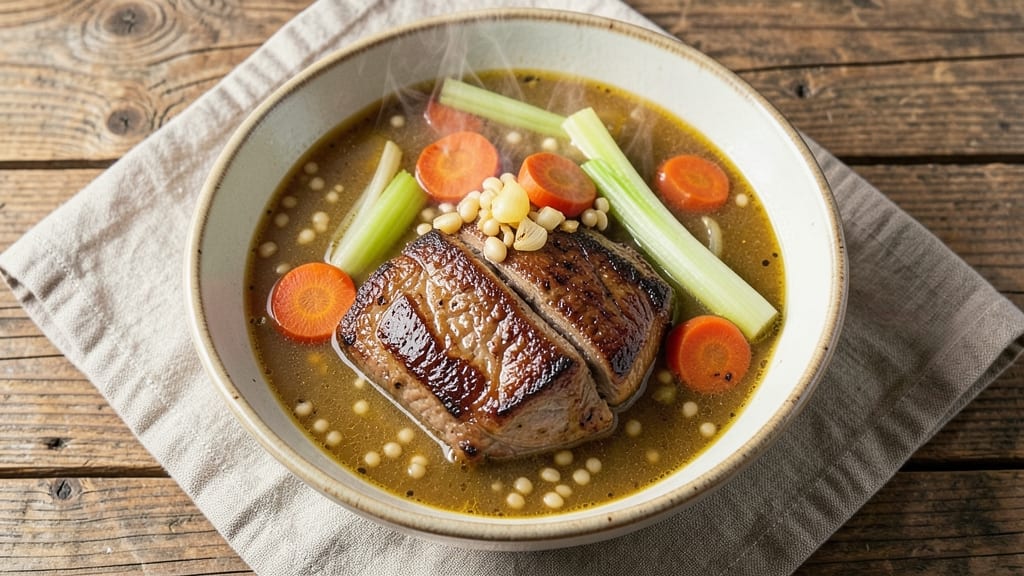
This beef barley soup recipe delivers deep, savory richness without tomatoes—just slow-cooked beef, barley, and aromatic vegetables working together. The secret lies in collagen-rich bones and a long simmer that transforms tough cuts into tender, melt-in-your-mouth pieces while developing layers of umami flavor.
I’ve perfected this version over years of testing, ensuring every spoonful is hearty, comforting, and packed with the kind of depth that turns simple ingredients into something extraordinary.
The beauty of this recipe is its versatility and foolproof technique.
Whether you’re using a classic Dutch oven or a modern pressure cooker, the method remains the same: brown the meat thoroughly for maximum flavor, then simmer everything together for hours until the barley is tender and the broth is rich enough to coat a spoon.
No tomatoes here—just the natural sweetness of carrots, onions, and celery, balanced by herbs and a splash of vinegar for brightness.
What you’ll end up with is a bowl of soul-warming soup that’s perfect for chilly evenings or meal prep. The barley softens just enough to be comforting yet still holds its shape, while the beef falls apart at the touch of a fork.
The broth, infused with collagen from the bones, is velvety and deeply satisfying—ideal for soaking up with crusty bread or pairing with a simple green salad.
This recipe scales beautifully for crowds, and the flavors only improve with time, making it a perfect candidate for leftovers. The slow cooking process allows the vegetables to caramelize slightly, adding another layer of complexity.
Whether you’re serving it as a main dish or a side, this beef barley soup is the kind of meal that feels like a hug in a bowl.
Ingredients for beef barley soup recipe no tomatoes
Six core ingredients build this rich, collagen-packed beef barley soup without tomatoes.
| Ingredient | Amount | Notes |
|---|---|---|
| Beef Chuck Roast 🥩 | 2 lb | Bone-in preferred for flavor |
| Pearl Barley 🌾 | 1 cup | Uncooked, rinsed thoroughly |
| Yellow Onion 🧅 | 1 whole | Large, diced into 1/2-inch pieces |
| Carrots 🥕 | 4 medium | Whole, peeled, cut into 1-inch chunks |
| Celery Stalks 🧄 | 4 whole | Trimmed, cut into 1-inch pieces |
| Garlic Cloves 🧄 | 4 cloves | Peeled, smashed lightly |
| Fresh Thyme Sprigs 🌿 | 2 whole | Stems removed, leaves only |
| Fresh Bay Leaves 🍃 | 2 whole | Lightly crushed |
| Apple Cider Vinegar 🍎 | 2 tbsp | Unfiltered preferred |
| Beef Broth 💧 | 6 cups | Homemade or high-quality store-bought |
| Olive Oil 🫒 | 2 tbsp | Extra-virgin for browning |
| Salt 🧂 | 1 ½ tsp | Diamond Crystal preferred |
| Ground Black Pepper 🌶️ | ½ tsp | Freshly cracked |
The beef is where all the magic happens. Chuck roast with bones delivers the most flavor and collagen—sirloin or ribeye won't cut it for that tender, melt-in-your-mouth texture. Look for cuts with good marbling at Whole Foods or your local butcher shop. If you're using pre-cut chuck, check for visible fat—it renders down into flavor. For the barley, pearl barley is traditional, but pot barley softens faster if you're short on time. Rinse it well before adding to remove any dust or debris that could make the broth cloudy. The vegetables should be fresh but don't stress over perfection—just make sure they're firm and free of bruises.
No fresh thyme? Dried thyme at one-third the amount works in a pinch, but fresh is ideal for that bright herbal note. Running low on beef broth? Water plus 2 beef bouillon cubes gets you close, though the flavor won't be as deep. The vinegar might seem odd, but it's essential for brightness—white wine vinegar works too. For the vegetables, baby carrots or celery root can substitute, but they'll change the texture slightly. If you're prepping ahead, par-cook the vegetables for 10 minutes before storing to save time later. The olive oil matters here—use something with a high smoke point like avocado oil if you're searing at high heat.
This soup tastes even better the next day as flavors meld. Store in an airtight container in the fridge for up to 5 days, or freeze portions for 3 months. For freezing, cool completely first to prevent ice crystals. I like to portion into 2-cup containers—perfect for lunches. The barley will thicken slightly when reheated, so add a splash of broth if needed. If you're scaling up for a crowd, double the beef and broth but keep the barley amount the same—it absorbs liquid beautifully. Leftovers reheat perfectly in a pot or microwave, though I prefer the stovetop for even heating.
Why You'll Love This Recipe
- No-Fuss Prep: I swear by the "chop once, dump all" method—just dice the onion, slice the carrots and celery, and toss them in. The beef chuck roast handles the rest while you sip coffee or scroll through your phone.
- Deep, Savory Richness: That slow-cooked chuck roast turns tender enough to fall apart, soaking up the barley’s chewy texture and the sweetness of the carrots. Honestly? It’s the kind of flavor that makes you forget you didn’t use tomatoes.
- Meal Prep MVP: Between us, this soup only gets better after a day or two in the fridge. I double the batch on Sundays—freeze half for lazy nights, and the other half becomes my "I’m sick but still need protein" cure.
- Budget Booster: A whole chuck roast for under $5 a pound? Yes, please. The barley stretches it into six servings, and the veggies (onion, carrots, celery) are the kind you always have lurking in the crisper. Frugal but far from boring.
Step-by-step instructions for beef barley soup
Here's the method to develop rich, slow-cooked flavors without tomatoes.
Brown the Beef Chuck Roast for Deep Flavor
Pat the 2 lb beef chuck roast completely dry with paper towels. Heat 2 tablespoons olive oil in a large Dutch oven over medium-high heat. Place the roast in the pot and sear on all sides until deeply browned, about 8-10 minutes total. This step is crucial—it creates the Maillard reaction that forms complex flavors.
Real talk: Don't rush this. You want the outside to develop a rich crust. If it sticks, don't panic—just let it sit for 30 seconds before gently moving it. Once browned, remove the roast from the pot and set it aside on a plate.
Sauté the Vegetable Base
In the same Dutch oven, add 1 whole yellow onion, 4 medium carrots, and 4 whole celery stalks that have been cut into 1-inch chunks. Cook for 5-7 minutes over medium heat, stirring occasionally, until the vegetables begin to soften and the onion becomes translucent.
Add the 4 cloves garlic, 2 whole fresh thyme sprigs, and 2 whole fresh bay leaves to the pot. Stir for 30 seconds until the garlic becomes fragrant. This aromatic base forms the flavor foundation of your soup. If you notice the garlic starts to brown too quickly, reduce the heat slightly to prevent bitterness.
Deglaze and Add Barley
Pour in the 2 tablespoons apple cider vinegar and scrape up any browned bits from the bottom of the pot with a wooden spoon. This deglazing step captures all the flavorful meat juices that have caramelized during the searing process. Add the 1 cup pearl barley and stir to coat it in the liquid and vegetables.
Here's the thing—adding the vinegar brightens the flavors and helps tenderize the barley. The barley should be fully submerged in liquid, but don't worry if it's not yet covered by the broth. We'll add that next.
Simmer the Soup Until Tender
Return the beef chuck roast to the pot. Pour in the 6 cups beef broth until the roast and vegetables are completely covered by about 1 inch of liquid. Add 1.5 teaspoons salt and 0.5 teaspoon ground black pepper. Bring the mixture to a boil over high heat, then immediately reduce the heat to low and cover the pot.
Simmer for 2 hours, stirring occasionally. The soup should bubble gently and maintain a steady temperature. This low-and-slow cooking method is essential—it breaks down the collagen in the beef, creating a rich, velvety texture. After 2 hours, use tongs to remove the roast and shred it directly into the pot.
Finish and Adjust Seasoning
Continue simmering the soup for an additional 30-45 minutes until the pearl barley is tender and the flavors have melded together. The barley should be soft enough to eat but still hold its shape. Taste the soup and adjust the seasoning if needed—you may need to add more salt or pepper depending on the saltiness of your broth.
Once you're satisfied with the flavor, remove the 2 whole fresh thyme sprigs and 2 whole fresh bay leaves from the soup. Serve the soup immediately, or let it cool slightly before transferring to a pot for later. Each spoonful should deliver a balance of rich beef, hearty barley, and aromatic vegetables.
Pro Tips For Making Beef Barley Soup Recipe No Tomatoes
- Sear the Chuck Roast Hard: This isn’t a gentle simmer—crank the heat to medium-high and walk away for 3-4 minutes per side until deep brown crust forms. I used to rush this, and the soup always tasted flat. That crust? It dissolves into the broth later, adding rich, caramelized depth. (Yes, even if you’re impatient like me.)
- Cut Barley in Half: Pearl barley’s outer hull stays stubbornly tough. Toss it in a dry pan and toast it for 2 minutes first, then pulse in a food processor for 5 seconds—just enough to crack the hulls. The soup will absorb flavor faster, and you’ll end up with a creamier texture without gummy bits. (Your future self will notice the difference.)
- Don’t Overcrowd the Pot: If you dump all the veggies in at once, they’ll steam instead of caramelize. Start with onions, celery, and carrots in a single layer, cook for 8-10 minutes until softened but not browned, then add the rest. The first batch of veggies builds flavor that the second wave soaks up—like a flavor relay race.
- Use Cold Water for Barley: I learned this the hard way—adding barley to hot broth makes it gummy. Instead, cook the broth first, then remove the pot from heat, stir in the barley, and let it sit for 5 minutes before returning to low heat. The temperature shock keeps the barley firm and prevents mush. (Sounds weird, but it works.)
Storing and reheating this dish
Refrigerator Storage
Let your soup cool to room temperature (about 30-45 minutes) before transferring to airtight containers—I use glass Pyrex containers with snap-on lids. Store in the fridge at 40°F or below for up to 5 days.
The flavors actually deepen overnight as the barley absorbs more liquid and the beef continues to tenderize. I like to portion into 2-cup servings for easy lunches. 🥣
Freezer Prep Tips
For long-term storage, freeze in quart-sized freezer bags with 1-inch headspace to prevent expansion cracks. Lay flat to save space and label with the date. This soup freezes beautifully for up to 3 months, though I find the texture and flavor peak at 1-2 months.
For best results, cool completely before freezing to avoid ice crystals.
Stovetop Reheating
My preferred method is stovetop reheating—it preserves the barley's texture and prevents a watery consistency. Pour soup into a pot and heat over medium-low heat for 10-15 minutes, stirring occasionally.
If it thickens too much, add ¼ cup beef broth to restore the perfect consistency. Taste and adjust seasoning—you may need an extra pinch of salt or pepper. 🔥
Microwave Shortcut
For quick reheating, transfer soup to a microwave-safe bowl and cover with a damp paper towel. Heat on 70% power for 3-4 minutes, stirring halfway. Add 1 tablespoon broth or water if it looks too thick. This method works best for single servings and takes about 5 minutes total.
Broth Boosting
If reheated soup tastes flat, revive it by adding 1 teaspoon Worcestershire sauce or ½ teaspoon fish sauce for umami depth. A splash of apple cider vinegar (just ½ teaspoon) also brightens flavors.
For extra richness, stir in 1 tablespoon butter or olive oil at the end. The key is to enhance, not overpower, the original flavors. ✨
Nutrition facts
Frequently asked questions
Can I substitute pearl barley for another grain?
Yes! If you're short on time, use pot barley (cooks in 45 minutes instead of 1 hour) or wild rice for a nuttier flavor. For a quicker option, try couscous (cooks in 5 minutes), though it'll be less hearty. Just reduce the cooking time by 20-30 minutes and check for tenderness early.
Why does my beef barley soup turn out too thin?
This usually happens when barley overcooks and breaks down. To fix it, simmer uncovered for 10-15 minutes to reduce the liquid, or stir in 1 tablespoon cornstarch mixed with 2 tablespoons cold water until thickened. For prevention, use ½ cup less broth and check barley doneness at 45 minutes instead of waiting the full hour.
What's the best way to make this soup in a slow cooker?
Brown the beef in a skillet first, then transfer everything to the slow cooker. Use 4 cups broth instead of 6 cups (the barley absorbs more liquid in low-and-slow cooking). Cook on low for 7-8 hours or high for 4-5 hours, stirring occasionally. The barley will soften more than stovetop, so check at 6 hours if possible.
Can I make this soup vegetarian?
Replace the beef with mushrooms (cremini or portobello), hearts of palm, or tofu for texture. Use vegetable broth and add 1 teaspoon soy sauce or 1 tablespoon balsamic vinegar for umami depth. The cooking time remains the same, but check the barley every 30 minutes after 45 minutes of simmering.
How do I know when the barley is perfectly cooked?
Barley should be tender but still hold its shape—like a firm al dente pasta. Test by tasting a grain or pressing it between your fingers. If it's soft but not mushy, it's done. Overcooked barley turns to mush and makes the soup gluey. For precise timing, start checking at 45 minutes if using pearl barley.