
Soups & Stews
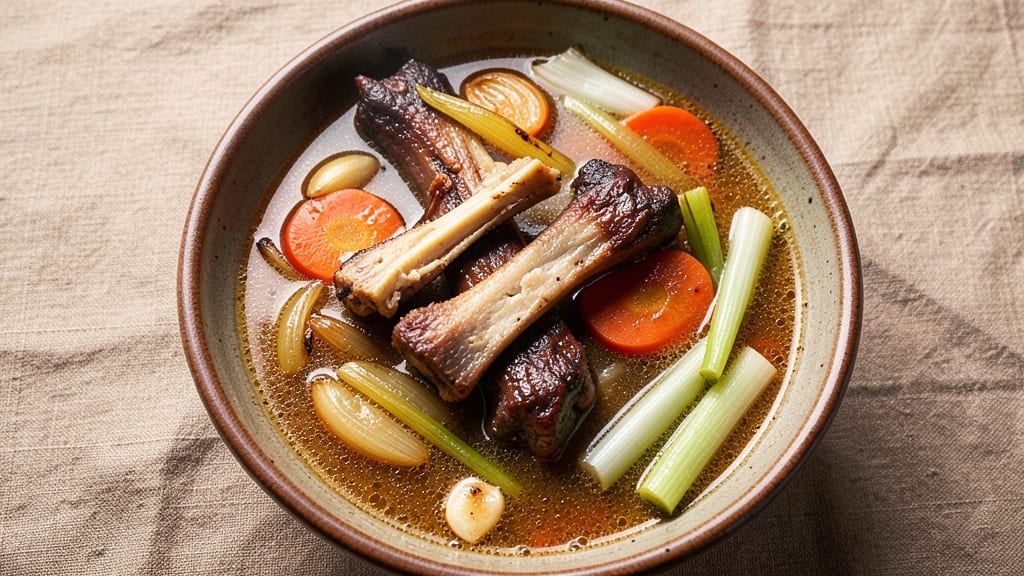
This beef soup bone stew recipe transforms tough bones into a velvety, collagen-rich broth that's the heart of any meal. The secret lies in slow simmering—extracting deep, savory flavors while keeping the broth clear and rich. This isn't just soup; it's a comforting, nutrient-packed dish that builds character with every hour on the stove.
The magic happens in the bones: beef marrow and knuckle bones release gelatin and collagen as they simmer, creating a naturally thickened broth without added thickeners. With aromatic vegetables, herbs, and a touch of acidity from vinegar, the flavors develop into a harmonious balance of richness and brightness.
It's the kind of soup that tastes even better the next day, as the flavors meld and deepen.
What you'll end up with is a restaurant-quality stew—golden, fragrant, and packed with tender beef and vegetables swimming in a glossy, collagen-rich broth. The texture is unmatched: fork-tender meat, crisp vegetables, and a broth so rich it coats your spoon.
This is the kind of dish that turns ordinary weeknights into special occasions.
Perfect for feeding a crowd or meal prepping for the week, this stew scales beautifully while maintaining its depth of flavor. Serve it with crusty bread to soak up every last drop of that precious broth. Let's get started on creating a soup that's worth the wait.
Ingredients for beef soup bone stew
Six pounds of bones and fresh vegetables create restaurant-quality collagen broth.
| Ingredient | Amount | Notes |
|---|---|---|
| Beef Marrow Bones 🦴 | 2 lb | Split for marrow access |
| Beef Knuckle Bones 🦴 | 2 lb | For collagen-rich broth |
| Yellow Onions 🧅 | 2 whole | Chopped, medium size |
| Carrots 🥕 | 4 medium | Whole, peeled and cut |
| Celery Stalks 🧅 | 6 whole | Trimmed and chopped |
| Garlic Cloves 🧄 | 6 cloves | Minced for depth |
| Tomatoes 🍅 | 2 whole | Roma, crushed by hand |
| Bay Leaves 🍃 | 2 whole | Fresh for aroma |
| Fresh Thyme 🌿 | 2 sprigs | Or 1 tsp dried thyme |
| Apple Cider Vinegar 🍏 | 1 tbsp | Brightens broth flavor |
| Salt 🧂 | 2 tsp | Kosher or sea salt |
| Black Peppercorns 🌶️ | 1 tsp | Crushed for texture |
| Olive Oil 🫒 | 2 tbsp | For initial searing |
The bones are everything here. Beef marrow and knuckle bones from the butcher section—ask for them specifically. Costco or local meat markets usually have them, but if you can't find them, beef shank bones work too. Look for bones with good marrow—when split open, they should be bright red inside. Fresh thyme and bay leaves add depth, but dried works in a pinch (half the amount). For the vegetables, organic carrots and celery from the grocery store's produce section keep best—just make sure they're firm and free of soft spots.
No beef marrow bones? Pork trotter bones or chicken feet add gelatin too, though the flavor will differ. Skip the vinegar if you're sensitive to acidity—a splash of lemon juice works instead. The tomatoes can be canned (San Marzano if you want to splurge) or fresh. For extra richness, add a splash of Worcestershire sauce at the end—it's vegetarian-friendly. If you're prepping ahead, chop all your vegetables the night before and store them in a sealed container in the fridge. The bones can sit in the freezer for up to 3 months until you're ready to start.
This broth gets better with time. Day 1 is good, day 2 is magical—the collagen fully sets and the flavors meld perfectly. Store in the fridge for up to 5 days or freeze in portions for 3 months. I like to portion it into quart-sized containers so I can grab just what I need for a quick weeknight meal. Serve it hot with crusty bread or over rice—every last drop of that golden broth is worth savoring.
Why You'll Love This Recipe
- One-Pot Magic: I swear by this recipe—just toss the bones, veggies, and water in a pot, then walk away. No chopping boards, no mess, no stress. The marrow bones even render down into golden, buttery richness while you’re doing anything else.
- Deep Umami Bomb: That first sip? Pure flavor explosion. The knuckle bones break down into gelatinous perfection, while the onions and celery melt into the broth like a slow-dance of savory sweetness. Honestly, the kind of taste that makes you pause mid-spoonful and go, "Wait, is this even real?"
- Leftovers That Shine: This stew only gets better the next day—like a cozy hug for your fridge. I make a double batch on Sundays, and by Wednesday, it’s still rich, still comforting, still the star of my lunch. (Yes, even when reheated.)
- Budget Meal Hero: A few bones stretch into weeks of meals—no wasted ingredients, just pure value. The marrow alone turns a simple soup into something restaurant-worthy without breaking the bank. Between us? This is how I feed my family for less than half the cost of takeout.
Step-by-step instructions for beef soup bone stew
Here's how to unlock rich, collagen-packed broth from humble bones.
Prepare the Bones for Maximum Flavor
Start by splitting the 2 lb beef marrow bones lengthwise with a sharp cleaver to expose the marrow. This releases flavor as it cooks. Leave the 2 lb beef knuckle bones whole—they'll contribute deep, gelatinous richness. Pat both bone types dry with paper towels to remove any surface moisture, which prevents steam from forming and keeps the broth clear.
Heat a large Dutch oven over medium-high heat and add the 2 tbsp olive oil. Once shimmering, add the bones in a single layer and sear for 8-10 minutes until deeply browned on all sides. This caramelization builds the foundation for your stew's depth of flavor. Don't rush this step—well-browned bones mean well-flavored broth.
Build the Aromatic Base
Remove the seared bones and set aside. In the same Dutch oven, add the chopped 2 whole yellow onions, 4 medium carrots (cut into 2-inch chunks), and 6 whole celery stalks (trimmed and cut into 2-inch pieces). Cook for 5 minutes until softened and just beginning to color.
Add the 6 cloves minced garlic, 2 whole Roma tomatoes (crushed by hand), 2 whole bay leaves, and 2 sprigs fresh thyme. Stir for 1 minute until fragrant—this aromatic trio will infuse the broth with layers of complexity. Pour in the 1 tbsp apple cider vinegar and scrape up any browned bits from the bottom of the pot. These bits, called fond, are packed with flavor.
Simmer the Bones for Collagen Extraction
Return the seared bones to the pot, then add 8 cups cold water (enough to cover the bones by 2 inches). Bring to a boil over high heat, then immediately reduce to a gentle simmer. Skim off any foam or impurities that rise to the surface during the first 10 minutes—this ensures a clear, clean broth.
Once the foam subsides, add the 2 tsp salt and 1 tsp crushed black peppercorns. Cover the pot and maintain a low simmer (small bubbles breaking occasionally) for 3 hours. Here's the secret: collagen-rich bones need slow cooking to break down into gelatin, which thickens the broth naturally. Don't let it boil vigorously, or the bones will toughen instead of tenderize.
Finish and Strain for Silky Texture
After 3 hours, remove the bones with tongs and let them cool slightly. Use a spoon to scoop out the marrow from the marrow bones—it'll be thick and custard-like. Return the bones to the pot and simmer uncovered for another 30 minutes to reduce the broth slightly and deepen its flavor.
Strain the broth through a fine-mesh sieve into a clean pot, pressing gently on the solids to extract every last bit of flavor. Discard the solids or compost them. The result should be a deep amber, silky broth with a rich, almost velvety texture. Taste and adjust seasoning if needed—this is your chance to fine-tune the balance of salt, acid, and umami.
Serve with Crisp Vegetables and Fresh Herbs
Ladle the finished broth into bowls, dividing it evenly among 6 servings. For a complete stew, serve with the cooked vegetables (carrots, celery, and onions) from the strainer, along with a sprinkle of fresh parsley or thyme. The marrow can be spread on toasted bread for a decadent garnish.
This stew tastes even better the next day as the flavors meld further. Store leftovers in the refrigerator for up to 5 days or freeze for 3 months. The broth will continue to thicken and deepen in flavor over time, making it perfect for reheating and using as a base for future meals.
Pro Tips For Making Beef Soup Bone Stew
- BLANCH BONES FIRST: I learned this the hard way—skipping the quick blanch (3-5 minutes in boiling water) means your marrow bones won’t release their golden goodness later. It also washes off that metallic bone taste that can sneak into your broth. Just don’t overdo it, or you’ll end up with soggy bones before they even hit the pot.
- SWEAT ONIONS LOW AND SLOW: After burning three batches of caramelized onions, I finally figured out the trick: cover the pot. Use medium-low heat and let them sweat for 10-15 minutes with a splash of water or broth. The lid keeps them from drying out, and the steam helps break them down into that sweet, jammy base—no browning required, no bitter edges.
- CHOP VEGETABLES UNIFORMLY: Big chunks of celery and carrots? They’ll turn to mush before they soften properly. Small, even pieces (about ½-inch) cook at the same rate, so your soup stays balanced—no rubbery celery stalks or hard carrots. Yes, it takes a few extra minutes, but your future self will notice the difference.
- SKIP THE BOILING START: Sounds weird, but it works: begin with a gentle simmer, not a rolling boil. I was skeptical until I tried it—starting hot just makes the bones toughen up faster and clouds the broth. Let the pot come to a simmer on its own, then add your bones and aromatics. The broth will clarify better, and the meat stays tender.
Regional styles of this beef soup bone stew
French Bouillon Tradition
In France, this recipe transforms into a classic bouillon, where bones are simmered for hours to create a clear, aromatic broth—the base for many French dishes. The French version often includes parsley stems, leeks, and a bouquet garni (a bundle of herbs tied together) for extra depth.
I love adding a splash of white wine during the simmer to brighten the broth, just like in a traditional bouillon de bœuf. 🍷
Italian Osso Buco Style
Northern Italy's Osso Buco takes this stew to another level by braising beef shanks with marrow bones in a tomato-based sauce rather than a clear broth. The Italians use Gremolata (a mix of garlic, lemon zest, and parsley) to finish the dish.
For an Italian-inspired twist, add a splash of dry red wine when searing the bones and finish with fresh sage leaves for an aromatic touch. 🌿
Spanish Cocido Madrileño
Spain's Cocido Madrileño is a hearty, multi-layered stew that includes chickpeas, morcilla (blood sausage), and potatoes alongside beef bones. The Spanish version often starts with a sofrito (sautéed onions, garlic, and tomatoes) before adding the broth.
For an authentic touch, add a pinch of saffron or smoked paprika to the broth for a distinct Spanish flavor profile. 🌶️
German Rindfleischsuppe
German Rindfleischsuppe (beef soup) often features cabbage, carrots, and a touch of mustard for a tangy kick. The Germans typically use beef shank bones and simmer the broth for an extended time to achieve a thick, gelatinous texture.
For a German-inspired version, add ½ cup sauerkraut and 1 tsp caraway seeds during the final 30 minutes of simmering. 🥬
Caribbean-Inspired Fusion
For a bold twist, infuse the broth with Caribbean flavors like allspice, thyme, and Scotch bonnet peppers. Add 1 tsp ground allspice and 1 sliced Scotch bonnet pepper (seeds removed for less heat) during the simmer.
Serve the stew with coconut rice and fried plantains for a fusion dish that’s both comforting and vibrant. 🌴
Modern Shortcut Version
Short on time? Use store-bought beef bone broth (like Kettle & Fire or Pacific Foods) as a base and add beef shank chunks for protein. Simmer for 2 hours instead of 3, then finish with fresh herbs and a splash of vinegar for brightness.
This version keeps the rich, collagen-packed essence while cutting prep time in half. ⏱️
Nutrition facts
Frequently asked questions
Why do we split the marrow bones?
Splitting the marrow bones releases the rich, flavorful marrow as it cooks, adding depth to your broth. The exposed marrow also breaks down more easily, creating a naturally thickened, velvety texture without needing extra thickeners. This is the secret to that restaurant-quality richness!
Can I use regular beef bones instead of marrow and knuckle bones?
Yes, but the results will differ. Regular beef bones (like short ribs) will still make flavorful broth, but they won't provide the same collagen-rich gelatin that knuckle bones do. For best results, use a mix of knuckle bones and marrow bones—this gives you both deep flavor and that signature silky texture.
How do I know when the broth is ready?
The broth should simmer gently for 3 hours, then reduce uncovered for 30 minutes to deepen flavors. When ready, it will be deep amber, glossy, and naturally thickened from collagen. If you're unsure, taste it—it should be rich, savory, and well-seasoned, not bland or watery.
What if my broth turns cloudy?
Cloudiness usually means impurities (like foam or fat) weren't skimmed early on. To fix it, strain the broth through a fine-mesh sieve or cheesecloth, then simmer uncovered for 10-15 minutes to clarify. For next time, skim foam aggressively during the first 10 minutes of boiling.
Can I make this stew in a slow cooker?
Sear the bones and vegetables first, then transfer everything to a slow cooker with 8 cups water. Cook on low for 8-10 hours or high for 5-6 hours, skimming foam occasionally. The slow cooker method is perfect for hands-off prep—just