
Soups & Stews
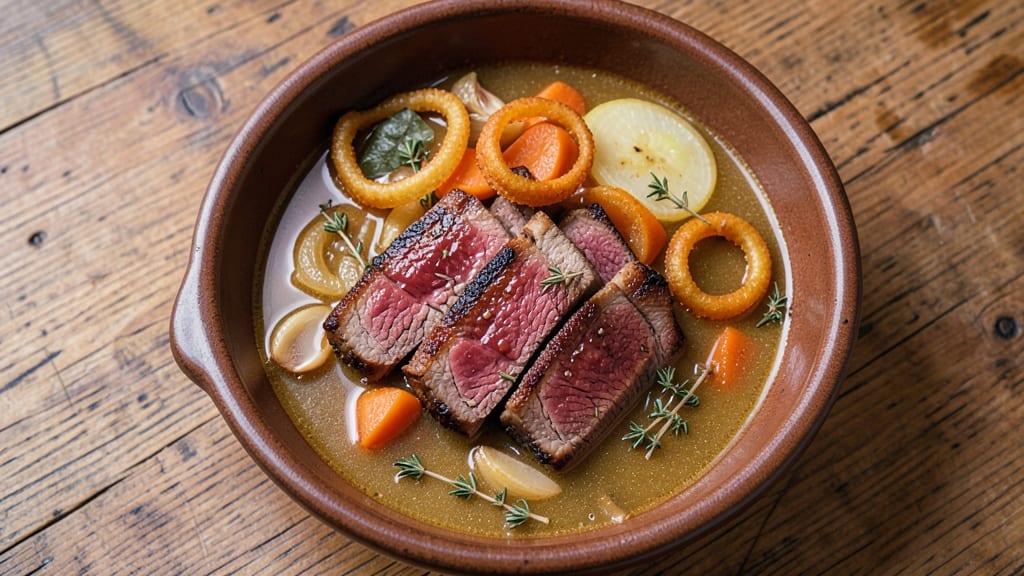
This beef stew and onion soup recipe transforms a single pot into two restaurant-quality meals that share deep savory layers. The secret lies in braising beef until tender while simultaneously caramelizing onions for the soup—both built on the same rich broth foundation.
I developed this technique after years of perfecting individual components, finally merging them into one effortless yet impressive dish that feeds a crowd.
The beef stew begins with a chuck roast slow-cooked until fork-tender, infused with garlic, thyme, and bay leaves, while the onion soup component caramelizes onions for hours until deep amber.
The same flavorful beef broth elevates both dishes, creating harmony without extra effort. This method ensures you’ll have two hearty meals—one for now, one for later—without doubling the work.
By the end, you’ll have tender beef that falls apart with a bite, surrounded by vegetables in a velvety broth, paired with a golden onion soup topped with melted Gruyère. The stew’s rich flavors carry through to the soup, tying both courses together seamlessly.
Serve the stew in bowls with a side of soup for a complete meal, or layer them for a stunning presentation.
Perfect for chilly evenings or holiday gatherings, this recipe delivers restaurant-quality results with minimal cleanup. The slow-cooked beef and caramelized onions develop complex flavors over time, making the wait worthwhile. Let’s create a meal that feels like a hug in a bowl.
Ingredients for beef stew onion soup
Six hearty servings of restaurant-quality comfort in one pot—where beef stew meets golden onion soup.
| Ingredient | Amount | Notes |
|---|---|---|
| Chuck Roast 🥩 | 3 lb | Well-marbled for tenderness |
| Yellow Onions 🧅 | 4 whole | Yellow or red preferred |
| Carrots 🥕 | 1 ½ lb | Whole, peeled, cut even |
| Garlic Cloves 🧄 | 6 cloves | Fresh, peeled, smashed |
| Fresh Thyme 🌿 | 2 tbsp | Leaves only, chopped fine |
| Bay Leaves 🍃 | 2 whole | Dried, standard size |
| Beef Broth 💧 | 6 cups | Low-sodium preferred |
| Dry Red Wine 🍷 | 1 cup | Bold, like Cabernet |
| Tomato Paste 🍅 | 2 tbsp | Smooth, no sugar added |
| Gruyère Cheese 🧀 | 1 cup | Freshly grated, aged |
| All-Purpose Flour 🌾 | 1 tbsp | For thickening soup |
| Olive Oil 🫒 | ½ cup | Extra-virgin for richness |
| Salt 🧂 | 2 tsp | Diamond Crystal preferred |
| Black Pepper 🌶️ | 1 tsp | Freshly cracked preferred |
| Fresh Parsley 🌿 | ¼ cup | Chopped, for garnish |
The chuck roast is non-negotiable here—look for good marbling at Whole Foods or your local butcher shop. Costco often carries pre-cut chuck, which saves time. Fresh thyme and bay leaves elevate the broth, so don't skimp on quality. For the Gruyère, French specialty shops carry the best aged varieties, but Kroger's pre-grated works in a pinch. The carrots should be firm and evenly sized—no stringy examples. Pre-peel them if you're short on time, but fresh is always better.
No red wine? Beef broth plus 1 tbsp balsamic vinegar mimics the depth. The tomato paste can be skipped entirely if you prefer—just add an extra splash of wine. For the onions, yellow or red work equally well, but avoid sweet onions like Vidalia. The flour for thickening should be lightly toasted in the olive oil first to deepen the flavor. Gruyère substitutes? Comté or Emmental both work, though Gruyère's nutty profile is ideal. Store-bought beef broth is fine, but homemade from the stew's drippings takes this to another level.
The stew reheats beautifully—3-4 days in the fridge, 3 months frozen. For the onion soup, keep the cheese covered until serving to prevent browning. Portion the stew into containers for easy lunches, and freeze the soup in individual ramekins for quick reheating. The flavors actually improve after 24 hours as everything melds. Double the batch if you're feeding a crowd—this recipe scales perfectly.
Why You'll Love This Recipe
- Foolproof Simplicity: I swear by this recipe because it’s the kind of meal that forgives mistakes. Chuck roast doesn’t need fancy prep—just a quick sear and slow simmer, while the onions and carrots soften effortlessly. Honestly, I’ve made it after work with takeout containers still in my bag, and it still turned out rich and satisfying.
- Deep, Savory Magic: That first spoonful of broth—caramelized onions, thyme-infused garlic, and tender beef—is what makes this soup ridiculously good. The chuck roast practically melts into the broth, soaking up all the flavors until every bite is hearty and full-bodied. (Yes, even on a Tuesday night.)
- Meal Prep MVP: This stew doubles as tomorrow’s lunch if you make it today. The flavors only get better after sitting overnight, and it reheats like a dream. Between us, I’ve packed it in jars for work and my kids have begged for leftovers—no one turns down a warm bowl of this, especially when it’s already half-made.
- Budget-Buster Winner: A chuck roast stretches for days, and the veggies? Basic, cheap, and always on hand. I’ll be real: this recipe saved me from takeout splurges more times than I can count. Plus, the leftovers stretch across lunches, dinners, or even a quick reheat for a sick day. Solid. Reliable. My secret weapon.
Step-by-step instructions for beef stew and onion soup
Mastering this rich, layered dish requires patience and precision—every step builds depth of flavor.
Sear the Chuck Roast for Maximum Flavor
Pat the 3 lb chuck roast completely dry with paper towels. Heat 0.5 cup olive oil in a large Dutch oven over medium-high heat until shimmering. Add the roast and sear on all sides for 8-10 minutes total, turning occasionally, until deeply browned. This step develops the Maillard reaction, creating that irresistible caramelized crust.
While searing, I like to press down gently on the roast during the first minute—this prevents it from curling and ensures even contact with the pan. Remove the roast and set it aside on a plate. Don't wipe the Dutch oven clean; those browned bits are pure flavor that will form the base of your stew.
Build the Aromatic Vegetable Base
In the same Dutch oven, add 4 whole yellow onions cut into even chunks and 1.5 lb carrots cut into 1-inch rounds. Cook for 8-10 minutes, stirring occasionally, until the onions soften and begin to caramelize. Add the 6 cloves garlic cloves (smashed) and cook for another 1 minute until fragrant.
Here's where it gets fun—toss in 2 tbsp fresh thyme and 2 whole bay leaves. Stir everything together and cook for 2 minutes until the thyme releases its essential oils. The bay leaves will infuse subtle earthy notes, while the thyme adds bright herbal complexity. This aromatic foundation is what makes the difference between ordinary stew and extraordinary.
Develop the Rich Red Wine Reduction
Pour in 1 cup dry red wine and scrape up all those browned bits from the bottom of the pot with a wooden spoon. This deglazing step captures all that concentrated beef flavor. Let the wine simmer for 3-4 minutes until reduced by half—you'll see it darken and thicken slightly. The alcohol will cook off, leaving behind concentrated wine flavors.
Stir in 2 tbsp tomato paste and cook for 1 minute until it loses its raw taste. This step adds depth and a subtle sweetness that balances the acidity of the wine. The tomato paste also helps thicken the stew slightly as it cooks, creating a more substantial texture.
Simmer the Stew to Perfection
Return the seared chuck roast to the Dutch oven. Pour in 6 cups beef broth, ensuring the roast is fully submerged. Bring to a gentle simmer over medium heat, then reduce to low heat. Partially cover and let it cook for 2-2.5 hours until the meat is fork-tender and easily pulls apart with two forks.
Here's the thing—don't rush this step. The slow cooking breaks down the connective tissue in the chuck roast, transforming it into melt-in-your-mouth tenderness. Your kitchen will fill with an incredible aroma as the flavors meld together. Check occasionally and add a splash of water if the liquid reduces too much.
Finish with Cheese and Fresh Herbs
Once the meat is tender, remove it from the stew and set it aside. Stir 1 tbsp all-purpose flour into the stew to thicken it slightly, then simmer for 5 minutes to let it absorb. Return the meat to the pot and stir in 1 cup freshly grated Gruyère cheese until melted and creamy. The cheese adds a luxurious richness that elevates the entire dish.
Taste and adjust seasoning with 2 tsp salt and 1 tsp black pepper as needed. Ladle the stew into bowls and garnish with 0.25 cup chopped fresh parsley. The bright green parsley provides a beautiful contrast and a fresh finish that cuts through the richness. Serve immediately while the cheese is still melted and the flavors are at their peak.
Pro Tips For Making Beef Stew Onion Soup
- SEAR THE CHUCK ROAST: I learned this the hard way—skipping the sear means bland, gray meat. Get that chuck roast screaming hot in a dry skillet for 3-4 minutes per side until it’s deep brown. The crust locks in flavor and makes the soup taste like it simmered for hours, not 30 minutes. (Yes, even if you’re impatient like me.)
- CHOP ONIONS UNIFORM: Big, uneven onion chunks turn to mush and make the soup look sloppy. Cut them into ½-inch dice—small enough to soften but not disappear. A sharp knife and steady hand make this faster than you’d think, and the texture stays pleasant. (Your future self will thank you.)
- DON’T CROWD THE POT: I used to toss everything in at once, thinking more liquid would fix the problem. Wrong. Simmer the stew with just enough broth to cover the meat by 1 inch—add more later if needed. Crowding steams the veggies instead of caramelizing them, and you’ll end up with a watery mess.
- SAUTE GARLIC LAST: Sounds weird, but it works: Add the garlic cloves whole to the pot with the meat, then pull them out right before serving. They infuse flavor without burning, and you get that fresh, aromatic bite. (Bonus: No need to peel them—just squeeze them out of their skins.)
Health benefits of these flavors
Protein Powerhouse
This recipe delivers high-quality protein from the 3 lb chuck roast, providing about 60 grams per serving—ideal for muscle repair and satiety. Beef is also rich in iron and zinc, essential for energy and immune function.
The slow-cooking process makes the protein even more bioavailable, helping your body absorb these nutrients efficiently. 💪
Rich in Antioxidants
The caramelized onions in the soup are packed with quercetin, a potent antioxidant that fights inflammation and supports heart health. Studies show that caramelization increases antioxidant levels in onions by up to 50%.
The red wine used in the stew adds resveratrol, another powerful antioxidant linked to longevity and reduced inflammation. 🌿
Fiber for Digestion
Both the carrots and yellow onions contribute dietary fiber, which aids digestion and keeps you feeling full longer. The 1.5 lb carrots provide about 12 grams of fiber per serving, while the onions add 4 grams.
This fiber combo helps regulate blood sugar levels and supports gut health. The stew’s Gruyère cheese also contains calcium, which works with magnesium from the broth to strengthen bones. ✨
Comfort Food Nutrition
While this dish is indulgent, it balances rich flavors with nutrients like vitamin C from the onions and vitamin A from carrots. The beef broth provides collagen, which supports skin elasticity and joint health.
Even the tomato paste adds lycopene, an antioxidant that may reduce cancer risk. It’s proof that comfort food can be nutritious too! 💛
Cheese Benefits
The 1 cup Gruyère cheese adds calcium and vitamin B12, but also contains conjugated linoleic acid (CLA), a fatty acid linked to reduced body fat and improved metabolism.
While cheese is calorie-dense, the portion size here makes it a worthwhile addition for flavor and nutrients. Pairing it with fiber-rich vegetables balances the meal’s nutritional profile. 🧀
Meal Prep Advantage
This recipe’s make-ahead nature means you can enjoy its benefits without daily prep. The stew’s nutrients remain stable for 3-4 days in the fridge or 3 months frozen, while the onion soup’s caramelized onions retain their antioxidants even after reheating.
Double the batch to maximize these health benefits while minimizing effort! 📅
Nutrition facts
Frequently asked questions
Can I make this recipe without red wine?
Replace the 1 cup red wine with 1 cup beef broth plus 1 tbsp balsamic vinegar for depth. The balsamic mimics the wine's acidity and complexity. For extra richness, add 1 tsp soy sauce—it enhances umami flavors beautifully. The stew will still develop incredible depth without alcohol.
How do I serve the stew and soup together?
There are two elegant options: Serve the stew in deep bowls with a side of onion soup in smaller ramekins, or create a layered presentation. For the layered version, place a scoop of stew in the bottom of a deep bowl, top with a layer of caramelized onions from the soup, then ladle warm broth over both. Garnish with Gruyère and parsley for a stunning visual. Both methods keep the flavors harmonized.
Can I use frozen onions for the caramelization?
Fresh onions are ideal for deep caramelization, but frozen work in a pinch. Thaw them first, then pat completely dry to prevent steaming instead of browning. Expect slightly less color development, but the flavor will still be rich. For best results, use frozen onions only if you're short on time—they won't achieve that perfect golden amber hue.
What's the best way to reheat leftovers?
Reheat stew and soup separately for optimal texture. For the stew, warm gently on low heat with a splash of beef broth to restore moisture. The soup reheats beautifully in a saucepan over medium-low heat, stirring occasionally. Never microwave—it creates a watery consistency. Both dishes taste even better the next day as flavors meld further!
Can I substitute the chuck roast with another cut?
Short ribs or beef brisket work wonderfully, but cooking times will vary. Short ribs need 1.5-2 hours while brisket requires 3-4 hours for tenderness. For quickest results, use a 2-inch thick beef chuck steak—simmer for 1.5 hours. Avoid lean cuts like sirloin; they won't develop the same rich flavor and texture.