
Soups & Stews
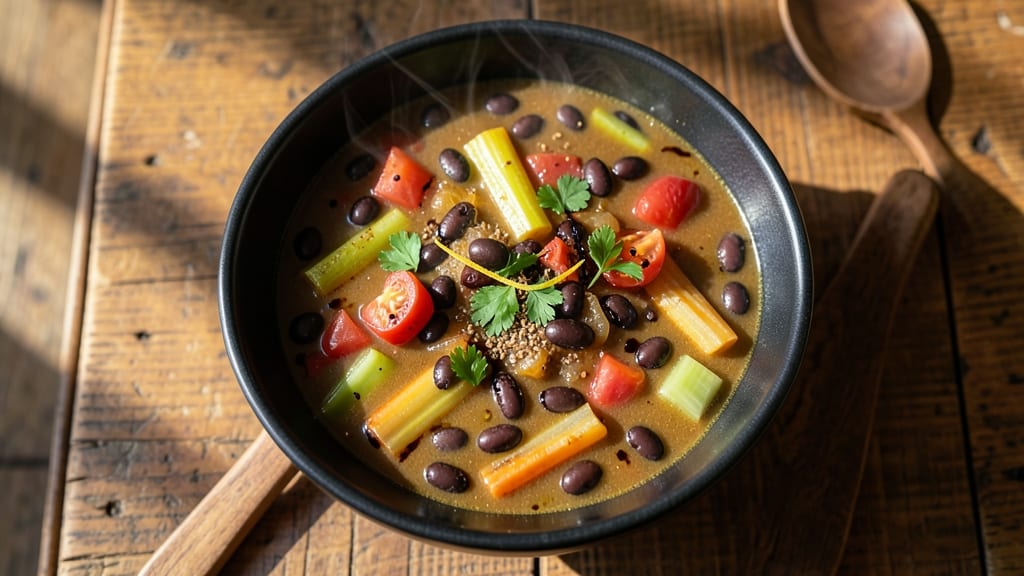
This black bean minestrone soup recipe delivers the ultimate hearty, vegetable-packed comfort in a single pot. 🌟 The combination of earthy black beans, tender pasta, and fresh herbs creates a flavorful, protein-rich soup that's perfect for chilly evenings or meal prep.
What sets this version apart is the deep, savory base built from sautéed aromatics and slow-simmered tomatoes—transforming simple ingredients into something extraordinary.
The beauty of this recipe lies in its versatility and simplicity. You'll start with classic minestrone elements—onions, carrots, celery, and garlic—sautéed until fragrant before adding beans, diced tomatoes, and vegetable broth.
The pasta cooks directly in the soup, absorbing all those rich flavors as it goes, while fresh herbs add brightness at the end. It's the kind of dish that tastes even better the next day, making it ideal for busy schedules.
What you'll end up with is a bowl of warm, satisfying soup with hearty black beans, al dente pasta, and a medley of vegetables in a deeply flavorful broth. The texture is perfect—tender beans, chewy pasta, and crisp vegetables all working together.
This is comfort food at its finest, packed with plant-based protein and fiber to keep you full and content.
Serve it as-is or top with grated Parmesan, fresh basil, or a drizzle of olive oil for extra richness. The possibilities are endless, but the foundation is foolproof—just one pot, minimal cleanup, and maximum flavor. Let's get cooking!
Ingredients for black bean minestrone soup
Hearty black beans, fragrant vegetables, and rich tomato sauce create this extraordinary one-pot comfort.
| Ingredient | Amount | Notes |
|---|---|---|
| Vegetable Broth 💧 | 6 cups | Low-sodium preferred for flavor control |
| Black Beans 🫘 | 1 ½ cups | Drained and rinsed, canned or cooked |
| Diced Tomatoes 🍅 | 1 can | 14.5 oz can, fire-roasted for depth |
| Yellow Onion 🧅 | 1 whole | Medium size, diced finely |
| Carrots 🥕 | 3 whole | Medium size, sliced into thin rounds |
| Celery Stalks 🧅 | 3 whole | Diced finely, stringy parts removed |
| Garlic Cloves 🧄 | 4 cloves | Minced for aromatic depth |
| Pasta 🍝 | 2 oz | Small shape like ditalini or acini di pepe |
| Canned Tomato Sauce 🍅 | 1 can | 15 oz can, for richness |
| Fresh Basil Leaves 🌿 | ¼ cup | Chopped finely for freshness |
| Extra-Virgin Olive Oil 🫒 | 2 tbsp | For sautéing aromatics |
| Dried Oregano 🍃 | 1 tsp | For earthy depth |
| Bay Leaves 🍃 | 2 whole | For subtle complexity |
| Salt 🧂 | 1 ½ tsp | Adjust to taste, kosher preferred |
| Black Pepper 🌶️ | ½ tsp | Freshly cracked for heat |
The vegetable broth is the flavor foundation—low-sodium lets you control the seasoning. I always grab Pacific Foods or Imagine brands for the cleanest taste. Black beans should be firm but tender—avoid mushy ones. Fresh tomatoes? San Marzano diced tomatoes make a world of difference, but the canned fire-roasted kind works perfectly too. For the aromatics, Trader Joe's sells pre-diced onions, carrots, and celery in a bag—game-changer for busy nights. The garlic? Freshly minced is non-negotiable here.
No fresh basil? Dried oregano at half the amount keeps the earthy notes. Running low on tomato sauce? Crushed tomatoes plus a pinch of sugar mimics the depth. The pasta shape matters—small shapes like ditalini hold up better than spaghetti. For extra protein, add white beans or lentils. Want more veggies? Zucchini or spinach wilts beautifully in the last 5 minutes. The bay leaves? Remove before serving—they're for flavor, not texture.
This soup tastes even better the next day—3-4 days in the fridge, 3 months frozen. I always double the batch and freeze half for lazy days. Store in glass containers to avoid absorbing odors. For serving, keep the olive oil separate until ready to eat—prevents sogginess. Top with grated Parmesan or a drizzle of hot sauce if you're feeling fancy. Leftovers reheat beautifully—just add a splash of water if it's too thick.
Why You'll Love This Recipe
- No Chopping Chaos: I swear by this recipe because you can literally dump everything in one pot and walk away. The onions and carrots soften while you stir in the beans and tomatoes—no fancy dicing, no stress. (Yes, even on a Tuesday night when you’re exhausted.)
- Umami Bomb Combo: That deep, savory punch from the black beans and vegetable broth? It’s like a hug in a bowl. The diced tomatoes add just enough brightness to cut through the richness, and honestly, the first spoonful makes me pause mid-stir.
- Leftover Hero: This soup only gets better the next day—thicker, richer, and somehow even more satisfying. I make a double batch on Sundays and freeze half; reheating it later is my lazy-day savior. (No takeout needed.)
- Budget-Friendly Powerhouse: Black beans, carrots, and onions stretch this recipe into a full meal for pennies. I’ve fed four people for under $10 with this, and they’ve never complained. Plus, it’s one of those dishes that tastes expensive but costs next to nothing.
Step-by-step instructions for black bean minestrone soup
This hearty soup comes together in one pot with layers of flavor and texture.
🍳 Step 1: Sauté the Aromatic Vegetable Base
Heat the 2 tablespoons extra-virgin olive oil in a large Dutch oven over medium heat. Add the diced yellow onion, diced celery stalks, and sliced carrots. Cook for 5-6 minutes until the vegetables soften and begin to release their natural juices.
Here's the thing—you want the vegetables to sweat but not brown. If they start to stick, reduce the heat slightly and stir more gently. This foundational step builds the soup's depth of flavor. After 3 minutes, add the minced garlic cloves and cook for another 30 seconds until fragrant. The garlic should smell pungent but not burn—this is your cue it's ready for the next ingredients.
🥘 Step 2: Build the Flavor Layers
Pour in the 1 can diced tomatoes (with juices), 1 can tomato sauce, 1.5 teaspoons salt, 0.5 teaspoon black pepper, 1 teaspoon dried oregano, and the 2 whole bay leaves. Stir well to combine, scraping up any browned bits from the bottom of the pot—this is where all the flavor hides.
Bring the mixture to a gentle boil, then reduce heat to medium-low and let it simmer for 10 minutes. You'll see the tomatoes break down and the sauce thicken slightly. This step develops the base flavor, so don't rush it. The soup should smell rich and tomato-forward with herbal undertones from the oregano and bay leaves.
🍲 Step 3: Add the Black Beans and Pasta
Stir in the 1.5 cups black beans and 6 cups vegetable broth. Bring the soup back to a gentle boil, then reduce heat to low and let it simmer for 15 minutes. The beans will begin to absorb the broth and soften slightly. After 10 minutes, add the 2 ounces pasta—small shapes like ditalini or acini di pepe cook quickly and hold up well in soups.
Here's where it gets fun: the pasta should cook right in the soup. You want it al dente but fully cooked—about 8-10 minutes depending on the shape. Taste the soup at the 12-minute mark to check the pasta. If it's not quite done, simmer for another 2-3 minutes. The soup should be thick but still spoonable, with the beans and pasta fully integrated.
⏰ Step 4: Finish with Fresh Herbs and Rest
Remove the 2 whole bay leaves and stir in the 0.25 cup chopped fresh basil leaves. The basil adds a bright, fresh finish that cuts through the richness of the tomatoes and beans. Taste the soup and adjust the seasoning if needed—you might need a pinch more salt or pepper depending on your broth.
Let the soup sit off the heat for 5 minutes before serving. This resting period allows the flavors to meld and the pasta to finish cooking in the residual heat. The soup should be hearty yet balanced, with each bite delivering tender beans, al dente pasta, and a rich tomato broth. Serve with crusty bread to soak up every last drop of that comforting minestrone goodness.
Pro Tips For Making Black Bean Minestrone Soup
- SOFTEN BEANS FIRST: Black beans straight from the can taste like they’ve been sitting in a tin for a decade. Drain them, rinse well, then simmer in fresh broth for 10 minutes before adding everything else—this breaks down their skins just enough to make them creamy without falling apart. (Yes, even if the recipe says “add later,” trust me on this.)
- CARROTS COOK LOW: Tossing diced carrots into boiling broth will turn them mushy and sad. Sauté them with the onion for 5 minutes first until they soften slightly, then add the broth. They’ll stay bright and hold their shape—no one wants to eat soup with carrots that look like pudding.
- TOMS NEED TIME: Diced tomatoes dumped in at the start? They’ll turn to mush and water down your soup. Add them in the last 15 minutes of cooking—this keeps their texture intact and lets their sweetness shine without turning the broth into tomato juice.
- SALT THE BROTH EARLY: Waiting to season until the end means your soup will taste bland no matter how much salt you add after. Season the broth right after it boils, then taste again at the 20-minute mark—this gives the flavors time to meld instead of playing catch-up at the end. (Pro move: a pinch of salt in the pot while heating the broth prevents bitterness.)
Wine and beer pairings for black bean minestrone soup
Crisp White Wine
For this vibrant black bean minestrone, I reach for a dry Italian white wine like Pinot Grigio or Vermentino. Their bright acidity and citrus notes cut through the richness of the tomatoes and beans while complementing the earthy basil.
Look for a wine with 12-13% ABV and crisp finish—avoid anything too oaky or overly fruity. A chilled glass (around 45°F) enhances the soup's freshness without overwhelming its hearty profile. 🍷
Crisp Lager Pairing
A crisp Italian lager like Peroni or Moretti works beautifully with minestrone's tomato-forward flavors. The light malt sweetness balances the soup's acidity, while the effervescence cleanses your palate between bites.
For craft beer lovers, try a Belgian witbier—the coriander and citrus notes mirror the basil and tomato. Serve the beer well-chilled (38-40°F) to contrast the warm soup. 🍺
Red Wine for Heartier Palates
If you prefer red, a light-bodied Chianti or Sangiovese (around 12-13% ABV) pairs surprisingly well. The wine's bright acidity and cherry notes complement the black beans and tomatoes.
Decant it for 10-15 minutes before serving to soften tannins. Avoid heavy reds like Cabernet—this soup deserves a wine that won't compete with its vegetable-forward profile. 🍇
Non-Alcoholic Options
For a refreshing non-alcoholic match, try sparkling water with a splash of lemon or hibiscus iced tea. The acidity in both enhances the soup's tomato base. For a richer option, almond milk chai latte (with cinnamon and cardamom) adds warmth that mirrors the soup's herbal notes.
Keep the drink chilled (38-42°F) to contrast the soup's hearty texture. ✨
Serving Temperature Tips
Serve your wine or beer slightly cooler than room temperature—around 45-50°F for whites and 50-55°F for reds. The coldness helps balance the soup's warmth, creating a refreshing contrast. If using a sparkling option, add ice to keep it crisp.
Pro tip: Let your wine breathe for 5 minutes after opening to release aromas that'll complement the basil and tomatoes. 💡
Nutrition facts
Frequently asked questions
Can I make this black bean minestrone soup without pasta?
This soup is delicious without pasta—just increase the vegetable broth to 7-8 cups to maintain the right consistency. For extra heartiness, add 1 cup cooked quinoa or brown rice at the end. The soup will still be packed with flavor and protein from the black beans and tomatoes.
How do I prevent the pasta from getting mushy in the soup?
Use small pasta shapes like ditalini or acini di pepe—they hold up better than long pasta. Add them only in the last 8-10 minutes of cooking and avoid over-simmering. If your soup is too thin, let it simmer uncovered for 5-10 minutes to thicken naturally. Never add raw pasta to cold soup!
Can I use canned black beans instead of dried? Yes! This recipe works perfectly with canned black beans—just
What if I don't have fresh basil?
No problem! Use ½ teaspoon dried basil (or 1 teaspoon dried oregano) for a similar earthy flavor. For a different twist, try chopped parsley or cilantro at the end. Avoid skipping herbs—they brighten up the rich tomato and bean flavors.
How can I make this soup spicier?
Add ½ teaspoon red pepper flakes or 1 chopped jalapeño with the aromatics. For heat lovers, stir in 1 teaspoon hot sauce or a pinch of cayenne at the end. Remember: you can always add more, but you can't take it out!