
Soups & Stews
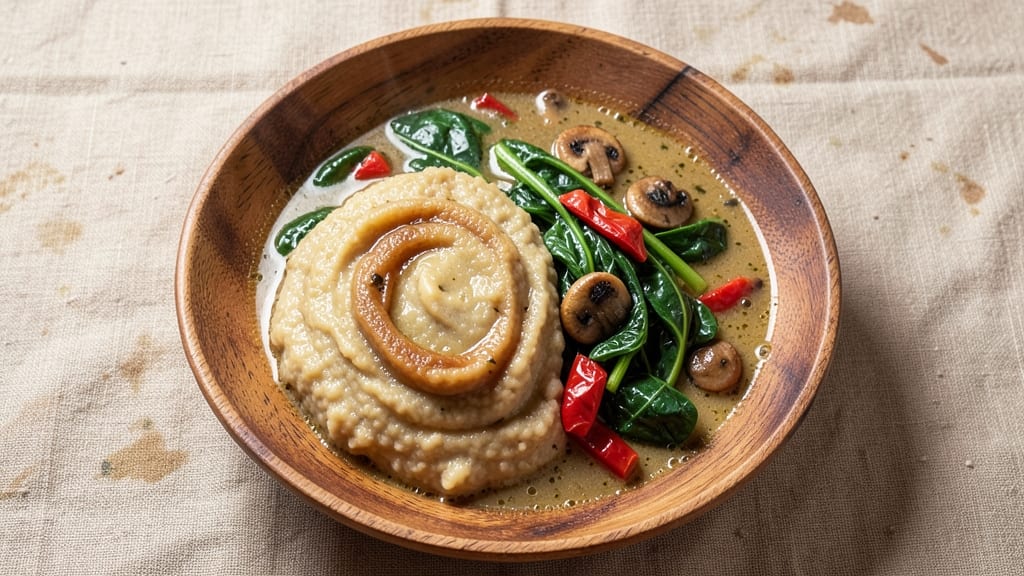
This African fufu and soup recipe brings the soul of West African cuisine to your kitchen with its signature stretchy dough paired with rich, flavorful stew.
The fufu—a smooth, elastic dough made from cassava or yams—is traditionally served with hearty soups like egusi, okra, or groundnut, creating a meal that's both comforting and deeply satisfying.
What makes this dish special is its cultural significance, often served at gatherings and celebrations, where every bite tells a story of tradition and community.
The key to perfect fufu lies in the dough's texture—it must be smooth, stretchy, and hold its shape when formed into balls. While it requires patience (especially when boiling or steaming), the result is a dish that's as much about the process as it is about the taste.
The accompanying soup, packed with vegetables, protein, and aromatic spices, balances the dough's mild flavor with bold, savory depth. Whether you're using meat, fish, or plant-based alternatives, this recipe delivers a meal that's hearty, nourishing, and full of flavor.
By the time you're done, you'll have a steaming bowl of fufu paired with a rich, aromatic soup that's perfect for sharing. The dough's unique texture contrasts beautifully with the soup's heartiness, creating a meal that's both visually appealing and deeply satisfying.
This is a dish that invites you to slow down, savor, and connect with its roots—one bite at a time.
Serve with your choice of soup—egusi, okra, or groundnut—and enjoy a taste of West Africa in your own kitchen. The recipe is designed to be adaptable, so feel free to customize the protein or vegetables to suit your preferences. Let's get started on this flavorful journey!
Ingredients for african fufu soup
Here’s what you’ll need to craft this soulful West African meal—where stretchy fufu meets rich, leafy stew.
| Ingredient | Amount | Notes |
|---|---|---|
| Cassava Flour 🍠 | 2 cups | Freshly milled preferred |
| Yam Flour 🍠 | 1 cup | For stretchier texture |
| Water 💧 | 1 ½ cups | Room temperature |
| Salt 🧂 | 1 tsp | Fine sea salt preferred |
| Vegetable Oil 🫒 | 2 tbsp | For smooth dough |
| Dried Leafy Greens 🥬 | 2 cups | Spinach or collards |
| Groundnut Peanut Butter 🥜 | ½ cup | Smooth, no sugar added |
| Onions 🧅 | 1 whole | Medium, chopped |
| Garlic Cloves 🧄 | 4 cloves | Minced for soup |
| Tomato Paste 🍅 | 2 tbsp | Concentrated for depth |
| Chicken or Beef Stock 🍲 | 3 cups | Homemade or quality store-bought |
| Smoked Paprika 🌶️ | 1 tsp | For smoky flavor |
| Ground Cumin 🌿 | ½ tsp | Toasted for warmth |
| Bay Leaves 🌿 | 2 whole | Fresh preferred |
| Protein of Choice 🍗 | 1 lb | Chicken, beef, or plant-based |
The cassava and yam flours are your texture anchors. Bob’s Red Mill or Amazon’s bulk options are reliable, but check for freshness—stale flour makes dough crumbly. If you can’t find yam flour, sweet potato flour works too (just add an extra pinch of salt). For the leafy greens, dried spinach or collards work best—they’ll rehydrate perfectly in the soup. The peanut butter? Natural, unsweetened is key here; brands like Skippy Natural or Smucker’s are solid choices. If you’re using plant-based protein, smoked tofu or chickpeas add great texture.
No cassava flour? Tapioca starch plus extra water can stretch you through, though texture will differ slightly. Swapping the smoked paprika? Regular paprika plus a pinch of liquid smoke gets you close. The stock is non-negotiable for depth—homemade is ideal, but store-bought like Pacific Foods works. For the protein, chicken thighs stay juicier than breasts, but beef chuck or plant-based crumbles hold up beautifully too. If you’re using dried leafy greens, soak them in warm water for 10 minutes before adding to the soup—they’ll rehydrate perfectly.
Fufu dough keeps best in the fridge for 2 days wrapped tightly in plastic—it’ll dry out if left exposed. The soup reheats beautifully; just add a splash of water if it thickens too much. For leftovers, freeze the soup in portions—it’s even more comforting the next day. The dough itself? Make it fresh—it’s part of the fun! But if you’re prepping ahead, store the dry flour mix separately and combine with water just before cooking.
Why You'll Love This Recipe
- No-Fuss Foundation: I swear by this combo of cassava and yam flour—just mix, knead, and steam. No fancy tools, no waiting for dough to rise, just pure, hands-on simplicity that still feels special.
- Creamy Without Dairy: That velvety texture? Pure plant magic from the flours and oil. It’s rich, satisfying, and somehow better than starchy mashed potatoes—no butter needed, just pure comfort.
- Leftovers That Shine: Fufu keeps for days in the fridge, and reheats like it was just made. Honestly, I often make double batches because it’s easier than scrambling for dinner later.
- Budget Stretch: A single bag of flour feeds us for weeks, and oil is the only other splurge. Between us, this is my go-to when grocery money’s tight—filling, hearty, and zero waste.
Step-by-step instructions for African fufu and soup
Let's create this comforting West African classic with its signature stretchy dough and flavorful leafy stew.
👨🍳 Step 1: Prepare the Fufu Dough
In a large mixing bowl, combine the 2 cups cassava flour and 1 cup yam flour. This combination creates that signature stretchy texture that's perfect for dipping. Gradually add the 1.5 cups room temperature water while stirring with a wooden spoon or silicone spatula. You'll want to mix until you have a smooth, thick paste with no lumps remaining.
Next, stir in the 2 tbsp vegetable oil and 1 tsp salt until fully incorporated. The dough should be quite firm at this stage—almost like playdough. If it feels too dry, add 1 tablespoon water at a time until it reaches a workable consistency. I like to press the dough together between my fingers to test its texture—it should hold together without sticking too much.
🍳 Step 2: Cook the Protein and Aromatics
While the fufu dough rests, heat 2 tbsp vegetable oil in a large pot over medium heat. Add the 1 lb protein of choice, cut into bite-sized pieces, and cook until browned on all sides. This should take about 5-7 minutes depending on your protein choice. Remove the protein and set it aside temporarily.
In the same pot, add the 1 whole chopped onion and cook for 3-4 minutes until softened. Add the 4 minced garlic cloves and cook for another 30 seconds until fragrant. Stir in the 2 tbsp tomato paste, 1 tsp smoked paprika, and 0.5 tsp ground cumin, cooking for 1 minute to toast the spices and deepen their flavors.
🥘 Step 3: Build the Leafy Stew
Pour in the 3 cups chicken or beef stock and bring to a gentle simmer. Add the 2 whole bay leaves and the cooked protein back to the pot. Let everything simmer for 10 minutes to allow the flavors to meld together. This is where the magic happens—those spices and aromatics are infusing the broth with their delicious essence.
Now it's time for the star ingredient: the 2 cups dried leafy greens. Gradually add them to the simmering broth, stirring occasionally. The greens will rehydrate and soften as they cook. Simmer for another 10-12 minutes until the greens are tender and the soup has thickened slightly. Remove and discard the bay leaves before proceeding.
🥘 Step 4: Finish the Soup with Peanut Butter
Reduce the heat to low and stir in the 0.5 cup groundnut peanut butter. This might seem unusual, but it adds a wonderful richness to the soup. Let the soup simmer for 2-3 minutes until the peanut butter is completely melted and incorporated. Taste and adjust the seasoning with additional salt if needed.
Keep the soup warm while you prepare the fufu. The peanut butter will give the soup a slightly nutty flavor that pairs beautifully with the earthy leafy greens and the smoky spices. This is the moment where all the flavors come together in perfect harmony.
👨🍳 Step 5: Shape and Cook the Fufu
Return to your fufu dough. Wet your hands with water to prevent sticking, then take small portions of the dough and roll them into smooth balls about 1.5 inches in diameter. I like to make about 8-10 balls depending on their size. Place them on a clean surface and cover with a damp towel to keep them moist.
Bring a large pot of water to a gentle boil. Carefully add the fufu balls and cook for 10-12 minutes, stirring occasionally with a wooden spoon. The fufu is ready when it floats to the surface and you can gently press it with your finger—it should feel firm but slightly spongy. Remove the fufu with a slotted spoon and place it on a serving platter.
🍽️ Step 6: Serve and Enjoy
To serve, gently press each fufu ball into an oval shape with a wet spoon or your hands. The traditional way is to serve the fufu alongside the soup in a communal bowl. The fufu should be warm and slightly sticky on the outside, with a soft, stretchy interior that's perfect for scooping up the flavorful stew.
This dish is all about the contrast—each bite of the stretchy fufu pairs beautifully with the rich, savory soup. The peanut butter adds a lovely depth, while the smoked paprika and cumin give it that authentic African flavor. Serve immediately while everything is warm and enjoy this comforting meal with family or friends.
Pro Tips For Making African Fufu Soup
- STIR CONSTANTLY AT FIRST: The first 3 minutes of boiling your fufu dough are where lumps form or disappear—no in-between. I used to walk away for "just a second," and that second turned into a gloppy mess. Keep your spoon moving in figure-eights until the mixture smooths out like pancake batter.
- SIFT THE FLOURS TOGETHER: Cassava and yam flours love to clump like stubborn kids. Sift them directly into your pot while dry, then add water in a thin stream. I learned this the hard way—dumping them in creates pockets that never fully hydrate, leaving you with a dough that fights you instead of stretches.
- TEST THE DOUGH TEMPERATURE: Your fufu should be hot enough to burn your fingers but cool enough to shape without sticking. Drop a tiny ball into cold water—if it sinks slowly (not instantly), it’s ready. I used to eyeball it and end up with dough that either stuck to my hands or turned to glue.
- USE HOT WATER FOR THE DOUGH: Start with water that’s just off the boil—this cuts the cooking time in half. Cold water makes you wait forever for the dough to come together, and lukewarm water? That’s just sad. Pour the boiling water over the sifted flours, then stir like your life depends on it.
Creative variations of this dish
West African Egusi Soup
Swap the leafy greens for 1 cup ground egusi seeds (melon seeds) and add ½ cup palm oil for that rich, nutty depth. Toast the egusi seeds in a dry pan for 2 minutes until fragrant before adding to the soup.
Simmer for 15 minutes to let the seeds soften and release their flavor. This version is a staple in Nigeria and Ghana—perfect for special occasions. 🌶️
Ghanaian Groundnut Soup
For a smoother, creamier texture, blend ½ cup roasted peanuts (instead of peanut butter) with 1 cup water until smooth. Add this to your soup along with 1 tsp ginger powder and ½ tsp nutmeg for warmth.
This is a classic Ghanaian twist that’s lighter but equally satisfying. I love adding shredded chicken for extra protein. ✨
Vegetarian Okra Stew
Skip the protein entirely and use 2 cups fresh okra slices as your thickener. Add 1 diced bell pepper and 1 cup chopped tomatoes for brightness.
Stir in 1 tbsp tomato paste and ½ tsp thyme to mimic the umami depth. This version is hearty, veggie-packed, and perfect for plant-based eaters. 🌱
Spicy Pepper Soup
For heat lovers, add 2 tbsp shito (black pepper sauce) or 1 tbsp cayenne pepper to the soup base. Balance the heat with ½ cup coconut milk stirred in at the end. This spicy variation is popular in Cameroon and Ivory Coast—great for those who love bold flavors. 🔥
Creamy Palm Nut Soup
Replace peanut butter with ½ cup palm nut paste (or blended palm nuts) for a richer, slightly sweet flavor. Add 1 tsp cinnamon and ½ tsp cloves for warmth.
This version is a West African favorite, often served during festivals. The palm nut paste gives it a luxurious, velvety texture. 💛
Nutrition facts
Frequently asked questions
What's the secret to getting fufu dough stretchy?
The perfect stretch comes from the right flour ratio and proper hydration. Use 2 parts cassava flour to 1 part yam flour—this combo creates that signature elasticity. Work the dough thoroughly while mixing, and add water gradually until it reaches a firm, smooth consistency (like playdough). Overworking it makes it tough, so stop when it's just combined.
Can I make fufu without cassava flour?
Yes! For a similar texture, substitute with tapioca starch plus extra water (start with 1.5 cups tapioca starch and add 1 tbsp water at a time). The dough will be slightly less stretchy but still workable. For a heartier version, try plantain flour mixed with 1 cup yam flour—it adds natural sweetness that pairs well with savory soups.
How do I know when the fufu is fully cooked?
Fufu is done when it floats to the surface and feels firm but slightly spongy when pressed gently. Test by dropping a small piece in the boiling water—if it holds its shape and doesn't crumble, it's ready. Cooking time varies (10-15 minutes), so keep an eye on it. Overcooking makes it dense, while undercooking leaves it gummy.
What's the best way to reheat leftover fufu?
Reheating fufu is tricky—it dries out easily! The best method is to steam it for 5-7 minutes in a bamboo steamer or covered pot with 1 inch of simmering water. For microwave reheating, wrap the fufu in a damp paper towel and heat in 20-second bursts until warm. Avoid adding water directly—it turns fufu into a paste.
Can I make this soup without peanut butter?
For a nut-free version, try ½ cup blended roasted peanuts (strained for smoothness) or ¼ cup coconut milk for creaminess. For extra richness, add 1 tbsp tomato paste and ½ tsp smoked paprika to compensate for the peanut butter's depth. The soup will still be flavorful—just with a different profile.