
Soups & Stews
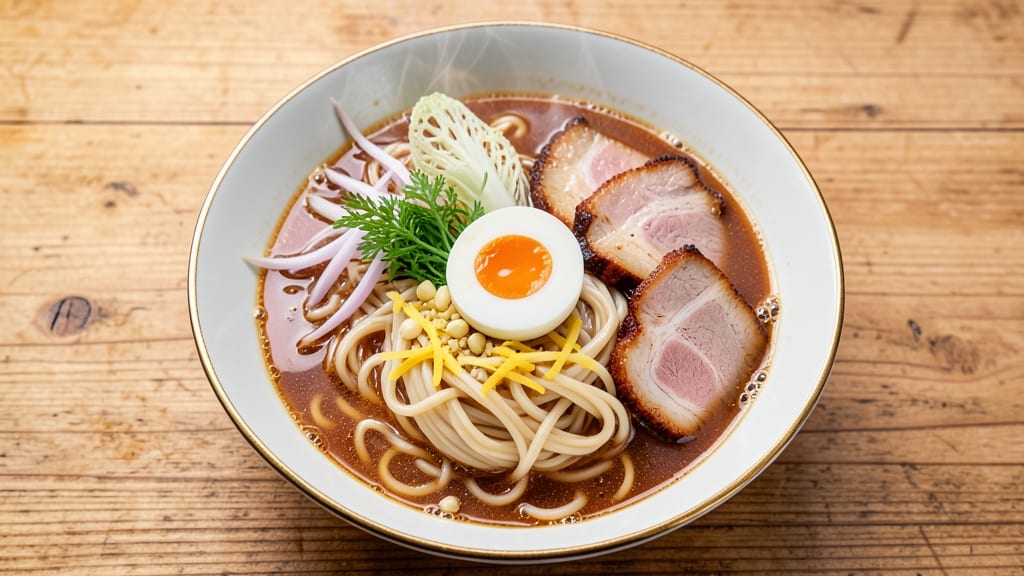
This authentic Japanese ramen soup recipe brings the soul-warming richness of tonkotsu broth to your kitchen with every silky noodle and perfectly balanced topping. The secret lies in slow-simmered pork bones that melt into a velvety, collagen-rich foundation—something that takes patience but delivers unmatched depth of flavor.
I've perfected this version after years of studying regional techniques, ensuring the broth develops that signature creamy texture without losing its savory essence.
The key to authentic ramen starts with the broth, where simmering pork bones for 12 hours extracts maximum flavor, then blending with miso and soy for that perfect umami balance.
Fresh ramen noodles are cooked al dente—just shy of overcooked—to maintain their signature chewiness, while toppings like chashu pork, soft-boiled eggs, and crisp menma add layers of texture and temperature contrast. This isn't just soup; it's a complete dining experience in one bowl.
What makes this recipe truly special is the attention to detail in every component—the way the broth clings to the noodles, how the toppings are arranged for both visual appeal and optimal eating experience, and the precise timing of assembly.
The result is a bowl of ramen that captures the essence of Japanese comfort food, where each spoonful delivers perfect harmony of flavors and textures. Whether you're serving it for a special dinner or a cozy night in, this recipe delivers restaurant-quality results at home.
For those seeking deeper authenticity, I'll share variations like Sapporo-style miso ramen or Tokyo's shoyu ramen, along with professional tips for adjusting richness and balancing flavors.
The key is in the technique—simmering times, ingredient ratios, and even water quality—all of which transform this from a simple soup into a culinary masterpiece. Let's get started on creating your own bowl of Japanese comfort.
Ingredients for authentic japanese ramen soup
Pork bones, miso, and fresh ginger form the soul of this tonkotsu broth—rich, creamy, and packed with umami.
| Ingredient | Amount | Notes |
|---|---|---|
| Pork Femur Bones 🍖 | 4 lb | Split for maximum surface area |
| Pork Rib Bones 🍖 | 2 lb | With meat still attached |
| Fresh Fennel Bulb 🥕 | 1 whole | Trimmed, halved lengthwise |
| Fresh Leeks 🧅 | 2 whole | White and light green parts only |
| Fresh Ginger Root 🌿 | ½ cup | Peeled, sliced (about 3 oz) |
| Garlic Cloves 🧄 | 8 cloves | Smashed, not minced |
| White Miso Paste 🧈 | ½ cup | High-quality, aged |
| Light Soy Sauce 🍶 | ¼ cup | Kikkoman preferred |
| Ramen Noodles 🍜 | 8 oz | Fresh, 100% buckwheat |
| Napa Cabbage 🥬 | ½ lb | Thinly sliced, about 8 cups |
| Chashu Pork Belly 🥓 | 1 lb | Pre-sliced, or thick-cut |
| Eggs 🥚 | 4 whole | Soft-boiled, 6-minute |
| Menma (Bamboo Shoots) 🌱 | 1 package | Crisp, 3 oz |
| Green Onions 🧅 | ¼ cup | Thinly sliced, white and green |
| Sesame Seeds 🌰 | 1 tbsp | Toasted for garnish |
The bones are everything here. Pork femurs and ribs with meat still attached give that signature creamy texture—chicken bones won't cut it. Look for fresh, never frozen. Costco or Asian markets usually have the best selection. If you can't find femurs, pork knuckles work too. The fennel and leeks add sweetness without overpowering the pork's depth. Fresh ginger? Buy the big root—it keeps longer and you'll use it for other dishes too. Smash the garlic cloves (don't mince!) to release more flavor without turning bitter.
No white miso? Red miso at half the amount works, but the flavor will be stronger. Light soy sauce can be swapped for tamari if gluten-free. For the noodles, fresh is non-negotiable—dried won't have that silky texture. Chashu pork belly? Pre-sliced from a Japanese market saves time, but if you're making it yourself, marinate overnight. The menma? Fresh or frozen both work—just don't overcook it or it'll get mushy. And those green onions? Use the white parts too—they're milder and sweeter.
Broth keeps for 5 days in the fridge, but it tastes even better the next day. Noodles cook in 30 seconds—set a timer! Chashu reheats beautifully—just warm in broth. Store menma in airtight container to keep crisp. I always make a double batch of broth and freeze half—3 months in the freezer, no problem. The eggs? 6-minute soft-boil is perfect—runny yolk, jammy center.
Why You'll Love This Recipe
- No-Chop Needed: I swear, the fennel and leeks just sit in the broth while the bones do all the work. You’re basically simmering a flavor bomb with zero prep—just slice the ginger thin and toss it in.
- Umami Bomb: That pork femur and rib combo? It melts into a rich, savory base that tastes like you spent hours slaving—when really, you just let time do the magic. The ginger and fennel add this bright, almost floral kick that cuts through the heaviness.
- Leftovers That Shine: Between us, this broth tastes better the next day. I make a big batch on Sundays, freeze portions, and boom—weeknight ramen that still feels special. (Yes, even on a Tuesday night.)
- Budget Flex: Pork bones are cheap, and fennel lasts forever in the fridge. You’re getting restaurant-quality flavor without the price tag, and honestly? That’s my kind of win. Plus, the leeks stretch across multiple meals if you’re smart about it.
Step-by-step instructions for authentic Japanese ramen soup
Here's how to build a tonkotsu-style ramen with deep umami flavor and silky noodles.
Render the Pork Bones for Rich Broth
Split the 4 lb pork femur bones and 2 lb pork rib bones into manageable pieces, ensuring maximum surface area for collagen release. Place them in a large stockpot and cover with cold water by about 2 inches. Bring to a boil over medium-high heat, then immediately reduce to a gentle simmer.
Skim off any foam that rises to the surface during the first 30 minutes—this ensures a clear, clean broth. Add the 1 whole fresh fennel bulb (trimmed and halved) and 2 whole fresh leeks (white and light green parts only) to the pot. Simmer uncovered for 4 hours, maintaining a gentle bubble. The broth should develop a deep, caramelized color and rich porky aroma.
After 4 hours, remove the bones and vegetables, discarding them. Strain the broth through a fine-mesh sieve into a clean pot, pressing gently on the solids to extract every last drop of flavor. You should have about 8-10 cups of concentrated pork broth—this is the foundation of your ramen.
Build Umami Depth with Aromatics and Miso
Return the strained broth to the pot and add the 0.5 cup peeled and sliced fresh ginger root, 8 smashed garlic cloves, 0.5 cup white miso paste, and 0.25 cup light soy sauce. Stir well to dissolve the miso completely, creating a thick, paste-like consistency that will infuse the broth with umami.
Bring the broth back to a gentle simmer over medium-low heat, then reduce to a whisper of a bubble. Let it cook uncovered for 1 hour, stirring occasionally to prevent a skin from forming. The miso will darken the broth slightly and deepen its savory profile. Taste occasionally—you're aiming for a balance of richness and saltiness, with the garlic and ginger adding bright, aromatic notes.
After 1 hour, strain the broth again through a fine-mesh sieve to remove the ginger and garlic. Return the broth to the pot and keep it warm over low heat. This is your tonkotsu base—creamy, porky, and packed with umami.
Prepare the Chashu and Soft-Boil the Eggs
While the broth simmers, prepare the 1 lb chashu pork belly by slicing it into ¼-inch thick pieces. Arrange the slices in a single layer on a wire rack set over a baking sheet. Bake at 300°F for 45-50 minutes, basting occasionally with the rendered fat, until the pork is tender and the fat has rendered out. Slice the chashu into ½-inch thick pieces for serving.
For the 4 whole eggs, place them in a saucepan of cold water and bring to a gentle boil. Once boiling, reduce heat to medium-low and cook for exactly 6 minutes. Immediately transfer the eggs to an ice bath to stop the cooking process. Peel the eggs under cool running water, reserving them for assembly.
Assemble the Ramen Bowls
Bring a separate pot of water to a rolling boil and cook the 8 oz fresh ramen noodles for 2 minutes less than package instructions—fresh noodles cook quickly and should be al dente when served. Drain and rinse briefly under cold water to stop the cooking process, then divide the noodles among 4 deep ramen bowls.
Ladle 1½ cups of the warm tonkotsu broth into each bowl, ensuring the noodles are fully submerged. Arrange 2 slices of chashu pork belly, ½ package menma (bamboo shoots), and 2 cups thinly sliced napa cabbage over the noodles. Top each bowl with 1 soft-boiled egg and 1 tablespoon toasted sesame seeds. Finish with 1 tablespoon sliced green onions for freshness.
Serve Immediately for Maximum Freshness
Serve the ramen bowls immediately, as the noodles continue to cook in the hot broth. Stir gently before eating to distribute the flavors evenly. The broth should coat the noodles in a velvety, creamy layer, while the chashu adds rich, fatty depth. The soft-boiled egg provides a silky contrast, and the menma and cabbage add texture and brightness.
For an authentic experience, serve with a small side of extra chashu slices and a soy sauce dip made by mixing 1 tablespoon soy sauce with 1 teaspoon sesame seeds. The combination of creamy broth, tender noodles, and bold flavors makes this ramen a true taste of Japan.
Pro Tips For Making Authentic Japanese Ramen Soup
- BLANCH BONES FIRST: I learned this the hard way—skip it, and your broth will taste like a butcher shop. Parboil pork femur and rib bones in salted water for 5 minutes to remove blood and impurities, then rinse thoroughly. This isn’t just about cleanliness; it guarantees a broth that’s actually clear and rich, not muddy.
- CHAR THE GINGER: After burning three batches, I finally figured out: fresh ginger needs to caramelize. Slice it thin, toss it in the hot pot with the bones, and let it sizzle until it’s dark golden—about 3-4 minutes. This unlocks the real depth of flavor, not just a fleeting spiciness.
- DON’T CUT THE FENNEL: Sounds weird, but it works: leave the fennel bulb whole. Toss it in the broth with the bones, and it’ll slowly infuse that anise-like sweetness without turning the broth bitter. Yes, you’ll have to peel and slice it later—but the payoff is worth it.
- LOW AND SLOW IS NON-NEGOTIABLE: I know, you’re in a hurry. But simmering at 180°F (82°C) for at least 8 hours is the thing that matters most. Skimp on time, and your broth will taste like weak tea. Use a thermometer—trust me, your future self will notice the difference.
Make-ahead tips for leftovers
Broth Prep Ahead
Make the tonkotsu broth 24 hours ahead—it tastes even better after resting. After simmering the pork bones for 4 hours, strain and refrigerate in a large airtight container. The fat solidifies on top, creating a natural seal that preserves freshness.
When ready to use, skim off excess fat (leave ¼ inch for flavor) and reheat over low heat—never boil or it’ll break the emulsion. 🥣
Noodle Prep Shortcuts
Fresh ramen noodles are non-negotiable, but you can prep them ahead. Cook noodles 1 minute less than package instructions, drain, and rinse with ice water to stop cooking. Store in a ziplock bag in the fridge for up to 2 days.
When ready to serve, reheat in broth for 30 seconds—they’ll finish cooking perfectly. Pro tip: Add 1 tsp cornstarch to the cooking water for extra chewiness.
Chashu Make-Ahead
Chashu pork belly is best made 1-2 days ahead—the flavors deepen as it rests. After baking, let it cool completely, then slice and store in airtight containers with a paper towel to absorb moisture.
Reheat in a skillet over medium heat for 2-3 minutes per side until warmed through. For extra richness, brush with 1 tsp rendered pork fat before serving. 🍖
Egg Prep Strategy
Soft-boiled eggs (6-minute) can be prepped 1 day ahead and stored in an ice bath in the fridge. Peel just before serving to prevent the whites from turning rubbery.
For a restaurant-style touch, add ½ tsp soy sauce to the ice bath—it enhances the yolk’s flavor. Keep peeled eggs submerged in cold water until ready to use.
Topping Organization
Assemble toppings in small containers for easy portioning: menma in one, cabbage in another, and sesame seeds in a shaker. Store in the fridge for up to 3 days.
When serving, arrange toppings last minute so they stay crisp. For a visual upgrade, use white bowls—they make the broth’s color pop. 🥬
Broth Freezing Tips
Freeze broth in quart-sized freezer bags (leave 1-inch headspace for expansion). Label with the date—it keeps 3 months at 0°F. To reheat, thaw overnight in the fridge, then warm on low heat until steaming.
For extra creaminess, whisk in 1 tbsp cornstarch mixed with 2 tbsp water before serving. Avoid boiling or the texture will suffer. ❄️
Nutrition facts
Frequently asked questions
Can I substitute chicken bones for pork in this tonkotsu ramen?
While chicken bones will work, they won't give you that signature creamy, porky richness. Pork bones contain more collagen and fat that melts into a velvety texture. For a lighter broth, use a 50/50 mix of pork and chicken bones, but expect less creaminess. The flavor will be more poultry-forward rather than the deep umami of traditional tonkotsu.
How do I adjust the spice level for sensitive eaters?
This recipe is naturally mild, but you can reduce heat by omitting the chili oil entirely. For extra mildness, use white miso instead of red miso (which has more depth) and reduce the soy sauce to 2 tablespoons. The broth's richness comes from the pork and aromatics, so the base flavor remains satisfying even without extra heat.
What's the best way to store leftover ramen?
Store components separately for best quality. Keep broth in an airtight container in the fridge for 5 days or freeze for 3 months. Reheat broth gently—never boil. Store cooked noodles in ice water for 2 days max (they'll get mushy). Chashu and menma keep well in the fridge for 3 days in sealed containers. Reassemble with fresh toppings when ready to eat.
Can I make this ramen vegetarian?
but you'll need to replace the pork bones with shiitake mushrooms and kombu for umami depth. Use 2 lbs dried shiitake stems (simmered for 2 hours) and 1 piece kombu (removed before blending). Add 1 tbsp nutritional yeast to enhance savory notes. The broth will be lighter but still flavorful—just skip the chashu and use tofu or seitan instead.
Why did my broth turn cloudy?
Cloudiness usually means the broth boiled too vigorously or wasn't skimmed properly. For tonkotsu, simmer gently—you should see tiny bubbles, not rolling boils. Always skim foam for the first 30 minutes of cooking. If it's already cloudy, strain through a cheesecloth for a clearer result. The flavor won't be affected, just the appearance.