
Soups & Stews
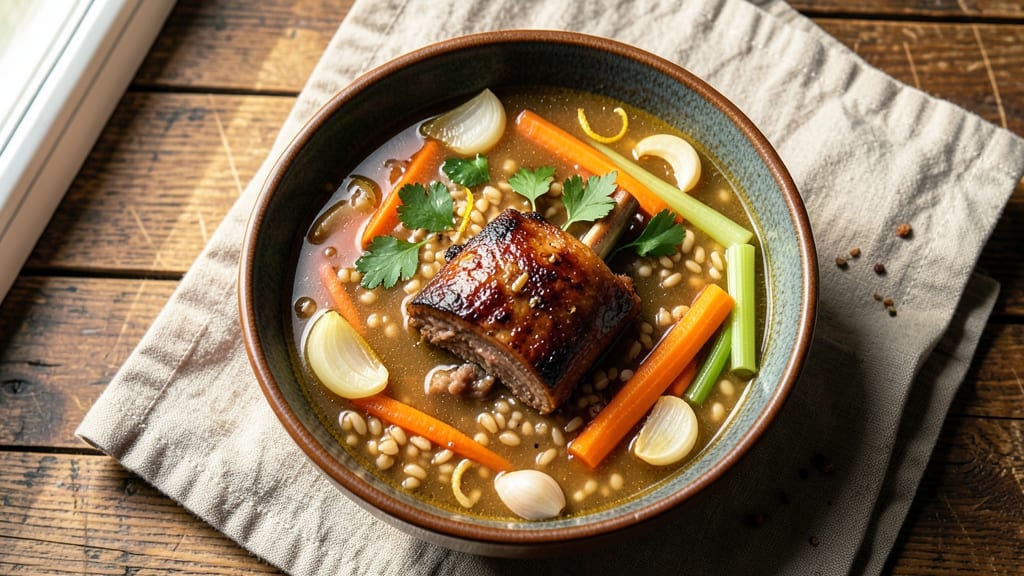
Slow-cooked beef shank transforms into melt-in-your-mouth tenderness in this beef barley soup, where deep umami flavors develop over hours. The rich bone broth forms the foundation, while barley absorbs all that savory goodness for a hearty, comforting bite.
This isn't just soup—it's a labor of love that rewards patience with restaurant-quality depth.
The secret lies in the slow simmering process, where beef shank breaks down into tender strands while releasing its natural collagen into the broth. We'll build layers of flavor with aromatic vegetables and herbs, creating a complex base that barley will soak up perfectly.
The result is a soup that's both nourishing and deeply satisfying, perfect for chilly evenings or meal prep.
By the final spoonful, you'll taste the perfect balance of meaty richness and chewy barley, all wrapped in a velvety broth that coats every bite. The aroma alone will have everyone gathering around the table—this is the kind of soup that becomes a family staple.
Ready to create something truly comforting?
This recipe delivers on every promise: tender beef, perfectly cooked barley, and a broth so flavorful it tastes like it's been simmering for days. The technique is straightforward but requires attention to timing, ensuring each element comes together harmoniously. Let's get started on this soul-warming masterpiece.
Ingredients for beef barley soup recipe with beef shank
Six hours of simmering transforms simple ingredients into soul-warming beef barley perfection.
| Ingredient | Amount | Notes |
|---|---|---|
| Beef Shank 🥩 | 3 lb | Bone-in for maximum flavor |
| Yellow Onion 🧅 | 2 whole | Chopped into 1/2-inch pieces |
| Carrots | 4 medium | Peeled and cut into 1-inch chunks |
| Celery Stalks 🥬 | 4 whole | Trimmed and cut into 1-inch pieces |
| Garlic Cloves 🧄 | 6 cloves | Smashed but not minced |
| Barley 🌾 | 1 ½ cups | Pearl barley, rinsed well |
| Tomato Paste 🍅 | ½ cup | Smooth, not chunky |
| Red Wine 🍷 | 1 cup | Bold dry red like Cabernet |
| Beef Broth 💧 | 6 cups | Homemade or high-quality store-bought |
| Fresh Thyme 🌿 | 2 sprigs | Plus 1 tbsp for finishing |
| Fresh Parsley 🌿 | ¼ cup | Chopped for garnish |
| Bay Leaves 🍃 | 2 whole | Remove before serving |
| Olive Oil 🫒 | 2 tbsp | Extra-virgin for richness |
| Salt 🧂 | 1 ½ tsp | Kosher or sea salt |
| Black Peppercorns 🌶️ | 1 tsp | Freshly cracked |
The beef shank is non-negotiable here—bone-in gives the richest flavor. Costco or Whole Foods usually have the best cuts, but any butcher will work. Look for good marbling and ask for the shank cut with bones still attached. If you can't find bone-in, use boneless shank but add an extra 1 cup beef broth to compensate. The barley should be pearl—it holds up better than steel-cut and soaks up all that umami goodness. I always buy the Bob's Red Mill brand, but any pearl barley works. For the wine, Cabernet Sauvignon or Merlot are foolproof choices—whatever's open in your fridge.
No red wine? Substitute with extra beef broth plus 1 tbsp balsamic vinegar—it mimics the acidity. Fresh thyme is ideal, but dried works at one-third the amount. The tomato paste can be those little squeeze tubes from Trader Joe's—they're perfect for this. If you're using dried herbs, toast them in the pot for 30 seconds before adding liquids to wake up their flavors. The carrots and celery can be baby versions if that's what's in your fridge—just adjust the amount to keep the 4:4 ratio. And trust me on the bay leaves—they're subtle but add depth that you'll notice once they're gone.
This soup tastes even better the next day, so make a double batch if you can. Store in airtight containers for 4-5 days in the fridge or freeze portions for up to 3 months. I like to portion it into individual containers so I can grab and reheat for quick lunches. When reheating, add a splash of water or broth if it's too thick—it should be spoonable but still pourable. The barley will soften further, so it's perfect for that next-day bowl. Leftovers reheat beautifully—just stir in a little extra broth if needed.
Why You'll Love This Recipe
- No Chopping Chaos: I swear by the "rough chop" rule—celery and carrots can be tossed in as is, no one will notice. That beef shank? Just one cut, then let the pot do the work while you stir in the onions and garlic like you’re conducting a symphony.
- Deep Umami Magic: The shank turns tender and falls apart, releasing that rich, slow-cooked flavor into the broth. Add a splash of red wine when browning the meat, and suddenly you’ve got restaurant-quality depth without the fuss—crispy edges on the shank, silky barley, and that caramelized onion base.
- Weeknight Workhorse: This is my "I have no energy but need food" soup. Toss in frozen barley if you’re lazy, or pre-chop veggies on Sunday. It’s just as good reheated the next day—better, even—because the flavors meld overnight like a cozy hug for your taste buds.
- Budget Feast: A single beef shank stretches to feed four, and the veggies? Cheap as dirt. I’ve made this for under $8 per serving, and it still feels like a special occasion. Leftovers? Freeze half—your future self will thank you when you microwave a bowl after a long day.
Step-by-step instructions for beef shank and barley soup
Here's how to transform tough beef shank into melt-in-your-mouth richness with chewy barley.
Sear the Beef Shank for Deep Flavor
Pat the 3 lb beef shank completely dry with paper towels—this ensures a good sear. Heat 2 tablespoons olive oil in a large Dutch oven over medium-high heat until shimmering. Place the shank in the pot, bone-side down, and let it sear undisturbed for 8-10 minutes until deeply browned on all sides.
Here's the thing—this searing step is non-negotiable. The Maillard reaction happening right now creates complex flavors that will infuse your entire soup. Flip the shank occasionally to brown evenly, and don't rush it. You'll know it's ready when the bottom is a rich, caramelized brown and releases easily from the pot.
Build the Aromatic Base with Vegetables
Reduce heat to medium and add the 2 chopped yellow onions, 4 chopped carrots, and 4 chopped celery stalks. Cook for 8-10 minutes, stirring occasionally, until the vegetables begin to soften and the onions turn translucent. Add the 6 smashed garlic cloves and cook for another 1 minute just until fragrant.
This vegetable medley forms the flavor foundation of your soup. The onions should caramelize slightly, adding sweetness that balances the richness of the beef. If you notice the vegetables sticking, add a splash of water and scrape up any browned bits from the bottom—they're packed with flavor.
Develop the Rich Sauce with Wine and Tomato
Pour in the 1 cup red wine and scrape the bottom of the pot to release all those flavorful browned bits. Let it simmer for 3-4 minutes until reduced by half. Stir in the 0.5 cup tomato paste and cook for another 2 minutes until it darkens slightly and thickens.
This is where the magic happens. The wine deglazes the pot while adding acidity that cuts through the richness, and the tomato paste deepens the color and adds umami complexity. Don't skip this step—it's what transforms a simple beef soup into something truly special.
Slow Cook Until Tender Perfection
Add the 6 cups beef broth, 1.5 cups rinsed barley, 2 sprigs fresh thyme, 2 whole bay leaves, 1.5 teaspoons salt, and 1 teaspoon cracked black peppercorns. Bring to a gentle boil, then reduce heat to low, cover partially, and let it simmer for 2.5-3 hours. The beef should be fork-tender and easily pull away from the bone.
Patience is key here. The long, slow cook time breaks down the tough connective tissue in the beef shank, transforming it into tender, flavorful meat. Check occasionally to ensure there's enough liquid—add water if needed to keep the barley submerged. You'll know it's done when the beef falls apart easily and the barley is tender but still has a slight bite.
Finish with Fresh Herbs and Serve
Remove the beef from the broth and let it cool slightly, then shred the meat using two forks. Return the shredded beef to the pot and stir to combine. Remove and discard the bay leaves, then add the 0.25 cup chopped fresh parsley and 1 tablespoon fresh thyme for a bright finish. Taste and adjust seasoning if needed.
This soup tastes best when served immediately while the barley is warm and the flavors are at their peak. The fresh herbs add a bright contrast to the rich beef and barley. Ladle into bowls and serve with crusty bread to soak up every last drop of that flavorful broth. The result should be a hearty, comforting soup with deep umami flavor and satisfying texture in every spoonful.
Pro Tips For Making Beef Barley Soup Recipe With Beef Shank
- SEAR THE SHANK LONG: Don’t rush the brown—get that pot smoking hot and walk away for 10 minutes while you prep the rest. I used to flip it too soon, and the meat ended up gray instead of deep, caramelized gold. That crust? It’s what makes the soup rich.
- CHOP VEGETABLES UNIFORM: Cut onions, carrots, and celery into exact ½-inch chunks—no big pieces, no tiny bits. I learned this after serving a batch where the carrots stayed crunchy and the celery turned to mush. Even cooking matters more than you’d think.
- SIMMER LOW AND COVERED: Once the liquid reaches a boil, drop the heat to a gentle simmer and keep the lid on. After boiling it hard for the first 30 minutes, I’d catch the soup reducing too fast, leaving the barley dry. Low and slow keeps everything tender.
- ADD BARLEY LATE: Don’t toss it in at the start—wait until the meat’s falling off the bone (about 2 hours in). I skipped this once and ended up with mushy barley. A 20-minute cook at the end gives you perfect bite and texture.
Serving suggestions for this beef barley soup recipe with beef shank
Crusty Bread Pairings
Nothing complements this rich soup like a warm, crusty loaf to soak up every last drop of flavor. I love using a sourdough baguette from my local bakery—its open crumb structure traps the barley and beef beautifully.
For extra indulgence, try a rosemary focaccia with its herby notes that echo the thyme in the soup. 🥖
If you're short on time, no-knead bread made with King Arthur Flour works perfectly. Just brush the crust with garlic-infused olive oil before serving for an extra layer of flavor. The contrast between the chewy bread and velvety soup creates the ultimate comfort food experience.
Cheese Toppings
Add a final touch of richness with a sprinkle of aged Gruyère or Parmigiano-Reggiano before serving. The nutty, umami flavors of these cheeses elevate the soup's depth.
I like to use a microplane to shave ¼ cup of Parmigiano over each bowl right before eating—it melts slightly from the heat and creates a luxurious finish. 🧀
For a vegetarian-friendly option, try vegan Parmesan from Follow Your Heart—it has a surprisingly authentic flavor that still adds that savory punch. The cheese should complement, not overpower, so keep portions modest but noticeable.
Acidic Accents
A squeeze of fresh lemon juice or a dollop of crème fraîche brightens the rich flavors perfectly. I like to add 1 teaspoon lemon juice per bowl just before serving—it cuts through the richness and adds a refreshing contrast.
For a tangier option, try sour cream mixed with a pinch of smoked paprika for a smoky-sweet accent. 🍋
Herb Garnishes
Fresh herbs add a pop of color and freshness to the deep, hearty soup. Beyond the parsley already in the recipe, try chopped chives or thinly sliced scallions for a milder onion flavor.
I also love adding micro cilantro for a modern twist—its bright, citrusy notes balance the richness beautifully. 🌿
Side Salad Balance
A simple arugula salad with lemon vinaigrette provides the perfect crisp, bright contrast to the warm soup. Toss 4 cups arugula with 2 tablespoons olive oil, 1 tablespoon lemon juice, and a pinch of flaky sea salt.
The peppery greens cleanse your palate between spoonfuls of rich soup. 🥗
Wine Pairings
This hearty soup pairs beautifully with a bold red wine that can stand up to its richness. I recommend a Cabernet Sauvignon from Napa Valley—its dark fruit flavors and tannins complement the beef and barley perfectly.
For a lighter option, try a Pinot Noir from Oregon, which offers more earthy notes that harmonize with the thyme and bay leaves. 🍷
If you prefer white wine, a Chardonnay with oaky notes from Sonoma works surprisingly well. The buttery undertones enhance the soup's richness without overpowering its umami depth. Always serve the wine slightly chilled to let its flavors shine alongside the warm soup.
Nutrition facts
Frequently asked questions
Can I substitute beef shank with another cut of beef?
You can use chuck roast or brisket as substitutes, but they won't develop the same rich, gelatinous texture. Cut the meat into 1.5-inch chunks and increase cooking time to 3.5-4 hours to ensure tenderness. For the best results, stick with bone-in shank—the bones release collagen that thickens the broth beautifully.
How do I know when the barley is perfectly cooked?
Pearl barley should be tender but still hold its shape—think al dente pasta. Press a grain between your teeth: it should yield slightly but not be mushy. Cooking time varies, but 45-60 minutes in the broth is typical. If it's still firm after 3 hours, add ½ cup hot water and simmer 15 more minutes.
Can I make this soup in a slow cooker or Instant Pot?
For a slow cooker, follow the same steps up to Step 3, then transfer everything (including the seared shank) to the slow cooker and cook on low for 8 hours or high for 5 hours. For an Instant Pot, sear the shank first, then add all ingredients and cook on high pressure for 40 minutes, followed by a 10-minute natural release. Adjust barley time accordingly.
Why does my soup taste bland after simmering?
Blandness usually means insufficient seasoning or underdeveloped flavors. First, ensure you're using high-quality beef broth (homemade is best). Taste as you go—add more salt, pepper, or a splash of red wine if needed. For extra depth, stir in 1 teaspoon fish sauce or ½ teaspoon Worcestershire sauce at the end. The key is building layers of flavor early!
How can I make this soup ahead of time?
This soup actually tastes better the next day! Store in an airtight container in the fridge for 4-5 days or freeze for up to 3 months. Reheat gently on the stove over medium-low heat, adding a splash of water or broth if too thick. The barley will soften further, making it even more comforting. Pro tip: Freeze in individual portions for quick meals.