
Soups & Stews
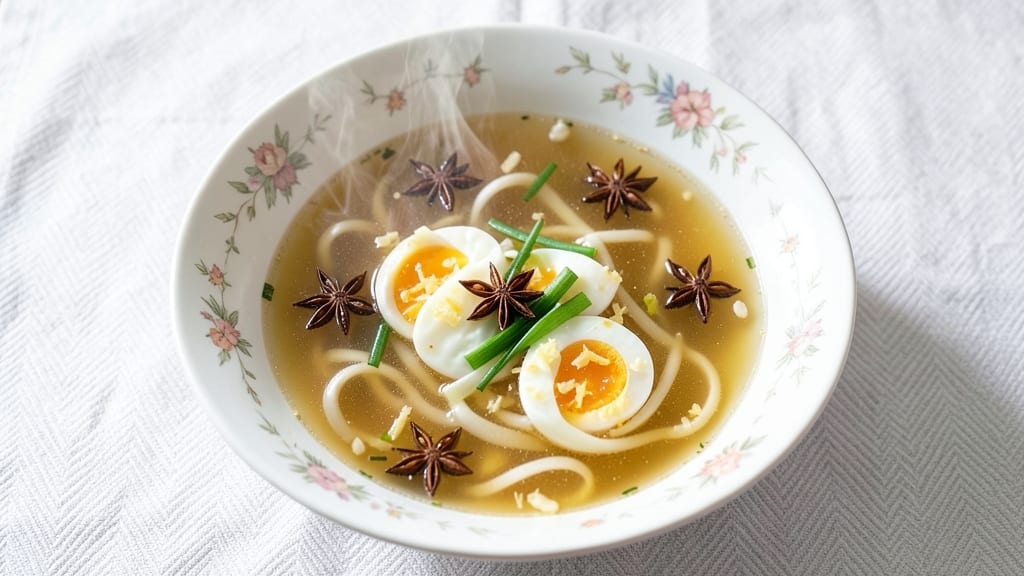
This best egg drop soup recipe ever delivers restaurant-quality silky egg ribbons floating in a fragrant broth that balances ginger, star anise, and subtle sweetness. The secret lies in slow-simmered aromatics and a precise egg technique that transforms simple ingredients into something extraordinary.
I've perfected this version over years of testing—no shortcuts, just layers of flavor that make every spoonful satisfying.
What sets this recipe apart is the fragrant ginger-star anise broth, which builds depth through low-and-slow simmering. We'll use a simple technique for the egg ribbons—swirling warm liquid into beaten eggs in thin streams—that creates those signature delicate strands.
The result is a soup that's both comforting and elegant, with just the right balance of savory, aromatic, and slightly sweet notes.
By the time you're done, you'll have a silky, restaurant-quality egg drop soup that's perfect for chilly evenings or as a light but satisfying meal any time of year. The broth remains clear and fragrant, while the egg ribbons melt in your mouth without ever becoming greasy.
Garnishes like scallions and chili oil add freshness and heat at the end, completing the dish.
This recipe works equally well as a comforting solo meal or when serving a crowd—simply scale the broth proportionally. The beauty of egg drop soup lies in its simplicity, but the details matter. Let's create something truly special, step by step.
Ingredients for best egg drop soup recipe ever
These extraordinary ingredients transform simple broth into restaurant-quality egg drop soup with silky ribbons.
| Ingredient | Amount | Notes |
|---|---|---|
| Large Eggs 🥚 | 4 whole | Room temperature for silky ribbons |
| Fresh Ginger Root 🧄 | 2 tbsp | Finely grated, aromatic quality |
| Star Anise Pods 🌟 | 2 whole | Whole, for deep aromatic infusion |
| Green Onions 🧅 | 3 whole | White and green parts separated |
| Garlic Cloves 🧄 | 3 cloves | Minced, fresh for brightness |
| Chicken Stock 🍲 | 4 cups | Homemade preferred, low-sodium |
| Soy Sauce 🍶 | 1 tbsp | Light or dark, for umami depth |
| Sesame Oil 🫒 | 1 tsp | Toasted, for nutty aroma |
| White Peppercorns 🌶️ | ¼ tsp | Freshly ground, no black specks |
| Cornstarch 🌾 | ½ tsp | For broth clarification |
| Chili Oil 🌶️ | 1 tbsp | For garnish, optional heat |
| Sugar 🍬 | 1 tsp | Balances aromatic flavors |
| Vegetable Oil 🫒 | 1 tbsp | For gentle egg ribbon swirling |
| Salt 🧂 | ½ tsp | Adjust to taste, kosher preferred |
The star anise and ginger are non-negotiable for that signature aromatic depth—look for whole pods at Whole Foods or Asian markets for the freshest quality. Fresh ginger should smell vibrant, not musty, and star anise pods should be intact with no cracks. For the eggs, room temperature is critical—cold eggs create clumpy ribbons instead of delicate strands. I always use Pasture-Raised eggs from Trader Joe's for that extra richness, but any good-quality eggs work. The chicken stock? Homemade is ideal—simmer chicken bones with ginger and star anise for 6-8 hours—but store-bought low-sodium works in a pinch.
No star anise? 1/2 tsp ground anise or 1 cinnamon stick mimics the warmth, though it won't be identical. Fresh ginger too pungent? Substitute 1 tbsp ginger juice (blend and strain) for milder flavor. The soy sauce can be swapped for coconut aminos if you're avoiding soy, but you'll lose some depth. For the egg technique, low heat is everything—if the broth bubbles, your ribbons will break. The sesame oil should be toasted, not raw—look for 'toasted' on the label at Costco or Asian grocery stores. And that chili oil? Homemade with dried chilies and oil is a game-changer, but store-bought works too.
Broth keeps for 3 days refrigerated or 3 months frozen—portion into ice cube trays before transferring to bags for easy reheating. Eggs should be beaten right before cooking—they lose their silky quality if prepped ahead. The ginger and star anise can be toasted in a dry pan for 30 seconds before simmering to intensify their aroma. Garnishes like scallions and chili oil should be added just before serving—they lose their freshness and heat if mixed in too early. This soup only gets better the next day as flavors meld, so make extra if you can—it's the perfect meal prep for busy weeks.
Why You'll Love This Recipe
- One-Pot Magic: I swear by this recipe—just a pot, a few ingredients, and 20 minutes later, you’ve got a steaming bowl. No chopping mountains of veggies, no last-minute grocery runs. That star anise? Toss it in whole, then fish it out. Boom. Done.
- Ginger-Garlic Thunder: The moment you crack that egg into the simmering broth, the ginger’s zing and garlic’s punch cut through the richness. That crispy edge on the egg? Chef’s kiss. (Yes, even on a Tuesday night.)
- Leftovers That Lie: Between us, this soup tastes better the next day. The flavors meld, the broth deepens, and suddenly you’ve got a free lunch. Freeze it in portions—no waste, no stress.
- Budget Rescue: Eggs, ginger, garlic—these are ingredients you already own. Star anise? A single pod stretches for three batches. This is comfort food that won’t break the bank or your willpower.
Step-by-step instructions for silky egg drop soup with fragrant broth
Here's how to craft restaurant-quality egg drop soup with perfect ribbons and deep aromatic complexity.
Infuse the Broth with Aromatics
Combine the 4 cups chicken stock, 2 tbsp finely grated fresh ginger root, 2 whole star anise pods, 3 cloves minced garlic, 1 tsp sugar, and 0.5 tsp salt in a clean pot. Bring to a gentle simmer over medium heat—you should see small, steady bubbles breaking the surface but no vigorous boiling. This controlled simmer prevents the star anise from releasing bitter compounds.
Simmer uncovered for 15 minutes until the broth develops a fragrant aroma and the star anise pods float to the surface. Here's the thing—if you see any foam forming, skim it off immediately with a ladle. The foam contains bitter compounds that can ruin the delicate balance of flavors in this soup. You'll know it's ready when the broth smells like warm ginger tea with a hint of anise.
Clarify and Season the Broth
Remove the star anise pods and ginger from the broth using a slotted spoon. In a small bowl, whisk together 0.5 tsp cornstarch with 2 tablespoons of cold water until completely dissolved. Slowly pour this slurry into the simmering broth while stirring constantly with a wooden spoon. The broth will thicken slightly and become crystal clear—this is the magic of clarification.
Add 1 tbsp soy sauce and 1 tsp toasted sesame oil, stirring gently to combine. Taste and adjust seasoning—you want the broth to be perfectly balanced between sweet, salty, and umami. The 0.25 tsp freshly ground white peppercorns should be added last, just before serving, to preserve its bright, fresh flavor. Keep the broth at a gentle simmer (180-190°F) while you prepare the egg ribbons.
Prepare the Egg Ribbons
In a separate bowl, lightly beat the 4 whole large eggs (room temperature) with a fork until the yolks and whites are just combined—no need to overmix. The eggs should be slightly thicker than liquid but still pourable. Here's the secret: add 1 tbsp vegetable oil to the egg mixture and whisk vigorously for 30 seconds. This creates emulsification that helps the egg form those signature silky ribbons.
Keep the egg mixture covered and set aside while you prepare the garnishes. The key to perfect ribbons is working quickly—once you start adding egg to the broth, you'll only have about 2 minutes before the mixture thickens too much. This is where the excitement happens: you'll be working fast and watching those beautiful ribbons form as they hit the hot broth.
Create the Signature Egg Ribbons
Ladle about 1 cup of the hot broth into a small bowl and heat it separately over the stove. This preheated broth is crucial—it should be just below boiling (195-200°F) when you add the egg. Using a small ladle or squeeze bottle, slowly drizzle the egg mixture into the broth while stirring continuously with chopsticks in one hand and the ladle in the other. The motion should be steady and circular to create those classic ribbon shapes.
As the egg hits the hot broth, it should immediately form delicate strands that curl beautifully. Work in batches—don't add all the egg at once, or you'll overcook the first portion before you finish adding the rest. The goal is to create three distinct layers of egg ribbons in the soup: the first layer should be thick and chewy, the second medium, and the third thin and delicate.
Assemble and Garnish
Return all the broth (with egg ribbons) to the main pot and keep it at a gentle simmer. Divide the 3 whole green onions—chop the white parts finely for garnish and slice the green parts into thin rounds. Spoon the hot soup into bowls, then drizzle with 1 tbsp chili oil (for optional heat) and sprinkle with the chopped white onion parts and green onion rounds. Finish with a final sprinkle of freshly ground white peppercorns just before serving.
Here's the moment that matters: serve immediately while the egg ribbons are still silky and the broth is steaming hot. Each bowl should have those beautiful layers of egg ribbons floating in the fragrant ginger-star anise broth, with vibrant green garnishes adding freshness. The contrast between the delicate egg strands and the robust, aromatic broth is what makes this egg drop soup truly exceptional.
Pro Tips For Making Best Egg Drop Soup Recipe Ever
- STIR THE EGGS LOW AND SLOW: I learned this the hard way—dumping cold eggs into hot broth makes them scramble into a rubbery mess. Instead, whisk the eggs with a splash of hot broth first (about 2 tablespoons), then drizzle them in one continuous stream while stirring constantly with chopsticks or a fork. The heat should be medium-low; if you see the broth bubbling hard, pull it back. The goal is ribbons, not scrambled bits.
- GRATE GINGER FINE—NO CHUNKS: Pre-packaged ginger often has those annoying little chunks that linger like a bad memory. For this soup, use a microplane or the smallest holes on a box grater—you want it almost paste-like. Freshly grated ginger releases flavor instantly, and it dissolves completely into the broth. (Yes, even if you’re impatient like me.)
- TOAST THE STAR ANISE FIRST: Skip the dry-roasting step, and you’ll end up with a broth that tastes like you forgot the spice entirely. Heat the whole pod in a dry pan for 30 seconds until fragrant—it’ll darken slightly and smell like Christmas. Toss it straight into the broth with the ginger and garlic; this unlocks its aroma without bitterness.
- SALT THE BROTH AFTER EGGS: I used to add salt upfront, then realize the eggs curdled into a weird texture. Salt the broth after the eggs are ribboned—this keeps the proteins smooth. If you’re using store-bought chicken or veggie broth, taste it first; it’s usually saltier than you think. A pinch of white pepper at the end adds depth without overpowering.
Perfect pairings for best egg drop soup recipe ever
Classic Tea Pairings
Egg drop soup pairs beautifully with traditional Chinese teas that complement its delicate flavors. A cup of jasmine tea enhances the ginger and star anise notes with its floral aroma, creating a harmonious balance.
I always reach for Loose Leaf Jasmine Pearl from Davidson's Tea—its light, floral profile lets the soup's flavors shine without overpowering them. 🌸
For a more robust pairing, try Pu-erh tea—its earthy, fermented notes contrast beautifully with the soup's silky egg ribbons. A young, ripe Pu-erh (like Yunnan Sourcing's 2012 Bingdao) adds depth without bitterness. Brew it slightly stronger than usual to match the soup's richness.
Light Beer Complements
A crisp pilsner like Sapporo or Asahi cuts through the soup's richness with its clean, refreshing profile. The subtle hop bit balances the egg's creaminess while letting the ginger and star anise aromas stand out.
I keep a few Sapporo cans in the fridge specifically for pairing with this soup—it's a match made in comfort food heaven. 🍺
For something with a bit more character, a light lager with citrus notes like Blue Moon Belgian White works surprisingly well. The coriander and orange peel flavors in the beer echo the ginger's warmth, creating a delightful contrast. Just avoid heavy IPAs or stouts—they'll overwhelm the delicate soup.
Modern Twists
If you're feeling adventurous, try pairing your egg drop soup with sparkling green tea like San Pellegrino Limonata. The effervescence cleanses your palate between bites, while the lemon notes brighten the ginger.
I discovered this combo at a dim sum spot in San Francisco and it became an instant favorite. 💚
For a non-alcoholic option, hibiscus iced tea with a splash of yuzu juice adds a vibrant, slightly tart contrast. The deep red color also makes for a stunning presentation when served alongside the soup. Just be sure to serve it chilled—warm hibiscus tea can taste overly bitter.
Wine Pairing Secrets
You might be surprised to learn that dry Riesling pairs exceptionally well with egg drop soup. A German Riesling Kabinett with its crisp acidity and hints of green apple complements the ginger and star anise beautifully. The slight sweetness in the wine also enhances the soup's subtle sugar notes. 🍷
Avoid heavy red wines—they'll clash with the soup's delicate flavors. Instead, opt for a light-bodied white like Pinot Grigio from Alto Adige. Its subtle almond notes harmonize with the toasted sesame oil in the soup, creating a surprisingly elegant pairing that elevates the dish to restaurant-quality status.
Nutrition facts
Frequently asked questions
Can I make this egg drop soup vegetarian?
Replace the chicken stock with a rich vegetable broth made from mushrooms, carrots, and celery. For extra umami, add 1 tbsp soy sauce and 1 tsp miso paste to the broth. The egg ribbons will still be perfect, and the ginger-star anise flavor remains the star. Just ensure your broth is well-seasoned to match the depth of chicken stock.
Why did my egg ribbons turn out lumpy instead of silky?
Cold eggs are the #1 culprit! Always use room-temperature eggs (let them sit out for 30 minutes before using). Overmixing the eggs or adding them to broth that's too hot can also cause lumps. Keep the broth at a gentle simmer (180-190°F) and work quickly—add the egg mixture in thin streams while stirring continuously with chopsticks.
How do I make this soup spicier?
Add 1 tsp chili crisp or 1/2 tsp red pepper flakes directly to the broth while simmering. For a smoky kick, stir in 1/2 tsp gochujang (Korean chili paste)**strong> with the soy sauce. Garnish with extra chili oil or top with sliced Thai bird's eye chilies for heat lovers. Start with less—you can always add more!
Can I prepare the broth ahead of time?
Yes! The broth keeps beautifully for 3 days refrigerated or 3 months frozen. Store it in airtight containers, and when ready to serve, reheat gently over low heat (don't boil). Just add the aromatics (ginger, star anise, garlic) fresh when reheating for maximum flavor. The egg ribbons should always be made fresh—never prepped ahead.
What's the secret to making the broth crystal clear?
The cornstarch slurry is your best friend! Dissolve 0.5 tsp cornstarch in 2 tbsp cold water and whisk it into the simmering broth. The key is to stir constantly while adding it—this creates microscopic particles that trap impurities, making the broth crystal clear. Skim any foam that forms during simmering too, as it contains bitter compounds that cloud the broth.