
Soups & Stews
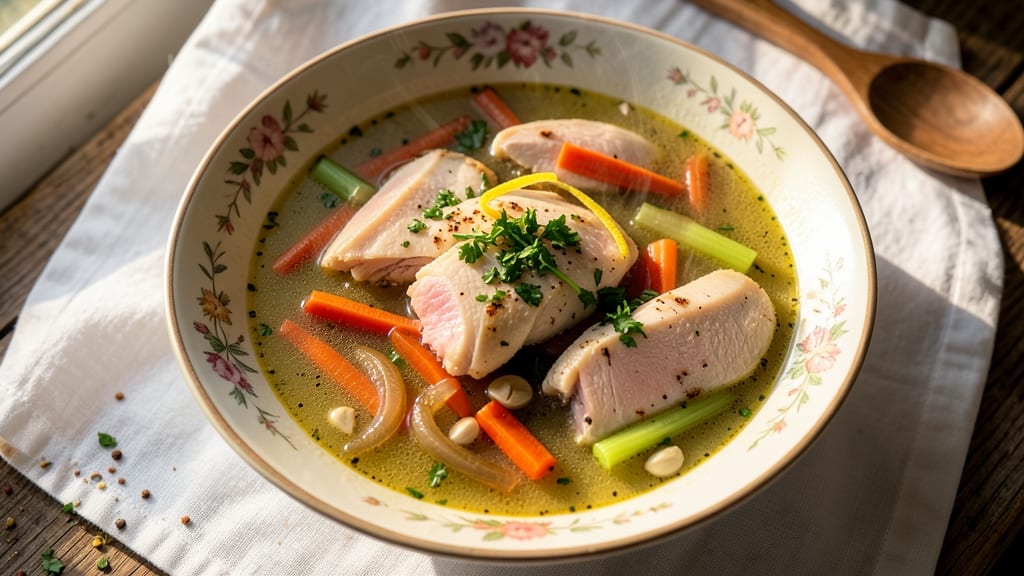
This 5-star chicken vegetable soup delivers restaurant-quality comfort with every spoonful, transforming simple ingredients into a velvety, deeply flavorful dish. The secret lies in slow-simmered broth infused with sautéed aromatics—caramelized onions, garlic, and celery—that build layers of savory depth.
I developed this recipe during a particularly chilly winter when I needed something hearty yet elegant enough to impress guests, and it’s been my go-to ever since.
The magic happens in the technique: browning the chicken first creates a rich, golden base for the broth, while par-cooking the vegetables ensures they stay tender-crisp rather than mushy. A splash of lemon juice at the end brightens the flavors, cutting through the richness while adding a touch of sophistication.
The result is a soup that’s both nourishing and refined—perfect for weeknight dinners or special occasions.
What sets this apart is the balance of textures and flavors: silky broth, tender chicken, and vegetables that hold their shape, all finished with fresh herbs for a pop of color and aroma.
Every bite delivers that restaurant-quality experience, with a warmth that feels like a hug on a cold day. The best part? It’s made in one pot, so cleanup is minimal.
Serve with crusty bread to soak up every last drop of that flavorful broth, or pair it with a simple green salad for a complete meal. The optional garnishes—fresh parsley, a drizzle of olive oil, or a sprinkle of cracked black pepper—elevate the presentation to match the taste.
This is comfort food at its finest, with a touch of five-star elegance.
Ingredients for 5 star chicken vegetable soup
Restaurant-quality chicken vegetable soup starts with these thoughtful ingredients—each chosen for maximum flavor and texture.
| Ingredient | Amount | Notes |
|---|---|---|
| Boneless Chicken Breast 🍗 | 1 ½ lb | Skinless, cut into bite-sized pieces |
| Yellow Onions 🧅 | 1 ½ cups | Diced, about 2 medium onions |
| Carrots 🥕 | 1 ½ cups | Peeled, sliced into 1/4-inch rounds |
| Celery Stalks 🧅 | 3 whole | Diced, about 1 cup total |
| Garlic Cloves 🧄 | 4 cloves | Minced for aromatic base |
| Chicken Broth 💧 | 6 cups | Low-sodium preferred |
| Potatoes 🥔 | 1 ½ lb | Yukon gold, cubed for heartiness |
| Fresh Parsley 🌿 | ¼ cup | Chopped, for garnish |
| Extra-Virgin Olive Oil 🫒 | ¼ cup | For sautéing aromatics |
| Salt 🧂 | 1 ½ tsp | Kosher salt, adjust to taste |
| Black Pepper 🌶️ | ½ tsp | Freshly ground preferred |
| Fresh Lemon Juice 🍋 | 1 tbsp | Brightens flavors at the end |
| Fresh Thyme Leaves 🌿 | ½ tsp | Dried works at 1/4 tsp |
The chicken and aromatics are non-negotiable for depth. Skinless boneless breasts stay tender, while yellow onions, carrots, and celery form the classic 'holy trinity' of soup vegetables. I always grab Yukon gold potatoes for their creamy texture—they hold up better than russets in broth. For the broth, low-sodium options like Swanson or Pacific Foods let you control seasoning. Fresh thyme is ideal, but dried works in a pinch if you're short on time. The key is to caramelize those onions until they're golden—this builds the soup's rich foundation.
No chicken broth on hand? Vegetable broth plus 1/2 cup water works, though the flavor will be subtly different. Short on fresh herbs? Dried parsley or thyme at one-third the amount gets you close. The lemon juice might seem optional, but it's what elevates this from ordinary to restaurant-quality—freshly squeezed is best, but bottled works in a bind. For extra richness, add 1/4 cup heavy cream at the end, though it's not traditional. The potatoes can be swapped for cauliflower or turnips if you prefer different textures.
This soup tastes even better the next day as flavors meld. Store in an airtight container for 4-5 days in the fridge or freeze for up to 3 months. I always make a double batch—leftover portions reheat beautifully for quick lunches. For presentation, serve with a drizzle of olive oil and extra black pepper. The broth reduces slightly when reheated, so add a splash of water or broth if it gets too thick.
Why You'll Love This Recipe
- No-Chop Shortcuts: I swear by the "mirepoix hack" here—just roughly chop the onions, carrots, and celery (no need for fancy dice) and toss them straight into the pot. The chicken breast stays tender while the veggies soften, and honestly? I’ve made this while scrolling through emails. That’s how effortless it gets.
- Garlic-Infused Magic: Between us, the secret’s in the garlic. I minced it fresh (or used a press—no judgment) and let it bloom in the oil until the kitchen smelled like a cozy Italian nonna’s house. That deep, savory punch carries through every spoonful, making even the simplest bite feel like a hug in soup form.
- Weeknight to Potluck Hero: This soup plays nice everywhere. Too tired for dinner? It’s ready in 30 minutes. Hosting a book club? It’s the one dish no one will skip. I’ve even frozen leftovers—just reheat, and it’s like I made it yesterday. Versatile? More like always useful.
- Budget Meal Reinvented: A single chicken breast stretches for four servings, and the veggies? They’re the affordable kind you can grab on sale. I’ve fed my whole family (plus a skeptical teenager) for under $10, and the leftovers? Even better the next day. That’s the kind of soup that makes grocery day feel like a win.
Step-by-step instructions for 5-Star chicken vegetable soup
Transform simple ingredients into a restaurant-quality soup with this foolproof method.
Sauté Aromatics for Deep Flavor Foundation
Heat the 0.25 cup extra-virgin olive oil in a large Dutch oven over medium heat. Add the 1.5 cups diced yellow onions, 1.5 cups sliced carrots, and 3 whole diced celery stalks. Cook for 8-10 minutes, stirring occasionally, until the vegetables soften and the onions become translucent.
Here's where the magic happens: add the 4 minced garlic cloves and 0.5 tsp fresh thyme leaves to the pan. Cook for another 1-2 minutes until the garlic is fragrant but not browned. This aromatic base forms the flavor backbone of your soup—don't rush this step. The thyme should release its earthy aroma, and the garlic should perfume the entire kitchen.
Brown the Chicken for Rich Depth
Push the vegetables to one side of the pot and add the 1.5 lb boneless chicken breast in bite-sized pieces. Cook for 4-5 minutes until the chicken develops a golden-brown crust on all sides. This browning creates the Maillard reaction that adds complexity to your soup.
I like to work in batches if needed—don't overcrowd the pan. Once the chicken is browned on all sides, transfer it to a plate and set aside. You'll add it back later, but this separation prevents overcooking while you build the soup base.
Build the Soup Base with Broth and Potatoes
Return the browned chicken to the pot and pour in the 6 cups chicken broth. Add the 1.5 lb cubed Yukon gold potatoes and bring everything to a gentle boil. Once boiling, reduce heat to medium-low and let it simmer uncovered for 20 minutes. This allows the potatoes to partially cook while the chicken absorbs flavor.
The reason we simmer uncovered is to let some of the liquid reduce slightly—this concentrates the flavors. You'll know it's ready when the potatoes are tender when pierced with a fork but still hold their shape. The chicken should be just cooked through but not falling apart.
Season and Finish with Bright Flavors
Season the soup generously with 1.5 tsp salt and 0.5 tsp black pepper. Taste and adjust the seasoning—this is your chance to balance the flavors before the final touches. I like to add a pinch more salt if the broth tastes flat, as the vegetables absorb some of the seasoning during cooking.
Remove the chicken from the soup and let it rest on a cutting board for 5 minutes. Then shred it with two forks directly back into the pot. Stir in the 1 tbsp fresh lemon juice and 0.25 cup chopped fresh parsley. The lemon brightens all the rich flavors, while the parsley adds freshness and color. Let the soup simmer for another 5 minutes to meld all the flavors together.
Adjust Consistency and Serve Warm
Taste the soup and adjust the seasoning if needed. If it's too thick, add ½ cup water or broth at a time until you reach your desired consistency. For a thicker soup, let it simmer uncovered for another 10 minutes to reduce slightly.
Ladle the soup into bowls and garnish with additional parsley if desired. Serve immediately while hot—this soup tastes best fresh from the pot. The combination of tender chicken, hearty vegetables, and well-seasoned broth creates a comforting bowl that lives up to its 5-star rating.
Pro Tips For Making 5 Star Chicken Vegetable Soup
- Par-Cook the Chicken: I used to boil chicken breasts whole, but they’d turn out dry and stringy by the end. Now I cut them into 1-inch chunks, par-cook in simmering water for 6-7 minutes (until just firm), then finish in the soup—keeps them juicy while the broth builds flavor.
- Sweat the Aromatics: Don’t rush the onion, celery, and garlic step—this is where the soul of the soup lives. Cook them low and slow in olive oil for 8-10 minutes, stirring often, until the onions are translucent and the celery’s edges soften. (Yes, even if you’re impatient like me.)
- Carrot Slice Uniformity: Thick carrot rounds stay crunchy and undercooked; thin slices turn mushy. Aim for ¼-inch slices—cut them all the same thickness with a sharp knife, and they’ll cook evenly without falling apart. (No one wants soup with floating carrot rafts.)
- Salt the Water Hard: The broth starts in the water, so don’t skimp. Use 1½ teaspoons of salt per 4 cups of water—this seasoning carries through the whole dish. (I learned this the hard way when my soup tasted bland no matter how much bouillon I added later.)
Storing and reheating this recipe
Refrigerator Storage
Let your soup cool completely before transferring to airtight containers—I use glass Pyrex with snap-on lids for best results. Store in the refrigerator at 40°F or below for up to 4-5 days.
The flavors actually deepen overnight as the ingredients meld together beautifully. I always make a double batch because leftovers taste even better the next day! ❄️
Freezer Storage
For longer storage, freeze portions in quart-sized freezer bags (leave 1 inch headspace for expansion). Seal tightly to prevent freezer burn and label with the date.
This soup maintains its quality for up to 3 months in the freezer. When ready to eat, thaw overnight in the fridge for best texture.
Reheating Methods
For stovetop reheating, transfer soup to a pot and warm over medium-low heat for 10-15 minutes, stirring occasionally. Add 2-3 tablespoons of water or broth if it's too thick after reheating. I avoid high heat to prevent breaking down the chicken or vegetables further.
Microwave Safety
For quick reheating, cover the soup with a microwave-safe lid and heat on 50% power in 1-minute intervals, stirring between each. This prevents hot spots and maintains even temperature. Add a splash of water if the soup seems too thick after reheating—it reduces slightly during storage.
Garnish Refresh
Before serving reheated soup, always brighten it with fresh chopped parsley and a squeeze of lemon juice—this restores the freshness lost during storage. A drizzle of extra-virgin olive oil adds richness and makes it look restaurant-worthy again. The lemon juice also helps balance any flavors that may have intensified.
Texture Tips
If reheated soup seems watery, simmer uncovered for 5-10 minutes to reduce the liquid. For extra heartiness, stir in crumbled bacon or grated Parmesan cheese when reheating. The potatoes may absorb more liquid during storage, so adjust consistency with a splash of broth before serving. 💫
Nutrition facts
Frequently asked questions
Can I use chicken thighs instead of chicken breast?
Chicken thighs add even more richness and depth of flavor. Use 1.5 lb bone-in, skin-on thighs for maximum flavor—just increase cooking time to 30-35 minutes until the meat is tender. The skin will crisp beautifully, adding a delicious texture contrast. If using boneless thighs, reduce to 25-30 minutes of simmering.
How can I make this soup vegetarian?
Swap the chicken for 1.5 lb firm tofu or mushrooms (like portobello or shiitake) for umami depth. Use vegetable broth instead of chicken broth and add 1 tsp soy sauce or miso paste for extra flavor. The potatoes and carrots will still provide heartiness, while fresh herbs like thyme and parsley keep the dish aromatic.
Why does my soup taste bland after reheating?
Reheated soup often loses brightness because the lemon juice evaporates and flavors dilute. To fix it, add 1 tbsp fresh lemon juice and ½ tsp salt when reheating, plus a pinch of black pepper. For extra depth, stir in 1 tsp olive oil or a splash of chicken broth before serving. Fresh parsley also helps revive the flavor profile.
Can I add pasta to this soup? Yes! Add 2 oz uncooked pasta per serving (like orzo or small shells) during the final 5 minutes of simmering. For best results, use pasta that cooks quickly (8-10 minutes). If using larger pasta, add it earlier with the potatoes.
What's the secret to making this soup extra creamy?
The secret is a blend of techniques: first, simmer the soup uncovered for 5 extra minutes to reduce the broth slightly. Then, stir in ¼ cup heavy cream or coconut milk at the end (or 2 tbsp cream cheese for a tangier taste). For a dairy-free option, blend ½ cup cooked soup with the cream and stir it back in. The result is a velvety texture without overpowering the other flavors.