
Soups & Stews
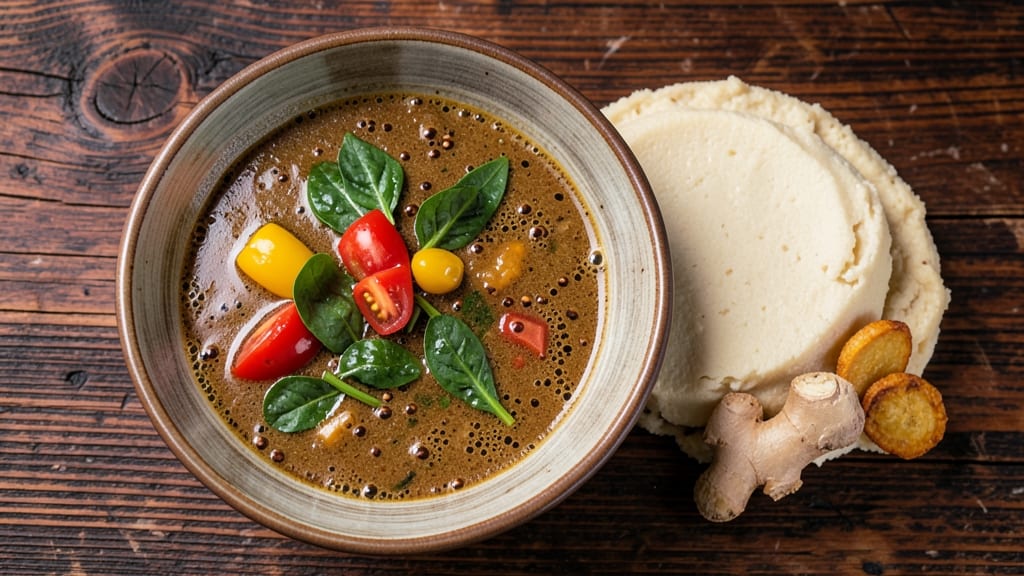
This African Egusi Soup and Fufu recipe brings the heart of West African cuisine to your table with its rich, nutty depth and comforting pillowy side. The soup transforms ground melon seeds into a creamy, flavor-packed base that pairs perfectly with the smooth, dough-like fufu.
I've perfected this combination over years of cooking, ensuring every bite delivers the authentic taste of traditional African meals.
The key to exceptional Egusi Soup lies in properly toasting the melon seeds to bring out their natural nuttiness before blending them into a smooth paste. This traditional technique creates the signature creamy texture that makes the soup so satisfying.
Meanwhile, the fufu dough requires patience—kneading and shaping it just right ensures that perfect tender, stretchy consistency that's essential to the meal.
What makes this recipe truly special is how the two components complement each other: the earthy, protein-rich soup contrasts beautifully with the neutral, pillowy fufu that soaks up every flavorful drop.
Whether you're preparing it for a family gathering or a special occasion, this combination delivers restaurant-quality results with authentic African flavors.
The recipe works beautifully with various proteins—beef, chicken, or fish—and can be customized with local leafy greens and spices. Perfect for those seeking an authentic culinary experience that's both hearty and deeply satisfying. Let's get cooking!
Ingredients for african egusi soup and fufu
Authentic West African flavors start with these carefully chosen ingredients that transform into a nutty soup and pillowy fufu.
| Ingredient | Amount | Notes |
|---|---|---|
| Ground Egusi Seeds (Melon Seeds) 🌰 | 1 cup | Toasted until nutty aroma |
| Fresh Leafy Greens (Spinach or Ugu) 🌿 | 3 cups | Chopped, stems removed |
| Chicken or Beef Stock 🍲 | 4 cups | Homemade preferred |
| Fresh Tomatoes 🍅 | 2 whole | Medium, diced |
| Fresh Bell Peppers 🌶️ | 1 whole | Red or green, chopped |
| Ginger Root 🧄 | 1 tbsp | Freshly grated |
| Garlic Cloves 🧄 | 4 cloves | Minced |
| Onions 🧅 | 1 whole | Medium, chopped |
| Fresh Cilantro 🌿 | ¼ cup | Chopped, for garnish |
| White Rice 🍚 | 1 cup | Uncooked, for fufu |
| Cassava Flour 🥔 | 1 ½ cups | For fufu dough |
| Vegetable Oil 🫒 | ½ cup | For fufu shaping |
| Salt 🧂 | 1 ½ tsp | Adjust to taste |
| Ground Black Pepper 🌶️ | ½ tsp | Freshly ground |
| Fish or Chicken (Optional) 🐟 | 1 ½ lb | Cubed for protein |
The egusi seeds are the soul of this dish—look for high-quality ground melon seeds at African markets or specialty stores like African & Caribbean Foods Market. Toasting them until fragrant unlocks their natural nuttiness, which is non-negotiable for that signature depth. Fresh leafy greens like ugu or spinach elevate the dish, so choose vibrant, fresh greens—wilted leaves compromise the final texture. For the stock, homemade is ideal, but high-quality store-bought chicken or beef stock works in a pinch. The cassava flour for fufu should be fine, sifted, and free of lumps—African grocery stores carry the best varieties.
No fresh ginger? Powdered ginger at half the amount works, though it lacks the bright zing. Substitute bell peppers with scotch bonnet peppers for heat if you prefer. The optional protein can be swapped for shrimp or smoked fish—common in many West African variations. For the fufu, if you can't find cassava flour, yuca flour or a mix of rice and cornmeal creates a similar texture. The key is achieving that perfect dough consistency—too much flour makes it dry, so adjust gradually. Toasting the egusi seeds in a dry pan until aromatic (about 3-4 minutes) is crucial—don't walk away or they'll burn.
Store the dry fufu dough in an airtight container for up to 3 days—reheat by steaming or boiling. The soup keeps well in the fridge for 4-5 days, though the fufu is best made fresh. For meal prep, portion the soup into containers and keep the fufu dough separate—shape and cook as needed. The combination of earthy egusi and smooth fufu makes this a freezer-friendly feast: freeze the soup for up to 3 months and reheat with a splash of water. The fufu dough can be frozen for 2 months—thaw and steam before serving.
Why You'll Love This Recipe
- No Chopping Chaos: I swear by this recipe when I’m too tired to dice anything—just blend the tomatoes, peppers, and greens whole, then toss them in. The egusi seeds handle all the heavy lifting, turning into that rich, nutty paste without a single knife stroke.
- Umami Bomb: That moment when the soup thickens and the egusi releases its earthy, almost peanut-like depth? Pure magic. The spinach or ugu wilts into a vibrant, slightly bitter contrast that makes every spoonful feel like a hug for your taste buds.
- Leftovers That Shine: Between us, this soup begs to be made in bulk. The flavors actually deepen overnight, and reheating it with a splash of stock? It’s like time travel to a fresher version. Plus, fufu keeps for days—just reheat with water and a pinch of salt.
- Budget-Friendly Feast: Ground egusi is cheaper than you’d think, and leafy greens stretch a meal across the whole family. I’ve fed six people (plus my picky teenager) for under $15—no takeout in sight. The stock? Use bones or even bouillon—this recipe doesn’t judge.
Step-by-step instructions for African egusi soup and fufu
Master this classic West African pairing with rich, nutty soup and pillowy fufu using precise techniques.
Toast the Egusi Seeds for Maximum Flavor
Heat a dry skillet over medium heat and add the 1 cup ground egusi seeds (melon seeds). Toast them for 3-4 minutes, stirring constantly, until they release an intense nutty aroma and turn slightly darker in color. This step develops the seeds' natural oils and deepens their flavor profile.
Remove the toasted seeds immediately to prevent burning. Let them cool for 5 minutes before using. The cooling period helps prevent the seeds from releasing excess oil into your soup, which could make it greasy. Keep them in a small bowl for the next step.
Build the Soup Base with Aromatics and Stock
In a large pot, heat 0.5 cup vegetable oil over medium heat. Add the 1 whole chopped onions and cook for 5 minutes until translucent and slightly caramelized. Add the 4 minced garlic cloves and 1 tbsp freshly grated ginger root, cooking for another 1 minute until fragrant.
Stir in the 2 diced fresh tomatoes and 1 chopped fresh bell peppers, cooking for 4-5 minutes until the tomatoes break down and the mixture thickens slightly. Pour in the 4 cups chicken or beef stock and bring to a gentle simmer. This aromatic base forms the flavor foundation for your soup.
Incorporate Protein and Leafy Greens
If using, add the 1.5 lb cubed fish or chicken to the simmering stock. Cook for 8-10 minutes until the protein is nearly done but still slightly firm to the touch. This timing ensures the meat finishes cooking when the soup reaches its final stage.
Add the 3 cups chopped fresh leafy greens (spinach or ugu) and the toasted 1 cup ground egusi seeds to the pot. Stir gently to combine. Let the soup simmer for 10-12 minutes until the egusi seeds are fully incorporated and the greens are tender. Taste and adjust seasoning with 1.5 tsp salt and 0.5 tsp freshly ground black pepper.
Prepare the Fufu Dough
In a mixing bowl, combine the 1 cup uncooked white rice and 1.5 cups cassava flour. Gradually add 1.5 cups hot water (from the soup pot) while stirring to create a smooth, thick dough. The mixture should be firm enough to hold its shape when pressed but still pliable.
Cover the bowl with a damp towel and let the dough rest for 10 minutes. This resting period allows the starches to fully hydrate and develop the perfect texture. If the dough becomes too sticky, add 1 tablespoon cassava flour at a time until it reaches the right consistency.
Shape and Cook the Fufu
Divide the dough into 6 equal portions (about 1/6 cup each). Wet your hands with water to prevent sticking, then roll each portion into a smooth, round ball. Place each ball on a piece of plastic wrap, cover with another piece, and roll between your palms to create a 3-inch diameter disc.
Drop each fufu disc into the simmering soup and cook for 15-20 minutes, partially submerged. The fufu is ready when it floats to the surface and develops a slightly crisp exterior. Serve immediately with the soup, garnished with 0.25 cup chopped fresh cilantro for brightness and freshness.
Pro Tips For Making African Egusi Soup And Fufu
- Roast Your Tomatoes: I used to just chop raw tomatoes and toss them in—big mistake. Roasting them for 10-12 minutes at 400°F (200°C) until they blister and darken brings out their sweetness and deepens the soup’s flavor. The skin softens too, so they blend smoother—no grainy texture to fight later.
- Toast the Egusi First: Ground egusi has a raw, almost bitter edge that disappears when you dry-toast it in a hot pan for 2-3 minutes before adding liquid. Skip this, and your soup will taste flat and vegetal. Stir constantly—it burns faster than you’d think—and listen for that nutty aroma. That’s your cue to move fast.
- Simmer Slow and Low: Egusi soup needs time to thicken properly, but rushing it with high heat makes the soup separate or turn gluey. Once you add the stock, reduce to the gentlest simmer you can manage—just enough to keep tiny bubbles breaking the surface. Thirty minutes of steady, lazy bubbling is better than 15 minutes of aggressive boiling.
- Use Cold Water for Fufu: I learned this the hard way after making fufu that turned out gummy and dense. When mixing cassava and yam dough, add cold water gradually while kneading—never hot. The dough should be smooth but still hold its shape when pressed. If it sticks to your hands, you’ve added too much water. (Yes, even if you’re impatient like me.)
Dietary considerations for this african egusi soup and fufu
Gluten-Free Foundation
This recipe is naturally gluten-free thanks to its cassava flour base for fufu and absence of wheat products. Cassava flour provides the perfect dough consistency without gluten, making it safe for those with celiac disease or gluten sensitivity.
I always double-check cassava flour labels at African grocery stores to ensure no cross-contamination with wheat.
The soup itself contains no gluten-containing ingredients, though you should verify your stock cubes or broth don't contain hidden gluten. For extra caution, use certified gluten-free stock. This makes the entire meal completely gluten-free while maintaining authentic West African flavors. 🌱
Vegetarian Adaptations
To make this fully vegetarian, simply omit the meat or fish entirely and focus on the plant-based elements. The egusi seeds provide ample protein, while leafy greens add nutrients. I've made this version with tofu cubes or mushrooms for added texture—both work beautifully when simmered in the soup.
For a vegan adaptation, ensure your stock is vegetable-based and check cassava flour for animal-derived additives. The natural flavors of the egusi and greens shine without animal products, making this a satisfying meat-free option. 💚
Protein Flexibility
The recipe accommodates multiple protein preferences. For a lighter option, use shrimp or white fish that cooks quickly. Heartier eaters can opt for beef chunks or goat meat, which adds rich depth to the soup. I often prepare a mixed-protein version with both fish and chicken for variety.
For those avoiding meat entirely, smoked tofu or tempeh provides a satisfying umami element. The key is balancing protein cooking times with the soup's final simmer to ensure everything finishes perfectly tender. 🍗
Nut Allergies
While egusi seeds are naturally nut-free, they're often stored near tree nuts in stores. Always check packaging for cross-contamination warnings. For nut-free alternatives, you can substitute with sunflower seed butter (thinned with water) for a similar creamy texture, though the flavor will differ slightly.
If you're avoiding all seeds, consider using blended white beans for thickness, though this changes the soup's signature nutty profile. The fufu remains completely nut-free as it's made from cassava flour, making this dish adaptable for most nut-sensitive diets. 🌾
Nutrition facts
Frequently asked questions
What's the secret to getting fufu just right?
The perfect fufu has a smooth, elastic texture with no lumps. Start with equal parts rice and cassava flour, then adjust the water gradually—too much makes it sticky, too little makes it dry. Knead the dough for 5 minutes to develop gluten-free elasticity, then rest it for 10 minutes before shaping. The key is patience: overmixing causes toughness, but underworking makes it crumbly.
Can I make this soup without fresh leafy greens?
If you can't find ugu or spinach, substitute with kale or collard greens for similar texture. For a non-green option, try blanched zucchini or sweet potato cubes—they add moisture and sweetness. Just reduce cooking time by 3-4 minutes since they soften faster. The egusi's nuttiness will still shine through.
Why did my fufu turn out too dense?
Dense fufu usually means overworking the dough or insufficient resting time. Try this fix: mix 1 extra tablespoon of hot water into the dough, then steam for 5 minutes before serving. For prevention, measure ingredients precisely—1:1.5 rice-to-flour ratio is critical. Also ensure your cassava flour is fresh; older flour absorbs moisture differently.
How do I store leftovers?
Store the soup in an airtight container for 4-5 days in the fridge. Reheat gently on low heat, adding 2 tablespoons of water to restore creaminess. For fufu, wrap leftover portions in plastic wrap and refrigerate for up to 3 days. To serve, steam for 3-4 minutes until warmed through. Freeze soup for 3 months—thaw overnight in the fridge before reheating.
What's the best protein for beginners?
Start with chicken thighs or white fish like cod or tilapia—they're forgiving and cook evenly. Avoid tough cuts like beef brisket (requires longer simmering). For fish, use 12-15 minutes** cooking time total. Pro tip: Pat proteins dry before adding to the soup to prevent steaming instead of searing, which keeps them juicy.