
Sauces & Condiments
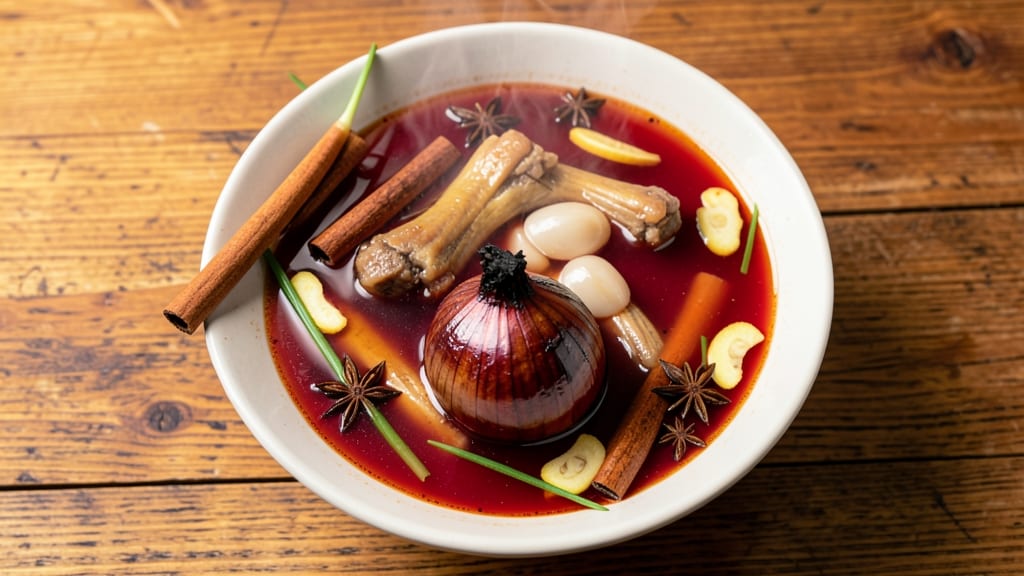
This beef pho soup base recipe unlocks the aromatic, umami-rich foundation every authentic bowl deserves. The star-anise and cinnamon create a fragrant backbone that simmers into deep, complex flavors—transforming simple ingredients into a restaurant-quality broth.
What sets this apart is the balance: salty from beef bones, umami from fish sauce, and herbal brightness from coriander and basil.
The process is straightforward yet precise: charring aromatics in a hot pot unlocks their full potential, while a 30-minute simmer develops layers of depth. This isn't just a broth—it's the soul of pho, designed for immediate use or storage (freezes beautifully for up to 3 months).
The key lies in patience: letting flavors meld without overcooking the delicate spices.
What you'll achieve is a clear, golden broth with a bold umami punch and subtle herbal notes—perfect for building pho bowls or noodle dishes. The star-anise infuses warmth, while ginger and garlic add brightness, creating harmony in every sip.
This is the kind of base that turns a simple meal into something extraordinary.
Adjust saltiness to taste with fish sauce or soy sauce, and customize with optional additions like lime leaves or lemongrass. The flexibility makes it ideal for both beginners and seasoned cooks. Ready to elevate your pho game? Here's how to make it.
Ingredients for beef pho soup base
Twelve aromatic ingredients transform into a fragrant, umami-rich broth foundation for authentic pho.
| Ingredient | Amount | Notes |
|---|---|---|
| Beef Bones 🦴 | 4 lb | Marrow and knuckle bones preferred |
| Star-Anise Pods 🌿 | 2 whole | Whole, not ground |
| Cinnamon Sticks 🌿 | 2 whole | 2-inch pieces |
| Fresh Ginger 🧄 | 2 tbsp | Thinly sliced, skin removed |
| Garlic Cloves 🧄 | 8 cloves | Smashed, not minced |
| Onion 🧅 | 1 whole | Yellow, cut into chunks |
| Fish Sauce 🍶 | 2 tbsp | Red Boat preferred |
| Soy Sauce 🍶 | 1 tbsp | Light or dark |
| Sugar 🍚 | 1 tbsp | White granulated |
| Coriander Seeds 🌿 | 1 tbsp | Toasted lightly |
| Black Cardamom Pods 🌿 | 2 whole | Optional, for depth |
| Water 💧 | 8 cups | Filtered preferred |
The beef bones are the heart of this broth—marrow and knuckle bones deliver rich, gelatinous depth. Source them from Whole Foods or a specialty butcher for optimal quality. If using pre-cut bones, ensure they're clean and free of excess fat. Star-anise and cinnamon are non-negotiable; Penzeys Spices carries authentic whole pods. Toast your spices briefly in a dry pot before adding to water—this unlocks their aromatic oils. Fresh ginger should be bright and firm, with no soft spots. For garlic, elephant garlic adds a milder, sweeter note if you prefer subtlety.
No star-anise? 1 tsp ground star-anise works in a pinch, though whole pods infuse more evenly. Substitute 1 cinnamon stick with ½ tsp ground cinnamon if needed. Fish sauce can be swapped for soy sauce (½ the amount) in vegetarian versions, though umami depth will differ. Red Boat is the gold standard, but Three Crabs is a solid backup. For sugar, coconut sugar adds subtle caramel notes. Black cardamom? Skip it if unavailable—it's purely for complexity. The water should be room temperature when added to prevent shocking the broth.
This broth peaks after 30 minutes of simmering, but flavors continue developing for up to 2 hours. Strain through a fine-mesh sieve lined with cheesecloth for clarity. Store in glass jars in the fridge for 5 days or freeze for 3 months. For long-term storage, portion into ice cube trays—perfect for adding to future batches. The broth's depth improves overnight, so always make a double batch if possible. Avoid boiling after initial simmer—gentle heat preserves delicate aromatics.
Why You'll Love This Recipe
- Minimal Chopping Required: I swear by this—just a few ginger slices and garlic cloves to smash, then toss them in with the bones. No dicing, no julienning, no stress. That star-anise and cinnamon? Just drop them in whole and let the pot do the work.
- Deep Umami Magic: The beef bones alone give you that slow-simmered richness, but add the star-anise and ginger? It’s like a warm hug in a bowl—earthy, slightly sweet, with that garlic punch cutting through. Honestly, the first sip makes me forget I was planning to order takeout.
- Leftovers That Shine: Make a big batch on Sunday, and you’ve got soup base for the week. Freeze what you don’t use—it’s my secret for quick weeknight pho, ramen, or even braised short ribs. (Yes, even on a Tuesday night.)
- Budget-Friendly Bone Broth: Beef bones are cheap, and they stretch into gallons of flavor. No fancy ingredients, no wasted money—just pure, rich broth that costs pennies per serving. My wallet thanks me every time.
Step-by-step instructions for beef pho soup base
Here's the method to extract maximum umami and aromatic depth from your beef bones.
Prepare and Parboil the Beef Bones
Rinse the 4 lb beef bones thoroughly under cold water to remove any blood or impurities. Place them in a large stockpot and cover with 8 cups water. Bring to a boil over high heat, then immediately reduce to a gentle simmer. Skim off any foam or scum that rises to the surface during the first 10 minutes—this ensures a clear, clean broth.
Simmer uncovered for 20 minutes to release initial impurities. This parboiling step is crucial—it removes surface debris that would otherwise cloud your broth. After 20 minutes, drain the water and return the bones to the clean pot. The bones should be bone-white, not pink, indicating they're properly cleaned.
Build the Aromatic Base
In a dry skillet over medium heat, toast the 1 tbsp coriander seeds for 2-3 minutes until fragrant and lightly golden. Immediately transfer them to a spice grinder or mortar and pestle and grind into a fine powder. This step unlocks their full flavor potential.
In the same stockpot with the cleaned bones, add the 2 whole star-anise pods, 2 whole cinnamon sticks, 2 whole black cardamom pods, 1 whole onion (cut into chunks), 2 tbsp fresh ginger (thinly sliced), and 8 smashed garlic cloves. Pour in 8 cups fresh water and bring to a boil over high heat. Reduce heat to maintain a gentle simmer—you should see small bubbles breaking the surface but no vigorous boiling.
Simmer for Deep Flavor Extraction
Cover the pot and let the broth simmer unattended for 30 minutes. This initial simmer allows the spices and aromatics to infuse the liquid, creating a fragrant foundation. After 30 minutes, remove the lid and continue simmering uncovered for another 30 minutes to develop the umami depth.
Here's the thing—don't stir the broth during this time. Stirring releases starches from the onion and ginger that can make the broth cloudy. Instead, let the ingredients settle naturally. You'll know it's ready when the broth takes on a rich, golden hue and the aroma becomes deeply aromatic with notes of star anise and ginger.
Season and Strain
After 60 minutes of total simmering, remove the pot from heat. Add the 2 tbsp fish sauce, 1 tbsp soy sauce, and 1 tbsp sugar, stirring gently to combine. Let the broth sit for 10 minutes to allow the seasonings to fully integrate. The sugar will caramelize slightly, adding another layer of complexity.
Line a fine-mesh strainer with cheesecloth or a coffee filter to create a makeshift filter. Carefully strain the broth through this setup into a clean pot or bowl, pressing gently on the solids to extract maximum liquid. Discard the solids—what remains is your star-anise infused pho base, ready to be used as the foundation for your soup.
Pro Tips For Making Beef Pho Soup Base
- BLANCH BONES FIRST: Skip the raw bone smell by giving them a quick 30-second boil in salted water before adding to the pho pot. I used to skip this and wondered why my broth always tasted like a butcher shop—blanching removes impurities and jumpstarts the flavor extraction.
- CRUSH STAR-ANISE: Lightly smash the star-anise pods with the flat side of a knife before adding them. I learned this the hard way—whole pods release flavor unevenly, while crushed ones infuse the broth like a spice bomb. (Yes, even if it looks messy.)
- SIMMER LOW AND SLOW: After the initial boil, reduce to the lowest possible heat where bubbles just break the surface. My first few batches turned cloudy because I kept the heat too high—patience here makes the difference between murky broth and golden clarity.
- ROAST GINGER AND GARLIC: Toss sliced ginger and minced garlic in a dry pan for 2 minutes until fragrant before adding to the broth. This step cuts the raw bite and adds depth—like the difference between black coffee and a properly pulled shot. (Your nose will thank you.)
Essential equipment for great beef pho soup base
Stockpot Essentials
A large, heavy-bottomed stockpot (at least 8-quart capacity) is non-negotiable for this recipe. I recommend the All-Clad Stainless Steel Stockpot—it distributes heat evenly and prevents hot spots that can scorch your broth.
If you're on a budget, the Cuisinart MultiClad offers similar performance for less. Avoid non-stick pots; they can't handle the prolonged simmering required for deep flavor extraction. 🌡️
Fine-Mesh Strainer
You'll need a fine-mesh strainer with a cheesecloth or coffee filter lining to achieve that crystal-clear pho broth. My go-to is the OXO Good Grips Strainer—it's durable and has a tight weave that catches even the finest particles.
For a budget option, a double-layered cheesecloth in a standard colander works just as well. Pro tip: Press the solids gently but firmly to extract every last drop of flavor without breaking the liquid. ⚡
Spice Toasting Tools
Toast your coriander seeds and other whole spices in a dry skillet (I use a Lodge cast iron) over medium heat. This step is crucial for unlocking their aromatic oils.
A mortar and pestle is ideal for grinding the toasted coriander seeds into a fine powder, but a spice grinder works in a pinch. Avoid electric coffee grinders—they can overheat and burn the spices. 💫
Thermometer for Precision
While not strictly necessary, a candy or instant-read thermometer helps ensure your broth simmers at the ideal 185-195°F range. The ThermoWorks Thermapen One is my favorite—it's fast and accurate.
For this recipe, you're aiming for a gentle simmer (small bubbles, not a rolling boil) to prevent cloudiness and preserve delicate flavors. A thermometer gives you peace of mind, especially if you're new to broth-making. 🌡️
Storage Containers
For short-term storage (5 days in the fridge), use glass mason jars with airtight seals. For long-term freezing (3 months), quart-sized glass jars or silicone ice cube trays work best.
I prefer glass because it preserves the broth's quality better than plastic. Label everything with the date—trust me, you'll thank yourself later when you're grabbing a cube for your next pho batch. ❄️
Optional: Immersion Blender
If you prefer a smoother broth without straining, an immersion blender (like the Ninja Foodi Immersion Blender) can help break down the solids slightly. Use it sparingly—just a few pulses—to avoid over-blending, which can make the broth too thick.
This is especially useful if you're short on time or want to skip the cheesecloth step entirely. 💡
Nutrition facts
Frequently asked questions
Can I substitute beef bones with other meats or vegetables?
The beef bones are essential for authentic umami depth, but you can use chicken bones or pork bones for a lighter flavor. For vegetarian versions, shiitake mushrooms or kelp (1 tbsp) mimic umami, though the texture will differ. The broth won't be identical, but it'll still be flavorful!
How do I adjust the spice level in the broth?
The recipe balances sweet, salty, and herbal notes. For more heat, add ½ tsp chili flakes or 1 sliced Thai chili during simmering. To reduce spice, omit the black cardamom or use ½ the fish sauce. Taste as you go—the broth should be savory, not overpowering.
Can I make this broth in a slow cooker or Instant Pot?
Yes! For a slow cooker, parboil bones first, then add all ingredients and cook on low for 6-8 hours. For an Instant Pot, use the "Sauté" function to toast spices, then add everything and pressure cook for 60 minutes. Release pressure naturally. The Instant Pot version will be cloudier but still delicious.
Why does my broth look cloudy?
Cloudiness usually means starches from onions/ginger or unskimmed impurities. For clarity, strain through cheesecloth and simmer uncovered for 30 minutes to evaporate excess liquid. If it's still cloudy, reduce the broth by 25% before straining. Patience is key—authentic pho broth often has a slight haze!
How long can I store the broth, and how do I reheat it?
Store in the fridge for 5 days or freeze for 3 months in airtight containers. To reheat, warm gently on low heat or in the microwave (stirring halfway). Never boil—this can make it bitter. For frozen broth, thaw overnight in the fridge before reheating.