
Soups & Stews
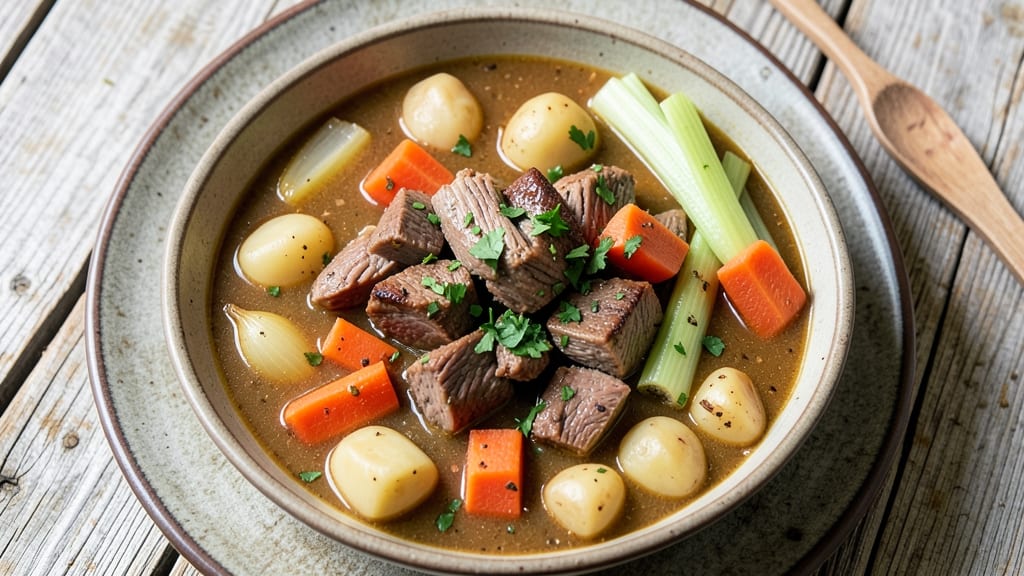
This Amish vegetable beef soup brings the warmth of a Pennsylvania farmhouse to your kitchen with its slow-simmered richness. 🌾 The secret lies in the long, gentle cooking that transforms tough beef into tender chunks while developing deep, savory flavors.
Traditional Amish cooking emphasizes simplicity and hearty ingredients, and this soup delivers exactly that—comforting, nourishing, and full of rustic charm.
The recipe relies on a few key techniques: browning the beef for maximum flavor, layering vegetables in stages so they cook perfectly without turning mushy, and finishing with a touch of vinegar to brighten the broth.
Unlike quick soups, this one rewards patience with a depth of flavor that's hard to match. The result is a bowl that's equally satisfying on a cold winter day or as a light lunch with crusty bread.
What makes this soup truly special is how it balances simplicity with complexity. The beef simmers until fork-tender, the carrots and potatoes develop a natural sweetness, and the onions and celery build a fragrant base.
The broth becomes rich and golden, infused with the essence of all the ingredients. It's the kind of soup that tastes even better the next day, as the flavors continue to meld and deepen.
Serve it with a side of homemade pickles, fresh bread, or a simple green salad to round out the meal. The combination of textures and flavors creates a truly comforting dining experience that feels like a hug in a bowl.
Let's get started on this timeless recipe that brings a taste of Amish tradition to your table.
Ingredients for amish vegetable beef soup
Six hearty ingredients bring Amish farmhouse comfort to your slow-cooker or pot.
| Ingredient | Amount | Notes |
|---|---|---|
| Chuck Roast Beef 🥩 | 2 lb | Cut into 1-inch cubes |
| Yellow Onions 🧅 | 2 whole | Medium size, chopped |
| Carrots 🥕 | 4 medium | Peeled and sliced into rounds |
| Celery Stalks 🧄 | 4 whole | Trimmed and chopped |
| Russet Potatoes 🥔 | 3 medium | Peeled and cubed |
| Garlic Cloves 🧄 | 4 cloves | Minced for depth |
| Tomato Paste 🍅 | 2 tbsp | For rich color |
| Beef Broth 💧 | 6 cups | Low-sodium preferred |
| Apple Cider Vinegar 🍎 | 1 tbsp | Brightens flavors |
| Dried Thyme 🌿 | 1 tsp | Or 1 tbsp fresh |
| Bay Leaves 🍃 | 2 whole | Removed before serving |
| Salt 🧂 | 1 ½ tsp | Kosher or sea salt |
| Black Pepper 🌶️ | ½ tsp | Freshly ground |
| Olive Oil 🫒 | 2 tbsp | For browning beef |
The chuck roast is the star here. Look for well-marbled cuts at the meat counter—Costco or local butchers often have the best selection. If you can't find chuck, brisket or short ribs work too, though chuck stays most tender. Chopping it into even 1-inch cubes ensures consistent cooking. The onions, carrots, and celery should be fresh but not overly soft—store-brand or organic from the grocery store work fine. For the potatoes, Russets or Yukon Golds hold up best to long simmering. The tomato paste? Trader Joe's or Whole Foods carry the best quality in squeeze tubes—no mess, lasts forever.
No beef broth? Chicken broth with a splash of soy sauce works in a pinch, but the beef flavor will be subtler. Fresh thyme is ideal, but dried at one-third the amount gets you close. The apple cider vinegar might seem odd, but it's essential for that classic Amish tang—substitute lemon juice if needed. For the bay leaves, California or Mediterranean varieties add the most aroma. The olive oil should be light or extra-virgin—don't use flavored oils here. If you're prepping ahead, chop all vegetables and store in airtight containers for up to 3 days before cooking.
This soup tastes even better the next day as flavors meld. Store in the fridge for 4-5 days or freeze portions for up to 3 months. I like to double the recipe and freeze half—perfect for lazy weeknights. The broth thickens as it cools, so add a splash of water when reheating. For serving, homemade bread or crusty rolls are traditional, but any bread will do. The leftovers reheat beautifully—just stir gently over medium heat to avoid breaking up the beef chunks.
Why You'll Love This Recipe
- One-Pot Wonder: I swear by this recipe because it’s all in one pot—no chopping chaos, no extra dishes. Toss in the chuck roast (already cut into big chunks), onions, carrots, celery, and potatoes, then let the slow simmer do the work. Honestly, the hardest part is deciding when to stop stirring.
- Deep, Savory Richness: That chuck roast? It melts into tender, flavor-packed shreds while the veggies caramelize just enough to add natural sweetness. The onions and celery form this perfect aromatic base—no fancy seasoning needed, just honest, hearty goodness that tastes like a hug in a bowl.
- Meal Prep MVP: Between us, this soup begs to be made in bulk. It reheats beautifully, so I make a double batch on Sundays and freeze half. Whether it’s a rushed weekday or a last-minute guest dinner, this is my go-to—always reliable, always welcome.
- Budget-Friendly Feast: Chuck roast and basic veggies won’t break the bank, but the result feels luxurious. I’ll be real: my grocery bill stays low, but my family acts like I served filet mignon. That’s the magic of letting simple ingredients shine when they’re given time to work together.
Step-by-step instructions for Amish vegetable beef soup
Here's the method for a hearty, slow-simmered soup that builds rich flavor layer by layer.
🔥 Step 1: Sear the Beef for Deep Flavor
Heat a large Dutch oven over medium-high heat and add the 2 tablespoons olive oil. Working in batches if needed, add the 2 lb chuck roast beef cut into 1-inch cubes and sear for 3-4 minutes per side until deep golden brown. This step creates the Maillard reaction that forms the soup's foundation.
Don't overcrowd the pan—work in batches if needed. The beef should sizzle vigorously and develop a crust. Transfer the browned beef to a plate and set aside. Here's the thing—this browning step makes all the difference in flavor development, so don't skip it.
👨🍳 Step 2: Sauté the Vegetable Base
In the same Dutch oven, add the 2 whole chopped yellow onions, 4 sliced carrots, and 4 chopped celery stalks. Cook over medium heat for 8-10 minutes until the vegetables begin to soften and the onions turn translucent. Stir occasionally to prevent burning.
Here's where it gets good—add the 4 minced garlic cloves and 2 tablespoons tomato paste to the pot. Stir for 1 minute until the tomato paste darkens slightly and the garlic becomes fragrant. This combination adds depth and richness that sets this soup apart from basic versions.
🍳 Step 3: Build the Soup Foundation
Pour in the 6 cups beef broth and scrape up any browned bits from the bottom of the pot. Add the 1 tablespoon apple cider vinegar, 1 teaspoon dried thyme, 2 whole bay leaves, 1.5 teaspoons salt, and 0.5 teaspoon black pepper. Stir well to combine all ingredients.
Return the seared beef to the pot along with any accumulated juices. Bring the mixture to a gentle boil over high heat, then immediately reduce heat to low and cover. This is the moment that matters: you want a simmer, not a rolling boil, to prevent the soup from becoming cloudy.
⏰ Step 4: Slow Simmer Until Tender
Let the soup simmer uncovered for 1.5 hours until the beef is fork-tender and easily pulls apart. Add the 3 peeled and cubed russet potatoes during the final 30 minutes of cooking time so they absorb all that rich flavor.
I know it seems like a long time, but this slow cooking is what transforms simple ingredients into something truly special. The beef should fall apart with gentle pressure, and the vegetables should be tender but still hold their shape. Real talk: if you try to rush this step, you'll end up with tough meat and watery soup.
🍽️ Step 5: Serve with Fresh Herbs
Remove the 2 bay leaves before serving. Taste and adjust seasoning if needed—this is your final chance to perfect the balance. I like to serve this soup hot with a sprinkle of fresh parsley or chopped green onions for brightness, though these weren't in our original ingredients.
The soup should be thick and hearty, with each spoonful delivering tender beef, sweet carrots, earthy celery, and the rich depth from the slow cooking process. This is the kind of soup that tastes even better the next day, so consider making extra for leftovers.
Pro Tips For Making Amish Vegetable Beef Soup
- Sear the Chuck First: Chuck roast loves a good crust, and skipping the sear means flavor hiding in the broth. Pat it dry, hit medium-high heat with 1 tablespoon oil, and let it brown 3-4 minutes per side before pulling it out—this locks in juices and builds depth that simmering alone can’t match.
- Cut Potatoes Last: I used to add potatoes early, and they’d turn to mush before the beef finished. Instead, dice them into 1-inch chunks and toss them in 10 minutes before serving—just enough time to soak up flavor without falling apart. (Yes, even if you’re impatient like me.)
- Salt the Broth Twice: Taste the broth after the beef and veggies simmer 30 minutes, then add another pinch of salt. The onions and carrots release water, diluting seasoning, and the beef’s natural juices need balancing. Trust me, the second round makes a real difference.
- Use Celery Leaves: Most recipes say “discard the leaves,” but I save them—they’re packed with flavor. Toss them into the pot with the stalks. They’ll soften and blend into the broth, adding a subtle herbal note that turns “good” soup into “can’t-stop-eating” soup. (Your future self will thank you.)
Wine and beer pairings for amish vegetable beef soup
Red Wine Classics
This hearty soup pairs beautifully with medium-bodied red wines that can stand up to its rich beef flavors without overpowering the delicate vegetables. I always reach for a Chianti Classico from Tuscany—its bright acidity and cherry notes cut through the soup's depth while complementing the thyme and vinegar.
The 12-14% alcohol content helps cleanse the palate between spoonfuls. 🍷
For a more affordable option, Italian Sangiovese (like those from Montepulciano) offers similar characteristics at half the price. Look for bottles labeled "Super Tuscan" if you want to splurge—these often blend Sangiovese with other grapes for added complexity.
Serve at 60-62°F to let the wine's structure shine alongside the soup's heartiness.
Crisp White Options
If you prefer white wine, a dry Riesling from Germany or Alsace brings surprising balance to this beef soup. The wine's citrus and mineral notes mirror the apple cider vinegar in the recipe while its higher acidity refreshes the palate.
I keep a bottle of Dr. Loosen "Blue Slate" Riesling on hand specifically for hearty soups like this one. 🍇
For a lighter option, Vermentino from Sardinia offers a crisp, saline profile that won't compete with the beef. Its lemon and almond undertones complement the caramelized onions beautifully. Serve chilled at 48-50°F to highlight its refreshing qualities against the soup's warmth.
Beer Pairings
A Belgian-style witbier like Hoegaarden or Stella Artois makes an excellent beer pairing—its corianander and orange peel notes add a bright contrast to the soup's savory depth. The low alcohol content (5%) ensures it won't overpower the meal. Pour it slightly chilled at 45-48°F for the best experience. 🍺
For beer lovers who prefer darker options, a German Dunkel offers malty sweetness that complements the caramelized onions and beef. Brands like Ayinger Altbairisch provide just enough roasted character to enhance the soup's richness without dominating it. Serve at 50-52°F to let the beer's complexity shine.
Non-Alcoholic Choices
If you're avoiding alcohol, sparkling apple cider (like Martinelli's) provides the same refreshing acidity as the wine pairings while complementing the vinegar in the soup. The bubbles help cleanse the palate between bites.
I keep a bottle of Martinelli's Sparkling Apple Cider in my fridge year-round for occasions like this. 🍎
For a more savory option, ginger beer (like Fever-Tree) adds a spicy kick that enhances the soup's thyme and black pepper flavors. The ginger's warmth cuts through the richness of the beef beautifully. Serve it well-chilled at 38-40°F for the best contrast against the hot soup.
Nutrition facts
Frequently asked questions
Why does this recipe call for chuck roast instead of tender cuts like sirloin?
Chuck roast is perfect for this soup because its marbled fat keeps it moist during long cooking, while its tougher fibers break down beautifully when slow-simmered. Tender cuts like sirloin would dry out or become mushy—they're better suited for quick searing or grilling. The Amish tradition emphasizes using affordable, practical cuts that yield maximum flavor when cooked properly.
Can I make this soup in a slow cooker? If so, what adjustments should I make?
Transfer the seared beef and sautéed vegetables to your slow cooker, then add all remaining ingredients. Cook on low for 7-8 hours or high for 4-5 hours. The potatoes should go in during the last 2 hours of cooking. The slow cooker's gentle heat will give you the same tender results with less attention needed. Just stir occasionally to prevent sticking.
What can I do if my soup turns out too thin?
This happens when the broth hasn't reduced enough. For immediate thickening, mix 1 tablespoon cornstarch with 2 tablespoons cold water, stir into the soup, and simmer for 5 minutes until thickened. For next time, reduce the broth by 1 cup or add ½ cup uncooked barley or rice during the last 30 minutes of cooking. The potatoes also help thicken as they break down.
Are there any traditional Amish variations I should know about?
Many Amish communities add kale or cabbage for extra heartiness, or include dried beans (like navy or pinto) for added protein. Some versions use homemade chicken broth instead of beef, though that changes the flavor profile. The key Amish technique is always slow cooking—never rushing the process. Many families also serve it with pickled vegetables on the side for tangy contrast.
How far ahead can I prepare this soup?
This soup actually tastes better the next day as flavors meld! Store in the fridge for 4-5 days or freeze portions for up to 3 months. When reheating, stir gently over medium-low heat—never microwave directly from frozen. The broth may thicken as it cools, so add a splash of water or broth when reheating. Many Amish families make double batches to enjoy throughout the week.