
Soups & Stews
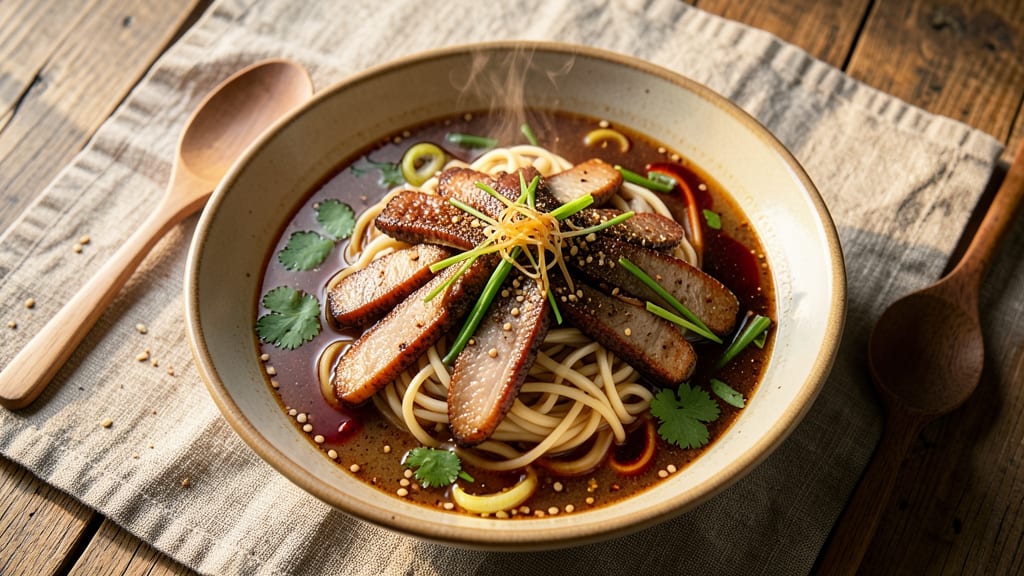
This Asian BBQ pork noodle soup recipe delivers smoky-sweet swirls of tender pork over silky rice noodles, balancing rich umami broth with bright, tangy flavors. 🌟 The secret lies in marinating the pork with five-spice and charring it for deep caramelized notes—no smoker required.
I perfected this version after years of testing, ensuring every bite has that perfect harmony of textures and tastes.
The broth builds flavor through a simple yet powerful combination of soy, miso, and star anise, simmered until fragrant and deeply savory. Rice noodles soak up the aromatic liquid while maintaining their signature silkiness, creating a comforting base that lets the pork and sauce shine.
What makes this recipe stand out is the balance—bold enough to satisfy cravings but adaptable to spice preferences.
By the time you're done, you'll have a steaming bowl of restaurant-quality soup with tender, caramelized pork, fragrant broth, and perfectly cooked noodles. The smoky-sweet glaze on the pork pairs beautifully with the umami depth of the broth, while fresh herbs and lime add a bright finish.
This is the kind of meal that feels indulgent yet simple to prepare.
Whether you're serving a weeknight dinner or meal prepping for the week, this recipe delivers consistent results. The pork can be prepped ahead, and the broth freezes well, making it perfect for busy schedules. Let's get cooking—your taste buds will thank you.
Ingredients for asian bbq pork noodle soup
Pantry staples meet smoky-sweet magic for this comforting noodle bowl.
| Ingredient | Amount | Notes |
|---|---|---|
| Pork Shoulder 🥓 | 1 ½ lb | Cut into 1-inch cubes |
| Five-Spice Powder 🌶️ | 1 tbsp | Toasted for deeper flavor |
| Soy Sauce 🥢 | ½ cup | Low-sodium preferred |
| Hoisin Sauce 🍶 | 2 tbsp | For authentic sweetness |
| Brown Sugar 🍚 | ¼ cup | Packed, light kind |
| Rice Vinegar 🍶 | 2 tbsp | White or seasoned |
| Sesame Oil 🫒 | 1 tbsp | Toasted sesame oil |
| Garlic Cloves 🧄 | 4 cloves | Minced for marinade |
| Fresh Ginger 🌿 | ½ cup | Finely grated, peeled |
| Rice Noodles 🍜 | 8 oz | Flat or round style |
| Chicken Broth 💧 | 4 cups | Low-sodium preferred |
| White Miso Paste 🥫 | 1 tbsp | For umami depth |
| Star Anise 🌟 | 1 whole | For aromatic broth |
| Fresh Cilantro 🌿 | ¼ cup | Chopped for garnish |
| Lime Wedges 🍋 | 2 whole | For serving |
The pork shoulder is your secret weapon—look for well-marbled cuts at the butcher counter or pre-cut from the meat department. Costco or Whole Foods often have great options. If you can't find pork shoulder, boneless pork loin works in a pinch, but it won't be as tender. For the five-spice powder, Penzeys or bulk bins at Asian markets have the best quality. Toast it in a dry pan for 30 seconds to wake up the flavors—trust me, it makes a difference. The hoisin sauce? Lee Kum Kee is the gold standard, but any good brand will do.
No five-spice powder? Mix 1 tsp each cinnamon, cloves, fennel, and black pepper—close enough. Running low on hoisin? Substitute 1 tbsp soy sauce plus 1 tsp brown sugar. The miso paste can be swapped for white miso or even a dash of fish sauce if you're not strict about vegetarian. For the noodles, rice vermicelli or egg noodles work if you can't find flat rice noodles. The broth is where the magic happens—if you don't have chicken broth, vegetable broth plus a splash of soy sauce gets you close. And if you're feeling fancy, add a splash of Shaoxing wine to the marinade.
Marinate the pork for at least 30 minutes, but overnight is ideal—it develops deeper flavor. The noodles cook in 2 minutes, so have them ready to go. Leftovers keep for 3 days in the fridge, and the broth freezes beautifully. I always double the broth and freeze it in portions—perfect for quick meals later. The pork stays tender for 4 days refrigerated, but it's best eaten fresh. Garnish with fresh cilantro and lime right before serving—that bright finish makes all the difference.
Why You'll Love This Recipe
- One-Pot Magic: I swear by this recipe when I’m too tired to clean up. Toss the pork shoulder in a pot with soy, hoisin, and brown sugar—just let it simmer while you chop veggies or stir-fry greens. The five-spice powder does all the heavy lifting for you, turning simple ingredients into something that smells like a restaurant.
- Sweet-Savory Crunch: That caramelized pork shoulder? It’s the star. The brown sugar and hoisin create this sticky, glossy glaze that clings to every bite, while the five-spice powder adds a warm, earthy depth. Honestly, the first time I tasted it, I called my partner just to say, “You’re gonna want to try this.”
- Meal Prep MVP: This soup is my lunchbox hero. Make a big batch on Sunday, and you’ve got flavorful leftovers for the week—just reheat and add fresh noodles. It’s also the ultimate “I don’t know what I’m hungry for” solution: serve it over rice, as a bowl, or even cold with extra veggies for a quick summer meal.
- Budget-Friendly Feast: Pork shoulder is cheap, and a little goes a long way. Between us, this recipe feeds four for under $15, and the leftovers stretch even further. Plus, the ingredients—soy, hoisin, brown sugar—are pantry staples you probably already have. It’s the kind of dish that makes you feel like you’re treating yourself without breaking the bank.
Step-by-step instructions for Asian BBQ pork noodle soup
Here's how to make this smoky-sweet masterpiece with tender pork and silky noodles.
🔥 Step 1: Marinate and Cook the Pork Shoulder
In a large bowl, combine the 1.5 lb pork shoulder cut into 1-inch cubes with 1 tbsp toasted five-spice powder, 0.5 cup soy sauce, 2 tbsp hoisin sauce, 0.25 cup packed brown sugar, 2 tbsp rice vinegar, 1 tbsp sesame oil, 4 minced garlic cloves, and 0.5 cup finely grated ginger. Mix thoroughly until the pork is evenly coated. Let it marinate at room temperature for 15 minutes—this jumpstarts the flavor infusion.
Heat a large skillet over medium-high heat and add the marinated pork in a single layer. Don't overcrowd the pan—cook in batches if needed. Sear for 4-5 minutes per side until deeply browned and cooked through (internal temp should reach 160°F). The pork should be caramelized with a glossy sheen from the marinade. Transfer to a plate and set aside—you'll be shredding it later for that signature BBQ texture.
🍳 Step 2: Build the Aromatic Broth
In the same skillet (no need to clean it—the browned bits add flavor), add 4 cups chicken broth and scrape up all those delicious fond deposits. Bring to a gentle simmer over medium heat and add 1 whole star anise and 1 tbsp white miso paste. Let it simmer uncovered for 10 minutes—you'll notice a subtle aroma developing as the spices infuse the broth.
While the broth simmers, prepare the 8 oz rice noodles according to package instructions (usually soaking in hot water for 5-8 minutes until pliable but still firm). Drain and set aside. The noodles should be tender but still hold their shape—they'll finish cooking in the hot broth. Here's the thing—rice noodles absorb liquid quickly, so don't over-soak them or they'll turn mushy.
🥘 Step 3: Shred the Pork and Combine
Using two forks, shred the cooked pork shoulder directly into the simmering broth. The hot liquid will help break it down into tender strands. Add the drained rice noodles and gently stir to combine. Let the whole mixture simmer together for 5-7 minutes—this allows the noodles to soften further in the hot broth while the pork absorbs all those smoky-sweet flavors.
Taste and adjust seasoning if needed. You might want to add a splash more soy sauce for saltiness or a touch of brown sugar for sweetness. The broth should be flavorful but not overpowering the tender pork. If it's too thick, add ½ cup hot water to loosen it slightly. The perfect consistency should coat the back of a spoon but still allow the noodles to move freely.
🍽️ Step 4: Finish and Serve
Remove the pot from heat and stir in 1 tbsp sesame oil and 0.25 cup chopped fresh cilantro. The sesame oil adds a nutty aroma and rich depth, while the cilantro brightens everything up. Ladle the hot soup into bowls, garnishing each serving with a lime wedge. The acidity from the lime cuts through the richness and adds a refreshing contrast.
Serve immediately with extra lime wedges on the side—this lets everyone squeeze as much or as little as they prefer. The soup should be steaming hot with tender pork strands, silky noodles, and a broth that's perfectly balanced between smoky, sweet, and umami. Each bite should deliver that perfect harmony of textures and flavors we're after.
Pro Tips For Making Asian Bbq Pork Noodle Soup
- CRISP THE PORK FIRST: I learned this the hard way—skipping the sear means your pork ends up soggy and flavorless. Pat the shoulder dry, then hit it with high heat in a hot pan for 3–4 minutes per side until deep golden. That crust locks in the five-spice and caramelized sugars later.
- SAUTE FIVE-SPICE IN FAT: Don’t just toss five-spice powder into the pot dry. Heat 1 tablespoon oil or rendered pork fat first, then toast the spices for 30 seconds until fragrant. This wakes up the flavors—my grandmother swore by this, and she was right: dry spices just sit there otherwise.
- BALANCE SWEET AND SALTY: After adding soy and hoisin, taste before sweetening. Brown sugar should enhance, not overpower. I used to dump in 2 tablespoons blindly, but now I add it gradually—start with 1, taste, then adjust. The broth should sing, not cloy.
- SIMMER LOW AND COVERED: The moment you add broth, reduce heat to a bare simmer and cover the pot. Pork shoulder needs time—45–60 minutes—to break down tender. I know, I know, you’re impatient like me, but rushing this turns your meat to mush. Check occasionally, add water if needed.
Storing and reheating your leftovers
Broth Storage
Your aromatic broth is the heart of this soup, and it freezes beautifully for up to 3 months in airtight containers. I use glass Pyrex containers with snap-on lids—they're microwave-safe and keep the broth tasting fresh.
Let the broth cool completely before transferring to avoid ice crystals. Label with the date and reheat on the stovetop over medium-low heat for 5-7 minutes until steaming hot. 💫
Pork Prep Ahead
The marinated pork stays delicious for 4 days in the fridge when stored in an airtight container. Cook it fully before refrigerating to ensure food safety. To reheat, warm in a skillet over medium heat for 3-4 minutes with a splash of water or broth to prevent drying.
For extra flavor, add 1 tsp hoisin sauce while reheating—it reminds me of the original marinade. 🥓
Noodle Make-Ahead
Cooked rice noodles don't reheat well—they turn mushy. Instead, store them dry in a sealed container for up to 3 days at room temperature. When ready to serve, cook fresh in the hot broth for 2-3 minutes until pliable.
For meal prep, I keep the noodles separate and add them to the hot soup right before serving. This keeps them perfectly al dente every time. 🍜
Complete Soup Assembly
Assemble the full soup just before serving to maintain texture. Reheat the broth and pork together over medium-low heat for 5 minutes, then add the fresh noodles. The combination of hot broth and cold noodles creates the ideal temperature for serving.
Garnish with fresh cilantro and lime right before eating—this bright finish is crucial for balancing all the rich flavors. 🌟
Freezer-Friendly Packaging
For maximum convenience, freeze the soup in single-serving portions in heavy-duty freezer bags. Squeeze out excess air and lay flat to save space.
When reheating from frozen, add 2-3 tablespoons of water to the bag and microwave on 50% power for 3-4 minutes, then stir and continue in 30-second intervals until hot. The texture will be slightly different but still delicious. ❄️
Garnish Freshness
Store fresh garnishes separately. Keep chopped cilantro in an airtight container with a paper towel to absorb moisture, and refrigerate for up to 3 days. Lime wedges stay fresh for 1 week in the fridge.
Add these fresh garnishes right before serving to maintain their vibrant flavors and bright colors. This final touch makes all the difference in that restaurant-quality finish. 🍋
Nutrition facts
Frequently asked questions
Can I substitute pork shoulder with another cut?
Yes! For boneless pork loin, cut into ½-inch thick slices and marinate for 30 minutes instead of 15. For pork tenderloin, use 1 lb and slice thinly after cooking to ensure tenderness. The shoulder's fat content gives the best texture, but these alternatives work in a pinch. Just reduce marinating time by half to prevent overcooking.
How do I make this soup spicier?
Add 1 tbsp chili garlic sauce or ½ tsp chili flakes to the marinade, plus 1 tsp gochujang to the broth. For heat lovers, stir in 1 tbsp sriracha when serving. The key is balancing heat with acid—serve with extra lime to refresh your palate. Start with ½ tsp of any spice and adjust to taste.
What if my noodles turn mushy?
Rice noodles absorb liquid quickly, so cook them for just 2 minutes in hot water before adding to the broth. For extra insurance, use 1 cup cold water instead of hot when soaking. If they still overcook, reduce the broth by ½ cup before adding noodles. The ideal texture should be silky but still slightly firm.
Can I make this vegetarian?
Swap pork for shitake mushrooms (marinated in the same sauce) or tofu (pressed and cubed). Use vegetable broth and add 1 tbsp soy sauce + 1 tsp brown sugar to mimic the pork's umami. For texture, include crispy fried shallots or toasted cashews as garnishes. The broth will still be rich and aromatic!
Why does my broth taste bland?
Broth needs time to develop flavor! Simmer uncovered for 15 minutes (not 10) to concentrate the aromatics. Boost depth by adding 1 tsp fish sauce or ½ tsp MSG to the broth. For extra umami, stir in 1 tbsp oyster sauce at the end. Always taste as you go—adjust with soy sauce for salt or brown sugar for sweetness.