
Soups & Stews
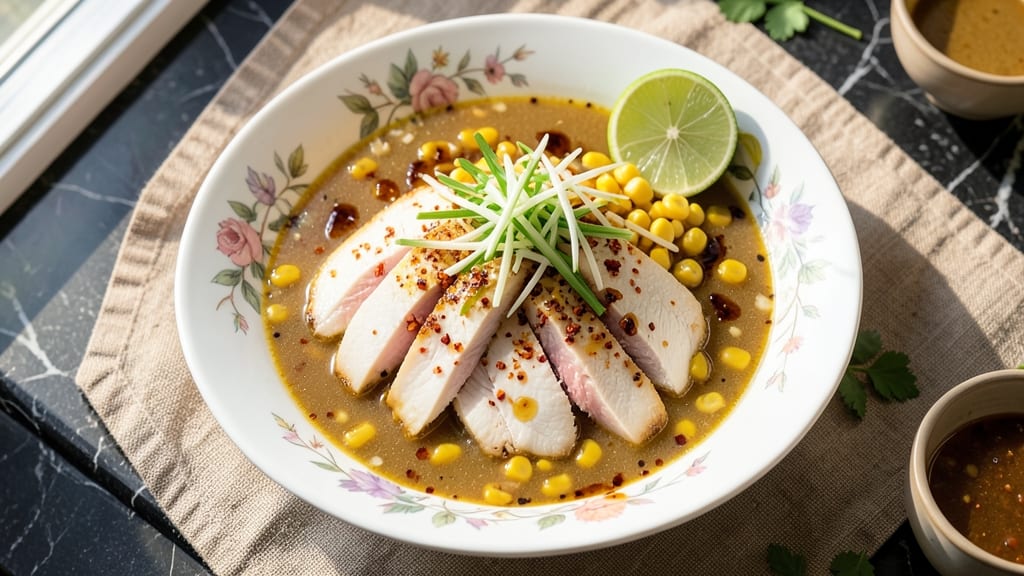
This Asian chicken and corn soup recipe delivers the perfect balance of fragrant ginger-lime broth, tender chicken, and sweet corn in every spoonful. The secret lies in building a rich aromatic base—garlic, ginger, and scallions—simmered until their flavors meld into a silky, umami-packed foundation.
I developed this recipe after craving a comforting yet vibrant soup that felt both nostalgic and fresh, blending traditional techniques with modern twists.
The beauty of this dish is its versatility—it works as a light lunch or hearty dinner, depending on how you serve it. Silky noodles absorb the fragrant broth beautifully, while the chicken stays juicy and tender.
The corn adds natural sweetness, and a touch of lime brightens every bite. What makes it special is the balance: savory broth, tender protein, and sweet vegetables all come together in one comforting bowl.
You'll start by creating the aromatic base, then simmer the chicken and corn until perfectly tender before adding the noodles for the final cook. The result is a soup that's rich in flavor but light enough to enjoy in any season.
Garnish with fresh herbs or a drizzle of chili oil for added depth—this recipe is designed to impress without being overly complicated.
Perfect for meal prep, family dinners, or sharing with friends, this soup keeps well in the fridge for up to three days, making it an ideal choice for busy weeks.
Whether you're serving it over rice or enjoying it as-is, the combination of textures and flavors will leave everyone asking for seconds.
Ingredients for asian chicken and corn soup
Fresh ginger, aromatic garlic, and silky noodles—this soup's core ingredients blend comfort and vibrancy effortlessly.
| Ingredient | Amount | Notes |
|---|---|---|
| Boneless Chicken Breast 🍗 | 1 ½ lb | Cut into 1-inch pieces |
| Fresh Corn Kernels 🌽 | 2 cups | Cut from 2-3 ears or frozen |
| Fresh Ginger 🌿 | 2 tbsp | Finely grated, aromatic base |
| Garlic Cloves 🧄 | 4 cloves | Minced for depth of flavor |
| Scallions 🧅 | ½ cup | Thinly sliced, green parts only |
| Fresh Lime Juice 🍋 | 2 tbsp | Brightens the broth |
| Low-Sodium Chicken Broth 💧 | 4 cups | Homemade or quality store-bought |
| Silken Tofu 🥬 | ½ cup | Blended for creamy texture (optional) |
| Egg Noodles 🍜 | 8 oz | Fresh or dried, silky texture |
| Sesame Oil 🫒 | 1 tbsp | For aroma, not cooking |
| Soy Sauce 🍶 | 1 tbsp | Light or dark preferred |
| Honey 🍯 | 1 tbsp | Balances flavors (optional) |
| Vegetable Oil 🫒 | 1 tbsp | For sautéing aromatics |
| Salt 🧂 | 1 tsp | Adjust to taste |
| White Pepper 🌶️ | ¼ tsp | Freshly ground for subtle heat |
Ginger and garlic are the soul of this soup—fresh is non-negotiable. Asian markets often have the best ginger, with bright, firm roots. Look for garlic with papery skins and no sprouts. I always grab extra ginger because it keeps for weeks in the freezer if grated and stored in a bag. For the corn, fresh off the cob adds sweetness, but frozen works in a pinch—just don't thaw it first. The scallions? Green parts only—the white stems are tough and don't add much flavor. Trust me, this is where the soup's brightness comes from.
No fresh ginger? Powdered works at half the amount, but it won't have that same punch. Out of soy sauce? Coconut aminos or even a splash of fish sauce (if not vegetarian) gets you close. The silken tofu is optional but adds that silky texture—blend it first so it dissolves into the broth. For the noodles, fresh egg noodles are ideal, but dried works too. Just cook them al dente—they'll finish in the hot broth. And if you're feeling fancy, swap the chicken for shredded rotisserie chicken to save time.
This soup tastes even better the next day as flavors meld—3-4 days in the fridge, no problem. Freeze broth separately for up to 3 months if you want to make a big batch. I always double the recipe because leftovers make perfect lunches. Store noodles separately if prepping ahead to avoid sogginess. Garnish with extra scallions or a drizzle of chili oil right before serving—that's when it shines.
Why You'll Love This Recipe
- One-Pot Magic: I swear by this recipe—just toss everything in one pot (chicken, corn, ginger, garlic) and let it simmer. No chopping boards full of scraps, no extra dishes to wash. The chicken practically falls apart on its own, and the corn stays tender-crisp without fuss.
- Ginger-Garlic Punch: That fresh ginger and minced garlic combo? It’s the secret weapon. The soup starts with a bright, zesty hit, then mellows into something warm and aromatic—like a hug in a bowl. Honestly, I’ll take this over takeout any day.
- Lunchbox Hero: Between us, this soup is my go-to for meal prep. Stays fresh in the fridge for days, reheats beautifully, and even travels well in a thermos. Pack it for work or school—it’s hearty enough to fill you up but light enough to keep you energized. (Yes, even on a Tuesday night.)
- Budget-Friendly Feast: Chicken breast and corn are affordable staples, and this recipe stretches them far. I’ll be real: it’s not the fanciest dish, but it’s solid, nourishing, and won’t break the bank. Plus, the leftovers taste just as good cold the next day—perfect for quick lunches.
Step-by-step instructions for Asian chicken and corn soup
Let's build this aromatic soup with layers of flavor—starting with the fragrant ginger-lime base.
Sauté Aromatics Until Fragrant
Heat the 1 tablespoon vegetable oil in a large pot over medium heat. Add the 4 cloves minced garlic cloves and 2 tablespoons finely grated fresh ginger—watch closely as they sizzle for 2-3 minutes until the ginger turns golden and the garlic releases its aroma. You'll smell that signature Asian warmth filling your kitchen.
Here's the thing—don't walk away. Ginger burns quickly, and you want it to perfume the broth without turning bitter. If it starts to darken too much, reduce the heat slightly. Add the 0.5 cup thinly sliced scallions and stir for 30 seconds until they soften just slightly but still retain their bright green color. These aromatics form the flavor foundation of your soup.
Brown the Chicken and Build the Broth
Push the aromatics to one side of the pot and add the 1.5 lb boneless chicken breast cut into 1-inch pieces. Cook for 4-5 minutes until the chicken develops a light golden crust—this creates depth of flavor in your broth. Stir occasionally to ensure even browning.
Pour in the 4 cups low-sodium chicken broth and bring to a gentle boil. Once boiling, reduce heat to medium-low and simmer uncovered for 15 minutes. You'll notice the broth starts to take on a pale golden color and the chicken becomes fork-tender. This simmering step extracts maximum flavor from the chicken and aromatics.
Add Corn and Season the Broth
Stir in the 2 cups fresh corn kernels and 1 tablespoon soy sauce. Add the 1 tablespoon honey and 2 tablespoons fresh lime juice, then bring the soup back to a gentle simmer. Cook for 8-10 minutes until the corn is tender but still holds its shape—you want it to stay slightly crisp rather than mushy.
Season with 1 teaspoon salt and 0.25 teaspoon freshly ground white pepper. Taste the broth—it should be bright, slightly sweet from the honey and lime, with a savory depth from the soy sauce. If you want extra creaminess, blend the 0.5 cup silken tofu with 1 tablespoon water until smooth, then stir it into the broth. The tofu will create a velvety texture without altering the soup's flavor profile.
Cook the Noodles and Finish
While the soup simmers, prepare the 8 oz egg noodles according to package instructions until al dente—they'll finish cooking in the hot broth. Drain the noodles but reserve ½ cup pasta water in case you need to adjust the soup's consistency later.
Add the cooked noodles to the pot and stir gently to coat them in the flavorful broth. Let the soup simmer together for 2-3 minutes—this allows the noodles to absorb some of the broth's richness. Remove from heat and let it sit for 2 minutes to allow the flavors to meld. Finish with a drizzle of 1 tablespoon sesame oil just before serving—this adds a nutty aroma that elevates the entire dish.
Serve with Fresh Garnishes
Ladle the soup into bowls and garnish with additional thinly sliced scallions and a squeeze of fresh lime juice. The bright acidity cuts through the richness of the broth, balancing all the flavors. Serve immediately while the noodles are still hot and the broth maintains its silky texture.
This soup delivers all the comforting qualities of a classic Asian chicken and corn dish—fragrant ginger, bright citrus, tender chicken, and silky noodles—all in one perfect bowl. The beauty of this recipe is that every component works together to create a harmonious balance of flavors and textures.
Pro Tips For Making Asian Chicken And Corn Soup
- Velvetize the Chicken First: Skip the raw chunks—sear thinly sliced chicken breast in oil until just opaque (about 2 minutes per side) before adding broth. I learned this the hard way: undercooked chicken turns mushy in soup, and overcooked chicken dries out. The sear locks in moisture while keeping the texture tender.
- Prep Ginger Like a Pro: Use a microplane for ginger instead of grating it—it releases more flavor without the fibrous texture. For this soup, finely mince 1 tablespoon of fresh ginger (about a 1-inch knob) and add it with the garlic. Sounds small, but it makes a real difference in depth.
- Don’t Crowd the Corn: Add corn kernels in batches, letting each wave cook for 2-3 minutes before stirring in the next. I used to dump them all in at once, and they’d turn mushy while the broth stayed undercooked. Space them out for even cooking and a satisfying bite.
- Save Time with Frozen Corn: Swap fresh corn for frozen kernels—thaw them first in warm broth instead of water to preserve texture. It’s not cheating; it’s efficient. Just toss them in 5 minutes before serving so they don’t overcook while the chicken simmers.
Common mistakes when making great asian chicken and corn soup
Overcooking Chicken
The biggest mistake is letting the chicken overcook and turn rubbery. Chicken breast is lean and dries out quickly, so once it reaches 165°F internal temperature, remove it immediately. I’ve seen people leave it in the broth too long, thinking more time equals more flavor—wrong!
The ideal texture is tender yet firm, not falling apart. Use a meat thermometer for precision, and resist the urge to peek too often. 🌡️
Skipping Aromatic Base
Rushing the ginger and garlic sauté is a common pitfall. These aromatics need 2-3 minutes of gentle cooking to release their full flavor potential. If you rush this step, your broth will taste flat.
I’ve learned the hard way—ginger burns quickly, and once it’s bitter, there’s no fixing it. Keep the heat at medium-low and watch closely. The golden color is your cue that it’s ready.
Ignoring Broth Consistency
Adding noodles to the broth too early can turn your soup into a mushy mess. Noodles should be cooked separately until al dente, then added just to finish cooking in the hot broth.
I’ve seen people dump raw noodles straight into the pot and end up with a gluey, overcooked disaster. Save ½ cup pasta water to thin the soup if needed—it’s liquid gold for adjusting texture.
Underseasoning the Broth
Many home cooks hold back on salt, thinking they can always add more later. But once the noodles are in, it’s hard to fix an underseasoned soup.
Taste your broth before adding noodles—it should be bright, slightly sweet from the honey and lime, with a savory depth from the soy sauce. Adjust with salt and white pepper before the final simmer. Trust your taste buds; this is where the magic happens. 💡
Overcrowding the Pot
Using a pot that’s too small forces the soup to boil too vigorously, which can cause the chicken to cook unevenly and the broth to turn cloudy. I use a 6-quart pot for this recipe—it gives everything room to breathe.
If your pot is too small, cook the chicken separately until just done, then add it to the finished soup. Overcrowding is a surefire way to ruin the texture and clarity of your broth.
Forgetting the Lime Juice
The lime juice is what brightens the entire dish, cutting through the richness of the broth. Skipping it or adding it too late leaves your soup flat and one-dimensional. I add the 2 tablespoons lime juice right when the corn goes in, so it has time to infuse the broth.
If you’re using bottled lime juice, opt for fresh—it makes all the difference. A squeeze at the table adds an extra layer of freshness. 🍋
Nutrition facts
Frequently asked questions
Can I substitute chicken thighs for breasts in this recipe?
Chicken thighs add even more richness and stay juicier than breasts. Use 1.5 lbs bone-in, skin-on thighs instead, and reduce the cooking time to 10-12 minutes after adding broth—they'll cook faster. The skin adds flavor to the broth, so you can remove it before serving if preferred.
How can I make this soup spicier?
Add 1-2 teaspoons of chili paste (like sambal oelek) when sautéing the aromatics, or stir in ½ teaspoon of red pepper flakes with the soy sauce. For heat with depth, finish each bowl with a drizzle of chili oil. Start with less—you can always add more!
What's the best way to store leftovers?
Store in an airtight container for up to 4 days in the fridge. The flavors actually improve overnight! Reheat gently on the stove with a splash of water or broth to restore creaminess. For freezing, remove the noodles first—they don't reheat well. Freeze broth and chicken/corn separately for up to 3 months.
Can I make this vegetarian?
Swap chicken for extra-firm tofu or mushrooms. Use 1 block tofu (pressed and cubed) or 8 oz shiitake mushrooms (sautéed first). Boost umami with 1 tbsp miso paste or 2 tbsp soy sauce. The corn and tofu/soup base will still shine!
Why does my broth look cloudy?
Cloudiness usually means the broth boiled too vigorously, causing proteins to break down. Keep heat at medium-low and skim any foam that rises. For extra clarity, strain the broth through a fine-mesh sieve after simmering. A touch of cloudiness is normal—it just means your soup is packed with flavor!