
Soups & Stews
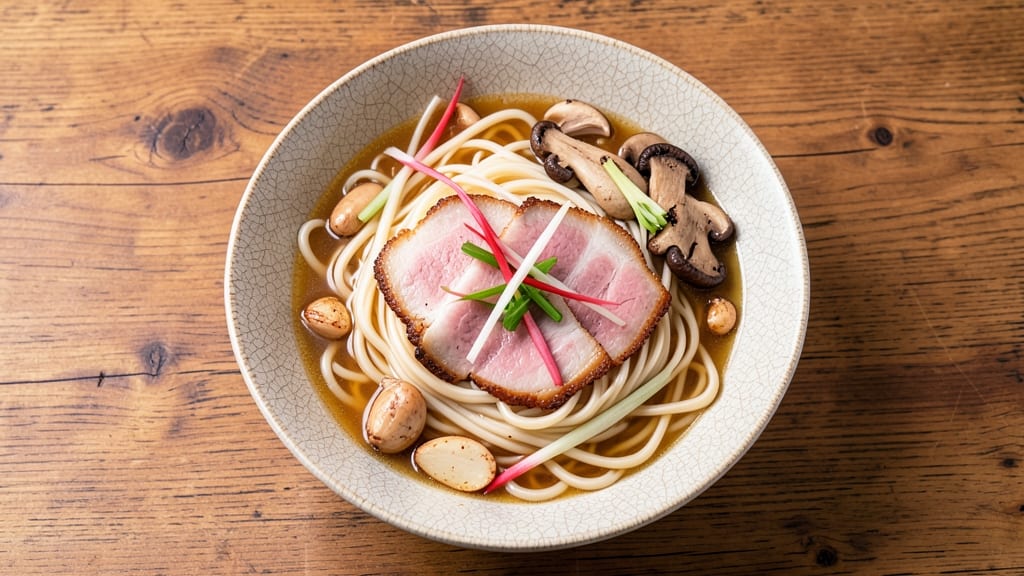
Asian ramen soup transforms simple ingredients into a bowl of comfort that feels like a hug in every slurp. 💛 The secret lies in the broth—whether you choose a rich tonkotsu base or a lighter miso-infused version—and the perfect balance of silky noodles, tender toppings, and layers of umami flavor. I’ve perfected this recipe over years of late-night cravings and weekend cooking sessions, and it’s the one dish that always delivers when you need something hearty yet light enough to enjoy any time of day.
The foundation starts with the broth, where simmered aromatics—garlic, ginger, and scallions—build depth before adding the star: either pork bones for a creamy tonkotsu or fermented miso for a bold, savory kick.
Meanwhile, the noodles cook just shy of al dente, soaking up the broth while staying firm enough to hold toppings like chashu pork, soft-boiled eggs, and crisp nori. This isn’t just ramen; it’s a customizable masterpiece where every ingredient plays a role in creating that perfect first bite.
What sets this recipe apart is the harmony of textures and flavors—creamy broth meets chewy noodles, crisp toppings cut through the richness, and a final drizzle of chili oil or sesame oil adds a bright, aromatic finish.
The result is a bowl that’s equal parts satisfying and elegant, with enough room for personalization to suit spicy lovers, miso purists, or anyone craving a bowl that tastes like home. Let’s get started.
Whether you’re making it for a cozy night in or a gathering of ramen enthusiasts, this recipe scales beautifully while keeping the soul of traditional Asian ramen intact. The key is patience—letting the broth develop its depth and the toppings shine.
Trust me, once you taste the difference between store-bought and homemade, you’ll never go back. Here’s how to make it.
Ingredients for asian ramen soup
Here's what you need to create that perfect bowl of silky ramen with charred umami broth.
| Ingredient | Amount | Notes |
|---|---|---|
| Pork Bones 🍖 | 2 lb | For tonkotsu broth, knuckle or marrow bones |
| Fresh Garlic Cloves 🧄 | 6 cloves | Smashed for aromatic depth |
| Fresh Ginger 🌿 | ½ cup | Sliced into 1/4-inch pieces |
| Scallions 🧅 | 1 whole | White and green parts separated |
| Dried Shiitake Mushrooms 🍄 | 4 whole | Rehydrated for umami richness |
| Ramen Noodles 🍜 | 2 packages | Fresh or dried, 8 oz each |
| Chashu Pork 🥓 | 1 lb | Pre-sliced or homemade |
| Soft-Boiled Eggs 🥚 | 4 whole | 6-minute cook time |
| Nori Sheets 🍣 | 4 sheets | Cut into strips for garnish |
| Sesame Oil 🫒 | 1 tbsp | Toasted for aroma |
| Chili Oil 🌶️ | 1 tbsp | Optional for heat |
| Miso Paste 🍶 | 2 tbsp | White or red miso preferred |
| Soy Sauce 🥫 | 2 tbsp | For balancing flavors |
| Green Onions 🧅 | 3 whole | Sliced for garnish |
| Sesame Seeds 🌰 | 1 tsp | Toasted for crunch |
The broth is everything. For tonkotsu, pork bones from the butcher counter give that creamy texture—look for knuckle or marrow bones. No pork? Miso paste becomes your best friend, and Trader Joe's has the best quality for a quick swap. Fresh ginger and garlic are non-negotiable here; the Asian market has the freshest, brightest pieces. I always double-check that the ginger has no fuzzy spots—those mean it's past its prime. Dried shiitake mushrooms? Soak them in hot water first—they triple in size and pack insane flavor. The ramen noodles? Fresh if you can find them, but dried works too (just cook them separately).
No chashu pork? Thinly sliced pork shoulder works in a pinch—just braise it with soy sauce and mirin. Soft-boiled eggs can be tricky, but 6 minutes in boiling water gives you that perfect runny yolk. Nori sheets from Japanese grocery stores stay crisp longer than the ones at regular supermarkets. Sesame oil and chili oil? Trader Joe's has great options, but if you're feeling fancy, toast your own sesame seeds for the garnish. The miso paste should smell funky and fermented—if it smells bland, it's past its prime. And soy sauce? Red label, not light—it's got more depth.
Broth keeps for 5 days in the fridge, and freezes beautifully for 3 months. I always make extra—it's perfect for rice bowls or dumplings later. The chashu pork reheats well, but add a splash of water to keep it moist. Store nori sheets in a cool, dark place—they go rancid fast in heat. Noodles? Cook them fresh if possible, but dried noodles can be prepped ahead and stored in the fridge for 2 days1 week in the fridge, but I eat them within 2 days—no one wants a sad, rubbery egg.
Why You'll Love This Recipe
- Porky Perfection: The rich, gelatinous broth from pork bones? Chef’s kiss. It’s the secret weapon—no fancy stock pots needed, just a slow simmer in your biggest pot. Honestly, the first time I tasted that deep umami, I canceled my takeout plans forever.
- Garlic-Ginger Magic: That first whiff of fresh garlic and ginger hitting the hot oil? Instant mood booster. The shiitake mushrooms soak up all the flavor, while the scallions add a bright finish—like a hug in a bowl. (Yes, even on a Tuesday night.)
- Leftovers That Shine: This broth actually gets better the next day. I make a big batch on Sundays, and by Wednesday, it’s the star of my lunch. Freeze extras in ice cube trays—just toss a few cubes into noodles later for instant flavor.
- Budget-Friendly Comfort: Pork bones and dried mushrooms stretch your dollar without sacrificing taste. Between us, this is the recipe I turn to when grocery money’s tight, but I still want to feel like I’m eating at a ramen shop. (Spoiler: You will.)
Step-by-step instructions for Asian ramen soup
Here's how to build a rich, layered ramen with deep umami broth and silky noodles.
🔥 Step 1: Build the Tonkotsu Broth from Pork Bones
Place the 2 lb pork bones in a large stockpot and cover with cold water by 2 inches. Bring to a boil over medium-high heat, then immediately reduce to a gentle simmer—you want just tiny bubbles breaking the surface, not a rolling boil. Skim off any foam that rises to the surface for the first 30 minutes using a fine-mesh skimmer. This removes impurities and gives you a crystal-clear broth.
Add the 6 smashed garlic cloves and 0.5 cup sliced ginger (cut into ¼-inch pieces) after 1 hour of simmering. These aromatics will infuse the broth with their flavors without overpowering it. Let the broth simmer uncovered for 4-5 hours, adding water as needed to maintain the liquid level. The longer it cooks, the richer and more gelatinous the broth becomes—this is what gives ramen its signature silkiness.
🍳 Step 2: Enhance the Broth with Umami Layers
After 4 hours, strain the broth through a fine-mesh sieve into a clean pot, discarding the solids. Return the broth to the pot and add the rehydrated dried shiitake mushrooms (soak them in hot water for 20 minutes first, then chop). Stir in the 2 tbsp miso paste and 2 tbsp soy sauce, letting the mixture simmer gently for 15 minutes to meld the flavors. The miso adds depth, while the soy sauce balances the richness.
Here's the thing—don't rush this step. The miso needs time to dissolve completely and integrate into the broth. If you notice any sediment at the bottom, that's perfectly normal and actually adds to the complexity of the flavor. Taste the broth now—it should be rich, slightly sweet, and deeply savory. If it needs more saltiness, add a pinch more soy sauce.
👨🍳 Step 3: Prepare the Chashu Pork and Soft-Boiled Eggs
While the broth simmers, prepare the 1 lb chashu pork by slicing it into ¼-inch thick pieces. If you're using pre-sliced chashu, skip this step. For the 4 soft-boiled eggs, bring a small pot of water to a gentle simmer and cook the eggs for exactly 6 minutes—this gives you a runny yolk and firm white. Immediately transfer them to an ice bath to stop the cooking process, then peel and set aside.
Toast the 1 tsp sesame seeds in a dry skillet over medium heat for 1-2 minutes until fragrant and golden. This adds a nutty crunch to your ramen. Cut the 4 nori sheets into ¼-inch wide strips for garnish. These elements will come together at the end to elevate your bowl from good to extraordinary.
🥘 Step 4: Assemble the Ramen Bowls
Bring a separate pot of water to a boil and cook the 2 packages ramen noodles according to package instructions—usually 3-4 minutes for fresh noodles or 2 minutes for dried. Drain and rinse briefly under cold water to stop the cooking, then divide them evenly among 4 bowls. Ladle the hot broth over the noodles, filling each bowl about ¾ full. The heat of the broth will finish cooking the noodles perfectly.
Here's where it gets fun—top each bowl with 2 slices of chashu pork, 1 soft-boiled egg, and a drizzle of 1 tbsp sesame oil and 1 tbsp chili oil (if using). Sprinkle with the toasted sesame seeds, sliced green onions, and nori strips. The contrast of textures—silky noodles, tender pork, runny egg yolk, crispy nori—is what makes ramen so satisfying.
🍽️ Step 5: Serve Immediately with Garnishes
Serve each bowl right away while the broth is steaming hot. The aroma alone should make your mouth water—smoky, savory, with hints of garlic and ginger. The first bite should deliver a perfect harmony: the silky broth clinging to the noodles, the rich chashu pork melting in your mouth, and the creamy egg yolk breaking against the sharp nori and crunchy sesame.
Don't forget the classic ramen technique: slurp! The noise isn't just cultural—it helps cool the hot broth and gets every last drop of flavor into your mouth. If you make this ahead, store the broth and components separately and reassemble when ready to eat, as the textures and temperatures matter most when everything is fresh.
Pro Tips For Making Asian Ramen Soup
- Char the Bones First: Don’t rush the pork bones—sear them hard over high heat until they turn deep brown and crackle. I used to skip this, and my broth never had that rich, caramelized depth that makes the difference between good and really good ramen.
- Slice Ginger Thinly: Skip the big chunks—slice the ginger paper-thin (almost like rice paper) so it infuses flavor without turning the broth bitter. My grandmother swore by this, and she was right: it melts into the broth instead of sitting there like a chewy afterthought.
- Skip the Boil: Let the broth simmer gently—a low, steady bubble—after the initial 30 minutes. Boiling too hard scatters oils and makes the broth cloudy. I learned this the hard way after my first batch looked like soup from a sad cafeteria.
- Soak Shiitake Right: Rehydrate dried shiitake in hot (not boiling) water for 20 minutes, then slice thick—about ¼-inch. The hot water keeps them from absorbing too much broth later, and the thick slices hold their texture. (Yes, even if you’re impatient like me.)
Essential equipment for this recipe
Stockpot Essentials
Your broth is the soul of ramen, so start with a large, heavy-bottomed stockpot—I swear by All-Clad’s 8-quart stainless steel for even heat distribution. A fine-mesh skimmer (like OXO’s 12-inch) is non-negotiable for skimming foam without losing broth.
For long simmers, a lid with a vented steam hole prevents pressure buildup. 🔥
Broth Simmer Tools
Invest in a digital meat thermometer (I use Thermoworks Smoke) to monitor broth temperature—ideal range is 185-195°F. A slotted spoon helps fish out aromatics like garlic and ginger without breaking them.
For straining, a colander with a fine mesh (like Kitchy’s) catches even the tiniest solids, leaving your broth crystal clear.
Noodle Prep Gear
Fresh ramen noodles need a sharp chef’s knife (my go-to is Wüsthof’s 8-inch) for clean cuts. A fine-mesh strainer (like OXO’s 10-inch) rinses noodles perfectly without breaking them. For portioning, 4 wide, shallow bowls (I use Corelle’s stoneware) let you ladle broth evenly.
A ladle with a pour spout (like Le Creuset’s) prevents spills when pouring hot broth. ✨
Topping Prep Tools
Slice chashu pork with a slicing knife (I love Victorinox’s 10-inch) for paper-thin cuts. A timer (or your phone’s) ensures eggs cook to exactly 6 minutes for that perfect runny yolk.
Toast sesame seeds in a small nonstick skillet (like Made In’s) to avoid burning. Cut nori strips with sharp kitchen shears—they’re easier than a knife for crisp edges.
Garnish & Finish
Drizzle oils with a small squeeze bottle (like OXO’s 4-oz) for precise control. A microplane (I use Barbaglio’s) zest fresh ginger and garlic for garnishes.
Keep toppings organized in small ramekins—one for sesame seeds, one for nori, one for chili oil. A slotted spoon helps place toppings neatly without sogginess. 💫
Nutrition facts
Frequently asked questions
Can I make this ramen without pork bones?
For a vegetarian version, replace pork bones with shiitake mushrooms and kelp to build umami depth. Simmer 2 cups dried mushrooms and 1 tbsp kelp powder in 8 cups vegetable broth for 2 hours, then add miso and soy sauce. The broth will be lighter but still packed with flavor.
How do I adjust the spice level?
Start with the base recipe, then customize: Add ½ tsp chili flakes to the broth for mild heat, or 1 tbsp gochujang (Korean chili paste) for deep spice. For extra kick, drizzle 1 tsp chili oil per bowl. Balance with a splash of rice vinegar if needed—it brightens the flavor without overpowering.
Can I use instant ramen noodles?
While traditional ramen noodles are ideal, instant noodles work in a pinch! Use 2 packs of high-quality instant ramen (like Nissin's) and cook them for 1 minute less than package instructions. Rinse briefly in cold water to remove excess starch, then assemble as directed. The texture won't be identical, but the flavor will still shine.
How long can I store the broth?
The broth keeps for 5 days in the fridge in an airtight container, or 3 months in the freezer. For best results, cool it completely before refrigerating and leave 1-inch headspace in the container. Reheat gently on the stove—never microwave—to preserve its silky texture.
What if my broth tastes too salty?
Don't worry—dilute it by adding 1 cup hot water per bowl of broth and simmer for 5 minutes to balance the flavor. If you're using miso, reduce it to 1 tbsp next time. For immediate fixes, add a splash of cold water or a pat of butter (it coats the tongue and mutes saltiness). Taste as you go!