
Soups & Stews
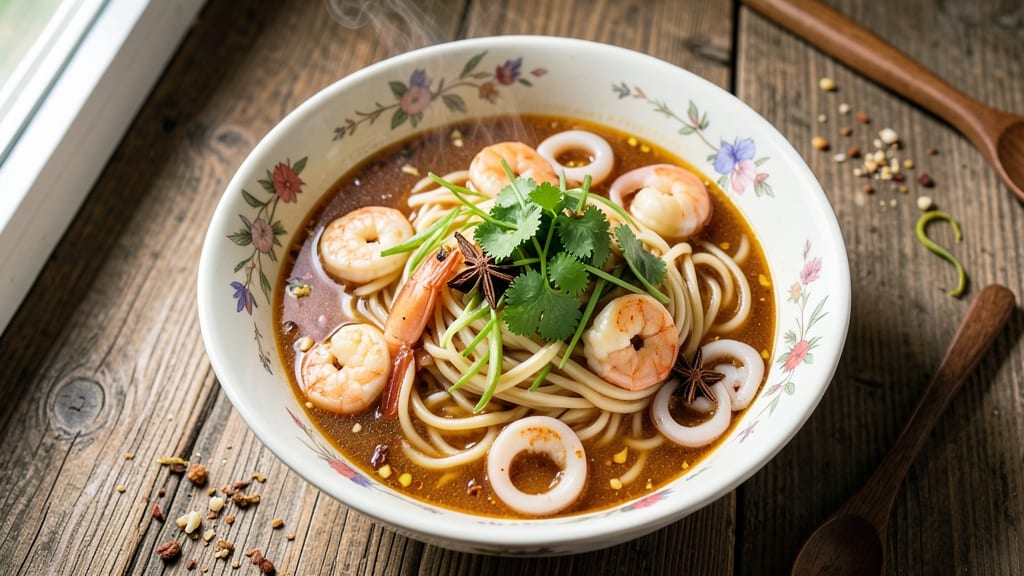
This Asian seafood noodle soup recipe transforms simple ingredients into a fragrant, umami-rich bowl that tastes like a fusion of pho and ramen. The star-anise-infused broth builds deep, aromatic layers while chewy rice noodles soak up every drop of flavor, creating a balance of textures that's impossible to resist.
I perfected this after years of testing—each component plays a role in delivering that perfect first sip.
The secret lies in the broth: simmering star anise, ginger, and aromatics until they release their essence into the liquid, then finishing with fish sauce and lime for brightness. Meanwhile, fresh shrimp and squid cook just until tender, ensuring they stay plump and flavorful.
The rice noodles are pre-cooked to the ideal chewiness, so they're ready in minutes without turning mushy.
What you'll end up with is a steaming bowl of golden broth, tender seafood, and perfectly textured noodles—each bite delivering a harmonious blend of salty, sweet, and tangy flavors.
The aroma alone will have everyone gathering around the table, while the first spoonful confirms this is restaurant-quality comfort food you can make at home.
This recipe works as a weeknight dinner or impressive meal for guests, with optional additions like fresh herbs, chili oil, or lime wedges to customize it to your taste. The broth makes enough for leftovers, which only deepen in flavor overnight. Let's get cooking!
Ingredients for asian seafood noodle soup
Star anise, ginger, and seafood transform simple pantry staples into restaurant-quality noodle soup.
| Ingredient | Amount | Notes |
|---|---|---|
| Fresh Shrimp (peeled, deveined) 🦐 | 1 lb | Medium size, tail-on preferred |
| Squid (cleaned, bodies cut into rings) 🐙 | 12 oz | Tender squid, patted dry |
| Rice Noodles (flat, chewy) 🍜 | 8 oz | Dried, 3-inch width preferred |
| Star Anise 🌿 | 2 whole | High-quality, aromatic |
| Fresh Ginger (peeled) 🧄 | 2 tbsp | Grated, aromatic |
| Garlic Cloves 🧄 | 6 cloves | Minced, fresh preferred |
| Coconut Milk (full-fat) 🥥 | 1 can | 13.5 oz can, unsweetened |
| Fish Sauce 🍶 | 2 tbsp | Red Boat preferred |
| Lime Juice 🍋 | 2 tbsp | Freshly squeezed |
| Chicken Stock 💧 | 4 cups | Homemade or quality store-bought |
| Green Onions 🧅 | 4 whole | Sliced, for garnish |
| Fresh Thai Basil 🌿 | ¼ cup | Packed, stems removed |
| Sesame Oil 🫒 | 1 tsp | Toasted, for finishing |
| Salt 🧂 | 1 tsp | Diamond Crystal preferred |
| White Pepper 🌶️ | ½ tsp | Freshly ground |
The star anise is non-negotiable here—it's the aromatic backbone that separates this from regular ramen. Look for whole pods at Asian markets or bulk spice sections, not the ground version. Trader Joe's and Whole Foods usually carry good quality. Fresh ginger matters too; the peel-on variety from Costco works great if you can't find fresh. For the seafood, shrimp with tails adds presentation, but tails-off is fine. Squid should be tender—ask your fishmonger to clean it if you're not comfortable doing it yourself. The rice noodles? 3-inch width gives that perfect chew; anything thinner gets mushy too fast.
No star anise? 1 cinnamon stick plus 1/2 tsp anise seeds gets you close, but it won't be identical. Swapping coconut milk? Heavy cream at half the amount works in a pinch, though the flavor won't be as rich. Fish sauce missing? Soy sauce plus a pinch of sugar mimics some of the umami. For the broth, low-sodium chicken stock is best—add extra salt at the end. The lime juice should be freshly squeezed; bottled won't cut it here. And if you can't find Thai basil, regular basil plus a pinch of cinnamon does the trick.
Broth keeps 5 days in the fridge and freezes beautifully for 3 months. I always make extra—it's perfect for dipping rice or tossing with greens. The noodles cook in minutes, but soak them in warm water for 5 minutes before adding to the soup to prevent clumping. Store seafood in the coldest part of your fridge and use within 2 days for best texture. The herbs? Wrap them in damp paper towels and store in a sealed bag—they'll stay fresh for 1 week.
Why You'll Love This Recipe
- No-Fuss Prep: The shrimp and squid take five minutes to ready—just peel, devein, and slice. I swear, that’s it. No fancy techniques, no stress, just fresh seafood that cooks in the same broth where it simmers to perfection.
- Umami Bomb: Star anise and ginger? That’s the magic duo here. The broth develops this deep, aromatic warmth while the shrimp stays tender and the squid rings melt like silk. Honestly, it’s the kind of flavor that makes you pause mid-bite.
- Lunchbox Hero: Between us, this is my go-to for meal prep. The noodles hold up for days, and I’ll pack containers with extra broth—perfect for dipping rice or tossing with veggies. My kids even ask for it on school nights.
- Budget-Friendly Luxury: Squid and shrimp stretch further than you’d think, especially when paired with rice noodles. I’ll make a big pot on Sunday, and it feeds my family for three weeknight dinners without breaking the bank. (Yes, even on a Tuesday night.)
Step-by-step instructions for star-anise infused seafood noodle soup
Here's how to build a fragrant, aromatic broth that transforms simple ingredients into a restaurant-worthy dish.
Build the Star-Anise Infused Broth
In a large pot, combine the 4 cups chicken stock, 2 whole star anise, 2 tablespoons peeled fresh ginger, and 6 cloves minced garlic. Bring to a gentle simmer over medium heat and let it steep for 15 minutes. The star anise will release its warm, licorice-like aroma into the broth, creating the foundation of your soup.
While simmering, keep an eye on the broth—it should smell deeply aromatic with hints of spice. If the star anise begins to float too high or the broth reduces too much, reduce the heat to low. This step is all about extracting those complex flavors without letting the broth evaporate completely.
Add Coconut Milk and Season the Base
Once the star anise infusion is complete, remove the star anise and ginger from the broth (you can discard them). Stir in the 1 can full-fat coconut milk and let the mixture warm through for 3-4 minutes—just until the coconut milk is fully incorporated and the broth is smooth.
Add the 1 teaspoon salt and ½ teaspoon freshly ground white pepper, then taste the broth. You want a balance of saltiness and subtle spice—this is your flavor baseline. If it needs more depth, add 1 tablespoon fish sauce now. The coconut milk will give the broth a velvety texture while keeping it light enough for the seafood to shine.
Cook the Seafood Until Just Done
Increase the heat to medium-high and add the 12 ounces cleaned squid rings and 1 pound peeled, deveined shrimp. Cook for 2-3 minutes until the squid turns opaque and slightly curled and the shrimp turns pink and opaque—they should cook just until done, as overcooking makes them rubbery.
Here's the thing—seafood cooks fast. Watch closely and remove the shrimp and squid as soon as they're done. Transfer them to a plate and tent loosely with foil to keep warm. The broth should still be simmering gently, carrying all those beautiful seafood flavors.
Finish with Lime and Noodles
Return the pot to medium heat and stir in the 2 tablespoons freshly squeezed lime juice. This brightens the broth and cuts through the richness of the coconut milk. Meanwhile, soak the 8 ounces rice noodles in hot water for 5-7 minutes until pliable but still slightly firm. Drain and add them directly to the pot with the broth.
Toss everything together for 1-2 minutes until the noodles are fully coated in the broth. The noodles should be tender but still hold their shape—chewy, not mushy. If the broth seems too thick, add ½ cup hot water to loosen it. The lime juice will make the soup sing with a perfect balance of tangy and savory.
Garnish and Serve Immediately
Divide the soup into bowls, then drizzle each serving with 1 teaspoon toasted sesame oil. Top with 4 sliced green onions and ¼ cup packed fresh Thai basil. The sesame oil adds a nutty depth, while the basil and green onions bring freshness and color.
Serve right away—this soup is best enjoyed piping hot, with the seafood still warm and the noodles chewy. The star-anise-infused broth will linger on your palate, making every spoonful feel like a little vacation. Pair it with a crisp white wine or a cold beer to complement the flavors.
Pro Tips For Making Asian Seafood Noodle Soup
- Parboil the Squid First: I learned this the hard way—tossing raw squid rings into simmering broth turns them rubbery. Instead, blanch them in boiling water for 20 seconds, then shock in ice water. This keeps them tender while the broth builds flavor. (Yes, even if you’re impatient like me.)
- Toast the Star Anise: Skip this, and your broth tastes like a sad, underwhelming perfume. Dry-toast the whole star anise in a hot pan for 30 seconds until fragrant—it deepens the anise flavor without bitterness. Just don’t burn it; you’ll regret that bitter aftertaste.
- Soak Noodles Separately: Dumping rice noodles straight into the hot broth makes them gummy. Soak them in warm water for 5–7 minutes first, then drain and add them to the soup just before serving. They’ll absorb the broth perfectly without turning to mush.
- Don’t Overcrowd the Protein: I used to dump all the shrimp and squid in at once, and the broth would turn cloudy. Instead, add the shrimp last (they cook in 2 minutes) and remove the star anise before the squid finishes. This keeps the broth clear and the seafood bright.
Serving suggestions for this asian seafood noodle soup
Garnish Like a Pro
Fresh Thai basil and green onions are non-negotiable for that restaurant-quality finish. I like to slice the green onions into ½-inch pieces and scatter them evenly across each bowl—they add a crisp contrast to the rich broth.
For the basil, use ¼ cup per serving, tearing the leaves rather than chopping to preserve their delicate texture. A final drizzle of toasted sesame oil (just ½ teaspoon per bowl) adds nutty warmth that ties everything together. 🌿
Bowl Presentation
Use deep, wide bowls—preferably ceramic or stoneware—to showcase the vibrant layers of your soup. I love how the golden broth contrasts with the white rice noodles and pink seafood.
For extra flair, arrange the seafood in a sunburst pattern around the edges of the bowl before adding the noodles. This makes the dish look even more inviting when served. A sprinkle of crushed white pepper on top adds a subtle visual pop. ✨
Side Pairings
This soup stands alone, but a crisp Vietnamese summer roll on the side adds a refreshing crunch. I also love serving it with steamed jasmine rice for those who want extra carbs.
For a modern twist, pair it with pickled vegetables—like carrots and daikon in rice vinegar—to cut through the richness. A cucumber salad with lime and chili flakes keeps things light. 🥒
Drink Recommendations
For a classic pairing, reach for a dry Riesling—its acidity complements the coconut and lime beautifully. If you prefer beer, a light lager like Asahi keeps the palate clean.
For something non-alcoholic, sparkling yuzu soda adds a citrusy lift that mirrors the lime in the soup. Avoid heavy reds or dark beers—they’ll overpower the delicate seafood flavors. 🍷
Make-Ahead Garnishes
Prep your garnishes ahead to save time. Store chopped green onions in a sealed container in the fridge for up to 3 days. For Thai basil, wrap it in a damp paper towel inside a plastic bag—it stays fresh for 5-7 days.
Toast your sesame oil in a small pan over low heat for 2-3 minutes until fragrant, then cool completely before storing. This way, you can assemble the soup in minutes when guests arrive. 💡
Leftovers Strategy
Store leftovers in an airtight container with the broth and seafood separated from the noodles. Reheat the broth and seafood together over medium-low heat for 5 minutes, then add the noodles just before serving.
The broth actually tastes better the next day as the flavors meld further. Garnish with fresh herbs when reheating to revive the presentation. ❄️
Nutrition facts
Frequently asked questions
Can I substitute shrimp with other seafood?
This recipe works beautifully with white fish fillets like cod or halibut (cut into bite-sized pieces), or even scallops for extra luxury. If using fish, cook it for 3-4 minutes until just opaque. For shellfish, clams or mussels add great texture—just steam them open first in the broth before adding noodles.
Why does my broth taste too bitter?
Bitterness usually comes from overcooking the aromatics or using low-quality stock. Reduce simmer time to 10-12 minutes for star anise and ginger, and use high-quality chicken stock. A splash of coconut milk or a squeeze of lime juice at the end also helps balance bitterness. Never boil the broth—keep it at a gentle simmer.
How do I make this gluten-free?
Replace regular rice noodles with gluten-free rice noodles (check labels for certification). For extra safety, verify all ingredients: fish sauce (some contain wheat), chicken stock (check for soy sauce additives), and sesame oil (toasted versions are often safe but verify). Tamari instead of soy sauce is another good precaution.
Can I make this soup spicier?
Yes! Add 1-2 slices of fresh chili (like Thai bird's eye) when simmering the broth, or finish with chili oil or sriracha drizzle. For heat lovers, toss in ½ teaspoon of chili flakes with the fish sauce. Remember, seafood pairs well with heat—just don't overpower the delicate flavors!
What's the best way to store leftovers?
Store broth and seafood separately from noodles in airtight containers for up to 3 days. Reheat broth and seafood together over medium-low heat for 5 minutes, then add noodles just before serving. The broth actually improves overnight! For longer storage, freeze broth alone for up to 3 months—it reheats beautifully.