
Soups & Stews
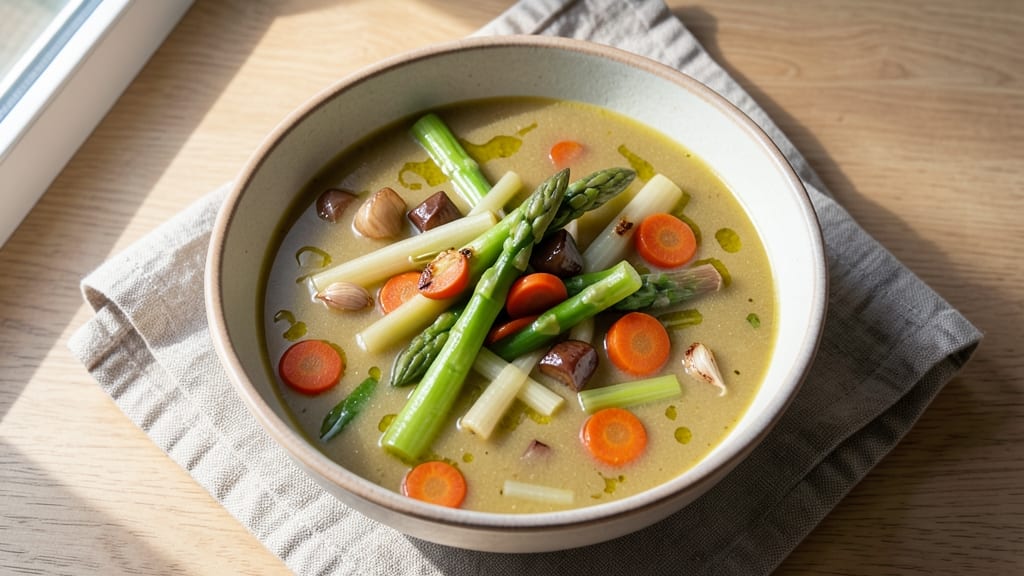
This asparagus broth soup recipe transforms humble spring asparagus into a velvety, umami-packed soup that tastes like spring in a bowl. The secret lies in slow-simmered asparagus stems—often discarded—combined with aromatic vegetables and herbs to create a broth so rich it rivals chicken-based soups.
I developed this recipe after realizing how much flavor we waste by trimming asparagus spears, and it became an instant weeknight favorite.
The process is straightforward but yields restaurant-quality results: sautéed onions and garlic form the flavor base, while asparagus stems and vegetable broth build depth. A touch of white wine brightens the broth before blending, creating a silky texture that coats every spoonful.
The key is patience—simmering the broth for at least 30 minutes allows the asparagus to release its natural sweetness and earthiness.
What you'll end up with is a soup that's equally satisfying as a light lunch or comforting dinner. The asparagus adds a subtle sweetness that balances the savory broth, while fresh herbs and a squeeze of lemon add brightness.
Garnish with toasted almonds or crispy croutons for texture, and you've got a dish that's elegant yet approachable.
This recipe works equally well with fresh or frozen asparagus, making it versatile for any season. The broth freezes beautifully, so you can make a big batch and enjoy it all week. Perfect for vegetarian meals or as a starter that impresses without being overly complicated.
Ingredients for asparagus broth soup
Spring asparagus, aromatic vegetables, and a touch of wine create this velvety, umami-rich soup.
| Ingredient | Amount | Notes |
|---|---|---|
| Asparagus Stems 🌱 | 1 lb | Trimmed from spears, chopped |
| Asparagus Spears 🌱 | 1 bunch | Tough ends trimmed, chopped |
| Yellow Onions 🧅 | 1 medium | Diced, about 1 cup |
| Carrots 🥕 | 2 medium | Peeled, chopped into chunks |
| Celery Stalks 🧅 | 3 whole | Trimmed, chopped |
| Garlic Cloves 🧄 | 4 cloves | Peeled, minced |
| Vegetable Broth 💧 | 4 cups | Low-sodium preferred |
| Dry White Wine 🍷 | ½ cup | Sauvignon Blanc or Pinot Grigio |
| Fresh Thyme 🌿 | 2 sprigs | Leaves only, stems removed |
| Fresh Parsley 🌿 | ¼ cup | Chopped, for garnish |
| Extra-Virgin Olive Oil 🫒 | ¼ cup | For sautéing |
| Lemon Juice 🍋 | 2 tbsp | Freshly squeezed |
| Salt 🧂 | 1 tsp | Diamond Crystal preferred |
| Black Peppercorns 🌶️ | ½ tsp | Freshly cracked |
| Toasted Almond Slices 🥜 | ¼ cup | For garnish, optional |
The asparagus stems are the star—look for bright green, firm spears at the grocery store. Whole Foods or local farmers markets often carry the freshest, but any supermarket asparagus works if it's crisp. Trim the tough ends from the spears (about 1 inch) and save them for the broth. The carrots and celery should be firm with no soft spots, and the yellow onions should have a vibrant color—not dried out or sprouting. Fresh thyme and parsley make all the difference, so grab a bunch and use half for this recipe, saving the rest for other dishes.
No white wine? Vegetable broth with a splash of apple cider vinegar works in a pinch. Fresh herbs unavailable? Dried thyme at one-third the amount is fine, but the flavor won't be as bright. The vegetable broth can be homemade (simmer veggie scraps with herbs) or store-bought—just check for low sodium. For extra depth, add a splash of soy sauce or miso paste (about 1 tsp) to the broth while simmering. The almonds? Toast them in a dry pan for 3-4 minutes until fragrant—they add a lovely crunch to the finished soup.
This soup tastes even better the next day as flavors meld. Store in an airtight container in the fridge for up to 5 days, or freeze for 3 months (leave room at the top for expansion). To reheat, warm gently on the stove with a splash of water or broth. The broth freezes beautifully—make a double batch and enjoy it all week. Garnish with fresh herbs and almonds right before serving for maximum freshness.
Why You'll Love This Recipe
- Uses Every Bit: I swear by this recipe because it turns scraps into gold. Those asparagus stems? Normally I toss them, but here they melt into the broth for a depth you’d never guess. No waste, just flavor—like a free upgrade.
- Rich Without Effort: The onions and carrots caramelize just enough to give it that warm, homey base, but it’s not fussy. Simmer them low and slow, and the broth becomes this velvety, umami-packed liquid that tastes like you spent hours. (Spoiler: You didn’t.)
- Lunchbox Magic: Between us, this soup is my secret weapon for meal prep. Make a big batch, and it’s lunch for days—just reheat and add a sprinkle of fresh spears on top. Honestly, my kids beg for it, and that’s saying something when they’d rather eat crackers.
- Budget-Boosting Staple: Celery, carrots, onions—those are the holy trinity of cheap, long-lasting veggies. Add in asparagus (often on sale in spring), and you’ve got a soup that’s cheaper than takeout but way more satisfying. Plus, it freezes like a dream.
Step-by-step instructions for asparagus broth soup
Here's how to transform simple garden vegetables into a velvety, umami-packed soup that highlights spring's finest flavors.
Prepare and Sauté the Vegetable Base
Heat the 0.25 cup extra-virgin olive oil in a large pot over medium heat until shimmering. Add the 1 medium diced yellow onions, 2 medium chopped carrots, and 3 whole chopped celery stalks. Cook for 8-10 minutes until the vegetables soften and begin to caramelize at the edges—this builds the soup's foundational depth of flavor.
Stir in the 4 cloves minced garlic and cook for 30 seconds until fragrant. Here's the thing—don't let the garlic burn. Remove the pot from heat if it starts to darken too quickly. The aroma should fill your kitchen, signaling the base is ready for the next layer of ingredients.
Develop the Broth and Wine Foundation
Return the pot to medium heat and add the 2 sprigs fresh thyme leaves and 1 tsp salt. Pour in the 0.5 cup dry white wine and let it simmer for 3-4 minutes until mostly evaporated. This step concentrates the wine's acidity, which brightens the earthy flavors of the vegetables.
Next, add the 4 cups vegetable broth and bring to a gentle simmer. Here's where the magic happens: the broth should just barely bubble at the edges, not boil vigorously. This controlled simmer extracts maximum flavor without making the soup cloudy. Let it cook for 10 minutes to meld all the ingredients together.
Incorporate the Asparagus and Season
Add the 1 lb chopped asparagus stems and 1 bunch chopped asparagus spears to the simmering broth. Cook for 8-10 minutes until the asparagus is tender but still holds its shape—you want it to be fork-tender, not mushy. The stems will break down slightly, releasing their earthy essence into the broth.
Season with the 0.5 tsp freshly cracked black peppercorns and adjust the salt if needed. Taste the soup at this stage—it should be flavorful but balanced. If it needs brightness, stir in 1 tablespoon of the lemon juice. The remaining 1 tablespoon will be used later for garnish.
Blend for Silky Texture (Optional)
For a completely smooth soup, use an immersion blender to purée the soup directly in the pot until silky. If you prefer some texture, simply mash a portion of the soup with a potato masher and stir it back in. The choice depends on your preferred consistency—both versions are delicious.
Return the soup to a gentle simmer for 5 minutes to allow any blended flavors to meld. The soup should now have a velvety texture with pockets of asparagus flavor. If it's too thick, add 2-3 tablespoons of water to reach your desired consistency. The soup should coat the back of a spoon but still be light enough to sip easily.
Finish and Serve with Elegance
Remove the pot from heat and stir in the remaining 1 tablespoon lemon juice. This final acidity brightens all the flavors and prevents the soup from tasting flat. Ladle the soup into bowls and garnish each serving with 2 tablespoons chopped fresh parsley and 1 tablespoon toasted almond slices for crunch and visual appeal.
Serve immediately while hot, as the flavors continue to develop even after cooking. The toasted almonds add a delightful contrast to the soup's earthy depth, while the parsley provides a fresh finish. Each spoonful should deliver a harmonious blend of umami, brightness, and spring's freshest flavors.
Pro Tips For Making Asparagus Broth Soup
- CHAR THE ONIONS FIRST: I learned this the hard way—skip this step, and your soup will taste raw. Slice onions finely, then cook them in a dry pot over medium heat until they’re deep golden, not just soft. The caramelization adds sweetness that balances the earthy asparagus.
- USE ASPARAGUS STEMS: Tossing the woody stems feels wasteful, but they’re flavor gold. Chop them into ½-inch chunks and toss them in with the spears—they’ll break down into a rich, umami base. (Yes, even if they look tough.)
- SIMMER LOW AND LONG: After adding broth, keep the heat at a bare simmer—no boiling. Too much heat turns asparagus bitter and scatters flavors. Thirty minutes of gentle bubbling extracts the best flavor without overcooking.
- SAVE TIME WITH FROZEN VEGETABLES: Fresh is ideal, but frozen carrots and celery work just as well—no chopping, no mess. Just toss them in whole (or pre-chopped) and let the broth do the work. (Your knife will thank you.)
Best sauces and condiments for these flavors
Creamy Garlic Sauce
For a richer texture, stir in 2 tablespoons of coconut cream or ½ cup heavy cream at the end of cooking. Heat the soup gently with the cream until just warmed through—this adds a luxurious mouthfeel without overpowering the asparagus flavors.
A splash of white miso paste (1 tsp) deepens the umami profile beautifully. 🥄
Lemon-Herb Aioli
Whisk together ¼ cup mayonnaise, 1 tbsp lemon juice, 1 tbsp chopped fresh dill, 1 tsp Dijon mustard, and a pinch of salt for a bright, herby drizzle.
Spoon a dollop over each bowl of soup just before serving—it adds a tangy contrast that cuts through the earthy asparagus. Store any leftovers in an airtight container for up to 3 days.
Crispy Shallot Topping
Sauté 3 thinly sliced shallots in 1 tbsp olive oil over medium-high heat for 5-6 minutes until golden and crisp. Sprinkle these over the soup right before serving for a sweet, caramelized crunch.
For extra drama, add a pinch of flaky sea salt on top. This topping elevates the dish to restaurant-quality in seconds. 🌟
Spicy Chili Oil
Infuse ½ cup neutral oil (like avocado or grapeseed) with 1 tbsp red chili flakes and 2 cloves smashed garlic by heating gently for 5 minutes. Strain and drizzle 1 teaspoon over each bowl of soup.
The heat balances the soup's earthiness while adding a smoky depth. Store the remaining oil in a cool, dark place for up to 2 weeks.
Miso-Ginger Swirl
Combine 1 tbsp white miso paste, 1 tsp grated fresh ginger, and 1 tbsp warm water in a small bowl. Stir until smooth, then drizzle over the soup. The ginger adds a zesty kick while the miso enhances the umami.
For extra richness, add a swirl of sesame oil on top. This pairing works especially well with the toasted almond garnish. 💛
Herbed Butter Drizzle
Mix 2 tbsp softened butter, 1 tbsp chopped chives, ½ tsp lemon zest, and a pinch of salt. Dot small pieces over the soup just before serving. The butter melts into the warm broth, creating a velvety finish.
For a vegetarian twist, use vegan butter. This is my go-to for adding a touch of indulgence without overpowering the delicate asparagus flavors.
Nutrition facts
Frequently asked questions
Can I use frozen asparagus instead of fresh?
Frozen asparagus works perfectly—just thaw it completely before chopping. The flavor won't be identical (fresh has brighter sweetness), but it's a great option when fresh isn't available. For best results, use a mix of stems and spears to mimic the texture of fresh asparagus in the broth.
How do I make this soup extra creamy without dairy?
Blend in ½ cup cooked white beans (like cannellini) or 2 tablespoons coconut cream at the end for richness. For a lighter option, mash a portion of the soup with a potato masher to create natural thickness. The asparagus stems naturally release starch when simmered, which also helps create body.
What if my soup tastes too bland? Boost flavor by adding 1 tsp soy sauce or ½ tsp miso paste to the simmering broth. A splash of lemon juice or apple cider vinegar brightens it up, while more fresh herbs (like parsley or thyme) add freshness.
Can I make this soup ahead of time?
Yes! This soup actually tastes better the next day as flavors meld. Store in an airtight container in the fridge for up to 5 days or freeze for 3 months. Reheat gently on the stove with a splash of water or broth. The texture may thicken slightly—just stir in a little extra broth or water to reach your preferred consistency.
What's the best way to use up leftover asparagus?
Save the trimmed ends for broth or blend them into the soup. For extra flavor, sauté leftover asparagus with garlic and olive oil for 3-4 minutes until tender, then toss with pasta or quinoa. You can also roast them at 400°F for 15 minutes with lemon zest and olive oil for a simple side dish. Every part of the asparagus has purpose!