
Soups & Stews
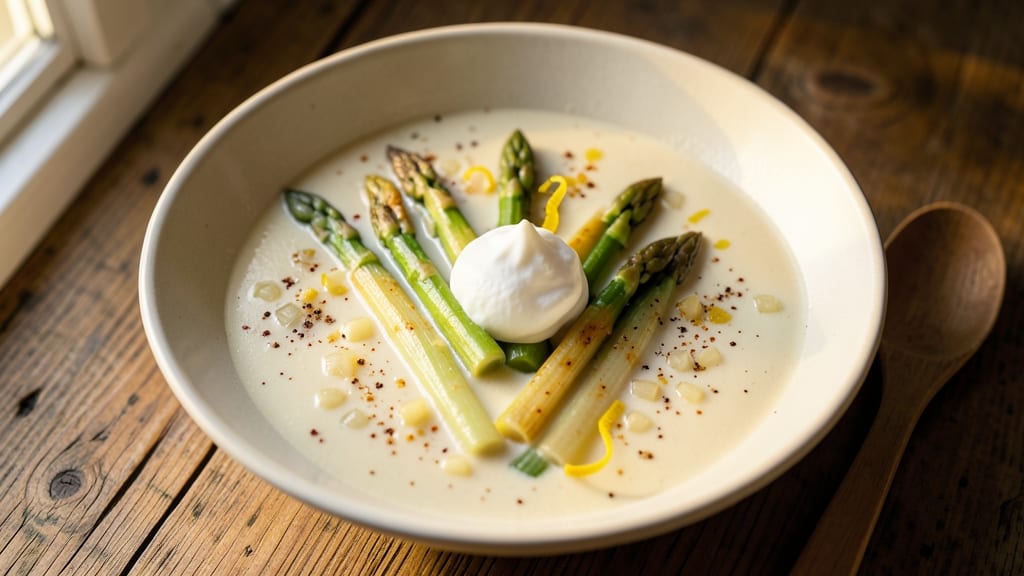
This asparagus celery soup recipe transforms simple vegetables into a velvety, herb-infused velouté that's elegant yet approachable—perfect for spring menus or cozy weeknight dinners. The secret lies in properly sautéing the aromatic vegetables before simmering, which builds deep flavor without overpowering the delicate asparagus.
I developed this version after testing countless variations, ensuring it delivers restaurant-quality smoothness while remaining adaptable for both vegetarian and vegan diets.
The process begins with a classic French velouté technique: onions and celery sweated in butter until translucent, then asparagus added to develop its natural sweetness before blending into a silky texture.
Fresh herbs like thyme and tarragon elevate the flavor profile, while a touch of cream (or coconut milk for vegan) adds richness without heaviness. What sets this apart is the optional fresh crunch topping—a mix of toasted breadcrumbs, parsley, and lemon zest—that adds texture contrast and brightens each spoonful.
What you'll achieve is a soup that's creamy yet light, with layers of earthy celery, subtle asparagus sweetness, and aromatic herbs that linger on the palate. The velouté technique ensures a velvety texture without excessive cream, making it satisfying yet balanced.
Perfect for spring produce lovers or anyone seeking a sophisticated yet simple vegetarian main, this recipe delivers professional results with minimal effort.
Whether you serve it as a starter or hearty vegetarian meal, the adaptability shines—swap the cream for coconut milk, use vegetable broth, and adjust seasoning to taste. The fresh topping can be customized with toasted nuts or extra herbs for added dimension.
Ready in about 45 minutes, this soup proves that elegant flavors don't require complicated techniques—just patience and proper layering of flavors.
Ingredients for asparagus celery soup
Fourteen ingredients transform spring vegetables into a velvety velouté with professional restaurant elegance.
| Ingredient | Amount | Notes |
|---|---|---|
| Fresh Asparagus Spears 🌱 | 1 lb | Trimmed woody ends removed |
| Celery Stalks 🧅 | 4 whole | Trimmed, cut into 1/2-inch pieces |
| Yellow Onion 🧅 | 1 whole | Medium size, diced |
| Unsalted Butter 🧈 | ½ cup | Cold, cubed for proper sweating |
| Vegetable Broth 💧 | 4 cups | Homemade or low-sodium store-bought |
| Heavy Cream 🥛 | ½ cup | Full-fat for velvety texture |
| Fresh Thyme Sprigs 🌿 | 2 whole | Leaves only, finely chopped |
| Fresh Tarragon Sprigs 🌿 | 1 whole | Leaves only, finely chopped |
| Fresh Parsley 🌿 | ¼ cup | Chopped, for garnish and topping |
| Panko Breadcrumbs 🍞 | ¼ cup | Toasted until golden |
| Lemon Zest 🍋 | 1 tbsp | Fine, from organic lemon |
| Diamond Crystal Kosher Salt 🧂 | 1 ½ tsp | Adjust to taste |
| Freshly Ground Black Pepper 🌶️ | ½ tsp | Cracked peppercorns preferred |
| Extra-Virgin Olive Oil 🫒 | 2 tbsp | For finishing drizzle |
The asparagus and celery are the foundation—look for vibrant green stalks with firm tips at the market. Whole Foods or local farmers' markets often carry the freshest spring produce, but any grocery store's produce section works if the celery isn't limp and the asparagus snaps cleanly. For the herbs, Penzeys Spices sells high-quality dried options if fresh aren't available, but fresh thyme and tarragon make all the difference in that aromatic depth. The butter should be cold and cubed when you start—this ensures proper sweating of the vegetables for maximum flavor development without burning. Don't skip the lemon zest; it's what brightens the entire dish and prevents the soup from tasting flat.
No fresh tarragon? Dried tarragon at one-third the amount works, though it lacks the anise notes. Substituting heavy cream for full-fat coconut milk makes this instantly vegan, though the texture will be slightly lighter. For the breadcrumbs, toasted panko gives the best texture, but any dry breadcrumbs work in a pinch. The vegetable broth is non-negotiable—homemade or high-quality low-sodium brands like Pacific Foods ensure the soup isn't watered down. If you're using store-bought broth, taste it first—some brands have a metallic aftertaste that can ruin the delicate balance. The asparagus trimming is critical: snap off the woody ends where they naturally bend, then discard the tough bottoms.
This soup tastes even better the next day once the flavors meld, so double the batch if you're feeding a crowd. Store in airtight containers for up to 5 days in the refrigerator, or freeze for 3 months—portion into ice cube trays before transferring to a freezer bag for easy single servings. The fresh topping should be assembled just before serving to maintain crispness. For make-ahead convenience, toast the breadcrumbs and store them separately, then mix in the parsley and lemon zest right before serving. The lemon zest keeps for 2 weeks in the fridge if stored in a sealed container, while fresh herbs should be used within 3-4 days of purchase for optimal flavor.
Why You'll Love This Recipe
- No Chopping Nightmare: I swear by this recipe because the veggies barely need prep—just trim the asparagus ends and halve the stalks if thick. Celery and onion get a quick dice, and before you know it, you’re sautéing in butter while scrolling through your phone. That’s real life.
- Earthy Creamy Magic: The asparagus lends this soup a bright, grassy punch, while the celery adds that crisp, refreshing crunch even after blending. Butter and broth round it out into something silky and deeply satisfying—like a hug in a bowl, but one that won’t make you nap for hours.
- Weeknight to Potluck Hero: This soup is my secret weapon for busy nights (ready in 30 minutes) and unexpected gatherings (doubles easily for guests). Serve it warm with crusty bread or chill it for a refreshing next-day lunch—it’s that adaptable.
- Budget-Friendly Leftovers: Celery and asparagus stretch further than you’d think, and vegetable broth keeps costs low. Make a big batch, freeze half, and thank me later when you’re reheating a steaming bowl on a lazy afternoon. Zero waste, all flavor.
Step-by-Step instructions for herb-infused asparagus celery velouté
This method delivers a silky, herb-forward velouté with a crispy breadcrumb topping that balances richness and texture perfectly.
Sauté the Vegetable Base
In a large Dutch oven, melt the 0.5 cup unsalted butter over medium heat until foaming subsides. Add the 1 whole yellow onion and 4 whole celery stalks (cut into ½-inch pieces), cooking for 8-10 minutes until softened and translucent. The onions should become nearly colorless while the celery releases its earthy aroma.
Add the 1 lb fresh asparagus spears (tough ends trimmed) and cook for another 5 minutes, stirring occasionally. The asparagus should begin to soften slightly at the edges while retaining its vibrant green color. This foundational cooking step develops the soup's depth of flavor through the natural sweetness of the vegetables.
Build the Velouté with Broth and Herbs
Pour in the 4 cups vegetable broth, scraping up any browned bits from the bottom of the pot. Bring to a gentle simmer, then reduce heat to low and add the 2 whole fresh thyme sprigs and 1 whole fresh tarragon sprigs. Simmer uncovered for 15 minutes, allowing the flavors to meld and the asparagus to become fork-tender.
Remove the herb sprigs and discard them. Using an immersion blender, purée the soup until completely smooth—no visible vegetable pieces should remain. The texture should be velvety, like thick paint. If you prefer a slightly rustic finish, you can strain it through a fine-mesh sieve instead.
Finish with Cream and Seasoning
Return the puréed soup to the pot and stir in the 0.5 cup heavy cream, bringing it to a gentle simmer over low heat. Add the 1 tbsp lemon zest, 1.5 tsp diamond crystal kosher salt, and 0.5 tsp freshly ground black pepper. Taste and adjust seasoning—this is where the soup's brightness comes together.
Keep the soup warm over low heat while you prepare the topping. The cream should create a luxurious mouthfeel while the lemon zest adds a bright, refreshing contrast to the earthy vegetables. The soup should be seasoned to taste like it needs nothing more—this is the moment to trust your palate.
Prepare the Crispy Breadcrumb Topping
In a dry skillet over medium heat, toast the 0.25 cup panko breadcrumbs for 3-4 minutes until golden brown and fragrant. Remove from heat and stir in 2 tbsp extra-virgin olive oil and 0.25 cup fresh parsley (chopped). The breadcrumbs should become slightly oil-rich but still maintain their crisp texture.
Divide the velouté among four warmed bowls, then sprinkle each portion generously with the crispy breadcrumb mixture. The contrast between the silky soup and crunchy topping creates the perfect balance of textures. Serve immediately while the breadcrumbs are at their crispest—this is the defining moment of the dish.
Pro Tips For Making Asparagus Celery Soup
- CHAR THE ONIONS LOW: I used to rush this step and end up with bitter, caramelized-on-the-bones onion chunks. Instead, cook them over medium-low heat in the butter until they’re soft and translucent—about 8-10 minutes—before adding anything else. This builds flavor without burning, and you’ll taste it in every spoonful.
- TRIM ASPARAGUS LIKE A PRO: Skip the messy, uneven snaps at the bottom—just bend each spear until it breaks naturally. Toss the woody ends (they’re tough no matter what), then chop the spears into 1-inch pieces. This keeps the texture consistent and saves you from chewing on unpleasantly fibrous bits.
- SAUTE CELERY UNTIL IT’S DARK: Celery loses its raw, grassy edge when it turns a deep golden-brown—don’t stop at pale green. Cook it for 5-6 minutes after the onions soften, stirring often, until it’s almost crispy. This step makes the soup’s base richer and cuts through the asparagus’s earthiness.
- BLEND IN STAGES: After simmering the veggies in broth, blend only half at a time—this gives you control. If the soup’s too thick, add a splash of broth; if it’s too thin, blend the rest longer. No guessing, no wasted effort. (Yes, even if you’re impatient like me.)
Creative variations of this dish
Spring Vegetable Fusion
Swap half the asparagus for 1 lb fresh green beans (trimmed and cut into 1-inch pieces) to create a vibrant spring fusion. The green beans add a subtle crunch and bright, grassy notes that pair beautifully with celery's earthiness.
Cook them with the asparagus in Step 1 for 4-5 minutes until just tender—they should retain a slight bite. 🌱
For a bolder flavor, add 1 small fennel bulb (thinly sliced) to the sautéed vegetables in Step 1. Fennel's anise-like sweetness complements the tarragon and adds depth. Simmer it with the broth for 12-15 minutes to soften while keeping its delicate texture.
Creamy Vegan Adaptation
Replace the heavy cream with ½ cup full-fat coconut milk for a luscious vegan version. The coconut milk adds natural sweetness that balances the soup's earthy flavors. For extra richness, stir in 1 tbsp nutritional yeast after blending—it mimics the umami depth of cream.
Adjust salt to taste, as coconut milk can be slightly salty.
For a lighter vegan option, use ½ cup unsweetened cashew cream (blend ½ cup soaked cashews with ¼ cup water) instead of coconut milk. The cashew cream creates a velvety texture without overpowering the vegetables. Add it in Step 3 when finishing the soup.
Herb Variations
Swap the thyme and tarragon for 1 tbsp fresh dill and 1 tbsp fresh chervil for a lighter, more delicate flavor profile. These herbs add a bright, almost parsley-like freshness that pairs beautifully with asparagus. Use them in Step 2 during the simmering phase.
For a Mediterranean twist, add 1 sprig fresh rosemary and ½ tsp red pepper flakes to the sautéed vegetables in Step 1. The rosemary adds piney depth, while the red pepper flakes introduce a subtle heat that lingers.
Adjust the pepper flakes to taste—start with ¼ tsp if you prefer mild heat.
Protein Boosters
Stir in ½ cup cooked white beans (like cannellini or navy beans) during Step 3 for added protein and creaminess. The beans blend seamlessly into the velouté, adding a subtle earthiness that complements the asparagus. Drain and rinse them first to remove excess starch.
For a heartier option, top each bowl with 2 oz crumbled feta cheese (or vegan feta) and a sprinkle of toasted pine nuts after serving. The feta adds a salty tang, while the pine nuts provide a nutty crunch that contrasts beautifully with the silky soup. 💫
Nutrition facts
Frequently asked questions
Can I make this soup without an immersion blender?
If you don't have an immersion blender, transfer the hot soup to a blender in batches (never fill it past the max line) and purée until completely smooth. For extra safety, hold a kitchen towel over the blender lid to prevent steam burns. Alternatively, strain the soup through a fine-mesh sieve for a slightly rustic texture.
How do I know when asparagus is perfectly cooked in the soup?
The asparagus should be fork-tender but still hold its shape—think al dente pasta. Test a piece by piercing it with a fork; it should slide in easily but not fall apart. If it's still crisp after 15 minutes of simmering, add 5 more minutes and check again.
Can I use frozen asparagus instead of fresh?
Frozen asparagus works in a pinch, but fresh delivers better texture and flavor. If using frozen, thaw it first and pat dry thoroughly to prevent a watery soup. For best results, trim the ends and cut into ½-inch pieces before adding to the pot in Step 1.
Why does my soup taste bland after blending?
Blandness usually means insufficient seasoning or underdeveloped flavors. First, ensure you're using low-sodium broth—store-bought brands can be overly salty. Second, taste before blending and adjust salt/pepper. Finally, let the soup simmer uncovered for 15 minutes to concentrate flavors.
How long will leftovers keep in the fridge?
Store leftovers in an airtight container for up to 5 days in the refrigerator. The flavors actually improve as the ingredients meld! For freezing, portion into ice cube trays, then transfer to a freezer bag for 3 months. Thaw overnight in the fridge before reheating.