
Soups & Stews
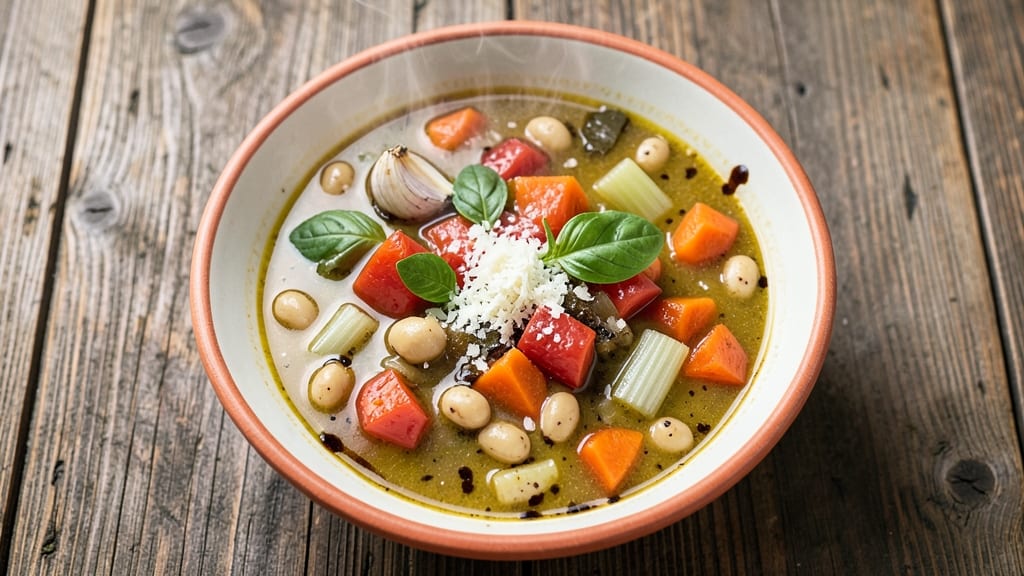
This authentic Italian minestrone soup recipe transforms humble vegetables into a rustic, hearty masterpiece that honors tradition while embracing vegetarian richness. 🌿 The secret lies in slow-simmered vegetable broth, crisp celery crowns that add satisfying texture, and a balance of cannellini beans, tomatoes, and Italian herbs that create depth without meat.
What sets this apart is the attention to authentic techniques: caramelizing onions and garlic until golden, toasting whole spices for aromatic complexity, and finishing with fresh basil that brightens every spoonful.
The soup develops its full flavor over time, rewarding patience with layers of savory, tangy, and herby notes that define Italian comfort food. By the final bowl, you'll experience tender vegetables, creamy beans, and a broth so flavorful it tastes like it's been simmering for hours.
The crisp celery crowns provide a delightful textural contrast that elevates this beyond ordinary vegetable soups—it's a dish that feels both humble and extraordinary at once.
Perfect for chilly evenings or as a nourishing meal prep base, this minestrone proves vegetarian Italian cooking can be just as satisfying as its meat-based counterparts. Let's begin with the foundation that makes it authentic.
Ingredients for authentic italian minestrone soup recipe vegetarian
The foundation of authentic Italian minestrone: vegetables, beans, and herbs that build flavor through slow simmering.
| Ingredient | Amount | Notes |
|---|---|---|
| Yellow Onions 🧅 | 2 whole | Thinly sliced for even cooking |
| Garlic Cloves 🧄 | 6 cloves | Peeled and smashed for aromatic depth |
| Carrots 🥕 | 4 whole | Whole with crowns intact for texture |
| Celery Stalks 🧆 | 4 whole | With leaves reserved for garnish |
| Cannellini Beans 🌾 | 2 cups | Dried, soaked overnight preferred |
| Diced Tomatoes 🍅 | 2 cups | San Marzano canned for sweetness |
| Zucchini 🥒 | 2 medium | Sliced into half-moons for even cooking |
| Fresh Basil Leaves 🌿 | ½ cup | Torn for final brightening touch |
| Fresh Parsley 🌿 | ¼ cup | Chopped for fresh herb finish |
| Vegetable Broth 💧 | 6 cups | Homemade preferred for depth |
| Extra-Virgin Olive Oil 🫒 | ½ cup | For caramelizing aromatics |
| Dried Oregano 🌿 | 1 tsp | Italian preferred for authenticity |
| Bay Leaves 🌿 | 2 whole | Removed before serving |
| Salt 🧂 | 1 ½ tsp | Diamond Crystal preferred |
| Black Peppercorns 🌶️ | ½ tsp | Freshly cracked for heat |
The vegetables are where this soup earns its rustic reputation. San Marzano tomatoes bring natural sweetness that's unmatched by regular canned varieties—look for the official label at Italian markets or specialty stores like Eataly. The celery crowns should remain crisp after simmering, so avoid overcooking—add them in the last 10 minutes. For the beans, dried cannellini develop richer flavor than canned, but soaked overnight is key. Fresh basil and parsley from the local farmers market add that final bright Italian touch—never dried substitutes here. The vegetable broth should be homemade if possible, but low-sodium store-bought works in a pinch.
No San Marzano tomatoes? High-quality crushed tomatoes in a pinch, but add 1 tsp extra sugar to balance acidity. Dried beans? Canned beans work but reduce simmer time to 15 minutes. Fresh herbs wilt fast—store stems in water like flowers to extend freshness. The olive oil matters here—avoid light or refined oils that lack flavor. For extra depth, toast the whole spices (oregano, peppercorns) in the olive oil before adding vegetables. This simple step transforms the soup from good to extraordinary. The bay leaves should be removed before serving—their job is flavor infusion, not texture.
This soup tastes even better the next day as flavors meld. Store in glass containers for up to 5 days in the fridge, or freeze for 3 months in portions. The celery crowns will soften upon reheating—add fresh celery to hot soup for crisp texture. For meal prep, make a double batch and freeze half immediately. The beans and vegetables reheat beautifully, though the celery will need to be added fresh when serving. Always taste before serving—adjust salt and pepper as needed, as flavors concentrate during storage.
Why You'll Love This Recipe
- No-Fuss Vegetable Base: I swear by the soffritto—sautéed onions, carrots, and celery until they’re just shy of caramelized—because it builds flavor without fuss. Once that’s done, toss in the garlic and beans, and let the broth do the heavy lifting. (Yes, even on a Tuesday night.)
- Umami-Packed Depth: That crispy edge from the garlic cloves and the creamy texture of the cannellini beans? It’s the kind of balance that makes you want to slurp it straight from the pot. The broth absorbs all the savory notes, but the fresh herbs at the end? Pure satisfaction.
- Leftovers That Taste Better: Between us, this soup actually improves the next day. The flavors meld, the beans soften just right, and you can reheat it with a splash of water or even freeze portions. I’ve fed a crowd with one batch—just double the recipe and thank me later.
- Pantry Staple Power: Honestly, if you’ve got onions, garlic, and dried pasta, you’re halfway there. The carrots and celery add color and crunch, but you can swap in whatever’s in your fridge. It’s my go-to when I’m broke or lazy—either works.
Step-by-step instructions for authentic Italian vegetarian minestrone soup
Master this classic Italian technique for vibrant, flavorful minestrone with crisp vegetable textures.
🍳 Step 1: Caramelize the Aromatic Base
Heat the 0.5 cup extra-virgin olive oil in a large Dutch oven over medium-low heat. Add the 2 whole yellow onions and 4 whole carrots (with crowns intact), cooking for 8-10 minutes until the onions soften and begin to color. This gentle cooking develops their natural sweetness.
Add the 4 whole celery stalks (with leaves reserved) and continue cooking for another 5 minutes until everything releases moisture and begins to caramelize. The crowns should remain intact for that signature crisp texture. Here's the thing—don't rush this step. You're building the flavor foundation, and patience here makes all the difference.
🍳 Step 2: Develop the Herb and Garlic Infusion
Increase heat to medium and add the 6 cloves garlic cloves (peeled and smashed) along with the 1 tsp dried oregano. Cook for 1-2 minutes until the garlic becomes fragrant but doesn't brown. Add the 2 whole bay leaves and stir to combine.
This is where the magic happens—the garlic should perfume the kitchen without burning. If it starts to darken too quickly, reduce heat to medium-low. The oregano will deepen the earthy notes that define authentic Italian minestrone. Don't skip this step; these aromatics form the soul of the soup.
🥘 Step 3: Build the Broth and Bean Foundation
Pour in the 6 cups vegetable broth and bring to a gentle simmer. Add the 2 cups cannellini beans (soaked overnight if possible) and 2 cups diced tomatoes. Partially cover and simmer for 20-25 minutes until the beans are tender but still hold their shape. This creates that perfect hearty texture without turning mushy.
I always check for doneness by pressing a bean with my spoon—it should yield slightly but not fall apart. If using dried beans, you might need 30 minutes total cooking time. This is the moment that matters: the beans should absorb the broth while maintaining their integrity for that satisfying bite.
🥘 Step 4: Add Vegetables for Texture Contrast
Stir in the 2 medium zucchini (sliced into half-moons) and simmer uncovered for 5-7 minutes until just tender. The zucchini should remain slightly crisp with a pleasant bite. Add the 1.5 tsp salt and 0.5 tsp black peppercorns (freshly cracked) now to balance the flavors.
Real talk: timing is critical here. Overcooking the zucchini turns it to mush. You want that perfect al dente texture that contrasts with the tender beans. If your zucchini cooks faster, add it later in the process. Each vegetable should contribute its own distinct texture to the soup.
🍽️ Step 5: Finish with Fresh Herbs and Garnish
Remove the 2 whole bay leaves and stir in the 0.5 cup fresh basil leaves (torn) and 0.25 cup fresh parsley (chopped). Simmer for just 1-2 minutes to infuse the fresh flavors without cooking them to oblivion. Taste and adjust seasoning—you might need a touch more salt depending on your broth.
Ladle the minestrone into bowls and garnish with the reserved celery leaves. Serve immediately with crusty bread to soak up every last drop of that flavorful broth. The contrast of crisp celery crowns against the hearty bean broth is what makes this minestrone truly authentic and memorable.
Pro Tips For Making Authentic Italian Minestrone Soup Recipe Vegetarian
- SOFTEN BEANS FIRST: Skip the raw cannellini beans in your broth—they’ll turn to mush and ruin the texture. Instead, soak them overnight or simmer them separately for 10 minutes before adding to the soup. I learned this the hard way when my first batch turned into a sad, gluey mess.
- SWEEAT ONIONS LOW: Don’t rush the onions—cook them over medium-low heat for 8-10 minutes until they’re translucent but not browned. Rushing this step makes your soup taste raw and bitter, and no one wants that. (Yes, even if you’re impatient like me.)
- CHOP VEGETABLES EVENLY: Cut carrots and celery into ¼-inch pieces—any larger and they’ll stay crunchy, any smaller and they’ll dissolve. A sharp knife and a steady hand make this easier than it sounds. Uneven cooking is the fastest way to turn minestrone into a sad, mushy stew.
- ADD PASTA LAST: Toss in your pasta (or potatoes, if using) just 5 minutes before serving—it’ll absorb too much liquid if you cook it in the broth. I skip this rule sometimes, and the soup always ends up watery. (Your future self will thank you.)
Regional styles of authentic italian minestrone soup recipe vegetarian
Northern Italian Rustic
In regions like Lombardy and Emilia-Romagna, minestrone takes on a heartier profile with pasta incorporated—traditionally small egg noodles or pici (hand-rolled thick spaghetti). I like adding ½ cup uncooked pasta in the final 8 minutes of simmering to create a satisfying al dente bite.
Use bronze-die pasta for authentic texture, and avoid overcrowding the pot to prevent sticking. 🍝
The broth here is often more robust, with additions like cabbage or potatoes for extra body. For a true Northern twist, stir in ½ cup finely chopped pancetta (even though this is vegetarian, the smoky fat adds depth) or substitute with smoked paprika for a similar effect.
The key is balancing the earthy flavors of the beans with the brightness of fresh herbs like sage, which pairs beautifully with the celery crowns.
Southern Italian Light
Down in Campania and Sicily, minestrone becomes lighter, focusing on fresh seasonal vegetables and seafood-inspired flavors (even in vegetarian versions). Swap the cannellini beans for white beans or lentils for a different texture, and add roasted red peppers or sun-dried tomatoes for a sweet-tangy contrast.
I often include zucchini blossoms if available—they add a delicate floral note that feels luxurious. 🌿
The broth here is lighter, sometimes even strained to create a clearer soup, and finished with a splash of lemon juice or white wine (like Vermentino) to brighten the flavors.
Garnish with toasted pine nuts or chopped almonds for a crunch that mimics the texture of fried anchovies in traditional versions. The celery crowns remain crisp, but the overall dish feels more refined and summery.
Roman Simplicity
In Rome, minestrone is all about simplicity and bold flavors. The Romans use more tomatoes—sometimes even freshly crushed—and fewer beans, relying instead on potatoes or fresh peas for heartiness.
I love adding a handful of fresh peas (frozen works) in the last 5 minutes of cooking to retain their vibrant color and sweetness. The broth is simmered longer to develop deep, umami-rich notes, often with a pinch of cinnamon or star anise for warmth. 🌶️
For a true Roman touch, finish the soup with a drizzle of high-quality olive oil and a sprinkle of Pecorino Romano (even though it’s vegetarian, the salty, nutty cheese elevates the dish).
The celery crowns are still crisp, but the focus here is on bold, unapologetic flavors that let the vegetables shine. Serve with crusty bread or grilled polenta to soak up every last drop.
Tuscan Bean Focus
Tuscany’s minestrone is all about the beans, with borlotti beans or fava beans often taking center stage. I replace cannellini with ½ cup dried borlotti beans (soaked overnight) for their earthy, nutty flavor and creamy texture.
The broth here is richer, sometimes even reduced to intensify the flavors, and often includes wilted spinach or kale for a bitter contrast that balances the sweetness of the tomatoes. 🌱
The Tuscan version also incorporates wild herbs like wild fennel or rosemary for a piney, aromatic depth. The celery crowns are still crisp, but the overall dish feels rustic and earthy, almost like a vegetable stew rather than a traditional soup.
Pair it with grilled bread or polenta to complement the hearty flavors. This is the version that feels most like a winter comfort food—perfect for chilly evenings.
Nutrition facts
Frequently asked questions
Can I substitute cannellini beans with other types?
For a different texture, try white beans or borlotti beans (soaked overnight). If you prefer a nuttier flavor, chickpeas work well too. Just adjust cooking time—dried beans need longer simmering than canned. The key is maintaining that hearty, creamy element that defines authentic Italian minestrone.
How do I keep the celery crowns crisp?
Add them only in the last 5-7 minutes of cooking to prevent over-softening. Keep the heat at a gentle simmer, and avoid stirring them too much. For extra crunch, reserve some fresh celery leaves to garnish after serving—this adds both visual appeal and texture contrast.
What's the secret to making the broth more flavorful?
Toast whole spices (like oregano and peppercorns) in olive oil before adding vegetables to deepen their aroma. For homemade broth, simmer vegetable scraps (onion skins, carrot tops) with garlic and bay leaves—this infuses rich umami. If using store-bought, choose low-sodium and add a splash of white wine or lemon juice at the end.
Can I make this soup ahead of time?
Yes! It tastes even better the next day as flavors meld. Store in glass containers for up to 5 days in the fridge. For freezing, portion and freeze for 3 months. Reheat gently on the stove—add fresh celery crowns and herbs at the end to restore crispness and brightness.
What if I don't have San Marzano tomatoes?
Use high-quality crushed tomatoes and add 1 tsp sugar to balance acidity. For extra depth, stir in 1 tsp tomato paste with the aromatics. Avoid watery canned tomatoes—they dilute the authentic Italian flavor. If using fresh tomatoes, roast them first to concentrate their sweetness.