
Soups & Stews
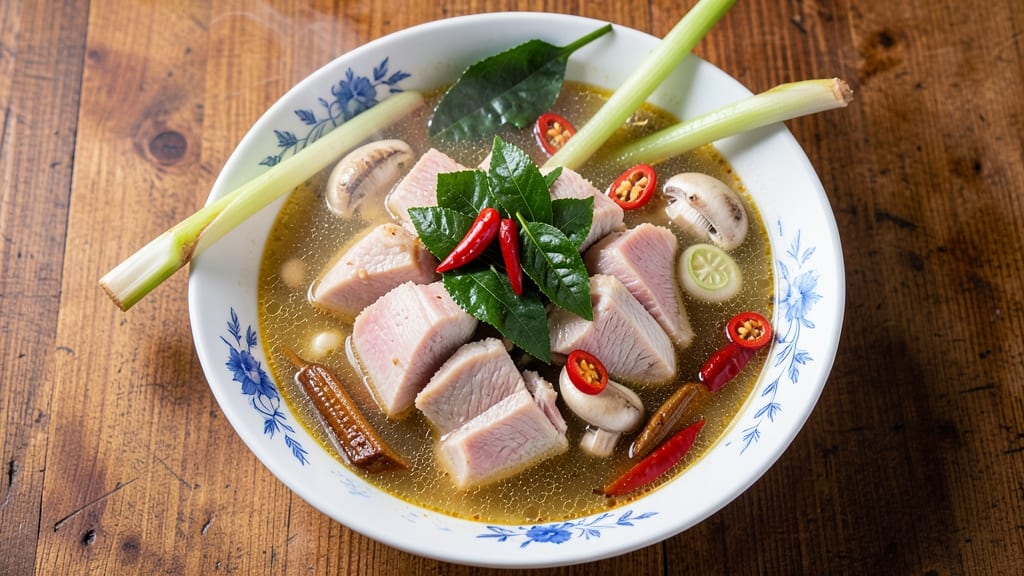
This authentic tom yum gai soup recipe delivers the perfect balance of spicy, sour, and umami flavors that define Thailand’s most beloved dish. The secret lies in a fragrant broth built layer by layer—starting with lemongrass, galangal, and kaffir lime leaves, then brightened with lime juice and tamarind.
I’ve perfected this version to ensure the chicken stays tender while the broth remains vibrant and complex, just like the soups served in Bangkok’s street-side eateries.
The key to authentic tom yum is precision in seasoning—too much spice can overpower, while too little leaves it flat. This recipe walks you through toasting whole spices (like coriander seeds and white peppercorns) to deepen their aroma, then simmering them with chicken until the meat falls apart effortlessly.
The result? A clear, fragrant broth with just the right kick, where each ingredient—from mushrooms to Thai basil—shines without competing.
What makes this recipe stand out is its adaptability. While traditional tom yum gai uses chicken, swapping in shrimp or fish transforms it into a pescatarian-friendly version without sacrificing authenticity.
The broth’s acidity cuts through the richness of the protein, while fresh herbs (like cilantro and Thai basil) add brightness at the end. Serve it piping hot with steamed jasmine rice to soak up every last drop of that bold, aromatic broth.
Ready to master this iconic Thai soup? The process is straightforward, but the flavors are anything but ordinary. Let’s get cooking—your taste buds will thank you.
Ingredients for authentic tom yum gai soup
These aromatic Thai ingredients transform simple broth into a vibrant, spicy-sour masterpiece.
| Ingredient | Amount | Notes |
|---|---|---|
| Boneless Chicken Breast 🍗 | 1 ½ lb | Cut into 1-inch cubes |
| Fresh Lemongrass 🌿 | 3 whole | Bruised stems for aroma |
| Galangal Root 🍃 | 3 inches | Peeled, sliced thin |
| Kaffir Lime Leaves 🍋 | 4 whole | Torn into strips |
| Fresh Chili Peppers 🌶️ | 4 whole | Bird's eye or Thai chili |
| White Mushrooms 🍄 | 8 oz | Sliced into quarters |
| Shallots 🧅 | 4 whole | Minced finely |
| Garlic Cloves 🧄 | 6 cloves | Smashed lightly |
| Fish Sauce 🐟 | 2 tbsp | Red Boat brand preferred |
| Lime Juice 🍋 | ½ cup | Freshly squeezed |
| Tamarind Paste 🍈 | 1 ½ tbsp | Diluted with 2 tbsp water |
| Coconut Milk 🥥 | ½ cup | Full-fat for creaminess |
| Thai Basil Leaves 🌿 | ½ cup | Packed loosely |
| Cilantro Leaves 🌿 | ¼ cup | Chopped for garnish |
| Coriander Seeds 🌶️ | 1 tbsp | Toasted lightly |
| White Peppercorns 🌶️ | 1 tsp | Crushed lightly |
| Salt 🧂 | 1 tsp | Diamond Crystal preferred |
| Jasmine Rice 🍚 | 2 cups | For serving |
The galangal and kaffir lime leaves are non-negotiable for authenticity—Thai markets carry them fresh, or use frozen if unavailable. For lemongrass, look for stalks with tight, pale leaves; discard any with brown spots. Bird's eye chilies deliver the signature heat, but adjust to taste. Toasting the coriander seeds in a dry pan for 30 seconds deepens their aroma—don't skip this step. Fish sauce is the umami anchor; Red Boat or Tiparos brands are most authentic. If you can't find tamarind paste, substitute with equal parts lime juice and brown sugar, though the flavor won't be identical.
No galangal? Ginger works in a pinch, but reduce to 1 inch and add 1 tsp of ground galangal powder if available. Short on Thai basil? Regular basil plus a pinch of cinnamon mimics the flavor profile. For a vegetarian version, replace chicken with extra-firm tofu or king oyster mushrooms. The coconut milk adds richness without overpowering—full-fat is essential—but if you're avoiding dairy, use coconut cream instead. Prefer less heat? Remove seeds from chilies before slicing, or use half the quantity. The tamarind-lime balance is critical; taste as you go and adjust with more lime if needed.
Fresh herbs wilt quickly—store basil and cilantro in damp paper towels in sealed bags for up to 3 days. Lemongrass and galangal keep 1 week wrapped in plastic. The broth reheats beautifully; simmer gently to preserve its clarity. For meal prep, store components separately: broth (up to 5 days), chicken (3 days), and herbs (2 days). Assemble fresh before serving to maintain vibrant flavors. The rice should be steamed just before serving—jasmine rice absorbs the broth perfectly when warm.
Why You'll Love This Recipe
- No Pulsing Pounding: I swear by this—no need to chop galangal into perfect slices. Just smash it with the flat side of my knife a few times, and the aroma hits like a warm hug. That’s the secret: rough texture still packs the same zingy, citrusy punch as the fancy stuff.
- Taste Like Thailand: The moment I add those crushed kaffir lime leaves and fresh chilies, my kitchen smells like a bustling Bangkok street market. The lemongrass and galangal create this impossible-to-resist balance—bright, spicy, but with a deep, savory warmth that makes every sip feel like a reward.
- Leftovers That Beg: This soup actually improves the next day. The flavors meld even more, and the broth gets richer—perfect for reheating with a splash of water. I make a double batch on Sundays because my kids (and my lazy self) fight over the leftovers all week.
- One-Pot Magic: Honestly, this is my go-to when I’m exhausted but craving something special. Toss in the chicken, herbs, and broth, simmer, and boom—done. The chicken stays juicy, the broth is fragrant, and cleanup is just a pot and a spoon. No stress, all flavor.
Step-by-step instructions for authentic tom yum gai soup
Here's how to craft this classic Thai soup with vibrant flavors and perfect texture.
Prepare the Aromatic Base
In a large pot, combine the 1.5 lb boneless chicken breast (cut into 1-inch cubes), 3 whole fresh lemongrass (bruised stems only), 3 inches peeled galangal root (sliced thin), 4 whole kaffir lime leaves (torn into strips), and 4 whole fresh chili peppers. Add 4 cups water and bring to a rolling boil over high heat. This initial boiling helps extract the essential oils from the aromatics into the broth.
Once boiling, immediately reduce heat to medium-low and let it simmer uncovered for 15 minutes. You'll see the lemongrass and galangal release their citrusy, peppery aromas into the water. This step builds the foundation of your soup's complex flavor profile - don't skip it. The broth should smell intensely aromatic with a balance of citrus and earthy notes.
Build the Broth with Mushrooms and Aromatics
After the initial simmer, add the 8 oz white mushrooms (sliced into quarters), 4 whole shallots (minced finely), and 6 cloves garlic (smashed lightly). Stir gently and continue simmering uncovered for another 10 minutes. The mushrooms will absorb some of the broth's flavors while the shallots and garlic infuse their sweet, pungent notes.
Here's where the magic happens: the broth should now have a deep golden color with visible sediment from the aromatics. If it looks cloudy, strain through a fine-mesh sieve into a clean pot, pressing gently on the solids to extract maximum flavor. Return the strained broth to the pot and discard the solids. This ensures a clear, vibrant soup without any fibrous textures.
Season and Balance the Flavors
While the broth simmers, dilute the 1.5 tbsp tamarind paste with 2 tbsp water in a small bowl. Stir until completely dissolved - this creates a smooth, tangy base for your soup. Add this mixture along with the 2 tbsp fish sauce and 0.5 cup lime juice to the broth. Bring to a gentle simmer over medium heat for 5 minutes, allowing these key ingredients to meld together.
Taste the broth at this stage - it should be tangy from the tamarind and lime, salty from the fish sauce, and subtly sweet from the shallots. The balance is delicate here. If needed, adjust with additional fish sauce (for saltiness) or lime juice (for acidity). The broth should be vibrant and complex, with a bright citrus aroma that makes your mouth water.
Finish with Creaminess and Herbs
Gently stir in the 0.5 cup coconut milk to create the signature creamy texture of authentic tom yum gai. The contrast between the spicy, tangy broth and the rich coconut milk is what makes this soup so irresistible. Add the 1 tsp white peppercorns (crushed lightly) and 1 tsp salt, stirring well to distribute evenly. Simmer for just 2 more minutes - any longer and the coconut milk will curdle.
Remove from heat and let the soup sit for 5 minutes to allow all the flavors to fully integrate. Before serving, stir in the 0.5 cup Thai basil leaves and 0.25 cup cilantro leaves. The herbs should be added just before serving to maintain their vibrant color and fresh aroma. The basil will add a peppery, slightly sweet note while the cilantro brings a bright, citrusy finish.
Serve with Perfectly Cooked Rice
While the soup rests, prepare the 2 cups jasmine rice according to package instructions for perfectly fluffy grains. Serve the tom yum gai immediately in deep bowls, ladling the hot soup over the rice. The contrast between the aromatic soup and the fragrant rice creates an experience that's both comforting and exciting.
Each bowl should be garnished with additional Thai basil leaves and cilantro leaves for color and freshness. The soup should be piping hot, with the chicken pieces tender enough to flake easily with a spoon. The broth should coat the back of a spoon, balancing heat, tang, and creaminess in every sip. Serve with extra lime wedges on the side - a squeeze of fresh lime just before eating enhances the flavors even more.
Pro Tips For Making Authentic Tom Yum Gai Soup
- CHAR THE CHICKEN FIRST: Slather the chicken breast in a mix of fish sauce and a splash of lime juice before cooking—it keeps the meat tender and infuses flavor. I used to skip this step, and the chicken always turned out dry no matter how long I simmered it.
- SLICE THE GALANGAL THIN: Galangal loses its punch when it sits too long in liquid, so slice it paper-thin and add it late—right when the broth is boiling. Thick chunks make the soup taste muted, and no one wants that.
- STRAIN THE LEMONGRASS: After bruising the lemongrass stalks, strain out the fibrous bits before adding them to the broth. I learned this the hard way when I ended up with a soup full of stringy bits instead of smooth, bright flavor.
- USE FROZEN CHILIS: No fresh chilies? Toss in frozen ones straight from the bag—they’re prepped, consistent, and won’t make your hands sweat. Just adjust the quantity; frozen chilies pack a little more heat than fresh.
Essential equipment for great authentic tom yum gai soup
Wok Essentials
A carbon steel wok with a 14-inch diameter is my go-to for tom yum gai—its sloped sides and high heat retention create the perfect environment for simmering aromatics and searing chicken. I recommend the De Buyer 14-inch wok for its durability and even heat distribution.
For budget-friendly options, Made In woks offer excellent quality without the premium price. Always preheat your wok over high heat for 5 minutes to establish a proper sear before adding ingredients. 🔥
Precision Tools
Invest in a fine-mesh strainer (like the OXO Good Grips) to remove fibrous aromatics while preserving flavor. A microplane is essential for zesting galangal and lime—it yields finer, more aromatic results than a grater.
For measuring tamarind paste, a small silicone spatula ensures accuracy, as the paste is thick and sticky. A digital thermometer (such as the Thermoworks Thermapen) helps monitor broth temperature, keeping it between 195-205°F for optimal flavor extraction.
Herb Handling
Fresh Thai basil and cilantro wilt quickly, so keep them in separate airtight containers with a damp paper towel to maintain crispness. A small pair of kitchen shears makes quick work of chopping herbs—just snip the stems at a 45-degree angle for uniform pieces.
For galangal and lemongrass, a sharp chef’s knife with a serrated edge slices through the fibrous textures cleanly. Store these aromatics in the freezer (wrapped in plastic) for up to 3 months without losing potency.
Spice Control
Bird’s eye chilies are potent—use tweezers to handle them safely and remove seeds for adjustable heat. A mortar and pestle (like the Kuhn Rikon) is perfect for crushing white peppercorns and coriander seeds to release their oils.
For precise measurements, a small scale ensures consistency, especially with spices like 1 tsp white peppercorns or 1 tbsp coriander seeds. Toast spices in a dry nonstick skillet over medium heat for 30 seconds—this enhances their aroma without burning.
Serving Accessories
Deep heatproof ceramic bowls (such as Corelle Stoneware) keep the soup hot while showcasing its vibrant colors. A small ladle with a long handle makes it easy to serve from the wok without spills.
For garnishes, lime wedges and Thai basil sprigs should be placed on a small plate next to each bowl. A rice steamer (like the Zojirushi NS-LAC10) ensures jasmine rice stays fluffy and fragrant—essential for soaking up the rich broth. ✨
Nutrition facts
Frequently asked questions
Can I make this soup without galangal?
Yes, but the flavor will differ slightly. Use 1 inch ginger plus ½ teaspoon ground galangal powder if available. For best results, toast the ginger in a dry pan for 30 seconds to enhance its aroma. The dish will still be delicious, though less authentically complex.
How do I adjust the spice level?
Start with 2-3 whole bird's eye chilies for mild heat, or 4+ for authentic spiciness. For a milder version, remove seeds and membranes before slicing. If you prefer extra heat, add ½ teaspoon chili flakes at the end. Always taste before serving—you can reduce spice by adding more coconut milk.
What's the best way to store leftovers?
Store the broth and chicken separately in airtight containers for up to 3 days in the fridge. Reheat gently on the stove, adding a splash of water if needed. For longer storage, freeze the broth (up to 3 months) and cook chicken fresh. Never freeze with coconut milk—it separates when thawed.
Can I make this vegetarian?
Replace chicken with extra-firm tofu (pressed and cubed) or king oyster mushrooms. For umami depth, add 1 extra tablespoon fish sauce or vegetarian oyster sauce. The broth will still shine with its signature tangy-spicy balance.
Why does my broth look cloudy?
Cloudiness usually means unstrained aromatics or starch from mushrooms. Strain the broth through a fine-mesh sieve after simmering, pressing gently on solids. For extra clarity, add 1 tablespoon cornstarch mixed with water as a slurry at the end, then simmer 1 minute before adding coconut milk.