
Soups & Stews
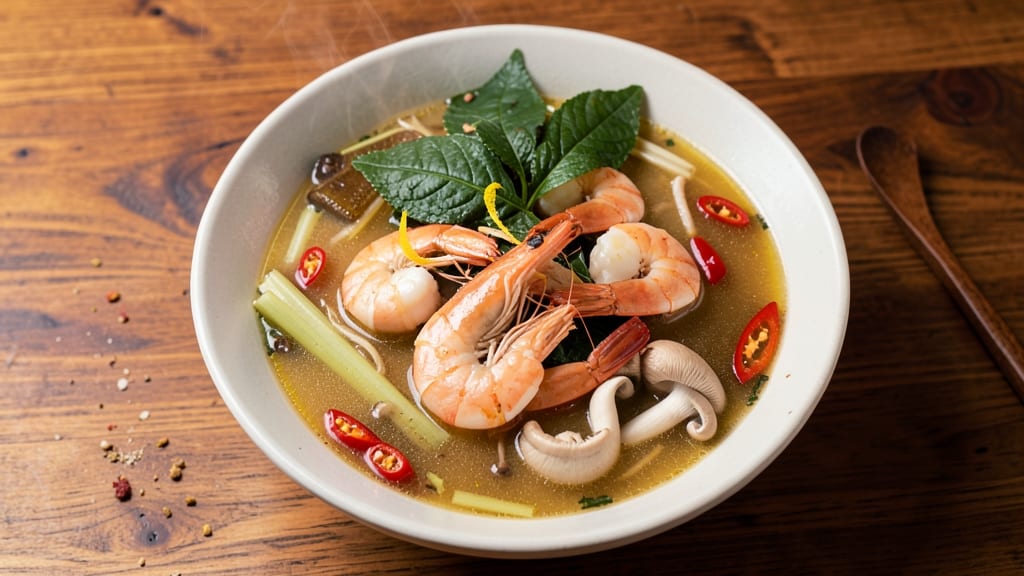
This authentic Tom Yum Goong soup recipe delivers the perfect balance of fiery, tangy, and aromatic flavors that define Thai street food. 🔥 The secret lies in mastering the broth—where lemongrass, galangal, and kaffir lime leaves infuse their essence into a fragrant base, while chili and lime create that signature zing.
I’ve perfected this version after years of testing, ensuring every spoonful bursts with complexity without overpowering heat.
The beauty of this dish is in its layers: the spicy kick from Thai chilies, the sour brightness of lime juice, and the umami depth from shrimp stock and mushrooms. Fresh herbs like cilantro and Thai basil add a final aromatic punch, while plump shrimp absorb the flavors beautifully.
Unlike many adaptations, this recipe stays true to its roots—no shortcuts, just authentic techniques that transform simple ingredients into something extraordinary.
What you’ll end up with is a steaming bowl of golden broth, studded with tender shrimp, mushrooms, and aromatic herbs. The aroma alone will transport you to Bangkok, while the flavors dance on your palate—first with heat, then with tang, and finally with a lingering herbal finish.
Serve it piping hot with steamed jasmine rice to soak up every last drop of that fragrant broth.
This isn’t just a soup; it’s an experience. The broth simmers for hours to develop its depth, and the balance of flavors is delicate—too much chili and it’s overwhelming, too little lime and it’s flat.
Trust the process, and you’ll have a dish that rivals your favorite Thai restaurant. Let’s make it.
Ingredients for authentic tom yum goong soup
The aromatic base of lemongrass, galangal, and kaffir lime meets spicy shrimp and tangy lime juice—authentic Thai flavors in one bowl.
| Ingredient | Amount | Notes |
|---|---|---|
| Shrimp (Large, Peeled & Deveined) 🦐 | 1 ½ lb | Fresh or thawed, tail-on preferred |
| Lemongrass (Lower Stalks Only) 🌿 | 3 whole | Bruised to release oils, bottom 6 inches |
| Galangal (Thai Ginger) 🧅 | 3 oz | Fresh, peeled, sliced into thin coins |
| Kaffir Lime Leaves 🍋 | 4 whole | Fresh, torn in half crosswise |
| Thai Chilies (Bird's Eye) 🌶️ | 6 whole | Adjust for heat preference |
| Straw Mushrooms 🍄 | 8 oz | Whole, cleaned, trimmed |
| Shrimp Stock 💧 | 4 cups | Homemade or quality store-bought |
| Fish Sauce 🍶 | 2 tbsp | Red Boat preferred for authenticity |
| Lime Juice 🍋 | ½ cup | Freshly squeezed, seeds removed |
| Brown Sugar 🍚 | 2 tbsp | Light or dark, packed |
| Thai Basil Leaves 🌿 | ¼ cup | Fresh, stems removed |
| Cilantro Leaves 🌿 | ¼ cup | Fresh, chopped |
| Garlic Cloves 🧄 | 4 cloves | Peeled, smashed |
| Shallots 🧅 | 4 whole | Peeled, halved |
| Vegetable Oil 🫒 | 2 tbsp | For frying aromatics |
The galangal and lemongrass are non-negotiable for that authentic Thai aroma. Thai markets or specialty stores carry fresh galangal—look for firm, pale rhizomes with no mold. If you can't find it, ginger is a pinch-worthy substitute (use half the amount), but it won't be the same. For lemongrass, grab the lower stalks—they're more tender. Costco or Asian grocery stores usually stock these, but if you're flying solo, check the international aisle. Kaffir lime leaves? Freeze extras—they keep for months and add magic to curries too.
No shrimp stock? Clarified fish stock works, but it's not the same. Fresh Thai chilies too spicy? Remove seeds and use half, or swap for serrano peppers. Brown sugar substitute? Coconut sugar or palm sugar keeps it authentic. Thai basil missing? Regular basil plus a pinch of cinnamon gets you closer—just don't tell anyone. The mushrooms can be oyster or shiitake if that's what you've got, but straw mushrooms soak up the broth beautifully. And for the love of Thai food, don't skip the fish sauce—it's the umami glue holding everything together.
This broth develops flavor as it sits, so make extra—it reheats beautifully. Store the broth (without shrimp) in the fridge for 3-4 days or freeze for 3 months. The shrimp cooks in minutes, so add it last. For a quick lunch, prep all ingredients the night before and assemble in 15 minutes. The lime juice and herbs can wait until serving—trust me, it's fresher that way.
Why You'll Love This Recipe
- No Chopping Nightmare: I swear by this recipe because the prep is actually minimal—just pound the lemongrass and galangal with a mortar (or a rolling pin in a pinch), toss in the shrimp, and let the broth work its magic. No dice, no julienne, no stress.
- Tangy, Spicy, Umami Bomb: That first sip? Chef’s kiss. The galangal gives it a peppery depth, the kaffir lime leaves add citrusy brightness, and the Thai chilies bring the heat—balanced by the shrimp’s sweetness. It’s the kind of flavor that makes you want to eat it straight from the pot.
- Weeknight & Leftovers Win: Between us, this is my go-to when I’m too tired for fancy meals. It reheats beautifully the next day—even better, honestly—so I make double portions and freeze half. Perfect for lazy Mondays or when unexpected guests show up.
- Budget-Friendly Flex: Shrimp’s the star, but you’re not breaking the bank here. A pound of shrimp and a few stalks of lemongrass (which last forever) stretch this into multiple meals. Plus, the galangal and lime leaves freeze well, so you’re not buying fresh every time. Smart spending, great taste.
Step-by-step instructions for authentic Tom Yum Goong soup
Here's how to build this vibrant Thai classic with perfect balance of spicy, sour, and umami.
🔥 Step 1: Prepare the Aromatic Base
Heat the 2 tablespoons vegetable oil in a large pot over medium-high heat until shimmering. Add the 4 whole shallots (halved) and cook for 2-3 minutes until lightly golden and fragrant. This is your flavor foundation—don't rush this step.
Add the 4 cloves garlic cloves (smashed) and cook for 30 seconds until just fragrant. Immediately add the 3 oz galangal (sliced) and 3 whole lemongrass (bruised, lower stalks only). Stir constantly for 1 minute—the galangal should release its citrusy aroma and the lemongrass should perfume the oil. If the aromatics start to brown too quickly, reduce heat to medium.
🍳 Step 2: Build the Spicy-Sour Broth
Increase heat to high and add the 6 whole Thai chilies (bird's eye). Let them sizzle for 10 seconds—this releases their capsaicin heat. Immediately pour in the 4 cups shrimp stock and bring to a rolling boil. Once boiling, reduce heat to medium-high and add the 2 tablespoons fish sauce and 2 tablespoons brown sugar. Stir well to dissolve.
Add the 0.5 cup lime juice and 8 oz straw mushrooms (whole). Let the broth simmer for 5 minutes—you'll see the mushrooms soften slightly and the broth develop a bright golden color. This is where the authentic tang comes together. Taste and adjust: add more lime for sourness, fish sauce for saltiness, or brown sugar to balance.
👨🍳 Step 3: Add Herbs and Shrimp
Tear the 4 whole kaffir lime leaves in half crosswise and add them to the pot. Stir in the 0.25 cup Thai basil leaves and 0.25 cup cilantro leaves. Let the herbs steep for 2 minutes—this infuses their bright flavors without overpowering the broth.
Add the 1.5 lb shrimp (peeled & deveined) and cook for 2-3 minutes until they turn opaque and curl slightly. The shrimp should cook quickly in the hot broth—overcooking makes them rubbery. Remove the pot from heat immediately after the shrimp are done.
⏰ Step 4: Finish and Serve with Precision
Let the soup rest off heat for 2 minutes—this allows the flavors to meld and the shrimp to absorb some of the aromatic broth. Skim off any excess oil that rises to the surface if desired (though a little fat adds richness).
Ladle into bowls and serve immediately with steamed jasmine rice on the side. The soup should be vibrant yellow with visible herbs, shrimp that curl slightly, and a broth that's tangy, spicy, and deeply umami. For extra authenticity, garnish each bowl with a few Thai basil leaves and a sprinkle of fresh cilantro. The heat should build gradually—adjust with more chilies if needed, but remember this is meant to be balanced, not overwhelming.
Pro Tips For Making Authentic Tom Yum Goong Soup
- Pound the Galangal: I learned this the hard way—just slicing galangal won’t wake up the soup. Use the flat side of a knife and give it a few firm smashes to break down the fibers before slicing. The soup will taste deeper, like it’s actually been simmering for hours instead of 20 minutes.
- Blanch the Shrimp First: Skip the raw shrimp straight into the pot, and you’ll end up with a murky broth. Give them a quick 30-second blanch in boiling water, then shock in ice water—this keeps them from releasing cloudiness and ensures they stay plump. (Yes, even if you’re impatient like me.)
- Char the Lemongrass: Don’t just toss in fresh lemongrass stalks—give the lower halves a quick sear in a dry pan for 30 seconds until they’re slightly blackened. The smoky bitterness cuts through the shrimp’s sweetness and adds complexity. (Your future self will notice the difference.)
- Strain the Broth Twice: After simmering, strain the broth through a fine-mesh sieve, then a cheesecloth for a crystal-clear result. The first strain removes solids; the second catches the fine galangal and lemongrass particles that make the broth look cloudy. (Does it look weird? Yes. Does it work? Every single time.)
Essential equipment for this recipe
Must-Have Pot
Start with a heavy-bottomed, wide pot—I recommend a 5-6 quart stainless steel stockpot like the All-Clad Stainless Steel Stockpot (about $150). The wide base prevents spills when adding shrimp, and stainless steel won’t react with acidic ingredients like lime juice.
If you’re on a budget, a Calphalon 5.5-quart pot (around $60) works perfectly too. Avoid non-stick—it can’t handle the high heat needed for authentic aromatics. 🔥
Precision Thermometer
A thermometer with a flexible probe is non-negotiable for balancing flavors. I use the ThermoWorks Thermapen ONE ($50)—it’s fast and accurate. Monitor the broth’s temperature to keep it between 195°F–205°F during simmering.
This ensures the shrimp stock doesn’t boil over while developing depth. For a cheaper option, the OXO Good Grips Bluetooth Thermometer ($30) is reliable too.
Bruising Tool
To release the oils from lemongrass and galangal, you need a rolling pin or meat mallet. A Nordic Ware Rolling Pin ($15) works well, but even a heavy wooden spoon does the trick.
Gently bruise the lemongrass stalks and galangal slices—this step unlocks their aromatic potential. If you’re short on time, a fork can work in a pinch, but it’s less effective. 🌿
Fresh Herb Prep
Invest in a sharp chef’s knife (like the Wüsthof Classic 8-inch, $50) and a cutting board (I love the John Boos End Grain, $120) for chopping Thai basil, cilantro, and kaffir lime leaves.
A microplane ($10) is also handy for zesting lime peels if you want extra brightness. Prep herbs just before serving to preserve their freshness—this keeps the soup vibrant.
Fish Sauce & Lime
Use Red Boat Fish Sauce ($10 for 10 fl oz)—it’s the gold standard for authenticity. For lime juice, Mexican Key limes (if available) add the best tang, but Eureka limes work too.
A handheld citrus juicer ($15) makes squeezing limes effortless. Never use bottled lime juice—it lacks the fresh acidity that balances the broth’s heat. 🍋
Storage Containers
For leftovers, glass airtight containers (like Pyrex 2-quart containers, $20) are ideal—they keep the broth’s aroma intact for up to 4 days in the fridge. If freezing, use silicone molds ($15) for easy portioning.
Label containers with dates to track freshness. The broth reheats beautifully, but avoid adding fresh herbs until serving—they’ll wilt and lose their punch. ❄️
Nutrition facts
Frequently asked questions
Can I make this soup without galangal?
Yes, but the flavor won't be authentic. Use ginger as a substitute (about half the amount) and add 1 teaspoon of citric acid or extra lime juice to mimic galangal's citrusy aroma. For best results, try to find fresh galangal at Asian markets—it's worth the effort for that signature Thai taste.
How do I adjust the spice level?
The recipe uses 6 Thai chilies for medium heat. For milder soup, remove seeds and membranes, or reduce to 3 chilies. For extra heat, add 2-3 more chilies or a dash of chili flakes. Remember, the broth builds heat—taste as you go and adjust gradually.
What if I can't find kaffir lime leaves?
Kaffir lime leaves are essential for authentic aroma, but you can substitute with 1 teaspoon of lime zest + 1 bay leaf. For a closer match, use 2-3 fresh lime leaves (if available at specialty stores). The flavor won't be identical, but it'll still be delicious.
Can I make this soup vegetarian?
Traditional Tom Yum Goong isn't vegetarian, but you can adapt it! Replace shrimp with tofu or mushrooms and use vegetable stock instead of shrimp stock. Add 1 tablespoon of soy sauce for umami depth. The balance of flavors will change, but it can still be delicious with these adjustments.
How long will leftovers keep?
The broth (without shrimp) stores for 3-4 days in the fridge or 3 months in the freezer. Reheat gently on low heat—never microwave, as it ruins the texture. Add fresh herbs and lime juice when reheating for maximum freshness. The shrimp should only be added when serving.