
Soups & Stews
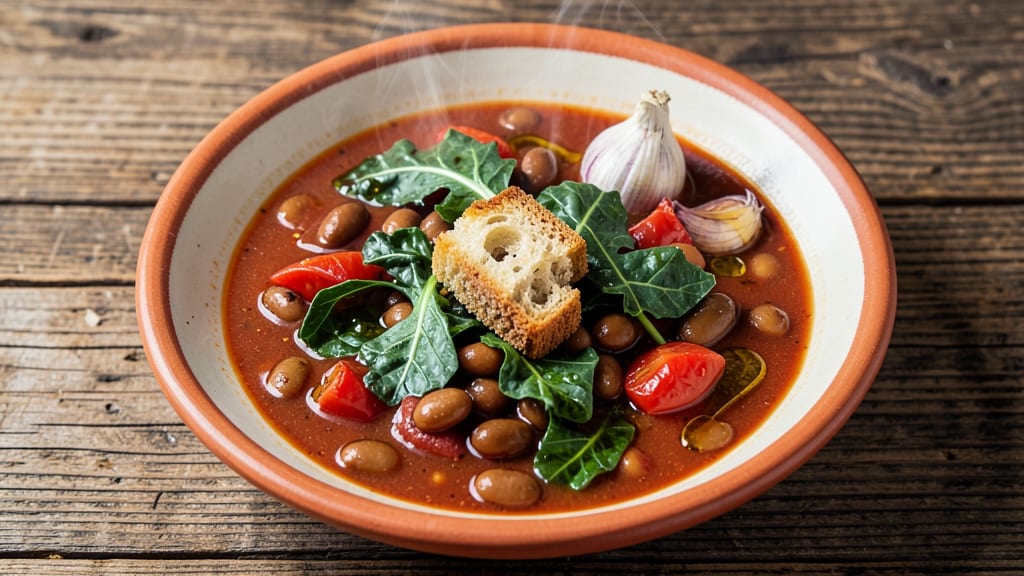
This authentic Tuscan soup recipe brings the heart of Italy to your kitchen with rustic simplicity and deep, comforting flavors. 🌿 The secret lies in slow-simmered cannellini beans, tender kale, and stale bread that transforms into a golden, crispy crust—just like Nonna used to make.
Each spoonful tells a story of Tuscan tradition, where humble ingredients create something extraordinary.
The magic happens in layers: rich vegetable broth builds the foundation, while tomatoes and garlic infuse warmth. Stale bread, toasted and crumbled, becomes the star topping, adding texture and depth that no shortcut can replicate.
This isn’t just soup—it’s a taste of Italy’s countryside, where meals are slow, flavorful, and meant to be shared.
What you’ll achieve is a hearty, rustic soup with a perfectly balanced broth—neither too thin nor too thick—where every ingredient shines. The bread crust topping adds a satisfying crunch that contrasts beautifully with the creamy beans and tender greens.
It’s the kind of dish that warms you from the inside out, perfect for chilly evenings or family gatherings.
Ready in about 1 hour (with minimal active time), this recipe delivers restaurant-quality results without the fuss. The slow cooking allows flavors to meld naturally, while the bread crust transforms stale loaves into something special. Here’s how to make it—just like in Tuscany.
Ingredients for authentic tuscan soup
These rustic Italian ingredients transform simple pantry staples into Tuscan countryside comfort.
| Ingredient | Amount | Notes |
|---|---|---|
| Dried Cannellini Beans 🌾 | 1 ½ cups | Unsoaked, dried beans preferred |
| Fresh Kale 🌿 | 1 lb | Stems removed, chopped small |
| Stale Bread 🍞 | 1 loaf | Day-old crusty bread preferred |
| Extra-Virgin Olive Oil 🫒 | ½ cup | High-quality, fruity variety |
| Garlic Cloves 🧄 | 6 cloves | Peeled, finely minced |
| Canned San Marzano Tomatoes 🍅 | 1 can | 28 oz, crushed by hand |
| Carrots 🥕 | 3 medium | Peeled, cut into small chunks |
| Celery Stalks 🧅 | 3 whole | Diced, for vegetable broth |
| Onion 🧅 | 1 whole | Yellow or red, diced |
| Vegetable Broth 💧 | 4 cups | Homemade or low-sodium store-bought |
| Parmesan Cheese 🧀 | ½ cup | Freshly grated, aged variety |
| Fresh Rosemary 🌿 | 2 tbsp | Chopped, for aroma |
| Salt 🧂 | 2 tsp | Diamond Crystal kosher salt |
| Black Pepper 🌶️ | 1 tsp | Freshly ground |
The cannellini beans are the heart of this soup—dried beans yield richer flavor than canned, but if you're short on time, use no-salt-added canned beans. For the kale, organic is ideal to avoid bitterness, but any fresh bunch works. The bread should be genuinely stale—fresh bread won't crisp properly. Ciabatta or rustic sourdough from the bakery section works best. If you can't find San Marzano tomatoes, plum tomatoes in a high-quality can are the next best option—they're sweeter and less acidic. The vegetable broth should be homemade if possible, but low-sodium store-bought is fine in a pinch.
No fresh rosemary? Dried at one-third the amount works, but the flavor won't be as vibrant. Substituting carrots? Sweet potatoes or parsnips add depth without altering the core flavor. The Parmesan must be real Parmigiano-Reggiano—pre-grated contains anti-caking agents that ruin the texture. For the bread crust, toasted garlic breadcrumbs can mimic the effect if you're out of stale bread. The garlic cloves should be freshly minced—pre-minced garlic loses its punch quickly. If you're making this ahead, add the kale and Parmesan just before serving to keep it vibrant.
Store the soup broth (without kale or Parmesan) in the fridge for 5 days or freeze for 3 months. The bread crust topping can be made a day ahead and stored in an airtight container. For optimal flavor, let the soup sit at room temperature for 10 minutes before serving—this allows the flavors to meld. The kale wilts quickly, so add it last and serve immediately. This soup tastes even better the next day as the flavors deepen, making it perfect for meal prep. Portion into jars for grab-and-go lunches.
Why You'll Love This Recipe
- I’ll be real: that stale bread isn’t trash—it’s the secret to this soup’s creamy, rustic heart. Toss it in while simmering, and suddenly you’ve got texture without extra effort. (Between us, I’ve saved three loaves this way.)
- No-Waste Magic: I’ll be real: that stale bread isn’t trash—it’s the secret to this soup’s creamy, rustic heart. Toss it in while simmering, and suddenly you’ve got texture without extra effort. (Between us, I’ve saved three loaves this way.)
- Garlic-Kissed Depth: The moment those garlic cloves hit the olive oil? Pure alchemy. You’re not just adding flavor—you’re building layers, especially when you let them caramelize just a little. That’s the difference between soup and ridiculously good soup.
- Weeknight to Potluck: Honestly, this is my go-to for everything: a rushed Tuesday dinner, a last-minute guest, or even a picnic. The beans soak overnight (or you use canned in a pinch), and the kale wilts in minutes. Bring it anywhere—it’s hearty enough to satisfy but light enough to pack.
Step-by-step instructions for authentic Tuscan soup
Transform simple ingredients into restaurant-quality Tuscan ribollita with this time-tested method.
🔥 Step 1: Soak and Simmer the Cannellini Beans
Rinse the 1.5 cups dried cannellini beans under cold water, then soak them in a large bowl of water for at least 8 hours or overnight. This ensures they cook evenly and maintain their texture. Drain and rinse them thoroughly before using.
In a large Dutch oven, heat 0.5 cup extra-virgin olive oil over medium heat. Add the 1 whole onion, 3 medium carrots, and 3 whole celery stalks (all diced). Sauté for 8-10 minutes until the vegetables soften and the onion becomes translucent. Add the drained beans, 4 cups vegetable broth, and bring to a gentle boil. Reduce heat to low and simmer for 1 hour, stirring occasionally. The beans should be tender but not mushy.
🍳 Step 2: Build the Tomato and Herb Base
While the beans simmer, crush the 1 can San Marzano tomatoes by hand (don't use a blender—this preserves texture). In a separate skillet, heat 2 tablespoons extra-virgin olive oil over medium heat. Add the 6 cloves minced garlic and sauté for 30 seconds until fragrant—don't let it brown, or it'll turn bitter.
Add the crushed tomatoes to the beans and stir well. Return the mixture to a simmer, then add the 2 tablespoons chopped fresh rosemary, 2 teaspoons salt, and 1 teaspoon black pepper. Let it cook uncovered for 20 minutes, stirring occasionally. The soup should develop a rich, rustic flavor—this is where the authenticity comes from.
🥘 Step 3: Incorporate Kale and Prepare the Bread Topping
Add the 1 lb chopped kale to the soup and simmer for 10 minutes until wilted but still vibrant. Taste and adjust seasoning if needed. In a food processor, pulse the 1 loaf stale bread into coarse crumbs. Mix the bread crumbs with 0.5 cup freshly grated Parmesan cheese and set aside.
Here's the key: the bread topping transforms this into a hearty Tuscan classic. The stale bread absorbs liquid perfectly, creating a crispy crust while keeping the soup moist. Keep the soup warm over low heat while you prepare the topping.
🔥 Step 4: Assemble and Bake to Perfection
Preheat your oven to 375°F. Ladle the soup into a large oven-safe dish, spreading it evenly. Sprinkle the bread-Parmesan mixture evenly over the top, pressing down gently with a spoon. Bake for 15-20 minutes until the topping is golden brown and crispy. Watch closely—it burns easily once it starts browning.
Let the soup rest for 5 minutes before serving. This resting time allows the flavors to meld and the crust to set properly. The result should be a soup with a crispy, savory top layer that contrasts beautifully with the creamy bean and tomato base.
Pro Tips For Making Authentic Tuscan Soup
- SOAK BEANS OVERNIGHT: I learned this the hard way—rushing the beans with a quick soak leaves them gummy. For Tuscan soup, dried cannellini need at least 8 hours in water (or 2 hours in boiling water). Use 3 cups water per cup beans, and drain them just before cooking. That extra time makes them tender without falling apart.
- TOAST BREAD UNTIL GOLDEN: Skip the stale-bread shortcut and toast it first—cubed, in olive oil, until crisp and golden. This isn’t just about texture; it prevents the bread from turning mushy in the soup. A dry pan on medium heat works best (no oil needed if you’re impatient, but it’ll be less flavorful).
- SAUTÉ GARLIC LOW AND SLOW: After browning the kale and beans, add the garlic last and cook it on the lowest heat setting. I used to burn it every time—now I just let it perfume the soup for 30 seconds, no color needed. Overcooking turns it bitter, and that’s a flavor crime in Tuscan soup.
- STIR IN KALE AT THE END: Kale wilts fast, but adding it too early turns the soup into a sad, watery green mess. Tear the leaves (no chopping—big pieces hold up better) and stir them in just before serving. The heat of the soup will soften them perfectly, and you’ll keep those bright green pockets of texture.
Creative variations of this authentic tuscan soup
Classic Ribollita Twist
For a true Tuscan experience, try adding 1 cup diced pancetta (or guanciale if you're feeling fancy) when sautéing the vegetables. Cook it until crispy, then remove and set aside before adding the rest of the ingredients.
Stir the pancetta back in during the final 10 minutes of simmering—this adds a smoky depth that Nonnas swear by. 🧀
Pappa al Pomodoro Style
Transform this into a Tuscan bread soup by omitting the beans and using 4 cups stale bread instead, soaked in the broth until creamy. Add 3 cups crushed tomatoes and simmer for 30 minutes before topping with the bread-Parmesan crust. This version is lighter but equally comforting.
Winter Vegetable Upgrade
Swap the kale for 1 lb Swiss chard or cavolo nero—both hold up beautifully to long simmering. Add 1 cup diced fennel with the carrots and celery for an earthy sweetness that pairs perfectly with the beans.
Roast 1 cup diced butternut squash separately and fold it in during the final 10 minutes of cooking.
Protein-Packed Variations
For meat lovers, stir in 1 lb Italian sausage (removed from casing) when sautéing the vegetables. For a vegetarian option, add 1 cup cooked lentils with the beans.
Both versions keep the soup hearty while adding new layers of flavor. The sausage adds richness, while lentils bring extra protein and texture.
Herb Infusions
Boost the aroma with 1 sprig fresh thyme alongside the rosemary. For a citrus note, add zest from 1 lemon when serving. Both additions brighten the dish without overpowering the rustic flavors. I find lemon zest particularly refreshing when paired with the rich tomato and bean base.
Modern Shortcut
For a quicker version, use 1 can no-salt-added cannellini beans (drained and rinsed) in place of dried. Reduce the broth to 3 cups and simmer for 30 minutes instead of 1 hour.
The texture will be slightly softer, but the flavors remain authentic. Perfect for busy weeknights when you still want that Tuscan comfort. 💡
Nutrition facts
Frequently asked questions
Why does this recipe use stale bread for the topping?
Stale bread is essential for the crispy crust—it absorbs moisture perfectly while creating that satisfying crunch. Fresh bread would turn mushy, ruining the texture. If you're in a pinch, toast regular bread until completely dry, then pulse it into crumbs.
Can I make this soup ahead of time?
Prepare everything up to baking, then refrigerate the unbaked soup (covered) for up to 2 days. When ready to serve, bake with the topping for 15-20 minutes at 375°F. For best flavor, reheat gently on the stove before baking. The crust will crisp up beautifully when baked fresh.
What's the difference between ribollita and pappa al pomodoro?
Ribollita (this recipe) uses beans and vegetables with a bread crust, while pappa al pomodoro is a bread-based soup with tomatoes and broth—no beans. Both are Tuscan classics, but ribollita is heartier. You can easily convert this recipe to pappa by omitting beans and using more bread soaked in broth.
How do I fix soup that's too thick or too thin?
For thick soup, stir in ½ cup warm broth gradually. If too thin, simmer uncovered for 10-15 minutes to reduce. The ideal consistency should coat a spoon lightly but still allow easy stirring. Remember, the bread topping absorbs some liquid, so adjust before baking.
Can I use canned beans instead of dried?
Yes! Use 2 (15 oz) cans no-salt-added cannellini beans, drained and rinsed. Reduce cooking time to 30 minutes after adding tomatoes, as canned beans are pre-cooked. For best flavor, still simmer with the vegetables to meld all ingredients properly.