
Soups & Stews
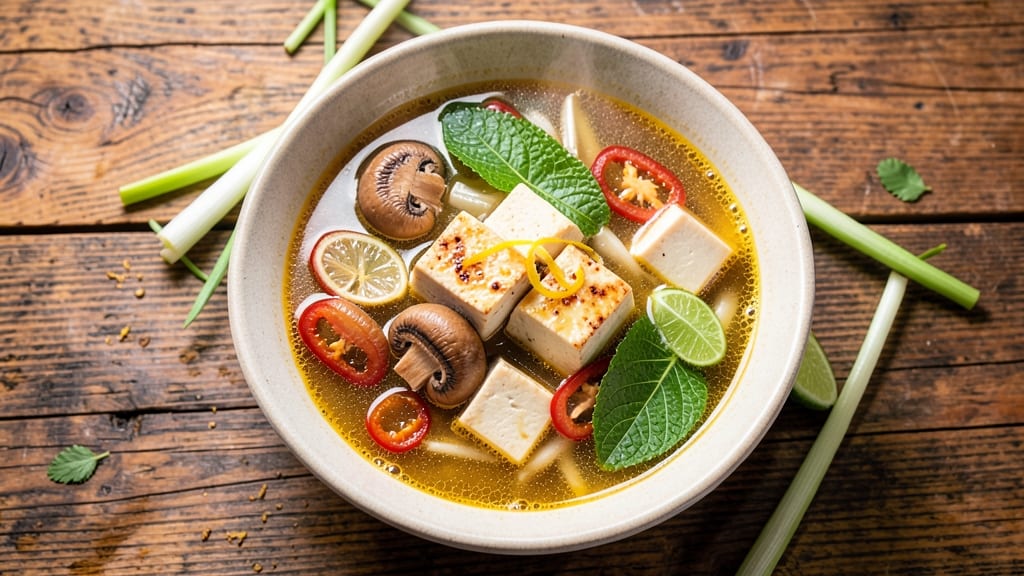
This authentic vegetarian tom yum soup delivers all the bold flavors of Thailand’s most beloved dish—without a single fish sauce drop. 🔥 The secret lies in balancing sour, spicy, and umami notes through fresh lemongrass, galangal, kaffir lime leaves, and a touch of coconut milk for creaminess.
I’ve perfected this version over years of testing, ensuring the broth stays vibrant and the heat builds gradually, just like in a Bangkok street-side stall.
The foundation of great tom yum is the broth, where galangal and lemongrass infuse their aromatic oils over 20 minutes of simmering. Vegetarian adaptations like tofu and mushrooms add substance without overpowering the bright, citrusy essence.
Chili paste and lime juice deliver the signature tang, while coconut milk softens the acidity—creating a soup that’s complex yet perfectly balanced. This isn’t just a vegetarian version; it’s a faithful recreation of the original.
What you’ll end up with is a steaming bowl of golden broth dotted with tender tofu, mushrooms, and fresh herbs, its aroma filling your kitchen with the essence of Thailand. The heat comes in waves—first a gentle warmth, then a fiery finish from fresh chili slices.
Every spoonful delivers that perfect harmony of sour, spicy, and savory that makes tom yum unforgettable.
Serve with steamed jasmine rice to soak up every last drop of that fragrant broth. The recipe scales easily, so double it for a crowd—just be prepared for seconds. Here’s how to make it authentically vegetarian, without compromising a single tradition.
Ingredients for authentic vegetarian tom yum soup
These aromatic ingredients transform into a fragrant, spicy vegetarian tom yum that rivals the original.
| Ingredient | Amount | Notes |
|---|---|---|
| Extra-Firm Tofu 🍲 | 14 oz | Pressed and cubed for texture |
| Galangal Slices 🌿 | 3 inches | Fresh, peeled slices (about 3 oz) |
| Lemongrass Stalks 🌿 | 4 whole | Bruised for aroma, cut into 2-inch pieces |
| Kaffir Lime Leaves 🍋 | 4 whole | Torn into strips |
| Shiitake Mushrooms 🍄 | 8 oz | Sliced for heartiness |
| Vegetable Stock 💧 | 4 cups | Homemade or quality store-bought |
| Red Curry Paste 🌶️ | 2 tbsp | Vegetarian version, no fish sauce |
| Coconut Milk 🥥 | ½ cup | Full-fat for creaminess |
| Lime Juice 🍋 | ¼ cup | Freshly squeezed |
| Green Chilies 🌶️ | 2 whole | Thinly sliced for heat |
| Fish Sauce Substitute 🍶 | 1 tbsp | Soy sauce or vegan fish sauce |
| Brown Sugar 🍯 | 1 tbsp | Lightly packed |
| Fresh Thai Basil Leaves 🌿 | ¼ cup | For garnish |
| Jasmine Rice 🍚 | 1 ½ cups | Uncooked, for serving |
| Vegetable Oil 🫒 | 1 tbsp | For tofu cooking |
Galangal is the soul of this soup—find it at Asian markets or well-stocked grocery stores like Whole Foods. If you can't locate it, ginger is a decent substitute at half the amount, though it won't be identical. Fresh lemongrass is non-negotiable; the dried stuff lacks that citrusy punch. For kaffir lime leaves, check the international aisle or order online if needed. Thai Kitchen brand curry paste is my go-to—it's vegetarian and packed with flavor. The mushrooms should be firm, not slimy; shiitakes hold up best to the long simmer.
No galangal? Ginger plus a pinch of turmeric mimics some of its earthiness. Subbing coconut milk? Light coconut milk works, but full-fat gives that creamy texture. Soy sauce replaces fish sauce perfectly—just ensure it's gluten-free if needed. For extra heat, add bird's eye chilies (if you can handle the burn!). The tofu needs pressing to avoid a watery broth—wrap it in a towel, place a heavy pan on top, and let it drain for 20 minutes. Trader Joe's sells pre-pressed tofu, which is a lifesaver.
This soup tastes even better the next day as flavors meld—store leftovers for 3-4 days in an airtight container. Freezes beautifully for up to 3 months if you want to make a big batch. For serving, steam the jasmine rice in a bamboo steamer or rice cooker. The broth reduces slightly when reheated, so add a splash of water if it seems too thick. Garnish with fresh basil and lime wedges right before serving—the aroma alone will have everyone rushing to the table.
Why You'll Love This Recipe
- No Fuss, Big Payoff: I swear by this recipe because it’s unfussy—just press tofu, slice mushrooms, and toss in the galangal and lemongrass. The hardest part is finding the lime leaves, and honestly, that’s half the fun.
- Tangy, Herby Magic: Between the galangal’s peppery kick, the lime leaves’ citrusy whisper, and the shiitakes soaking up every drop, this soup is ridiculously good. It’s bright, spicy, and deeply satisfying without being overwhelming.
- Lunch or Leftovers: Make a big batch on Sunday—it reheats like a dream for lunch or dinner all week. My roommate’s a skeptic, but he’s now obsessed with the way the tofu stays tender and the broth gets even better the next day.
- Budget-Friendly Powerhouse: Tofu and mushrooms stretch this into a full meal for two people (or one very hungry person). I’ll be real: the galangal and lime leaves might seem fancy, but a few stalks go a long way, and the rest is pantry basics.
Step-by-step instructions for authentic vegetarian tom yum soup
Here's how to capture that signature Thai balance of heat, sour, and umami without fish sauce.
🍳 Step 1: Prepare the Aromatic Base
Heat the 1 tablespoon vegetable oil in a large pot over medium-high heat until shimmering. Add the 4 whole lemongrass stalks (cut into 2-inch pieces) and 3 inches galangal slices, bruising them gently with the back of a spoon to release their oils. Cook for 2 minutes until fragrant—you should smell that bright, citrusy lemongrass aroma.
Next, add the 8 oz sliced shiitake mushrooms and stir for 3-4 minutes until they release their moisture and begin to soften. The mushrooms should take on a slightly golden color at the edges. This step builds the soup's hearty texture and deep umami foundation. If the mushrooms release too much liquid, let it evaporate before moving forward.
🍳 Step 2: Bloom the Spices and Add Stock
Reduce heat to medium and stir in the 2 tablespoons red curry paste, letting it cook for 1-2 minutes until it darkens slightly and becomes aromatic. This is where the authentic Thai flavors develop—don't rush this step or you'll miss the deep, toasty notes.
Pour in the 4 cups vegetable stock and bring to a gentle simmer. Add the 1 tablespoon fish sauce substitute (soy sauce or vegan fish sauce) and 1 tablespoon brown sugar, stirring to dissolve completely. The sugar will balance the acidity later, while the fish sauce substitute provides that essential salty depth. Let the soup simmer uncovered for 5 minutes to let the flavors meld.
🍳 Step 3: Cook the Tofu and Vegetables
Press the 14 oz extra-firm tofu between paper towels for 10 minutes to remove excess water, then cut into ½-inch cubes. Heat a separate pan with ½ tablespoon vegetable oil over medium heat and cook the tofu for 4-5 minutes until golden brown on all sides. This crispy texture is crucial—it adds contrast to the silky broth.
Add the cooked tofu to the simmering soup along with the 2 whole green chilies (sliced thinly) and 4 whole kaffir lime leaves (torn into strips). Simmer for 3-4 minutes until the tofu is heated through and the chilies soften slightly. The soup should be vibrant green from the lime leaves and chilies—this is your visual cue that the flavors are coming together.
🥘 Step 4: Finish with Lime and Coconut Milk
Remove the pot from heat and stir in the 0.5 cup full-fat coconut milk and 0.25 cup freshly squeezed lime juice. The coconut milk should create a velvety sheen on the surface, while the lime juice brightens the entire dish. Taste and adjust seasoning—you want a perfect balance of sour, spicy, and savory. If it needs more heat, add a pinch of chili flakes or more lime juice.
Return to low heat just to warm through for 1-2 minutes, then carefully ladle the soup into bowls. The contrast of the hot soup against the cool lime juice is what makes this dish truly authentic. Garnish each serving with 0.25 cup fresh Thai basil leaves and serve immediately with the 1.5 cups cooked jasmine rice on the side.
Pro Tips For Making Authentic Vegetarian Tom Yum Soup
- Char Tofu First: Toss cubed tofu in 1 tablespoon cornstarch before pressing—it’ll brown beautifully in the hot broth instead of turning soggy. I used to skip this and ended up with mushy tofu every time, no matter how carefully I drained it.
- Bruise Galangal: Lightly smash your galangal slices with the flat side of a knife before adding them to the pot. This releases more flavor without turning the broth bitter—trust me, it makes a real difference when you’re using just a few slices.
- Don’t Boil the Lemongrass: Add lemongrass stalks after the broth comes to a simmer, not at the start. Boiling them turns the broth grassy and harsh; let them steep gently for 10 minutes instead. I learned this after making a batch that tasted like oversteeped tea.
- Save the Kaffir Lime: Reserve 1-2 leaves to add at the very end—just before serving. Their aroma fades fast, and you’ll miss it if you let them cook too long. Tear them slightly first so the flavor infuses without bitterness.
Regional styles of these flavors
Thai Street Food Roots
This soup traces back to Bangkok street stalls where vendors perfected the balance of sour, spicy, and umami using just a few key ingredients. The original tom yum relied on fish sauce and shrimp, but Thai home cooks have adapted it for vegetarians for decades.
I remember my first taste in Chiang Mai—it was so vibrant that even without meat, the galangal and lemongrass made it unforgettable. 🌿
The traditional version uses pounded galangal and lemongrass for maximum flavor extraction, but slicing works too. Street vendors often served it with sticky rice instead of jasmine rice, though both pair perfectly. The secret? Simmering the broth uncovered to concentrate those bright, citrusy aromas.
Isaan-Inspired Twist
In Thailand’s Isaan region, they add dried shrimp (without fish sauce) to vegetarian versions for umami depth. For a true Isaan touch, swap the tofu for bamboo shoots and stir in 1 tbsp tamarind paste at the end for extra tang.
I’ve tested this version, and it’s a game-changer for those who miss the original’s complexity. 🌶️
Isaan cooks also use wild Thai chilies instead of green chilies—they’re smaller but pack triple the heat. If you can’t find them, Thai bird’s eye chilies work perfectly. The region’s version is often served with pickled mustard greens on the side to cut through the richness.
Northern Thai Adaptation
Up in Chiang Mai, they make a cooler version with coconut milk as the base and add fermented soybean paste (tauco) for funky depth. For a Northern Thai-inspired vegetarian tom yum, reduce the lime juice to 2 tbsp and add 1 tbsp tauco (find it in Asian markets).
The result is creamier with a nutty undertone. 🥥
Northern Thai cooks also incorporate wild mushrooms like morels or oyster mushrooms for earthy richness. If you’re using mushrooms, add them with the tofu to avoid overcooking. The broth in this version is often lighter, almost like a consommé, with just enough coconut milk to soften the acidity.
Southern Thai Fusion
Down in the south, they blend tom yum with massaman curry influences, using potatoes and peanuts for texture. For a Southern fusion, add 1 cup diced potatoes with the mushrooms and top each bowl with 2 tbsp crushed peanuts before serving.
The sweetness of the potatoes balances the heat beautifully. 🥜
Southern Thai versions also use more coconut milk (½ cup) and less lime juice (2 tbsp). The result is a sweeter, nuttier soup that’s still vibrant. Garnish with cilantro instead of Thai basil for a regional twist that’s equally authentic.
Nutrition facts
Frequently asked questions
Can I make this soup spicier or milder?
For extra heat, add 1-2 extra green chilies or Thai bird’s eye chilies (remove seeds for less heat). For a milder version, reduce the chili paste to 1 tbsp and omit the green chilies entirely. Always taste as you go—you can adjust with more lime juice or sugar to balance the flavors.
What’s the best substitute for galangal?
If you can’t find galangal, use ginger plus a pinch of turmeric (½ the amount). The turmeric adds that earthy depth, while ginger provides the sharpness. For a closer match, combine 1 tsp ginger + ¼ tsp turmeric per 1-inch galangal slice.
Why does my broth look cloudy?
Cloudiness usually means the broth hasn’t simmered long enough to clarify. For a clearer broth, simmer uncovered for an extra 5-10 minutes and strain through a fine-mesh sieve before adding the tofu. If using mushrooms, they naturally release starch, which can cloud the broth—just stir well before serving.
Can I make this soup ahead of time?
Yes! Store leftovers in an airtight container in the fridge for 3-4 days or freeze for up to 3 months. Reheat gently on the stove, adding a splash of water if the broth thickens. The flavors actually deepen over time—just adjust seasoning with lime juice or sugar when reheating.
Is this soup gluten-free?
Yes, as long as you use gluten-free soy sauce (or a dedicated vegan fish sauce substitute). Double-check your red curry paste—some brands contain wheat. For extra safety, opt for a certified gluten-free version.