
Soups & Stews
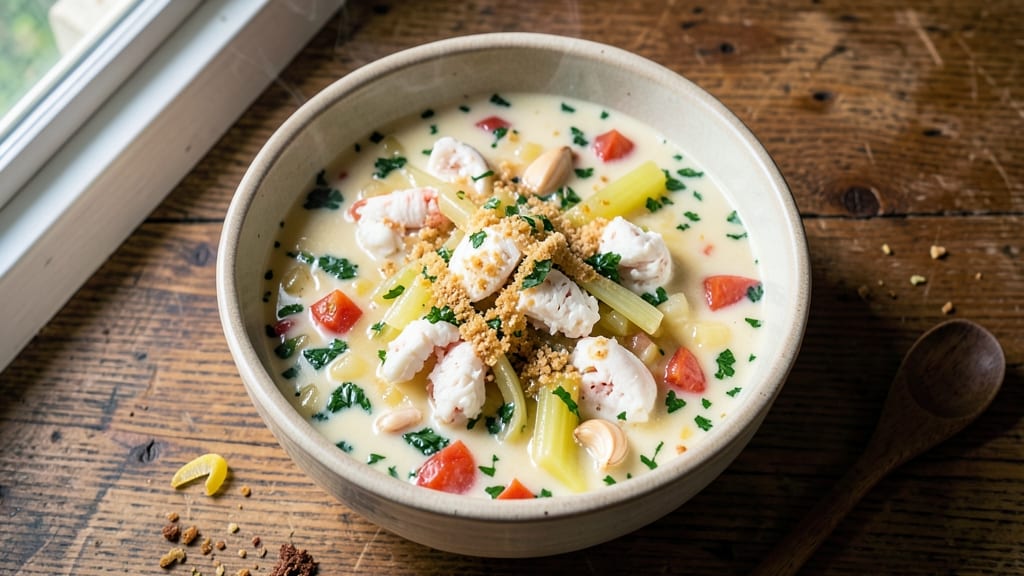
This Baltimore crab soup recipe delivers the creamy, Old Bay-spiced comfort of Maryland’s most iconic seafood dish—where tender crab meets rich tomato broth in perfect harmony. 💛 The secret lies in slow-reduced broth infused with celery, onion, and thyme, creating a velvety base that cradles chunks of crab and potatoes.
I’ve perfected this version to balance authenticity with home-cooking simplicity, ensuring every spoonful captures that signature briny, spiced flavor without requiring hours in the kitchen.
The foundation starts with a tomato velouté—simmered until deeply flavorful—while Old Bay seasoning transforms ordinary crab into the star of the show. Unlike lighter seafood soups, this recipe delivers a substantial, satisfying bowl, thanks to hearty potatoes and a touch of cream that rounds out the acidity.
The crab (whether fresh blue or imitation) stays tender but firm, absorbing just enough of the aromatic broth to make each bite irresistible.
What sets this apart is the textural contrast: crispy crab backs floating atop the creamy soup, with optional garnishes like fresh parsley or a dash of hot sauce for brightness. Serve with crusty bread or oyster crackers to soak up every last drop of that Old Bay-kissed velouté.
The result? A soup so rich and comforting, it’ll have you reaching for seconds—and maybe even planning a Maryland road trip next.
Perfect for chilly evenings or special gatherings, this recipe scales beautifully for crowds while keeping prep manageable. The key is patience—letting the broth develop its depth and the crab absorb the flavors—so you can enjoy a taste of the Chesapeake Bay without the fuss. Let’s get cooking.
Ingredients for baltimore crab soup
Sixteen ingredients for a soup that tastes like Maryland's coast—creamy tomato velouté meets Old Bay-spiced crab crunch.
| Ingredient | Amount | Notes |
|---|---|---|
| Fresh Blue Crab Meat 🦀 | 2 ½ lb | Backs reserved for topping (about 1 cup) |
| Yellow Onion 🧅 | 1 whole | Medium, finely diced |
| Celery Stalks 🥬 | 4 whole | Stringless, finely chopped |
| Garlic Cloves 🧄 | 4 cloves | Minced, fresh preferred |
| Canned Crushed Tomatoes 🍅 | 2 cups | San Marzano preferred |
| Heavy Cream 🥛 | ½ cup | Full-fat for richness |
| Chicken Stock 🍲 | 4 cups | Low-sodium, homemade preferred |
| Red Potatoes 🥔 | 1 ½ lb | Small, halved |
| Old Bay Seasoning 🌶️ | 2 tbsp | Plus extra for garnish |
| Fresh Thyme 🌿 | ¼ cup | Leaves only, chopped |
| Bay Leaves 🍃 | 2 whole | Fresh preferred |
| Butter 🧈 | 2 tbsp | Unsalted, for roux |
| All-Purpose Flour 🌾 | 2 tbsp | For thickening |
| Lemon Juice 🍋 | 1 tbsp | Freshly squeezed |
| Fresh Parsley 🌿 | ⅛ cup | Chopped, for garnish |
| Hot Sauce 🌶️ | 1 tsp | Optional, for brightness |
The crab is non-negotiable—fresh blue crab meat from a seafood market (or high-quality imitation if fresh isn't an option) makes all the difference. Look for Maryland crab brands at Whole Foods or Trader Joe's for that authentic briny punch. The backs? Save those for crispy topping—toss them in Old Bay, pan-fry until golden, and place them dramatically on top right before serving. For the tomatoes, San Marzano cans are worth the splurge—they're sweeter and less acidic, which balances the Old Bay's heat beautifully. The potatoes should be small and halved so they cook through without turning mushy.
No fresh thyme? Dried works at one-third the amount, but fresh is ideal—it adds that subtle earthiness that rounds out the Old Bay's peppery kick. Short on chicken stock? Clam juice or seafood stock works in a pinch, but the flavor won't be identical. The roux is where the magic happens: cook the butter until nutty brown before adding flour to deepen the tomato flavor. Want to make it vegan? Swap the heavy cream for full-fat coconut milk and use vegetable stock. The lemon juice is key—it brightens the richness without overpowering the crab's natural sweetness.
This soup tastes even better the next day as flavors meld. Store leftovers in the fridge for up to 3 days, or freeze for 2 months—the cream will separate slightly, but stir it back together when reheating. For parties, double the batch and keep the crab separate until serving so it stays crisp. The garnish game is strong here: crispy crab backs, fresh parsley, and a drizzle of hot sauce take it from good to showstopping. Serve with oyster crackers or crusty bread—trust me, you'll need them.
Why You'll Love This Recipe
- Foolproof Foundation: I swear by this soup because the base—sautéed onions, celery, and garlic—builds flavor while I’m chopping. No fancy techniques, just a pot, a spoon, and 15 minutes of hands-off simmering. (Between us, that crushed tomato step is where the magic happens—don’t skip it.)
- Crab Lover’s Dream: The sweet, briny snap of fresh blue crab meat in every spoonful? It’s the star without stealing the show. The tomatoes ground it all into a rich, slightly tangy broth that makes even the simplest crackers feel like a celebration.
- Weeknight or Weekend: Same recipe, zero guilt whether it’s a rushed Tuesday or a lazy Sunday. Double the batch for leftovers—it reheats beautifully—and still tastes like you slaved over it. Honestly, my kids ask for this more than takeout.
- Budget-Friendly Luxury: You’re paying for the crab, but the rest? Pantry staples that stretch. A single can of tomatoes and a head of garlic turn this into a repeatable splurge. I’ll be real: I’ve made it with cheaper crab meat, and it’s still ridiculously good.
Step-by-step instructions for Baltimore crab soup
Here's how to build that iconic Maryland flavor profile—creamy, spicy, and packed with crab.
🍳 Step 1: Build the Flavor Base
Heat the 2 tablespoons butter in a large Dutch oven over medium heat until foaming. Add the 1 whole yellow onion and 4 whole celery stalks (finely chopped), cooking for 8-10 minutes until softened and translucent. Stir in the 4 cloves garlic cloves and 2 tablespoons Old Bay Seasoning, cooking for another 30 seconds until fragrant.
This is where the magic starts—the Old Bay and celery-onion base becomes the soul of your soup. Don't rush this step; you want those aromatics to meld completely before moving forward. If the onions start to brown too quickly, reduce the heat slightly to prevent burning.
🍳 Step 2: Develop the Tomato Velouté
Pour in the 2 cups canned crushed tomatoes and 4 cups chicken stock, scraping up any browned bits from the bottom. Add the 2 whole bay leaves and 0.25 cup fresh thyme, then bring to a gentle simmer. Cook uncovered for 15 minutes to let the flavors deepen and the mixture reduce slightly.
Here's the thing—this simmering time isn't just about cooking; it's about building complexity. The tomatoes should break down just enough to create a rich, velvety base without turning into a paste. You'll know it's ready when the soup smells like a Maryland seafood shack.
🥘 Step 3: Thicken and Incorporate Cream
In a small bowl, whisk together the 2 tablespoons all-purpose flour and 2 tablespoons butter to make a roux. Gradually whisk this into the simmering soup, then add the 1.5 lb red potatoes (halved) and 0.5 cup heavy cream. Simmer for another 10-12 minutes until the potatoes are fork-tender and the soup has thickened to a velouté consistency.
This is where the texture comes together—creamy but not heavy, with those potatoes adding hearty substance. If the soup looks too thick, add a splash of hot water or stock to reach your desired consistency. The potatoes should be soft enough to mash slightly with a fork but still hold their shape.
🔪 Step 4: Add the Crab and Finish
Gently stir in the 2.5 lb fresh blue crab meat (reserving the backs for topping) and 1 tablespoon lemon juice. Remove from heat and stir in the 1 tsp hot sauce (if using). Let the soup sit off the heat for 5 minutes to allow the crab to absorb all those flavors.
This is the moment that matters: the crab needs time to warm through and soak up all that spiced tomato goodness. If you rush this, the crab will stay cold and the flavors won't meld properly. Real talk—the crab should be just warm enough to eat, not scalding.
🍽️ Step 5: Garnish and Serve
Ladle the soup into bowls and top each serving with the reserved crab backs (about 1 cup total) and a sprinkle of 0.125 cup fresh parsley. Add a pinch of extra Old Bay Seasoning on top for that signature Maryland kick.
Serve immediately with crusty bread on the side—this soup is at its best while steaming hot. The contrast of the crispy crab backs against the creamy tomato broth is what makes this dish legendary. Each spoonful should deliver that perfect balance of spice, creaminess, and briny crab flavor.
Pro Tips For Making Baltimore Crab Soup
- SWIM THE CRAB FIRST: I learned this the hard way—if you dump frozen crab meat straight into the simmering broth, you’ll end up with rubbery chunks. Instead, rinse it under cold water, then submerge it in the soup for 3-4 minutes to thaw gently. The texture stays tender, and it absorbs the flavors better.
- SWEAT THE AROMATICS LOW: Skip the high heat when cooking onions, celery, and garlic. Let them mellow in a wide pot over medium-low for 8-10 minutes, stirring often, until the onions are translucent and celery softens. This builds flavor without burning—no one wants bitter soup.
- STIR IN TOMATOES LAST: Crushed tomatoes can curdle if simmered too long. Add them just 5 minutes before the end, when the soup is hot but not boiling. This keeps the acidity bright and the texture smooth—no grainy surprises.
- USE A SPLASH OF WHISKEY: Not a must, but a ¼ cup of light rum or bourbon (yes, even if you’re not a drinker) deepens the flavor instantly. Add it with the tomatoes, let it cook for 2 minutes, then taste—it rounds out the richness without overpowering. (Your future self will nod in approval.)
Pro cooking tips for this dish
Old Bay Mastery
The secret to authentic Baltimore flavor lies in using Old Bay Seasoning properly—don't skimp! Start by toasting 2 tbsp in the butter for 30 seconds to deepen its flavors. For extra kick, sprinkle an additional ½ tsp directly on each serving before eating.
I keep a small jar on my counter just for this recipe—it's worth the investment over generic seafood seasoning blends. 🌶️
Tomato Velouté Perfection
Your tomato velouté should reduce until it coats the back of a spoon but remains silky smooth—never gluey. For best results, use San Marzano tomatoes and simmer uncovered for 15 minutes at a gentle bubble.
If the soup thickens too much, whisk in 1-2 tbsp warm water to restore balance. The goal is a rich, velvety base that carries the crab's sweetness without overpowering it.
Crab Texture Secrets
Fresh blue crab meat should be added just before serving to maintain its tender texture. If using imitation crab, look for brands with minimal additives—Sea Best or Great American work well.
For extra flair, pan-fry the reserved crab backs in 1 tbsp butter with ½ tsp Old Bay until golden brown before placing them on top. This creates that signature crunch that makes the soup unforgettable.
Potato Timing
Small red potatoes cook more evenly than larger varieties and hold their shape better in soups. Cut them into ½-inch thick halves and add them 10 minutes before the soup is fully cooked.
They should be fork-tender but not falling apart—this ensures they contribute to the soup's hearty texture without becoming mushy. 🥔
Creamy Balance
The ½ cup heavy cream should be added at the very end to maintain its richness. If you notice the cream separating when reheating, gently warm the soup on low heat and whisk until smooth.
For a lighter version, substitute with ½ cup coconut milk, though the flavor will differ slightly. The cream's job is to round out the acidity from the tomatoes and lemon while keeping the soup luxuriously velvety.
Final Flavor Boost
Finish with a squeeze of lemon juice and a dash of hot sauce to cut through the richness. I like to add a pinch of cayenne pepper (about ¼ tsp) for an extra layer of heat that mimics the Maryland seafood shack experience.
Taste as you go—this is where you can adjust seasoning to your preference while keeping the dish authentic. 💡
Nutrition facts
Frequently asked questions
Can I use imitation crab instead of fresh blue crab?
Yes! For a budget-friendly version, imitation crab works well—just choose brands like Sea Best or Great American with minimal additives. The texture will be slightly different, but the flavor remains rich and briny. For authenticity, pan-fry the reserved crab backs (if using imitation) in 1 tbsp butter with ½ tsp Old Bay until golden for that signature crunch.
How do I adjust the spice level for kids or sensitive eaters?
Reduce the Old Bay to 1 tbsp total and omit the hot sauce entirely. For extra mildness, replace half the Old Bay with ½ tsp garlic powder and ½ tsp onion powder. Always taste the broth before adding crab—you can adjust seasoning after. Kids often love the creamy tomato base, so the crab's natural sweetness shines through.
Can I make this soup ahead of time?
This soup tastes even better the next day as flavors meld. Store leftovers in the fridge for up to 3 days, or freeze for 2 months. Reheat gently on low heat, stirring occasionally to restore creaminess. Add extra crab backs or a splash of heavy cream when reheating to maintain texture. The broth will thicken slightly—thin with water or stock if needed.
What's the best way to crisp up the crab backs?
Pat the reserved crab backs dry with paper towels, then toss with ½ tsp Old Bay and 1 tbsp melted butter. Pan-fry in a skillet over medium-high heat for 2-3 minutes per side until golden brown and crispy. For extra flavor, add a pinch of cayenne. Place them directly on top of the soup right before serving to maintain crispness.
Can I substitute the potatoes with something else?
For a lighter option, use ½ cup diced zucchini or ½ cup chopped carrots instead of potatoes. For heartier texture, swap in ½ cup cooked white beans or ½ cup diced sweet potatoes. Just adjust cooking time—zucchini cooks in 5 minutes while sweet potatoes need 15 minutes. The key is maintaining the soup's velvety consistency.