
Soups & Stews
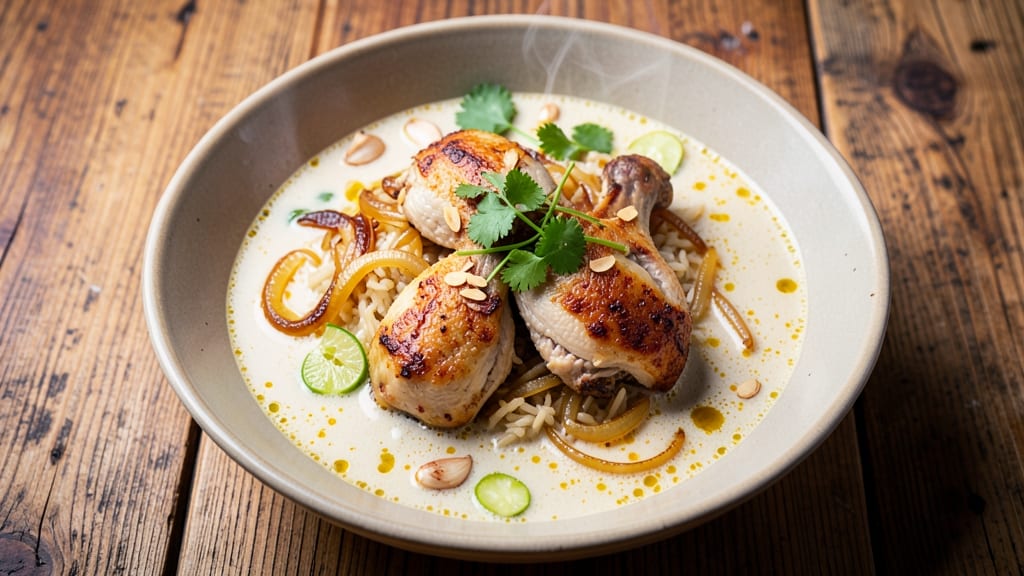
This Bangladeshi chicken soup recipe delivers the warm, aromatic comfort of a traditional biryani-inspired broth, where turmeric-infused chicken simmers with fragrant spices and coconut milk until tender and deeply flavorful.
The key lies in slow-cooking the chicken with whole spices—cardamom, cinnamon, and cloves—that dissolve into the broth, creating layers of earthy, citrusy depth. Unlike lighter soups, this one is rich yet balanced, with the coconut milk adding a velvety finish that makes every spoonful satisfying.
The beauty of this recipe is its approachability—no special techniques required, just patience and attention to the spices. Start by blooming the whole spices in hot oil to unlock their full aroma, then build the broth with ginger, garlic, and turmeric for that signature golden hue.
The chicken cooks low and slow, absorbing the flavors until it falls apart effortlessly, while the coconut milk rounds out the heat with natural sweetness. It’s the kind of soup that feels like a hug in a bowl, perfect for chilly evenings or when you crave something hearty yet comforting.
What sets this apart is the harmony of textures and flavors: the tender chicken, the slight bite of mustard seeds, the creamy coconut, and the subtle warmth of ginger. It’s a dish that travels well—packed lunches, potlucks, or a weeknight dinner—and only gets better as the flavors meld over time.
The aroma alone will have everyone gathering at the table, and the taste? That’s where the magic happens.
For those who love regional twists, try adding a splash of lime juice at the end for brightness or swapping coconut milk for yogurt for a tangier profile. Serve with steamed rice or crusty bread to soak up every last drop of that fragrant broth.
Here’s how to make it—step by step, just like my grandmother taught me.
Ingredients for bangladeshi chicken soup
Pantry staples meet exotic spices for this fragrant, comforting soup.
| Ingredient | Amount | Notes |
|---|---|---|
| Chicken Thighs 🍗 | 1 ½ lb | Bone-in, skin-on preferred |
| Coconut Milk 🥥 | 1 can | Full-fat, 13.5 oz can |
| Yellow Onion 🧅 | 1 whole | Medium size, chopped |
| Garlic Cloves 🧄 | 6 cloves | Fresh, minced |
| Fresh Ginger 🌿 | 2 tbsp | Grated, peeled |
| Turmeric Powder 🌶️ | 1 tbsp | Bright yellow, aromatic |
| Ground Cumin 🌿 | 1 tbsp | Toasted for depth |
| Ground Coriander 🌿 | 1 tbsp | Freshly ground preferred |
| Mustard Seeds 🌶️ | 1 tsp | Whole, yellow |
| Green Cardamom Pods 🌿 | 4 whole | Lightly crushed |
| Cinnamon Sticks 🌿 | 2 whole | 1-inch pieces |
| Cloves 🌶️ | 2 whole | Whole, lightly crushed |
| Vegetable Oil 🫒 | ½ cup | Neutral flavor |
| Salt 🧂 | 1 tsp | Kosher or sea salt |
| Fresh Cilantro 🌿 | ¼ cup | Chopped, for garnish |
The spices are where the magic happens. Whole spices like cardamom and cloves need to be lightly crushed—just enough to release their aroma without turning to dust. Grab them at Indian or Middle Eastern markets for the freshest batches, but the regular grocery store will work too. For the coconut milk, full-fat is a must—it adds that creamy richness that makes this soup so special. No need to peel the ginger; just scrub it and grate the whole thing. The turmeric? Bright yellow means it's potent—if yours looks dull, it's lost its punch.
No cardamom? Skip it or use half the amount of ground cinnamon—it won't be the same, but it'll still taste good. Running low on mustard seeds? Substitute with a pinch of ground mustard, but it won't have that same pop. The coconut milk can be swapped for yogurt or heavy cream if you're avoiding dairy, though the flavor will shift slightly. For extra depth, add a splash of lime juice at the end—trust me, it brightens everything up. And if you're feeling adventurous, a pinch of asafetida (hing) can take this to the next level, but it's optional.
This soup tastes even better the next day—3-4 days in the fridge, honestly. Freeze portions for up to 3 months if you're making a big batch. I always double the recipe because it disappears fast. Store the broth separately if you want to reheat it without the chicken getting rubbery. Garnish with fresh cilantro right before serving—wait until the end, or it'll wilt in the hot soup. And if you've got leftover rice, toss it in at the end for a quick biryani-style twist.
Why You'll Love This Recipe
- One-Pot Magic: The moment chicken thighs hit simmering coconut milk? That’s where the real work disappears. No extra pans, no fuss—just the rich aroma of ginger and garlic filling your kitchen while you stir once or twice. Honestly, I’ve made this with one hand tied behind my back (okay, maybe not, but close).
- Creamy Heat Balance: That first sip of coconut milk cutting through the sharp ginger and caramelized onions? It’s the kind of flavor that makes you pause mid-slurp. The chicken stays juicy, the broth is velvety, and the garlic? Oh, it sneaks up on you in the best way—like a warm hug with a little kick.
- Meal Prep MVP: Between us, this is my go-to for busy mornings. Toss leftovers in a thermos for lunch, or reheat it for dinner—it tastes just as good cold as it does hot. I’ll be real: my kids actually ask for seconds, and that’s saying something after their "I don’t like soup" phase.
- Budget-Friendly Luxury: Chicken thighs stretch for days, coconut milk adds depth without breaking the bank, and onions/ginger/garlic are pantry staples. I’ve fed a family of four for under $15, and somehow it still feels like a restaurant-worthy dish. Not the prettiest, but the taste makes up for it every time.
Step-by-step instructions for Bangladeshi chicken soup
Here's how to create a deeply aromatic, perfectly balanced soup that captures the soul of Bangladeshi home cooking.
Prepare the Spice Base and Chicken
Heat the 0.5 cup vegetable oil in a large pot over medium heat until shimmering. Add the 1 tsp mustard seeds and let them sizzle for 30 seconds until they pop and darken slightly. This is your flavor anchor—don't rush this step or they'll burn.
Add the 4 whole green cardamom pods, 2 whole cinnamon sticks, and 2 whole cloves. Stir for 1 minute until the spices release their aroma—you'll smell that warm, earthy scent that's pure comfort. Then add the 1 whole yellow onion and cook for 5 minutes until softened and golden. The onions should caramelize just slightly at the edges.
Add the 6 cloves garlic cloves and 2 tbsp fresh ginger (both minced) and cook for 1 minute until fragrant. This is where the magic happens—the spices should be toasted but not burned. Add the 1 tbsp turmeric powder, 1 tbsp ground cumin, and 1 tbsp ground coriander, stirring constantly for 30 seconds to bloom the spices' flavors.
Brown the Chicken and Build the Broth
Add the 1.5 lb chicken thighs (bone-in, skin-on preferred) to the pot, turning to coat evenly in the spice mixture. Let them brown for 4-5 minutes on each side until golden brown spots form. This browning creates deep, rich flavors that will infuse the entire soup.
Pour in 6 cups water (enough to cover the chicken) and add the 1 tsp salt. Bring to a boil, then reduce heat to low-medium and simmer uncovered for 30 minutes. You'll see the chicken release its juices and the broth turn cloudy—this is normal and exactly what you want. Skim off any foam that rises to the surface during this time.
After 30 minutes, check the chicken for doneness. It should be tender but not falling apart. If the broth hasn't reduced significantly, simmer uncovered for another 10-15 minutes to concentrate the flavors. The broth should coat the back of a spoon but still be liquid enough to sip.
Finish with Coconut Milk and Garnish
Reduce heat to low and stir in the 1 can coconut milk. The soup will turn creamy and rich—this is the moment it transforms from simple broth to something truly special. Simmer gently for 5-7 minutes, stirring occasionally, until the coconut milk is fully incorporated and the soup reaches your desired consistency.
Taste and adjust seasoning with additional salt if needed. The soup should be aromatic, slightly spicy from the mustard seeds, and deeply savory from the chicken. Ladle the soup into bowls, garnishing each serving with 0.25 cup fresh cilantro (chopped) just before serving. The cilantro adds freshness that cuts through the richness of the coconut milk.
Serve with Traditional Accompaniments
For an authentic experience, serve this soup with steamed basmati rice or naan bread on the side. The rice soaks up the flavorful broth beautifully, while the naan provides a contrast in texture. The soup tastes best fresh, so serve it immediately while the coconut milk is still creamy and the spices are aromatic.
Here's the thing about this soup—it's even better the next day. The flavors meld and deepen as it sits, making it perfect for meal prep. Store leftovers in an airtight container in the refrigerator for up to 3 days, or freeze for up to 3 months. When reheating, do so gently on the stove over low heat to preserve the texture of the coconut milk.
Pro Tips For Making Bangladeshi Chicken Soup
- Brown the Chicken First: Skip the direct coconut milk simmer—sear the chicken thighs skin-side down in a hot pot for 5-6 minutes until golden. This isn’t just for looks; it builds a crust that locks in flavor when the coconut milk joins later. (Yes, even if you’re impatient like me, don’t rush this.)
- Grate, Don’t Dice, the Ginger: I used to chop ginger into matchsticks, but grating it—even roughly—releases more of that zesty punch without bitterness. Toss it in early with the onions and garlic so it softens into the broth instead of sitting as chunks. (Your future self will notice the difference.)
- Simmer Low and Slow: Coconut milk curdles if you boil it, and that’s the last thing you want in a creamy soup. Once everything’s in the pot, reduce heat to a gentle simmer—just small bubbles breaking the surface—and let it cook uncovered. Thirty minutes at this pace makes all the difference.
- Strain the Broth (If You Dare): This isn’t the prettiest method, but it’s the tastiest: After simmering, strain the soup through a fine-mesh sieve to remove skin and bits. Return the liquid to the pot, then stir in a splash of coconut milk to restore creaminess. (I skip this when I’m lazy, but the dish is noticeably cleaner and richer when I don’t.)
Regional styles of bangladeshi chicken soup
Dhaka-Style Comfort
In Dhaka, this soup is often called chicken biryani soup—a lighter, broth-based cousin of the famous biryani rice dish. The key difference? Instead of rice, the focus is on the slow-cooked chicken and spice-infused broth, which is then finished with coconut milk for a creamy, velvety texture.
Locals often serve it with steamed rice on the side, letting everyone scoop up the rich flavors. I remember my first time trying it at a roadside stall in Old Dhaka—the aroma alone made my mouth water!
The soup is traditionally made with bone-in chicken thighs for maximum flavor, but you can use drumsticks if that’s what you have on hand. 🌶️
Chittagong Coastal Twist
Moving toward the coastal regions like Chittagong, you’ll find a slightly sweeter variation where coconut milk is the star. Here, the soup is often called chicken khichuri soup, blending influences from both Bengali and coastal Bangladeshi cuisine.
The addition of grated coconut (not just milk) gives it a unique texture and a hint of tropical sweetness. For this version, I like to add a splash of lime juice at the end to balance the richness.
The locals also love to serve it with crispy fried shallots on top for extra crunch. 🥥
Rural Village Simplicity
In rural areas, this soup takes on a more rustic form, often made with whatever spices are on hand. Whole spices like cardamom and cinnamon might be replaced with ground versions for convenience, but the soul of the dish remains the same.
One trick I picked up from a village cook is to add a pinch of asafetida (hing) when browning the chicken—it adds a deep, umami richness that’s hard to replicate.
The broth is usually less reduced, keeping it lighter and more broth-like, perfect for soaking up with homemade flatbreads. The simplicity here is what makes it so special—no fancy ingredients, just pure, comforting flavors. 🌿
Urban Fusion Adaptations
In cities like Dhaka and Chittagong, modern twists are everywhere. Some chefs add a dash of tomato paste to deepen the color and acidity, while others incorporate a splash of yogurt for tanginess.
For a fusion approach, try adding a handful of spinach or kale at the end—it wilts beautifully into the coconut milk, adding a fresh, vibrant touch. I’ve also seen versions with grilled chicken instead of simmered, giving it a smoky depth that pairs perfectly with the creamy broth.
The best part? These adaptations keep the dish approachable for home cooks while still feeling authentic. 🔥
Religious and Seasonal Variations
During Ramadan, this soup becomes a staple for Iftar meals, often served with dates and flatbreads. The coconut milk is sometimes replaced with yogurt to keep it lighter, aligning with the month’s traditions.
In winter, you’ll find it spiced with extra ginger and garlic for warmth, while summer versions might include a touch of mint to refresh the palate.
One of my favorite seasonal tweaks is adding roasted cumin seeds to the broth for a nutty depth—it’s a small change that makes a big difference. 🌱
Family-Style Serving Traditions
In Bangladeshi culture, soup is rarely eaten alone—it’s always part of a larger spread.
For a true family-style meal, serve this soup with: - Steamed basmati rice (the classic pairing) - Naan or roti (for dipping) - Pickled vegetables (like mango or lime chili) for acidity - Fresh cucumber slices to cut through the richness The idea is to create a shared experience—everyone gathers around a big pot, and the soup becomes the centerpiece of the meal.
I love setting up a DIY topping bar with extra cilantro, lime wedges, and even a sprinkle of crushed peanuts for texture. It’s all about making the dish feel special, just like a home-cooked meal should. ✨
Nutrition facts
Frequently asked questions
Can I use chicken breast instead of thighs?
While you can substitute chicken breast, thighs are preferred for this recipe because they stay tender and flavorful during long simmering. If you must use breast, cut it into small pieces and reduce the cooking time to 20 minutes after adding water to prevent dryness. The skin-on thighs also add richness to the broth that breast won't provide.
What can I do if my soup tastes too spicy?
Balance the heat by adding a splash of coconut milk (it naturally cools) or a spoonful of yogurt at the end. A squeeze of lime juice also brightens the flavors and cuts through the spice. If the mustard seeds are too intense, stir in a pinch of sugar or honey to mellow them out.
How do I make this soup vegetarian?
Replace the chicken with chickpeas or potato chunks for body, and use vegetable broth instead of water. Boost umami with soy sauce or mushrooms. The coconut milk will still work beautifully, but reduce it to ½ can to avoid heaviness. Add a pinch of asafetida (hing) for that authentic depth.
Can I make this soup in an Instant Pot?
Sauté the spices in oil as directed, then add chicken, water, and salt. Cook on high pressure for 15 minutes, then quick-release. Stir in coconut milk and finish with 5 minutes on sauté mode to heat through. The pressure cooker cuts prep time but keeps all the flavors intact.
Why does my broth look cloudy?
Cloudiness is normal and actually desirable—it means the chicken's collagen is breaking down, creating a rich, velvety texture. Skim off any excess foam, but don't worry about the cloudiness. For a clearer broth, simmer uncovered for 10 extra minutes to reduce it further, but this will concentrate the flavors.