
Soups & Stews
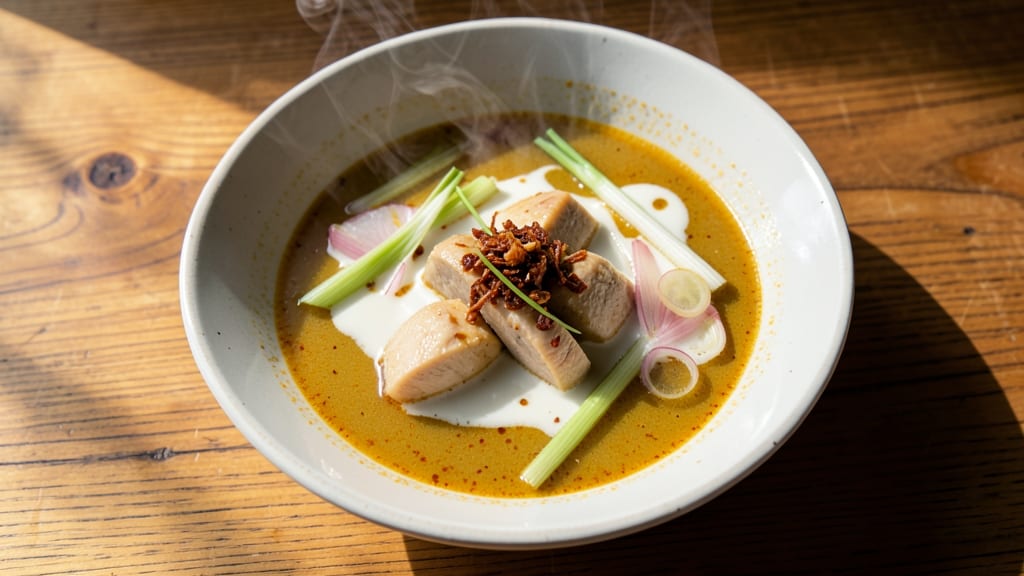
This Bangladeshi-style Thai soup recipe blends two vibrant culinary traditions into one fragrant, comforting bowl. 🌿 The marriage of mustard oil's bold heat with lemongrass's citrusy aroma creates a flavor profile that's both familiar and excitingly new.
What makes this dish special is how it balances traditional techniques—like slow simmering—with fresh, aromatic ingredients that transform ordinary ingredients into something extraordinary.
At its heart, this soup is all about harmony—creamy coconut milk meets the earthy depth of turmeric and cumin, while fresh herbs like cilantro and Thai basil add brightness.
The recipe builds layers of flavor through careful spice toasting and proper simmering time, ensuring every spoonful delivers that perfect balance of richness and freshness.
It's the kind of dish that feels both comforting and sophisticated, perfect for any gathering where you want to impress without spending hours in the kitchen.
What you'll end up with is a velvety, aromatic soup with tender vegetables, protein of your choice, and a fragrant broth that's infused with the essence of both Bangladeshi and Thai cuisines.
The garnish of fresh herbs and a drizzle of mustard oil adds that final touch of authenticity, making this soup not just a meal, but an experience. The best part? It comes together in one pot, so cleanup is just as effortless as the cooking process.
Whether you're serving this as a light lunch or a hearty starter for a dinner party, this fusion soup delivers restaurant-quality results with home-cooking simplicity. The secret lies in the balance of spices and the patience of letting flavors meld during simmering.
Here's how to create this beautiful fusion in your own kitchen.
Ingredients for bangladeshi style thai soup
Fragrant oil, aromatic herbs, and creamy coconut—this fusion soup comes together with just 15 ingredients.
| Ingredient | Amount | Notes |
|---|---|---|
| Mustard Oil 🫒 | ¼ cup | High-quality, cold-pressed preferred |
| Lemongrass Stalks 🌿 | 3 whole | Bruised and cut into 2-inch pieces |
| Galangal Slices 🍃 | 2 tbsp | Fresh, thinly sliced (substitute ginger if unavailable) |
| Coconut Milk 🥥 | 1 ½ cups | Full-fat, unsweetened preferred |
| Chicken or Tofu 🍗 | 1 ½ lb | Boneless chicken or firm tofu, cubed |
| Turmeric Powder 🌶️ | 1 tsp | Freshly ground preferred |
| Cumin Seeds 🌿 | 1 tsp | Toasted for deeper flavor |
| Coriander Seeds 🌶️ | ½ tsp | Toasted lightly |
| Red Curry Paste 🍅 | 1 ½ tbsp | Thai brand preferred (Maesri or Thai Kitchen) |
| Cilantro Leaves 🌿 | ½ cup | Fresh, chopped for garnish |
| Thai Basil Leaves 🌿 | ¼ cup | Fresh, chopped for garnish |
| Green Onions 🧅 | 3 whole | Thinly sliced, for garnish |
| Salt 🧂 | 1 tsp | Adjust to taste |
| Lime Juice 🍋 | 1 tbsp | Freshly squeezed |
| Chicken or Vegetable Broth 💧 | 2 cups | Low-sodium preferred |
Mustard oil is the soul of this soup—look for cold-pressed, high-quality bottles at Indian or Thai markets. The deeper the red hue, the fresher it is. Trader Joe's carries a good basic version if you're short on time, but nothing beats the authentic stuff. Lemongrass and galangal are the secret weapons here—most Asian grocery stores stock them fresh, or sub ginger in a pinch (though it won't be identical). Toast your whole spices in a dry pan for 30 seconds before adding to the pot—this unlocks their full aroma. The red curry paste? Maesri or Thai Kitchen brands are my go-tos—they're balanced and won't overwhelm.
No galangal? Ginger works in a bind, though it's not the same. Running out of mustard oil? Coconut oil or neutral oil keeps the fusion theme, just skip the final drizzle. The broth can be chicken or veggie—low-sodium is key—and tofu works perfectly if you're skipping meat. Fresh herbs are non-negotiable for garnish though—Thai basil has a distinct anise flavor that cilantro can't replicate. Pro tip: Buy extra cilantro and Thai basil—you'll want them for other dishes too. The lime juice should be freshly squeezed; bottled just doesn't cut it.
This soup tastes even better the next day as flavors meld—make extra and freeze portions. Store in airtight containers for 4-5 days in the fridge, or 3 months frozen. For serving, I like to keep the mustard oil in a separate small bowl so everyone can drizzle to taste. The broth reduces slightly overnight, so add a splash of water or broth when reheating. Garnish just before serving—the herbs wilt fast, so save that step for last.
Why You'll Love This Recipe
- No Chopping Chaos: That mustard oil hits the pan in seconds—no mincing, no fuss, just pour and go. The lemongrass and galangal? You can slap those stalks in whole if you’re lazy (I often do), and the soup still sings.
- Creamy Heat Magic: The coconut milk smooths out the galangal’s sharp bite while the mustard oil adds this unexpected depth—like a hug from a spice market. Honestly, the first time I tasted it, I nearly burned my tongue just to feel it again.
- Leftover Hero: This soup only gets better the next day, especially if you let it sit overnight. The flavors meld like old friends, and reheating it? Just a splash of water, stir, and you’ve got a ready-to-eat lunch for three days running.
- Budget Flexible: Use chicken one night, tofu the next—no waste, no guilt. The galangal and lemongrass stretch across multiple meals, and that jar of coconut milk? It’s the MVP of affordable comfort. (Yes, even on a Tuesday night.)
Step-by-step instructions for Bangladeshi-style Thai soup
This aromatic one-pot wonder blends Thai and Bangladeshi flavors for a creamy, spicy, and fragrant experience.
🔥 Step 1: Toast the Spices and Bloom the Mustard Oil
Heat the 0.25 cup mustard oil in a heavy-bottomed pot over medium-low heat. Add the 1 tsp toasted cumin seeds and 0.5 tsp toasted coriander seeds, letting them sizzle for 30-45 seconds until fragrant and lightly golden. This step unlocks their deep, nutty flavors—don't rush it or they'll burn.
Next, add the 2 tbsp galangal slices and 3 whole lemongrass stalks (bruised and cut into 2-inch pieces). Cook for 2 minutes until the galangal softens slightly and the lemongrass releases its citrusy aroma. The oil should shimmer but not smoke—this is where the soup's signature depth begins.
🍳 Step 2: Build the Flavor Base with Curry and Turmeric
Increase heat to medium and stir in the 1.5 tbsp red curry paste, breaking it down into the oil for 1-2 minutes until it darkens slightly and becomes fragrant. Add the 1 tsp turmeric powder and stir for 30 seconds until the spices meld together—this creates the vibrant golden hue and earthy warmth that defines this dish.
Pour in the 2 cups chicken or vegetable broth and bring to a gentle simmer. Add the 1.5 lb cubed chicken or tofu and the 1 tsp salt, stirring to combine. The broth should bubble softly—if it boils vigorously, reduce heat to maintain a gentle simmer. This step ensures the protein cooks evenly without toughness.
🥘 Step 3: Simmer Until Tender and Infused
Cover the pot and simmer for 15-20 minutes (or 20-25 minutes for tofu) until the chicken reaches 165°F or the tofu is fork-tender. The broth should reduce slightly, intensifying the flavors. Stir occasionally to prevent sticking—this is where the spices penetrate the protein and the broth transforms into a fragrant, aromatic base.
Real talk: If the broth looks too thin, uncover and simmer for an extra 5 minutes to concentrate the flavors. The soup should coat the back of a spoon but still be light enough to sip. This balance is key—too thick and it loses its refreshing quality.
🍳 Step 4: Finish with Coconut Milk and Bright Acid
Reduce heat to low and stir in the 1.5 cups coconut milk until fully incorporated. The soup will turn creamy and pale gold—this is the moment it comes together. Add the 1 tbsp lime juice and taste, adjusting salt if needed. The lime brightens all the rich, spicy, and earthy flavors, cutting through the creaminess beautifully.
Let the soup sit off heat for 5 minutes—this resting period allows the flavors to meld. The coconut milk will slightly thicken, creating that perfect silky texture. If you prefer it thinner, stir in 1-2 tablespoons of broth to reach your desired consistency.
🍽️ Step 5: Garnish and Serve with Fresh Herbs
Ladle the soup into bowls and garnish with the 0.5 cup chopped cilantro leaves and 0.25 cup chopped Thai basil leaves. The herbs add a fresh, slightly peppery contrast to the creamy, spicy broth. Finish with the 3 thinly sliced green onions for a pop of color and mild onion bite.
Serve immediately with steamed jasmine rice or crusty bread to soak up every last drop of that fragrant, harmonious broth. The first sip should deliver a perfect balance of heat, creaminess, and bright citrus—this is the magic of blending Thai and Bangladeshi flavors in one pot.
Pro Tips For Making Bangladeshi Style Thai Soup
- Bloom the Galangal: I learned this the hard way—slicing galangal too thin makes it bitter and mushy. Use ¼-inch thick slices, then lightly bruise them with the flat side of your knife before adding to the pot. This releases flavor without turning the soup into a galangal slurry.
- Toast the Mustard Oil: Skip the oil if it’s not hot enough, and you’ll end up with a chemical burn. Heat the oil over medium-low until it shimmers (around 250°F), then add the lemongrass and galangal. If it smells acrid, you’ve gone too far—pull it off heat immediately.
- Simmer, Don’t Boil: I used to crank the heat to speed things up, but that turns the coconut milk into a greasy mess. Once the broth is simmering, reduce to the lowest setting that keeps tiny bubbles breaking the surface. The soup needs time to marry, not a race to the finish.
- Crush the Lemongrass: Whole stalks infuse flavor but leave your soup looking like it’s missing something. Lightly crush 2-3 stalks with the side of your knife before adding them to the pot. This releases oils without turning the broth into a lemongrass smoothie.
Essential equipment for this dish
Must-Have Pot
Start with a heavy-bottomed Dutch oven—I swear by Le Creuset or All-Clad—to handle the mustard oil's high smoke point and even heat distribution. The depth helps prevent spills when adding broth and coconut milk.
A 3-quart pot is ideal for this recipe's yield, but a 4-quart works if you're feeding a crowd. Avoid thin, lightweight pots—they can't maintain steady temperatures during simmering. 🔥
Spice Toasting Tools
You'll need a small cast-iron skillet or nonstick sauté pan for toasting whole spices separately before adding them to the soup. I use a Lodge cast iron because it retains heat perfectly and adds a subtle iron note that complements the mustard oil.
Toast spices over medium-low heat to prevent burning—this is where their flavors truly shine. Keep a fine-mesh strainer handy to remove lemongrass stalks after simmering.
Herb Prep Essentials
Fresh herbs are non-negotiable for garnish, so invest in a sharp chef's knife (I love the Victorinox Fibrox) and a microplane for galangal if you're using it. A wooden cutting board prevents herbs from discoloring.
For Thai basil, which bruises easily, work quickly and store any extras in a sealed container with a damp paper towel to keep them vibrant. A small bowl for holding chopped herbs while you cook saves cleanup time.
Mustard Oil Safety Gear
Mustard oil can be intensely pungent when raw, so work near an open window or with a small kitchen fan running. I keep a box of baking soda nearby—just a pinch on a damp paper towel neutralizes any lingering odors if the oil splatters.
A long-handled spoon helps stir without getting too close to the heat. Never inhale the raw oil directly; let it heat up first to mellow its sharpness. 💨
Temperature Control
A digital instant-read thermometer (like the ThermoWorks Smoke) is worth every penny for checking chicken temp and broth consistency. The soup should reach 165°F for chicken or 185°F for tofu.
For simmering, maintain gentle bubbles—not a rolling boil—that way the coconut milk doesn't curdle. A kitchen timer ensures you don't overcook the protein while building deep flavors.
Garnish Presentation
Elevate your serving game with a small slotted spoon for delicate herb placement and a drizzling bottle (like a small glass squeeze bottle) for mustard oil. I arrange garnishes in a sunburst pattern around the bowl's edge for visual appeal.
Keep extra herbs and oil in airtight containers in the fridge for up to 5 days—this lets you garnish fresh every time without last-minute prep. 🌟
Nutrition facts
Frequently asked questions about Bangladeshi-style Thai soup
Can I make this soup vegetarian or vegan? Swap the chicken for extra-firm tofu (press and cube it first) or mushrooms like shiitake for depth. Use vegetable broth instead of chicken broth, and ensure your red curry paste is vegan (some contain fish sauce). The coconut milk and spices will still deliver that rich, aromatic flavor—just
What makes this soup different from traditional Thai or Bangladeshi soups?
The fusion lies in the mustard oil base (a Bangladeshi staple) combined with Thai ingredients like lemongrass, galangal, and red curry paste. Traditional Thai soups rely on lemongrass and kaffir lime, while Bangladeshi soups often feature mustard oil and poppy seeds. Here, the coconut milk adds creaminess, and the lime juice brightens the dish—creating a balance neither cuisine typically uses alone.
Can I adjust the spice level for sensitive palates?
Yes! Start by reducing the red curry paste to 1 tbsp instead of 1.5 tbsp and skip the raw mustard oil drizzle at the end. For extra mildness, strain the broth before serving to remove some of the spice particles. If you love heat, add a pinch of cayenne or extra mustard oil—just remember, the oil intensifies over time, so add it last.
How do I store and reheat leftovers?
Store in airtight containers for up to 4-5 days in the fridge or 3 months frozen. Reheat gently on the stove over low heat, stirring occasionally, until warmed through. Add a splash of water or broth if the soup thickens too much. Garnish with fresh herbs just before serving—they wilt when reheated, so save this step for last.
What if I can't find galangal or lemongrass?
For galangal, use ginger (though it’s not identical)—start with 1 tbsp grated ginger for every 2 tbsp galangal called for. For lemongrass, substitute 1 tbsp lime zest + 1 tbsp lime juice to mimic its citrusy aroma. Both work in a pinch, but the dish won’t be exactly the same. If you’re missing both, boost the ginger and add a pinch of turmeric for warmth.