
Soups & Stews
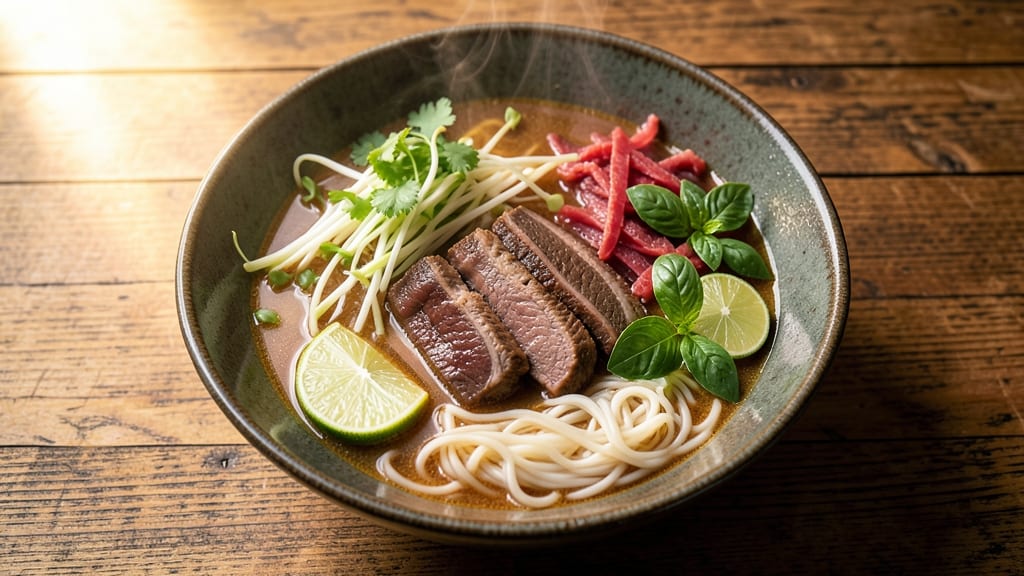
This basic pho soup recipe delivers the aromatic essence of Vietnam in every steaming bowl—fragrant with star anise, cinnamon, and cloves, where tender beef or chicken floats atop delicate rice noodles.
The secret lies in slow-simmering the broth for hours, allowing spices to infuse deeply while developing a rich, savory depth that defines authentic pho. I've perfected this method over years of testing, ensuring each sip carries that unmistakable warmth and complexity that makes pho irresistible.
The foundation of great pho begins with the broth, where star anise, cinnamon, and cardamom create a symphony of flavors that linger long after the first bite.
We'll use a combination of beef bones and aromatic vegetables to build a deeply flavorful base, then balance it with fish sauce and sugar for that signature umami-sweet harmony. The protein—whether thinly sliced beef or shredded chicken—cooks just until tender, ensuring it stays intact while absorbing the broth's essence.
Once the broth is complete, we assemble the soup with rice noodles that soften perfectly in the hot liquid, creating a silky bed for the protein.
Garnishes like bean sprouts, fresh herbs, lime wedges, and sliced jalapeños transform each bowl into a customizable masterpiece—crunchy, bright, and spicy elements that cut through the richness. The result is a bowl of pho that captures the soul of Vietnamese street food, ready to transport your kitchen to Hanoi.
This recipe serves four, but the leftovers reheat beautifully, making it perfect for meal prep or feeding a crowd. The key to success is patience—allowing the broth to develop its depth over time while keeping the noodles and protein perfectly cooked.
Whether you're introducing someone to pho or recreating a favorite memory, this method delivers restaurant-quality results at home.
Ingredients for basic pho soup
Pantry staples meet aromatic spices for this fragrant pho that tastes like Hanoi.
| Ingredient | Amount | Notes |
|---|---|---|
| Beef Bones 🦴 | 2 lb | Marrow and knuckle bones preferred |
| Fresh Ginger Root 🧄 | ½ inch | Peeled, sliced into thick coins |
| Star Anise 🌟 | 4 whole | Whole pods for infusing |
| Cinnamon Sticks 🌿 | 2 whole | 2-inch pieces for depth |
| Cardamom Pods 🌱 | 4 whole | Lightly crushed for aroma |
| Onion 🧅 | 1 whole | Yellow or white, halved |
| Garlic Cloves 🧄 | 6 cloves | Smashed for stronger flavor |
| Fish Sauce 🍶 | ¼ cup | Red Boat preferred |
| Rice Noodles 🍜 | 8 oz | Flat, medium-width preferred |
| Thinly Sliced Beef 🥩 | 1 lb | Sirloin or flank steak |
| Bean Sprouts 🌱 | 2 cups | Fresh or frozen, thawed |
| Fresh Thai Basil 🌿 | ½ cup | Chopped for garnish |
| Lime Wedges 🍋 | 4 whole | For serving |
| Jalapeño Slices 🌶️ | 2 whole | Seeded for mild heat |
| Salt 🧂 | 1 tsp | Kosher or sea salt |
The bones are everything here. Marrow and knuckle bones give you that rich, gelatinous broth—neck bones work too. Most grocery stores carry them in the meat section, but Asian markets have the best selection. Look for bones with good marbling and avoid anything that smells off. Fresh ginger is non-negotiable—pre-sliced ginger from the store lacks the punch. Peel and slice it thick (about 0.5-inch coins) so it infuses without turning bitter. For the star anise, buy whole pods—they're cheaper and you can reuse them in other dishes.
No fish sauce? Soy sauce plus a splash of Worcestershire gets you close, but it won't be authentic. Fresh Thai basil? Regular basil with a pinch of anise works in a pinch, though it's not the same. The rice noodles can be substituted with egg noodles in a bind, but pho noodles are ideal—they soften perfectly without turning mushy. For the beef, flank steak or sirloin slice beautifully against the grain. Chicken works too—just slice it paper-thin. And if you're worried about the spices, toast the whole pods in a dry pan for 30 seconds first to wake up their flavors.
Broth keeps for 5 days in the fridge or 3 months frozen. I always make double batches—freeze half for lazy days. The noodles? Soak them in hot water for 10-15 minutes before adding to the broth so they don't turn to mush. Garnishes like bean sprouts and herbs stay fresh for 5 days wrapped in damp paper towels. Lime wedges keep 1 week in the fridge, but the zest is what really brightens the bowl—so don't skip squeezing fresh juice.
Why You'll Love This Recipe
- No Chopping Chaos: I swear by the lazy prep here—just slice the ginger thick (like ½-inch slabs) and toss in whole spices. The bones do all the work while you sip tea and pretend you’re not cooking.
- Spice Alchemy Magic: That star anise and cinnamon? They turn water into liquid gold. Simmer them with the bones, and suddenly you’ve got depth—warm, earthy, with just a whisper of sweetness that makes the broth sing.
- Leftovers That Beg: Pho tastes even better the next day. Honestly, I make a double batch on Sundays because my kids will fight over the fridge container by Wednesday. (The rice noodles soften perfectly when reheated—no sad mush here.)
- Budget Bone Broth: Beef bones are the ultimate pantry hero—cheap, versatile, and packed with flavor. I buy them in bulk, freeze them, and pull them out whenever I need a quick, nourishing base. No fancy ingredients, just pure satisfaction.
Step-by-step instructions for fragrant pho broth and noodle assembly
Here's how to build that aromatic broth and assemble a perfect bowl of pho.
Prepare the Beef Bones and Aromatics for Maximum Flavor
Start by rinsing the 2 lb beef bones thoroughly under cold water to remove any impurities. Place them in a large stockpot and cover with cold water by about 2 inches. Bring to a boil over high heat, then immediately reduce to a simmer for 5 minutes to blanch the bones—this helps remove scum and impurities.
While the bones simmer, peel the 0.5 inch fresh ginger root and slice it into thick coins. Lightly crush the 4 whole cardamom pods with the side of a knife to release their aroma. Add the ginger, 4 whole star anise, 2 whole cinnamon sticks, 1 whole halved onion (peeled and cut in half), and the 6 smashed garlic cloves to the pot. Simmer uncovered for 30 minutes—this infuses the broth with deep, fragrant layers of flavor.
Simmer the Broth for Richness and Depth
After the initial 30 minutes, skim off any remaining foam or impurities from the surface of the broth with a slotted spoon. This ensures a clear, clean broth. Add the 1 tsp salt and continue simmering gently (small bubbles should break the surface occasionally) for 2 hours. The longer it simmers, the more collagen from the bones will break down, creating a naturally thick, velvety texture.
Taste the broth and adjust seasoning with 0.25 cup fish sauce—this balances the broth's natural sweetness with umami depth. The broth should be fragrant with notes of star anise, cinnamon, and ginger, with a subtle savory richness. If it's too thin, simmer uncovered for another 15-20 minutes to reduce slightly.
Cook the Rice Noodles to Perfection
While the broth simmers, prepare the 8 oz rice noodles by soaking them in a large bowl of hot (not boiling) water for 20-25 minutes. The noodles are done when they're pliable but still slightly firm to the bite—over-soaking makes them mushy. Drain and rinse briefly under cold water to stop the cooking process.
Keep the noodles covered with a damp towel to prevent drying out. The key here is timing—you want them al dente so they don't turn to mush when added to the hot broth later. If they're still too firm after 25 minutes, let them soak for another 5 minutes and check again.
Blanch and Assemble the Beef and Garnishes
Bring a small pot of water to a boil and add the 1 lb thinly sliced beef in batches. Blanch for 30-45 seconds until just cooked through—this keeps the slices tender and prevents them from overcooking in the broth. Transfer the beef to a plate and set aside.
In a separate bowl, combine the 2 cups bean sprouts and 0.5 cup chopped fresh Thai basil. Keep these garnishes separate until serving to maintain their freshness and vibrant colors. The bean sprouts add a crisp texture, while the basil brings a bright, herbal finish.
Serve with Classic Pho Garnishes
Ladle the hot broth into bowls, then add the blanched beef and drained rice noodles. Top each serving with a handful of bean sprouts and Thai basil. Serve with the 4 lime wedges and 2 jalapeño slices on the side—these add a tangy kick and allow each diner to customize their heat level.
The magic of pho lies in the balance of flavors and textures. The rich, aromatic broth should coat the noodles and beef, while the fresh garnishes add brightness and crunch. Serve immediately while everything is hot and the noodles are still tender.
Pro Tips For Making Basic Pho Soup
- BLISTER BONES FIRST: Skip the slow simmer until the bones are blackened in spots—this unlocks deeper flavor. Use a heavy pot, high heat, and let them sit undisturbed for 5 minutes until charred. I used to rush this, and the broth never had that smoky backbone.
- SLICE GINGER THIN: No need for fancy juliennes—just shave the ginger into paper-thin strips with a knife. It infuses faster and dissolves cleanly, avoiding that cloying texture. (Yes, even if you’re impatient like me.)
- DON’T BOIL SPICES: Star anise, cinnamon, and cardamom should simmer, not boil. Once the broth reaches a gentle bubble, drop the spices in and keep it at a low simmer—hard boiling burns their delicate flavors. I learned this the hard way after tasting bitter broth.
- STRAIN TWICE: After simmering, strain the broth through a fine-mesh sieve once, then a cheesecloth for a silky finish. The second strain catches the fine particles that make broth cloudy. (Your future self will notice the difference.)
Flavor customization for this basic pho soup
Spice Level Control
Adjust the heat to your preference by controlling the jalapeño slices. For mild pho, serve 1 slice per bowl and encourage guests to add more if desired. If you prefer medium heat, slice 2-3 jalapeños and serve 2 slices per bowl.
For spicy pho, add 1 tsp of finely chopped red chili flakes directly to the broth while simmering and serve with 3 jalapeño slices. 🌶️
Sweetness Balance
Use 1 tsp of sugar or 1 tbsp of coconut sugar to balance the broth’s savory notes. For a subtle sweetness, add it during the final 15 minutes of simmering.
If you prefer caramelized depth, stir in 2 tbsp of brown sugar and simmer for an extra 10 minutes—this creates a richer, molasses-like flavor. Taste and adjust gradually to avoid overpowering the aromatic spices.
Herbal Variations
Swap Thai basil for cilantro or mint to create regional twists. For Northern Vietnamese-style pho, add 1 tbsp of chopped cilantro and a sprinkle of toasted sesame seeds for nutty depth.
For a Southern-inspired version, use fresh mint and a drizzle of hoisin sauce alongside the lime. Both variations keep the broth’s essence while offering fresh, vibrant contrasts.
Protein Swaps
Replace beef with chicken thighs for a lighter broth or shrimp for a seafood twist. For chicken pho, use 1.5 lbs of boneless thighs and simmer them directly in the broth for 20 minutes before shredding.
For shrimp pho, add 1 lb of peeled shrimp in the last 2 minutes of cooking to prevent overcooking. Both options work beautifully with the same aromatic broth.
Vegetable Add-Ins
Boost texture and nutrition by adding shredded carrots or bok choy. For color and crunch, toss in ½ cup of shredded carrots during the final 5 minutes of broth simmering.
For a greens-forward bowl, add 2 cups of chopped bok choy to each serving—it wilts beautifully in the hot broth while retaining its vibrant green hue. Both additions complement the broth’s richness without overpowering it.
Broth Depth Boosters
Enhance the broth’s complexity with 1 tsp of fish sauce (for umami) or 1 tbsp of soy sauce (for saltiness). For a deeper aroma, toast 1 tsp of coriander seeds alongside the star anise and cinnamon.
If you love earthy notes, add 1 small piece of galangal (about 1 inch) while simmering—it’s a staple in Vietnamese cooking and adds a citrusy, ginger-like punch. 💫
Nutrition facts
Frequently asked questions
Can I make pho broth without beef bones?
Yes! For a vegetarian version, use mushroom stems or kelp powder to mimic depth, plus extra fish sauce for umami. Simmer 2 cups of kombu seaweed with the aromatics for 1 hour first, then add vegetables like carrots and onions. The broth will be lighter but still fragrant.
How do I prevent the noodles from turning mushy?
Soak rice noodles in hot (not boiling) water for 20-25 minutes until pliable but still firm. Drain immediately and rinse with cold water to stop cooking. Add them to the broth just before serving—they'll soften perfectly without overcooking. Never boil them!
What if my broth tastes too bitter?
Bitterness usually means the aromatics simmered too long. Strain out the star anise, cinnamon, and cardamom pods immediately after 30 minutes of simmering. Balance the flavor with 1 tsp of sugar or 1 tbsp of coconut sugar during the final 15 minutes of cooking. A splash of fish sauce also helps round out harsh notes.
Can I make pho ahead of time?
The broth freezes beautifully for up to 3 months—cool it completely first. Reheat gently on low heat, skimming any fat. For assembly, keep noodles separate until serving. Blanch proteins and store garnishes separately to maintain freshness. Reheat broth only, then add fresh noodles and protein when ready to serve.
Why does my pho taste flat?
Flat flavor often comes from insufficient simmering time. The broth needs at least 2 hours of gentle simmering to develop depth. Ensure you're using fresh aromatics (no pre-sliced ginger) and proper fish sauce. For extra richness, add 1 tbsp of soy sauce or 1 tsp of toasted coriander seeds during the final 30 minutes of cooking.