
Soups & Stews
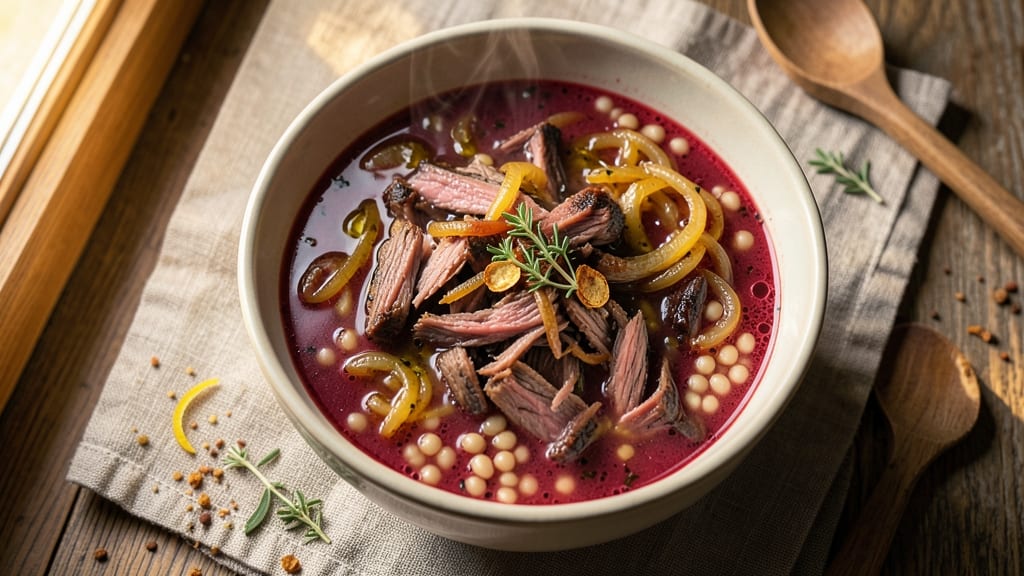
Leftover prime rib deserves a second life in this rich, hearty beef barley soup that transforms tough cuts into tender, flavorful bites. The secret lies in slow-cooked barley and a deeply aromatic broth that builds layers of savory depth—perfect for repurposing holiday leftovers without waste. This isn't just soup; it's a way to elevate every scrap of prime rib into something restaurant-quality.
The magic happens in the broth, where caramelized onions and garlic form a fragrant base, while thyme and bay leaves infuse warmth. Shredded prime rib melts into the soup, releasing juices that create a velvety consistency without needing heavy cream.
The barley softens just enough to soak up all those rich flavors, turning this into a one-pot meal that's both comforting and impressive.
What you'll end up with is a bowl of soup so hearty it feels like a hug—golden, aromatic, and packed with tender beef and chewy barley. The aroma alone will have everyone gathering at the table, and the first spoonful delivers that perfect balance of savory, umami, and subtle sweetness.
This is the kind of soup that turns leftovers into a centerpiece dish.
Best of all, it's a recipe that scales effortlessly—doubling the broth for a crowd or halving it for a cozy night in. The technique is straightforward but delivers professional results, proving that great food doesn't require starting from scratch. Let's turn those leftovers into something extraordinary.
Ingredients for beef barley soup recipe with leftover prime rib
Prime rib leftovers transform into restaurant-quality soup with these 13 flavor-packed ingredients.
| Ingredient | Amount | Notes |
|---|---|---|
| Leftover Prime Rib 🥩 | 1 ½ lb | Shredded or chopped into bite-sized pieces |
| Yellow Onions 🧅 | 2 whole | Thinly sliced for caramelization |
| Garlic Cloves 🧄 | 4 cloves | Minced for aromatic depth |
| Pearl Barley 🌾 | 1 cup | Rinsed before cooking |
| Beef Broth 💧 | 6 cups | Homemade or high-quality store-bought |
| Red Wine 🍷 | ½ cup | Bold dry variety like Cabernet Sauvignon |
| Tomato Paste 🍅 | 2 tbsp | For rich umami depth |
| Fresh Thyme 🌿 | 1 tbsp | Leaves only, stems removed |
| Bay Leaves 🍃 | 2 whole | Removed before serving |
| Olive Oil 🫒 | 2 tbsp | Extra-virgin for caramelizing onions |
| Salt 🧂 | 1 ½ tsp | Kosher or sea salt, adjust to taste |
| Black Pepper 🌶️ | ½ tsp | Freshly ground for warmth |
| Fresh Parsley 🌿 | ¼ cup | Chopped for garnish |
The prime rib is where this soup shines—shred it yourself for maximum tenderness. Look for Costco or Whole Foods for high-quality beef if you're buying fresh, but leftovers work even better. Caramelizing the onions (about 15 minutes) builds deep sweetness—don't rush this step. Fresh thyme and bay leaves add aromatic layers, but dried thyme at one-third the amount works in a pinch. For the barley, Pearl Barley from the bulk section is ideal—it's chewy and holds up well to long simmering.
No red wine? Substitute extra beef broth with a splash of balsamic vinegar for acidity. The tomato paste is non-negotiable for that rich umami kick—Trader Joe's squeeze tubes are perfect for this. Short on fresh thyme? Dried oregano at half the amount gives similar earthiness. The olive oil should be extra-virgin—it makes all the difference when caramelizing. For the broth, homemade is best, but Swanson or Pacific Foods brands are solid if you're buying store-bought. The parsley is just for garnish, so dried works fine if you're out of fresh.
This soup tastes even better the next day as flavors meld—reheats beautifully in 5 minutes. Keeps for 4-5 days in the fridge or 3 months frozen. I always double the batch because it's perfect for meal prep—portion into containers so you can grab and go. The barley thickens as it cools, so add a splash of broth if it seems too thick when reheating. Garnish with extra parsley and a crack of black pepper right before serving.
Why You'll Love This Recipe
- No-Waste Win: I swear by this trick—leftover prime rib transforms from "what’s for dinner?" to a full meal in one pot. The rich, tender beef shreds effortlessly, and you’re left with zero scraps (or guilt) after dinner.
- Deep Umami Magic: That slow-simmered beef broth? Chef’s kiss. The onions caramelize while the garlic infuses, creating a base so flavorful it turns even the simplest barley into something hearty. Honestly, I’ve tasted fancier soups that didn’t hit this hard.
- Crowd-Pleaser Flex: Bring it to a potluck, pack it for lunch, or serve it at a game-day spread—it’s the one dish that everyone asks for. Between us, my in-laws think I spent hours on it. (Spoiler: I didn’t.)
- Budget Booster: Pearl barley stretches the broth, making this soup feel luxurious without draining your wallet. I’ll be real: I often double the batch just to freeze half. That’s $5 worth of dinner for days.
Step-by-step instructions for beef barley soup with leftover prime rib
Turn your leftover prime rib into a hearty, restaurant-worthy soup with minimal effort.
Caramelize the Onions and Sauté the Garlic
Heat the 2 tablespoons olive oil in a large Dutch oven over medium-low heat. Add the 2 whole yellow onions, sliced thinly, and cook for 15-20 minutes until deeply golden and sweet-smelling. Stir occasionally to prevent burning—this slow caramelization builds rich, complex flavor that forms the soup's foundation.
Once the onions are beautifully caramelized, push them to the sides of the pot and add the 4 cloves minced garlic to the center. Cook for 1 minute until fragrant but not browned—burnt garlic will make the soup bitter. Stir to combine with the onions, then add the 2 tablespoons tomato paste and cook for another 30 seconds, stirring constantly. This step creates a flavorful base that will infuse the entire soup.
Deglaze and Build the Soup Base
Pour in the ½ cup red wine and scrape up any browned bits from the bottom of the pot with a wooden spoon. This deglazing step captures all the caramelized onion and garlic flavors that would otherwise stick to the pot. Let the wine simmer for 2-3 minutes until reduced by half, allowing its bold flavors to concentrate.
Add the 1 cup pearl barley (rinsed before cooking), 6 cups beef broth, 1½ teaspoons salt, and ½ teaspoon black pepper. Stir well to combine, then add the 1 tablespoon fresh thyme and 2 whole bay leaves. Bring the mixture to a gentle boil over medium-high heat, then immediately reduce the heat to low and let it simmer uncovered for 20 minutes. This initial simmer allows the barley to begin softening while the broth infuses with the aromatics.
Add the Prime Rib and Simmer to Perfection
After the initial 20 minutes, add the 1.5 pounds leftover prime rib, shredded or chopped into bite-sized pieces. Stir gently to distribute the meat evenly throughout the soup. The prime rib will infuse the broth with its rich, savory flavors, transforming a simple barley soup into something truly special.
Continue simmering the soup uncovered for another 30-40 minutes, stirring occasionally, until the pearl barley is tender and the meat is fully heated through. The soup should have a thick, hearty consistency—if it's too thin, reduce the heat and let it simmer uncovered for an additional 10-15 minutes to allow excess liquid to evaporate. Taste and adjust the seasoning with additional salt or pepper if needed. The barley should be fork-tender, and the meat should be warm all the way through.
Finish and Serve with Fresh Herbs
Once the soup is fully cooked, remove the 2 whole bay leaves and discard them. Stir in the ¼ cup chopped fresh parsley just before serving to brighten the dish with a fresh, herbaceous note. The parsley not only adds color but also balances the richness of the prime rib and barley.
Ladle the soup into bowls and serve immediately while it's hot. Each spoonful should deliver a perfect balance of tender prime rib, chewy pearl barley, and deeply flavorful broth. The caramelized onions and aromatic thyme add layers of complexity, making this soup a comforting yet sophisticated meal that's perfect for chilly days or cozy gatherings.
Pro Tips For Making Beef Barley Soup Recipe With Leftover Prime Rib
- Trim the Fat First: Leftover prime rib is fatty, and that fat turns soup greasy if you don’t handle it right. Shave off the thickest slices of external fat before dicing—about ¼-inch thick—and reserve it for rendering into the pot later if you’re feeling fancy. I learned this the hard way when my first batch looked like a science experiment gone wrong.
- Sweat Onions Low: Onions burn faster than you think, especially when you’re multitasking. Cook them over medium-low heat for at least 8 minutes, stirring occasionally, until they’re translucent and just starting to caramelize. Rushing this step means your soup will taste raw and bitter—trust me, you’ll know the difference.
- Rinse the Barley: Pearl barley comes with starch dust that clouds your broth. Give it a quick 30-second rinse under cold water before adding it to the pot. My grandmother swore by this, and she was right: the soup stays clearer and the barley absorbs flavor better without that gummy residue.
- Simmer, Don’t Boil: Barley needs gentle heat to soften properly—boiling it turns it mushy and releases too much starch. Keep the soup at a low, steady simmer (tiny bubbles, occasional skimming) for at least 45 minutes. I was skeptical until I tried it: the texture is perfect, and the broth stays rich, not gluey.
Make-ahead tips for beef barley soup recipe with leftover prime rib
Prep Ahead Essentials
Start by prepping your prime rib the night before—shred or chop it into bite-sized pieces and store in an airtight container in the fridge. This saves time and ensures even cooking.
I always rinse the pearl barley ahead of time and store it in a separate container to prevent premature softening. 💡
Broth Base Prep
Make your beef broth the day before if possible—it deepens in flavor as it sits. If using store-bought, opt for Swanson or Pacific Foods brands for maximum richness. Caramelize your yellow onions in advance and store them in the fridge for up to 3 days in an airtight container.
This step is worth the effort—it forms the soup's flavor foundation.
Freezer-Friendly Strategy
For long-term prep, freeze the soup in quart-sized freezer bags with 1-inch headspace to prevent expansion cracks. Label with the date—this soup keeps for 3 months without losing quality.
When ready to eat, thaw overnight in the fridge, then reheat on the stovetop with ¼ cup water to restore moisture. ❄️
Make-Ahead Timeline
Here's my foolproof schedule: Day 1 - Caramelize onions and prep prime rib. Day 2 - Assemble the soup base (without meat), simmer for 20 minutes, then cool completely before refrigerating. Day 3 - Add the prime rib and reheat until everything is piping hot.
This method ensures maximum flavor development while keeping prep manageable.
Portion Control
Divide the soup into individual airtight containers before freezing or refrigerating. This makes grab-and-go lunches effortless—just reheat and enjoy. I like using glass Pyrex containers because they're microwave-safe and don't absorb odors. Each serving comes out perfectly portioned and ready to heat in 5 minutes.
Flavor Boost Tips
Add a splash of red wine (½ cup) when reheating frozen soup to refresh the flavors. For extra richness, stir in 1 tablespoon butter during the final 2 minutes of reheating. If the soup seems too thick after reheating, thin it with ¼ cup beef broth or water.
The key is to taste as you go—adjust seasoning with salt and pepper to perfection. 🌟
Nutrition facts
Frequently asked questions
Can I use any type of leftover beef in this soup?
While this recipe was designed for prime rib, you can absolutely use other tender beef leftovers like roast, pot roast, or even brisket. The key is to shred or chop the meat into bite-sized pieces for even cooking. For tougher cuts like brisket, simmer them longer (up to 1 hour) to break down the fibers. Avoid using ground beef—it will make the soup too thick and lose its elegant texture.
Why does the recipe call for caramelizing the onions?
Caramelizing the onions (for 15-20 minutes) creates a deep, sweet-savory base that transforms this soup from ordinary to extraordinary. The slow cooking process develops complex flavors that infuse the entire broth. If you're short on time, you can sauté the onions for just 5 minutes until soft, but you'll miss that rich depth of flavor that makes this recipe special.
How do I adjust this recipe for a slow cooker?
Simply combine all ingredients (except fresh parsley) in your slow cooker and cook on low for 6-8 hours or high for 3-4 hours. The barley will absorb more liquid, so add ½ cup extra broth if needed. Stir occasionally to prevent sticking, and remove the bay leaves before serving. The slow cooker method is perfect for hands-off prep and even more flavor development.
What if my barley gets mushy?
Pearl barley should be tender but still have a slight bite—like al dente pasta. If yours turns mushy, you likely overcooked it. For future batches, start checking the barley after 20 minutes of simmering. If using a different type of barley (like quick-cooking), reduce the simmering time by half. Always rinse the barley before cooking to remove excess starch that can make it gummy.
Can I make this soup without wine?
Replace the ½ cup red wine with ½ cup beef broth plus 1 tablespoon balsamic vinegar for acidity. The balsamic adds depth similar to wine, balancing the rich beef flavors. If you prefer a sweeter taste, use ½ cup apple cider instead. Just remember that wine contributes both acidity and complexity that other substitutes can't fully replicate.