
Soups & Stews
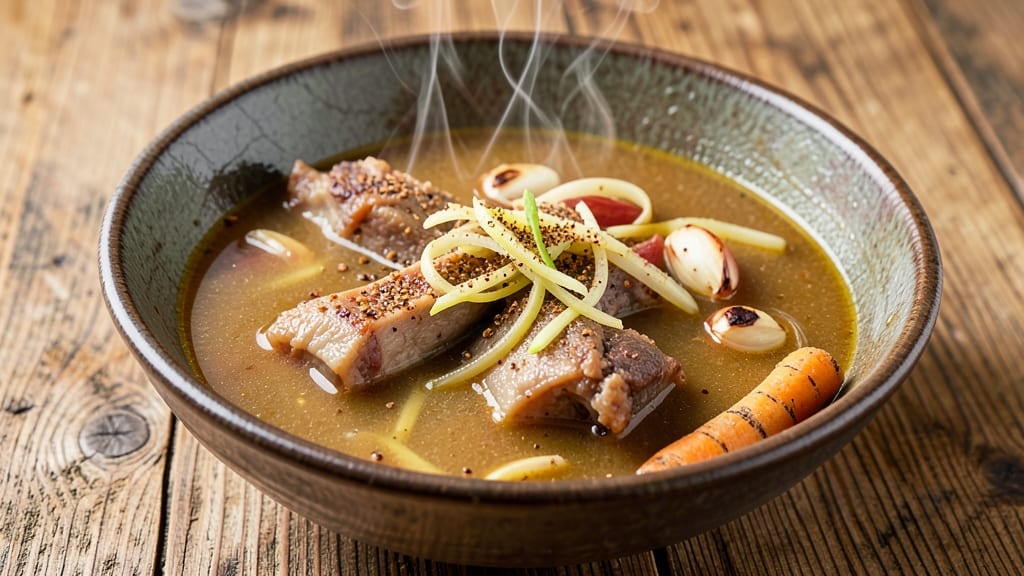
This Indian beef bone soup recipe transforms tough cuts into a deeply flavorful broth that carries the soul of regional Indian cooking. The secret lies in slow-simmering bones with aromatic spices—garam masala, turmeric, and black pepper—that infuse the liquid with layers of umami and warmth.
What starts as a simple pot of bones and water becomes a rich, collagen-packed foundation for a meal that feels like a hug in a bowl.
The process is straightforward but requires patience: bones are parboiled to remove impurities, then simmered for hours with whole spices and vegetables until the broth turns golden and velvety. The result isn’t just soup—it’s a restaurant-quality base for curries, rice dishes, or even a standalone comfort food.
Traditional techniques like blooming spices in hot oil and skimming foam ensure a clean, deeply flavorful result every time.
By the end, you’ll have a deeply aromatic, nutrient-rich broth that’s perfect for serving with steamed rice, roti, or even as a base for biryani. The slow cooking extracts maximum flavor and collagen, turning simple ingredients into something extraordinary.
This is the kind of soup that improves with each sip and leaves you craving more.
Whether you’re preparing for a family gathering or a cozy weeknight dinner, this recipe delivers authentic Indian soul in every spoonful. The key is in the slow simmer—where time transforms bones into liquid gold. Let’s get started on creating this deeply comforting dish.
Ingredients for beef bone soup recipe indian
Six pounds of bones and fifteen aromatic ingredients create this deeply comforting Indian beef bone soup.
| Ingredient | Amount | Notes |
|---|---|---|
| Beef Bones 🦴 | 4 lb | Marrow and knuckle bones preferred |
| Yellow Onions 🧅 | 2 whole | Chopped, medium size |
| Fresh Ginger 🌿 | 2 tbsp | Grated, organic preferred |
| Garlic Cloves 🧄 | 8 cloves | Peeled, roughly chopped |
| Whole Turmeric Root 🌿 | 1 tbsp | Grated, fresh preferred |
| Garam Masala 🌶️ | 2 tbsp | Freshly ground blend |
| Ground Black Peppercorns 🌶️ | 1 tbsp | Freshly cracked preferred |
| Cumin Seeds 🌿 | 1 tbsp | Toasted for depth |
| Bay Leaves 🍃 | 4 whole | Fresh, dried as substitute |
| Carrots 🥕 | 3 whole | Medium size, roughly chopped |
| Celery Stalks 🥬 | 3 whole | Roughly chopped with leaves |
| Tomatoes 🍅 | 4 whole | Medium size, quartered |
| Fresh Coriander Leaves 🌿 | ¼ cup | Chopped, for garnish |
| Lemon Juice 🍋 | 2 tbsp | Freshly squeezed |
| Salt 🧂 | 2 tsp | Diamond Crystal preferred |
The bones are the foundation—marrow and knuckle bones yield the richest collagen and flavor. Local butchers often carry these cuts, or ask for 'beef soup bones' at your grocery store's meat counter. Fresh ginger and turmeric root elevate the broth's complexity; Whole Foods or Indian specialty markets carry these in their produce sections. For garam masala, MDH or Everest brands are widely available in the Indian aisle, but freshly ground blends deliver superior depth. Toast your cumin seeds in a dry pan for 30 seconds before adding—this releases their essential oils and deepens their aroma.
No fresh ginger? Powdered ginger at half the amount works in a pinch, though it lacks the bright zing. Substitute dried turmeric with one-third the weight of fresh root, but bloom it in oil first to activate its flavor. Out of garam masala? Mix equal parts coriander, cinnamon, cardamom, and cloves for a homemade version. The tomatoes can be swapped for 1 cup tomato paste if you prefer a thicker broth. For extra umami, add 1 tbsp soy sauce at the end of cooking—it disappears into the broth without altering flavor.
This soup improves dramatically with time—24 hours of refrigeration allows flavors to meld completely. Store in airtight containers with a layer of fat on top to preserve freshness for 5 days. Freeze portions in 1-cup ice cube trays for easy single-serving use later. The bones can be blanched ahead and frozen for 3 months, saving you prep time on busy days. Always skim foam during the initial simmer—this ensures a crystal-clear, restaurant-quality broth.
Why You'll Love This Recipe
- One-Pot Magic: I swear by this—just toss the bones, onions, and ginger into a pot, simmer, and walk away. No extra pans, no mess, and honestly? That turmeric root turns the broth golden and ridiculously flavorful with almost no effort.
- Deep Umami Bomb: The beef bones melt into the broth like a slow-cooked secret weapon, while the garlic and ginger hit you with layers of warmth. Between us, that first sip? Pure satisfaction—rich, savory, and just spicy enough to linger.
- Weeknight to Party: Make a big batch on Sunday, and you’ve got lunch for the week or a showstopper for unexpected guests. Serve it with crusty bread for a cozy night in or ladle it over rice for a fancy-feeling meal. It’s my go-to for any occasion.
- Budget Goldmine: Beef bones stretch this soup into a feast without breaking the bank—literally half the cost of pre-made broth. Freeze leftovers for months, and you’ve got a pantry staple that tastes better than takeout. (Yes, even on a Tuesday night.)
Step-by-step instructions for beef bone soup Indian
Transform simple ingredients into a deeply flavorful soup through slow extraction and aromatic layering.
Prepare and Parboil the Beef Bones
Rinse the 4 lb beef bones thoroughly under cold water to remove any impurities. Place them in a large stockpot and cover with cold water by about 2 inches. Bring to a boil over high heat and let it boil vigorously for 5 minutes to remove surface blood and impurities. This step ensures a cleaner-tasting broth.
Drain the bones and return them to the pot. Add 8 cups fresh cold water (enough to cover the bones by 2 inches) and bring to a boil again. Once boiling, reduce heat to medium-low and skim off any foam or scum that rises to the surface using a fine-mesh skimmer. This creates a clear, clean base for your soup.
Build the Aromatic Base
In a separate large pot, heat 2 tablespoons olive oil over medium heat. Add the 2 whole chopped yellow onions and cook for 5-7 minutes until they soften and begin to caramelize slightly, developing a deep golden hue. This step forms the foundation of your soup's flavor profile.
Add the 2 tablespoons grated fresh ginger, 8 peeled and roughly chopped garlic cloves, and 1 tablespoon grated whole turmeric root. Stir constantly for 2-3 minutes until the ginger and garlic become fragrant and the turmeric releases its vibrant color. This aromatic trio will infuse the soup with warmth and depth.
Toast Spices and Add Vegetables
Increase heat to medium-high and add the 1 tablespoon toasted cumin seeds and 1 tablespoon ground black peppercorns. Toast for 30 seconds until the spices release their essential oils and become fragrant. Immediately add the 2 tablespoons garam masala and 4 whole bay leaves, stirring to combine.
Transfer the spice mixture to the pot with the beef bones. Add the 3 roughly chopped carrots, 3 roughly chopped celery stalks (including leaves), and 4 quartered tomatoes. Stir gently to distribute the spices evenly. The vegetables will soften as they simmer, releasing their natural sweetness into the broth.
Simmer for Deep Flavor Extraction
Bring the entire mixture to a gentle simmer over low heat. Maintain a steady simmer for 3-4 hours, ensuring the liquid never boils vigorously. This slow cooking process allows the collagen in the bones to break down, creating a rich, gelatinous broth. Skim off any additional foam that rises during the first 30 minutes of simmering.
After 3 hours, check the consistency of the broth. It should be thick and slightly viscous, with the bones falling easily from their sockets. If the broth is too thin, continue simmering for another 30 minutes. The vegetables should be tender but still hold their shape, contributing both texture and subtle sweetness to the soup.
Finish and Serve
Strain the soup through a fine-mesh sieve into a clean pot, pressing gently on the solids to extract maximum flavor. Discard the solids or save them for another use. Return the strained broth to the pot and stir in the 2 tablespoons freshly squeezed lemon juice and 2 teaspoons Diamond Crystal salt. Taste and adjust seasoning if needed—this soup should be rich but balanced, with a bright, tangy finish.
Ladle the hot soup into bowls and garnish each serving with 0.25 cup chopped fresh coriander leaves. The coriander adds a fresh, herbal note that cuts through the richness of the broth. Serve immediately with crusty bread or steamed rice to complement the hearty soup. The result is a deeply flavorful, umami-rich Indian beef bone soup that captures the essence of slow-cooked tradition.
Pro Tips For Making Beef Bone Soup Recipe Indian
- BLANCH BONES FIRST: Skip the raw beef bones straight into the pot—they’ll make the broth cloudy and take forever to render. Instead, blanch them in boiling water for 10 minutes, then rinse. This removes impurities and gets the collagen melting faster, so your soup turns rich and clear sooner.
- GRATE TURMERIC ROOT: That whole turmeric root? Don’t just slice it—grate it like ginger. The finer the texture, the more evenly the color and earthy flavor infuse into the broth. I used to chop it, and the soup always looked streaky and tasted uneven.
- BROWN ONIONS LOW AND SLOW: High heat caramelizes onions too fast and burns them before they soften. Instead, cook them on medium-low for 15-20 minutes, stirring occasionally, until they’re deep golden and jammy. This builds the base flavor without bitterness.
- ADD GINGER-GARLIC LATE: Tossing in fresh ginger and garlic at the start burns them before they release their aroma. Wait until the onions are fully cooked, then add them with the turmeric—this keeps their bright, fresh notes intact instead of bitter and sharp.
Troubleshooting this dish
Broth Too Thin?
If your broth isn't thickening after 3-4 hours, try adding a 1-inch thick slice of kombu seaweed during the final 30 minutes of simmering. This natural thickener adds umami without altering flavor.
Alternatively, whisk in 1 tablespoon cornstarch mixed with 2 tablespoons cold water and simmer for 5 minutes—just be sure to strain it out before serving. 💫
Bitter or Metallic Taste?
This usually means impurities weren't fully removed during the initial parboil. For next time, extend the first boil to 10 minutes and change the water twice before adding spices.
If it's already happened, add ½ cup fresh coconut milk at the end—it masks bitterness while adding creaminess. A pinch of sugar also helps balance harsh flavors.
Spices Overpowering?
Start by reducing garam masala to 1 tablespoon and toast spices for 1 minute instead of 30 seconds to mellow their intensity. For immediate fixes, stir in 1 cup plain yogurt or ½ cup heavy cream at the end—this smooths out spice heat while adding richness.
Fresh herbs like cilantro or mint also help balance strong flavors.
Bones Not Falling Apart?
Your bones need longer simmering time. Extend cooking to 5-6 hours for marrow bones or 6-8 hours for knuckle bones. For quicker results, add 1 tbsp apple cider vinegar during the final hour—it helps break down collagen faster. Never boil vigorously, as this toughens the meat instead of tenderizing it.
Cloudy Broth?
This happens when foam isn't skimmed properly. For future batches, skim aggressively for the first 20 minutes of simmering. If it's already cloudy, strain through a cheesecloth-lined sieve for a crystal-clear finish.
A splash of lemon juice at the end also brightens the color naturally. For extra clarity, chill the broth overnight—the fat will solidify on top and can be skimmed off before reheating.
Vegetables Too Soft?
Add vegetables only in the final 30-45 minutes of cooking instead of at the beginning. For extra control, blanch carrots and celery for 3 minutes before adding them to the broth.
If they're already mushy, strain and puree them separately to make a quick vegetable side sauce. The broth's flavor will still shine through even with softer veggies.
Nutrition facts
Frequently asked questions
What makes this Indian beef bone soup different from Western bone broth?
The key difference lies in the spice blend and cooking technique. This recipe uses garam masala, fresh turmeric root, and toasted cumin seeds—spices that create a warm, aromatic depth missing in many Western broths. The slow simmer also extracts more collagen, resulting in a thicker, more gelatinous texture perfect for Indian dishes like biryani or dal. Plus, the final touch of lemon juice adds brightness that balances the richness.
Can I use chicken or pork bones instead of beef?
While beef bones are traditional for their deep umami flavor, you can substitute with chicken bones (simmer for 2-3 hours) or pork bones (simmer for 4-5 hours). However, beef bones yield the most collagen and richest flavor. For pork, use knuckle bones and add ½ tsp fennel seeds to mimic the warmth of Indian spices. Chicken bones will create a lighter broth, better suited for soups rather than rich stews.
How do I know when the bones are done?
The bones are ready when they fall apart easily when pressed with tongs and the broth has a gelatinous, slightly viscous consistency. For marrow bones, this typically takes 3-4 hours, while knuckle bones may need 5-6 hours. If the broth isn't thick enough, continue simmering uncovered for another 30 minutes—the liquid will reduce naturally. The color should shift from pale to a rich amber-golden hue.
What can I serve with this soup besides rice or roti?
This rich broth pairs beautifully with steamed basmati rice, naan or paratha, or even crusty sourdough for dipping. For a heartier meal, serve with grilled paneer or chicken tikka, or use the broth as a base for Indian-style pasta (add cooked pasta and garnish with cilantro). The soup also makes an excellent soup dumpling filling or topping for pho-style bowls with lime and chili.
Can I make this soup in an Instant Pot or pressure cooker?
Yes! For an Instant Pot, follow the same prep steps but reduce simmering time to 1.5-2 hours on high pressure (natural release). The pressure cooker extracts collagen faster, but you’ll need to strain and reduce the broth afterward to achieve the same thickness. For deeper flavor, add 1 tbsp vinegar during cooking. However, traditional slow simmering yields the most complex, restaurant-quality broth—pressure cooking is a time-saving alternative, not a perfect substitute.