
Soups & Stews
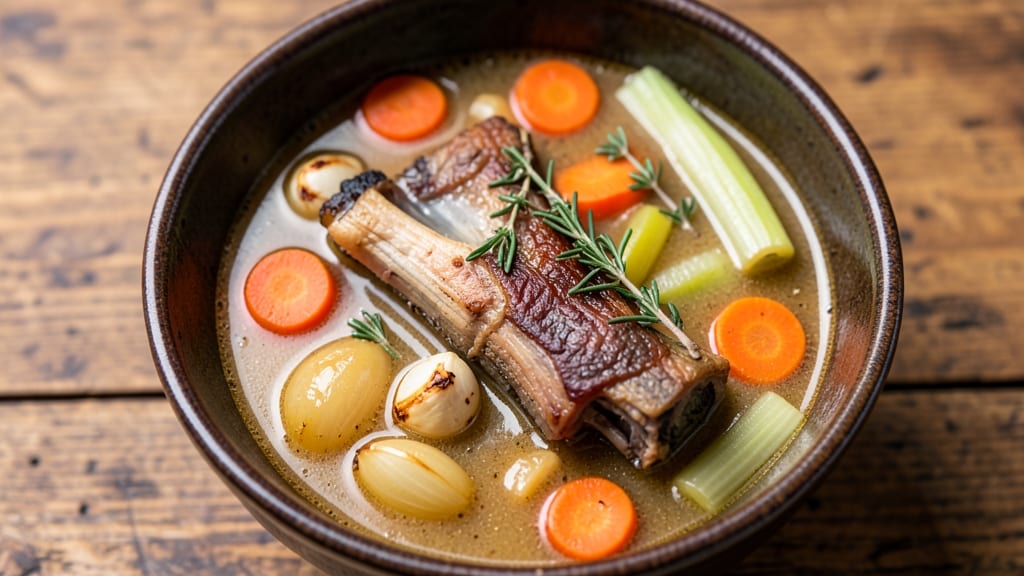
This beef bouillon soup recipe transforms simple ingredients into a deeply umami-rich elixir that warms both body and soul. 🌟 The secret lies in slow-cooked beef bones and aromatic vegetables, which infuse the broth with layers of savory depth that store-bought versions simply can't match.
What begins as a humble pot of ingredients evolves into a velvety, flavor-packed soup that tastes like comfort incarnate.
The beauty of this recipe is its foolproof technique—no fancy equipment required, just patience and attention to detail. You'll start with a base of beef bones and vegetables that simmer for hours, extracting maximum flavor while keeping the broth clear and elegant.
The result is a restaurant-quality soup that's rich enough to stand alone or pair perfectly with crusty bread.
By the time you're done, you'll have a golden, aromatic broth brimming with tender beef, vegetables, and herbs that have absorbed all the savory essence.
Each spoonful delivers that perfect balance of meaty richness and bright vegetable notes, making this more than just soup—it's a culinary experience that transforms ordinary weeknights into special occasions.
Perfect for chilly evenings or as a healing meal, this recipe scales beautifully for both small gatherings and large crowds. The leftovers only improve with time, deepening in flavor as the ingredients meld together. Let's create something truly memorable in your kitchen.
Ingredients for beef bouillon soup
Sixteen ingredients, hours of simmering, restaurant-quality umami depth in every spoonful.
| Ingredient | Amount | Notes |
|---|---|---|
| Beef Bones 🦴 | 3 lb | Marrow-rich knuckle or neck bones preferred |
| Yellow Onions 🧅 | 2 whole | Medium-sized, roughly chopped |
| Carrots 🥕 | 4 whole | Medium-sized, cut into 2-inch chunks |
| Celery Stalks 🌿 | 4 whole | Cut into 2-inch pieces |
| Garlic Cloves 🧄 | 8 cloves | Smash lightly before adding |
| Fresh Thyme Sprigs 🌿 | 4 whole | Or 1 tbsp dried thyme |
| Fresh Parsley Stems 🌿 | 4 whole | For bouquet garni |
| Fresh Bay Leaves 🍃 | 2 whole | Standard dried bay leaves |
| Tomatoes 🍅 | 4 whole | Roma or vine-ripened, quartered |
| Tomato Paste 🍅 | ½ cup | High-quality, no added salt |
| White Wine 🍷 | 1 cup | Dry, full-bodied preferred |
| Apple Cider Vinegar 🍎 | 1 tbsp | For brightness |
| Black Peppercorns 🌶️ | 1 tsp | Freshly cracked |
| Diamond Crystal Kosher Salt 🧂 | 1 ½ tsp | Adjust to taste |
| Extra-Virgin Olive Oil 🫒 | ¼ cup | For initial searing |
The bones are non-negotiable for authentic depth—marrow-rich knuckle or neck bones from Whole Foods or your local butcher deliver the richest flavor. Look for bones with visible marrow and minimal residue. Fresh herbs elevate the broth significantly, but dried thyme and bay leaves work in a pinch. The tomato paste should be high-quality—avoid brands with added salt or preservatives. For wine, Sauvignon Blanc or Pinot Grigio add brightness without overpowering. The vinegar is crucial for brightness; apple cider vinegar has the perfect balance of tang.
No beef bones? Substitute with 2 lbs beef chuck roast, cut into chunks, but expect less gelatinous richness. Fresh herbs unavailable? Use dried at one-third the quantity, but toast them lightly first for better flavor. Short on white wine? Dry vermouth or extra chicken broth works. The tomato paste can be replaced with 1 cup crushed tomatoes, though it won't be as concentrated. For a vegetarian version, mushroom stems and kombu seaweed create umami depth, though the texture will differ. The onions, carrots, and celery should be roughly chopped—they'll soften significantly during simmering.
This soup improves dramatically with time—24-48 hours in the fridge allows flavors to meld perfectly. Store in airtight containers with a layer of fat on top to preserve freshness. For long-term storage, freeze in 1-cup portions for easy reheating. The broth can be strained and frozen separately for up to 3 months, perfect for future soups or sauces. Always reheat gently on low heat to preserve the delicate flavors. Leftovers keep 5-7 days in the refrigerator when properly stored.
Why You'll Love This Recipe
- One-Pot Magic: I swear by this soup because it’s literally one pot—no chopping boards, no extra pans. Toss in the beef bones, onions, carrots, and celery, then let the slow simmer do the work. Honestly, the hardest part is deciding when to stop stirring.
- Umami Bomb: That first sip? Chef’s kiss. The beef bones melt into rich, savory broth while the garlic and onions caramelize into something deeply comforting. It’s the kind of flavor that makes you pause mid-slurp—even if your kids are rolling their eyes.
- Leftovers That Save Me: This soup tastes better the next day, and I’ve got proof: I’ve reheated it for lunch three times this week. Freeze half for when you’re too tired to cook, and thank me later when you’re spooning up warm, hearty broth without lifting a finger.
- Budget-Friendly Powerhouse: Beef bones and veggies stretch into gallons of soup—perfect for feeding a crowd or stretching meals. Between us, this is my go-to when I’m broke but still want to eat like I’m not. (Spoiler: It works.)
Step-by-step instructions for beef bouillon soup
Transform simple ingredients into restaurant-quality bouillon through precise technique.
🔥 Step 1: Roast the Beef Bones for Deep Flavor
Preheat your oven to 450°F. Place the 3 lb beef bones on a baking sheet lined with parchment paper, bone-side down. Roast for 20-25 minutes until they develop a deep mahogany color and begin to smell intensely caramelized. This step unlocks maximum flavor through the Maillard reaction.
Turn the bones over halfway through roasting to ensure even browning. The skin should blister and crack, releasing rich, meaty aromas. Once properly roasted, transfer the bones to a large stockpot—you'll hear the sizzle as they hit the cooler metal, signaling their readiness for the next phase.
🍳 Step 2: Sear Vegetables and Build the Base
In the same stockpot, heat the 0.25 cup extra-virgin olive oil over medium-high heat until shimmering. Add the 2 whole yellow onions, 4 whole carrots, and 4 whole celery stalks, all cut into 2-inch pieces. Sear for 8-10 minutes until the vegetables soften and begin to caramelize, developing a golden hue.
Add the 8 cloves garlic cloves (lightly smashed) and cook for 1 minute until fragrant. This quick sear prevents the garlic from burning while building complex flavor. Immediately pour in the 1 cup white wine and scrape up all the browned bits from the bottom—this deglazing captures concentrated flavor that would otherwise go to waste.
🥘 Step 3: Simmer the Bouillon Foundation
Add 8 cups cold water to the stockpot (enough to cover the bones by 2 inches). Bring to a boil over high heat, then reduce to a gentle simmer. Skim off any foam that rises to the surface during the first 15 minutes—this removes impurities and ensures a clear broth.
Add the 4 whole fresh thyme sprigs, 4 whole fresh parsley stems, 2 whole fresh bay leaves, 1 tsp black peppercorns, and 1.5 tsp diamond crystal kosher salt. Simmer uncovered for 2 hours, maintaining a gentle bubble. The broth should develop a rich, amber color and intense aroma as collagen breaks down from the bones.
🍳 Step 4: Develop Umami with Tomatoes and Vinegar
After 2 hours, remove the bones and set aside for later use. Add the 4 whole tomatoes (quartered) and 0.5 cup tomato paste to the broth. Stir in the 1 tbsp apple cider vinegar—this brightens the broth and balances the richness. Simmer for another 30 minutes to allow the tomatoes to break down and release their juices.
Strain the broth through a fine-mesh sieve into a clean pot, pressing gently on the solids to extract maximum flavor. Discard the vegetable solids. The resulting bouillon should be deep amber with a velvety texture and layers of umami complexity from the roasted bones, wine, and tomatoes.
⏰ Step 5: Finish and Serve with Confidence
Return the strained bouillon to the pot and bring to a gentle simmer. Taste and adjust seasoning with additional salt or pepper if needed. The broth should be rich but not salty, with bright acidity from the vinegar and deep savory notes from the bones.
For serving, return the meaty bones to the broth and simmer for 10 minutes to reabsorb their flavors. Ladle the hot bouillon into bowls, garnishing with fresh parsley if desired. This homemade bouillon forms the perfect base for soups, stews, or rice dishes—its depth of flavor elevates any dish it accompanies.
Pro Tips For Making Beef Bouillon Soup
- BLISTER THE BONES FIRST: I learned this the hard way—skipping the char on beef bones means weak flavor. Sear them in a dry pot over high heat until deep brown (yes, even the marrow bones) before adding liquid. That crust packs more umami than you’d expect, and it won’t dissolve like you’re worried it might.
- CHOP ONIONS COARSELY: Tiny onion pieces turn to mush and cloud your broth. Cut them into ½-inch chunks—they’ll soften but stay identifiable, adding sweetness without turning the soup into onion purée. Same goes for carrots and celery: bigger pieces = better texture.
- SIMMER LOW AND LONG: The first 30 minutes of simmering are critical—don’t rush. Keep the heat at a bare simmer (tiny bubbles, occasional skimming) or you’ll end up with a murky, bitter broth. After that, you can stretch it to 4+ hours, but the first hour is non-negotiable for depth.
- SAVE TIME WITH PARBOILED BONES: If you’re short on time, blanch the bones in boiling water for 10 minutes first to remove impurities. Rinse them well, then proceed with searing—it cuts down on skimming later. (Your future self will thank you when you’re not staring at a pot of cloudy broth.)
Creative variations of this recipe
French Classic Style
Transform this bouillon into a traditional French consommé by clarifying the broth using a raft method. After simmering the bones for 4 hours, strain the broth through a cheesecloth-lined colander into a clean pot.
Create a raft by layering beaten egg whites, chopped parsley, and breadcrumbs on top, then simmer gently for 30 minutes to trap impurities. The result is a crystal-clear, silky broth perfect for elegant dishes like boeuf bourguignon or coq au vin. 🍷
Italian Rustic Twist
Add 1 cup crushed San Marzano tomatoes and 1 tsp red pepper flakes during the final 30 minutes of simmering for an Italian-inspired pasta e fagioli base. Finish with 1 tbsp grated Parmesan and fresh basil before serving.
This version pairs beautifully with orzo pasta or crusty ciabatta. The tomatoes deepen the umami while the chili adds a subtle heat that balances the richness. 🌶️
Asian-Inspired Fusion
Infuse the broth with 1-inch fresh ginger, 2 star anise pods, and 1 cinnamon stick during the initial 2-hour simmer. After straining, stir in 2 tbsp soy sauce and 1 tsp fish sauce for depth.
Serve over rice noodles with shredded rotisserie chicken and sliced scallions for a Vietnamese pho-inspired bowl. The aromatic spices create a fragrant, complex broth that bridges Eastern and Western flavors. 🌿
Smoky BBQ Base
For a Southern-inspired variation, add 2 tbsp smoked paprika and 1 tbsp liquid smoke during the final 30 minutes of simmering. Strain and reduce the broth by one-third for a concentrated, smoky base.
Use it as a marinade for brisket or as a sauce for pulled pork sandwiches. The deep, charred notes transform this into a versatile BBQ staple. 🔥
Vegetarian Umami Boost
Replace beef bones with 2 lbs mushroom stems and 1 sheet kombu seaweed, simmered for 3 hours. Add 1 cup white miso paste during the final 30 minutes for umami depth.
Strain and finish with 1 tbsp rice vinegar and 1 tsp sesame oil. This version works as a base for vegetable ramen or miso soup, delivering rich flavor without meat. 🌱
Creamy Potato Addition
For a comforting twist, add 2 cups peeled Yukon Gold potatoes (cut into chunks) during the final 30 minutes of simmering. After straining, blend 1 cup of the broth with ½ cup mashed potatoes and 2 tbsp cream until smooth, then stir back into the pot.
Garnish with chives and crispy fried shallots for a loaded potato soup vibe. The creaminess contrasts beautifully with the broth's depth. 🥔
Nutrition facts
Frequently asked questions about beef bouillon soup
Why do I need to roast the beef bones first?
Roasting creates the Maillard reaction, which develops deep caramelized flavors that infuse the broth. The bones should turn mahogany-colored and smell intensely meaty. This step unlocks maximum umami that simmering alone can't achieve—it's what transforms good broth into extraordinary bouillon.
Can I use beef chuck roast instead of bones?
Yes, but expect a different texture and less gelatinous richness. For best results, cut 2 lbs beef chuck into chunks and brown them thoroughly before adding liquid. Simmer for 1.5 hours instead of 2 hours, and strain out the meat after cooking. The broth will be meatier but less velvety than bone-based versions.
How do I know when the broth is ready?
Look for three key signs: the broth should be deep amber, have a rich aroma, and the bones should be tender enough to pull meat from them. The simmering time creates collagen breakdown—if you're short on time, use a pressure cooker (reduce simmer time to 45 minutes at high pressure). Always taste before serving to adjust seasoning.
What if my broth turns cloudy?
Cloudiness usually means impurities weren't skimmed properly or the simmer wasn't gentle enough. To fix it, strain through a cheesecloth-lined sieve, then clarify using the raft method (egg whites + parsley) for 30 minutes. For quick fixes, add 1 tsp cornstarch mixed with water and simmer briefly to clarify.
Can I make this soup in a slow cooker?
Roast the bones first, then transfer everything to a 6-quart slow cooker with 8 cups water. Cook on low for 8-10 hours, skimming foam occasionally. The slow cooker's gentle heat works well, though the broth may be slightly less concentrated. For deeper flavor, reduce the broth by one-third on the stove after cooking.