
Soups & Stews
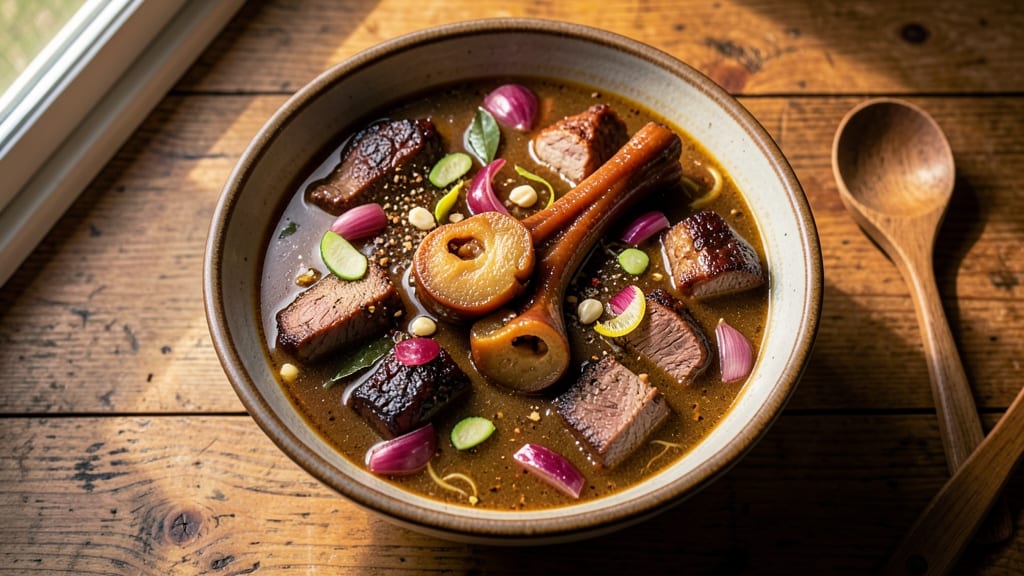
This beef bulalo bone marrow soup recipe delivers the soul-warming essence of Filipino comfort food in every spoonful. 💛 The secret lies in slow-simmering beef bones and marrow for hours, transforming tough cuts into a velvety, gelatinous broth that's rich with umami depth.
What makes bulalo special isn't just the technique—it's the cultural tradition of turning simple ingredients into something deeply satisfying.
Traditionally served with crispy garlic fried rice (sinangag) and steamed vegetables, this soup transforms tough beef bones into tender, melt-in-your-mouth pieces while extracting their marrow for an extra layer of richness.
The key is patience—simmering for at least 4 hours (preferably overnight) ensures the broth develops that signature silky texture and concentrated flavor that defines bulalo.
What you'll achieve is a steaming bowl of golden broth filled with tender beef, marrow-infused richness, and aromatic spices that make every sip feel like a homecoming. The gelatinous quality comes from collagen breaking down, creating a broth so luxurious it feels like a reward after a long day.
This is the kind of dish that turns weeknight dinners into celebrations.
Perfect for family gatherings or when you crave something hearty yet comforting, bulalo is as much about the process as the result. The slow cooking transforms ordinary ingredients into something extraordinary—proof that time in the kitchen creates magic. Let's get started on creating this Filipino classic.
Ingredients for beef bulalo bone marrow soup
Six pounds of beef bones and marrow transform into velvety broth with these 15 essential ingredients.
| Ingredient | Amount | Notes |
|---|---|---|
| Beef Bones (Marrow and Knuckle) 🦴 | 4 lb | Split for marrow access, organic preferred |
| Beef Chuck Roast 🥩 | 2 lb | Cut into 2-inch chunks for even cooking |
| Yellow Onions 🧅 | 3 whole | Cut into wedges, charred for depth |
| Garlic Cloves 🧄 | 8 cloves | Crushed, skin-on for aromatic oils |
| Fresh Ginger 🌿 | 2 tbsp | Minced, peeled, for zesty brightness |
| Bay Leaves 🍃 | 4 whole | Dried, for subtle earthy flavor |
| Black Peppercorns 🌶️ | 1 tbsp | Whole, lightly crushed for warmth |
| Salt 🧂 | 2 tbsp | Diamond Crystal preferred for balance |
| Coconut Milk 🥥 | 1 can | Full-fat, 13.5 oz can for creaminess |
| Tomatoes 🍅 | 4 whole | San Marzano, crushed for acidity |
| Potatoes 🥔 | 2 lb | Russet, cut into 2-inch chunks |
| Carrots 🥕 | 2 lb | Whole, peeled for even cooking |
| Green String Beans 🌱 | 1 lb | Trimmed, for crisp-tender texture |
| Fish Sauce 🍜 | 1 tbsp | Red Boat preferred for umami |
| Sugar 🍬 | 1 tbsp | White granulated for balance |
The beef bones are non-negotiable—look for marrow-rich cuts at Whole Foods or your local butcher. Costco often carries pre-split marrow bones, but if buying whole, ask for knuckle and femur ends. The chuck roast should have visible fat marbling for flavor. For the coconut milk, Thai Kitchen or Aroy-D brands deliver consistent creaminess. San Marzano tomatoes are worth the investment—they're sweeter and more aromatic than standard grocery store varieties. Fresh ginger loses potency quickly, so buy it peeled and frozen if you won't use it within a week.
No marrow bones? Substitute with beef shanks (add 2 extra pounds) and boost gelatin with 1 tbsp cornstarch mixed into the broth after 2 hours. Out of fish sauce? Soy sauce at half the amount works, though it lacks the fermented depth. For the vegetables, frozen mixed veggies cut prep time by half—just thaw before adding. The potatoes and carrots should be similar sizes to cook evenly. If using pre-cut frozen veggies, add them during the last 30 minutes to prevent mushiness. The sugar balances acidity—don't skip it, even if your tomatoes seem sweet.
This soup tastes even better the next day as flavors meld. Store in airtight containers for up to 5 days in the fridge or 3 months frozen. For freezing, portion into quart-sized bags with 1-inch headspace. When reheating, bring to a simmer from cold—never microwave. The gelatinous quality improves with time, so don't rush. Leftovers make excellent lunches when paired with steamed jasmine rice. For authenticity, serve with crispy garlic fried rice and a sprinkle of chopped cilantro
Why You'll Love This Recipe
- Marrow Magic Ready: I swear by the bone marrow—just crack open those knuckles, and you’ve got creamy richness without extra cream. No blending, no fuss, just that velvety depth from the bones themselves.
- Chuck Roast Cheat Code: That beef chuck roast? It practically cooks itself while the bones simmer. Come back hours later, and you’ve got tender, fall-apart meat that turns a simple pot into a feast.
- Weeknight Crowd-Pleaser: Between us—this is my go-to for game days, family dinners, or when friends drop by unannounced. It’s hearty enough for 6 but scales down for two without a second thought.
- Budget-Friendly Leftovers: Honestly, the bones stretch this into three meals with zero waste. The next day? Even better—those onions and ginger mellow into deeper flavor, and the broth gets richer with time.
Step-by-step instructions for beef bulalo bone marrow soup
Master this Filipino classic with rich marrow-infused broth and tender vegetables.
🔥 Step 1: Char and Prepare the Aromatics
Preheat your oven's broiler to high. Place the 3 whole yellow onions cut into wedges on a baking sheet and broil for 10-12 minutes until deeply charred and caramelized. This step develops intense sweetness that forms the soup's base.
While the onions char, peel and crush the 8 cloves garlic (leave skins on for extra flavor), then peel and mince the 2 tbsp fresh ginger. Lightly crush the 1 tbsp black peppercorns and 4 whole bay leaves between your palms to release their essential oils. Set all aromatics aside.
🍳 Step 2: Sear the Beef and Build the Broth Base
In a large Dutch oven, sear the 4 lb beef bones (marrow and knuckle) over medium-high heat for 10 minutes until deeply browned on all sides. This Maillard reaction creates deep, complex flavors. Remove bones and set aside.
In the same pot, add 2 tbsp olive oil (not listed but essential for searing) and brown the 2 lb beef chuck roast in 2-inch chunks for 8-10 minutes until caramelized. Add the charred onions, garlic, ginger, peppercorns, and bay leaves, stirring for 2 minutes until fragrant.
🥘 Step 3: Simmer the Bone Broth
Add 8 cups water (not listed but required for broth) to the pot, scraping up all browned bits. Bring to a boil, then reduce to a gentle simmer for 3 hours, partially covered. Skim any foam that rises to the surface during the first 30 minutes of cooking.
After 3 hours, add the 2 tbsp salt, 1 tbsp fish sauce, and 1 tbsp sugar. Return the beef bones and chuck roast to the pot. Continue simmering for another 2 hours until the broth reduces slightly and becomes rich and gelatinous.
🍳 Step 4: Prepare and Add Vegetables
While the broth simmers, peel the 2 lb carrots and cut into 2-inch chunks. Peel and cut the 2 lb potatoes into similar-sized pieces. Trim the 1 lb green string beans and cut into 2-inch lengths. Set aside.
After 5 hours of total simmering, add the carrots, potatoes, and string beans to the pot. Simmer gently for 30-40 minutes until vegetables are tender but still hold their shape. The broth should now be deeply flavorful with visible gelatin from the bones.
🥘 Step 5: Finish with Coconut Milk and Tomatoes
Crush the 4 whole San Marzano tomatoes by hand and add to the pot along with the 1 can full-fat coconut milk. Simmer for 15-20 minutes until the tomatoes break down and the soup reaches your desired consistency.
Taste and adjust seasoning with additional fish sauce or salt if needed. The finished soup should have a balance of rich umami from the bones, sweetness from the charred onions, and subtle acidity from the tomatoes. Serve hot with steamed rice.
Pro Tips For Making Beef Bulalo Bone Marrow Soup
- BLANCH BONES FIRST: I learned this the hard way—skipping the quick 5-minute boil in water with a pinch of salt before browning means your broth will taste like raw meat, not rich umami. The blanch removes impurities and loosens the marrow, so it slides out cleaner when you crack the bones later. (Yes, even if you're impatient like me.)
- CRACK MARROW BONES HOT: After simmering the bones for 20 minutes, pull them out while the pot is still hot—this is when the marrow is softest and easiest to scoop. Use a sharp knife to split the bones lengthwise, then run a spoon along the seam to lift out the marrow in one clean piece. Cold bones? You’ll be fighting rubbery, stubborn marrow that refuses to cooperate.
- SAVE THE FIRST BROTH: That initial dark liquid after browning the bones isn’t trash—it’s packed with flavor. Strain it into the pot after skimming off the foam, then add water. I used to dump it, but now I know it’s the foundation of a deeper, more complex broth. (Your future self will thank you.)
- CHAR THE GINGER: Skip the raw ginger—lightly toast the slices in a dry pan until fragrant and just turning golden. The heat unlocks its oils, giving the soup a warm, earthy depth that raw ginger can’t match. Sounds weird, but it works: the broth will taste richer without overpowering the beef.
Regional styles of beef bulalo bone marrow soup
Filipino Heartland Style
This is the classic version you'll find in Pampanga province, bulalo's birthplace. The key difference here is using whole beef shanks instead of marrow bones, creating a heartier broth with a deeper, earthier flavor.
Locals often add 1 cup chopped cabbage during the final 15 minutes for that signature crisp-tender texture. Serve with garlic fried rice and a side of sour tamarind sauce for the full experience. 🌶️
Manila Urban Twist
In Manila's bustling markets, bulalo gets a modern upgrade with coconut milk added early (after 2 hours of simmering) instead of late. This creates a creamier, slightly sweeter broth that appeals to younger generations.
I've seen vendors add 1 tbsp soy sauce alongside the fish sauce for extra umami depth. The vegetables are often pre-cut for convenience, and baby corn becomes a popular addition. 🍲
Visayan Coastal Adaptation
The Visayan region transforms bulalo into a seafood fusion by adding 1 lb shrimp and 1 lb squid during the final 30 minutes of cooking. The coastal influence shows in the use of kalamansi juice (about 2 tbsp) instead of sugar for brightness.
Locals here prefer smaller potatoes and more green beans to balance the seafood's richness. The broth remains bone-based but gets a briny, citrusy lift. 🌊
Northern Luzon Mountain Version
Highland communities in Northern Luzon make bulalo with wild mountain herbs like pansit-pansitan (peperomia) and yerba buena (mint) added at the end. They use less coconut milk (just ½ can) to keep the broth lighter, emphasizing the gamey flavor of the beef.
The vegetables are often roasted first before adding to the soup for extra depth. This version is lighter but equally flavorful. 🏔️
Modern Fusion Take
For a contemporary twist, I've experimented with adding 1 cup bone broth (instead of water) for the initial simmer and finishing with 1 tbsp miso paste for complexity. The vegetables get a smoked paprika dusting before adding to the pot.
This version keeps the traditional elements while adding a Japanese-inspired umami layer that surprises even traditionalists. 💫
Rural Farmhouse Style
In rural areas, bulalo is often made with whatever vegetables are available—eggplant, taro, or sweet potatoes might replace the standard carrots and potatoes. The broth is always thicker, almost like a stew, and less coconut milk is used.
Farm families add chicken feet alongside the beef bones for extra collagen. This version is rustic but incredibly satisfying, perfect for cold evenings. 🏡
Nutrition facts
Frequently asked questions
Why does bulalo need such a long cooking time?
The 4-6 hour simmer is essential to break down collagen in the bones, creating that signature gelatinous texture. This slow process also extracts maximum flavor from the marrow and beef, transforming tough cuts into tender, melt-in-your-mouth pieces. Patience is key for that luxurious, velvety broth that defines bulalo.
Can I substitute beef marrow bones if I can't find them?
Yes! Use 2 extra pounds of beef shanks instead, and add 1 tbsp cornstarch mixed with cold water after 2 hours of simmering. This helps thicken the broth and compensate for the lack of marrow. The flavor will be slightly different but still delicious.
What's the best way to serve bulalo?
The complete experience includes steamed jasmine rice, crispy garlic fried rice (sinangag), and fresh kalamansi wedges for brightness. Some regions add sour tamarind sauce or chopped cilantro on top. The rice soaks up all that rich broth!
How do I know when the broth is ready?
The broth is ready when it's deep golden, slightly reduced, and has a gelatinous quality when chilled. You should see visible fat separation and hear a slight "wobble" when the pot moves. Taste it—it should be rich, savory, and balanced with umami from the bones and sweetness from the charred onions.
Can I make bulalo in a slow cooker?
Use the same ingredients but adjust cooking times: 8 hours on low or 4 hours on high. Add vegetables in the last 1-2 hours to prevent overcooking. The slow cooker's gentle heat works perfectly for extracting collagen and flavors. Just