
Soups & Stews
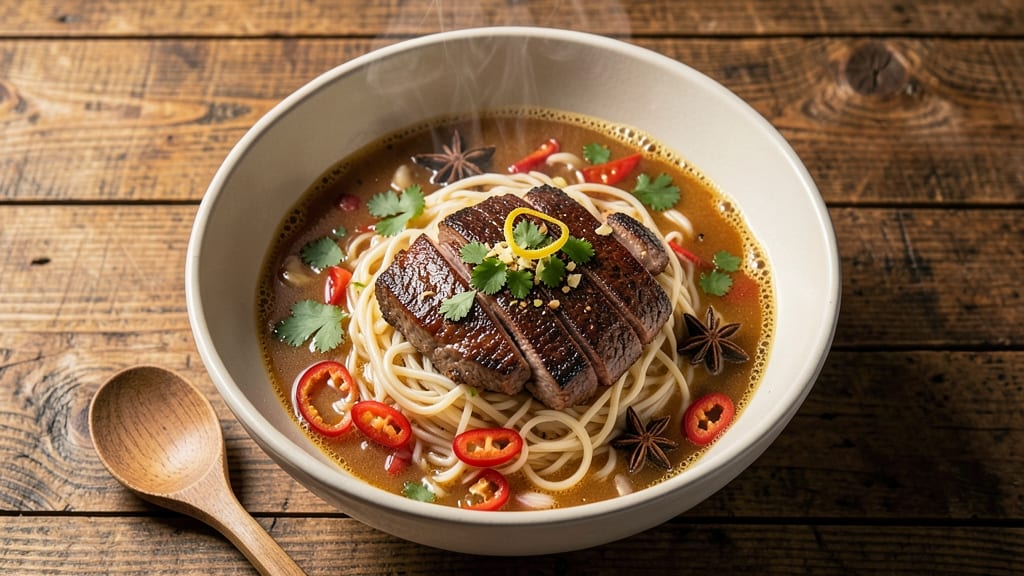
This beef noodle bowl soup recipe delivers restaurant-quality flavor with a smoky, aromatic broth that clings to silky rice noodles and tender beef. The foundation is a rich, slow-simmered broth packed with ginger, garlic, and star anise, creating layers of warmth that define every spoonful.
What sets this apart is the balance—bold enough for hearty appetites but adaptable for lighter meals with a quick 30-minute version.
The technique combines traditional pho-style depth with modern efficiency, starting with a deep-fried beef base for concentrated flavor. Thinly sliced beef sears quickly, locking in juices while developing a caramelized crust. Rice noodles cook in the hot broth, absorbing its essence without turning mushy, ensuring each bite delivers perfect texture.
What you’ll achieve is a bowl that’s visually striking with its golden broth, glossy noodles, and vibrant garnishes, yet effortless to assemble. The broth’s smoky aroma alone will have everyone gathered at the table, while the first spoonful confirms why this dish becomes a weekly staple.
Every element—from the seared beef to the fragrant herbs—works in harmony for a meal that’s both comforting and impressive.
Serve with lime wedges, chili oil, and fresh herbs for customizable heat and brightness. This recipe scales effortlessly for crowds or leftovers, making it ideal for busy weeknights or special gatherings. Ready in under an hour, it’s the kind of dish that transforms simple ingredients into a memorable experience.
Ingredients for beef noodle bowl soup
Rich aromatic broth meets tender beef and silky noodles in this restaurant-inspired bowl.
| Ingredient | Amount | Notes |
|---|---|---|
| Flank Steak 🥩 | 1 ½ lb | Thinly sliced against grain |
| Fresh Ginger Root 🧄 | ½ cup | Finely minced, peeled |
| Garlic Cloves 🧄 | 8 cloves | Minced, aromatic |
| Star Anise Pods 🌿 | 2 whole | Lightly crushed |
| Coconut Milk 🥥 | 1 can | Full-fat, 13.5 oz total |
| Rice Noodles 🍜 | 8 oz | Flat, medium-width |
| Beef Broth 💧 | 6 cups | Homemade or high-quality |
| Fish Sauce 🍶 | 2 tbsp | Red Boat preferred |
| Soy Sauce 🥢 | 3 tbsp | Light or regular |
| Sesame Oil 🫒 | 1 tbsp | Toasted, for finishing |
| Lime Wedges 🍋 | 2 whole | For serving |
| Fresh Cilantro 🌿 | ¼ cup | Chopped, for garnish |
| Thai Chili Peppers 🌶️ | 4 whole | Sliced, optional heat |
| Salt 🧂 | 1 ½ tsp | Kosher or sea salt |
| Black Peppercorns 🌶️ | ½ tsp | Freshly cracked |
The beef selection is critical here. Flank steak delivers that signature pho texture when sliced thinly against the grain—sirloin works too, but flank has more marbling for flavor. For the ginger, fresh is non-negotiable—the dried powder lacks the bright, zesty punch this dish needs. I always grab organic ginger from the produce section at Whole Foods, where it's typically sold in 4-ounce chunks. The star anise? Penzeys Spices carries the highest quality whole pods—look for them in the bulk section if you're not near a specialty store. Pre-mincing the garlic and ginger saves time during assembly, but keep them separate until you're ready to sauté.
No fish sauce? Soy sauce plus a dash of Worcestershire mimics the umami depth, though purists will notice the difference. The coconut milk can be swapped for light coconut cream if you prefer a richer texture, but the full-fat version creates that signature velvety mouthfeel. For the noodles, rice stick noodles from Asian markets are ideal—brands like Vietnamese rice noodles cook perfectly in the broth. If you must use dried, soak them in warm water for 10-15 minutes before adding to the broth. The Thai chilies add heat, but serrano or jalapeño work in a pinch—just adjust the quantity based on your heat tolerance.
The broth develops maximum flavor when simmered uncovered—20-30 minutes minimum—so plan ahead if you're short on time. Store leftovers in airtight containers for up to 4 days; the noodles will soften further but regain texture when reheated with a splash of water. For freezing, portion the broth separately from the noodles—3 months maximum. The beef reheats beautifully, but add a splash of water to prevent drying. Garnishes like cilantro and lime should be added fresh after reheating to preserve their brightness.
Why You'll Love This Recipe
- One-Pot Wonder: I swear by this recipe—just sear the flank steak, toss in the ginger and garlic, then let the star anise and coconut milk work their magic in the same pot. No extra bowls, no extra stress, and honestly? The cleanup is just wiping a single pan.
- Umami Bomb: That star anise and ginger combo with the tender flank steak? It’s like a warm hug for your taste buds. The coconut milk adds this silky richness that makes every bite feel like a little reward—especially when the noodles soak up all that flavor.
- Lunchbox Hero: Between us, this is my go-to for meal prep. Double the batch, store it in jars, and grab a container for lunch all week. The flavors actually get better the next day—my kids fight over who gets the leftovers, and I don’t even have to cook twice.
- Budget Stretch: Flank steak is affordable, and a little goes a long way when sliced thin. Add the coconut milk and spices, and you’ve got a restaurant-quality bowl for half the price. Plus, the leftovers freeze like a dream—no sad, soggy takeout here.
Step-by-step instructions for beef noodle bowl soup
Master this aromatic balance of smoky beef, silky noodles, and fragrant broth in just one pot.
Marinate and Slice the Flank Steak
Begin by slicing the 1.5 lb flank steak thinly against the grain using a sharp knife. This ensures tender bites that cook quickly in the broth. Place the sliced steak in a bowl and combine with 0.5 cup finely minced fresh ginger root, 8 minced garlic cloves, 2 lightly crushed star anise pods, 2 tbsp fish sauce, 3 tbsp soy sauce, 1.5 tsp salt, and 0.5 tsp freshly cracked black peppercorns. Marinate for at least 30 minutes at room temperature—this allows the flavors to penetrate deeply and the meat to tenderize.
Here's the thing—don't skip the marinating. The acidity from the fish sauce and soy sauce breaks down muscle fibers, while the ginger and garlic infuse the beef with complex aromatics. The star anise adds a subtle licorice note that elevates the entire dish. If you're short on time, marinate for a minimum of 20 minutes, but longer is always better.
Build the Flavorful Broth
In a large pot, combine 6 cups beef broth, the marinated steak (with any accumulated marinade), and the 1 can full-fat coconut milk. Bring to a gentle simmer over medium heat, then reduce to a low boil. Let it cook uncovered for 15 minutes to allow the flavors to meld and the broth to develop depth. You'll notice the star anise pods floating—don't remove them yet; they'll infuse the broth with their aromatic essence.
The reason we use coconut milk here is twofold: it adds richness to balance the broth's acidity while creating a velvety texture that coats the noodles beautifully. Watch the broth carefully—it should bubble gently but not boil vigorously. If it boils too hard, the surface will form a skin, which prevents proper flavor infusion. Skim off any foam that rises to the surface during this time.
Cook the Rice Noodles Separately
While the broth simmers, prepare the 8 oz flat rice noodles according to package instructions. Typically, this means soaking them in hot water for 5-7 minutes until pliable but still slightly firm. Drain immediately and rinse under cold water to stop the cooking process. This prevents the noodles from becoming mushy when added to the hot broth later.
Here's where it gets technical: rice noodles have a delicate texture that can easily turn to mush if overcooked. You want them al dente when removed from the water—able to hold their shape but still tender enough to eat. The cold water rinse is crucial; it shocks the noodles and sets their texture perfectly. Don't skip this step, or your noodles will turn into a gluey mass in the soup.
Finish the Soup with Aromatics
Remove the star anise pods from the broth and discard them. Add the drained rice noodles to the pot and gently stir to coat them evenly with the broth. Simmer for an additional 3-4 minutes just to heat through—no longer, or the noodles will overcook. The soup should now have a rich, aromatic quality with visible strands of silky noodles floating throughout.
This is the moment that matters: taste and adjust seasoning. Add more soy sauce if needed for saltiness, or a splash of fish sauce for umami depth. The broth should be balanced—savory from the beef and coconut milk, with bright notes from the ginger and garlic. If the soup tastes too heavy, add a small amount of water to lighten the consistency. The final texture should be silky yet still allow you to distinguish individual noodles.
Assemble and Serve with Garnishes
Ladle the hot soup into bowls, dividing the beef evenly among servings. Garnish each bowl with 2 whole Thai chili pepper slices (if using), 0.25 cup chopped fresh cilantro, and a drizzle of 1 tbsp toasted sesame oil. Serve immediately with 2 lime wedges on the side for squeezing.
Real talk: the presentation matters just as much as the flavor. The vibrant green of cilantro, the bright red of chili peppers, and the glossy sheen of sesame oil make this dish visually appealing. Each bite should deliver tender beef, silky noodles, and a complex broth that's both comforting and exciting. The lime wedges provide a final acidity pop that cuts through the richness, balancing the entire bowl.
Pro Tips For Making Beef Noodle Bowl Soup
- SEAR THE STEAK FAST: Flank steak needs a screaming-hot pan—no wimpy medium heat. I used to walk away for "even cooking," and the outside turned to shoe leather while the inside stayed cold. Now I crank the burner to max, sear for 2-3 minutes per side until deep brown, then pull it out. The crust locks in flavor, and you can finish it in the broth later without drying it out.
- GRATE THE GINGER FINE: Skip the food processor—freshly grated ginger makes all the difference. Use the smallest holes on a box grater (or microplane) and get aggressive. Too many chunks? The soup will taste like you threw in a thumbtack. A tablespoon of finely grated ginger mellows into warmth; a teaspoon of coarse shavings will haunt your broth.
- STAR ANISE EARLY: Toss that star anise into the broth before the coconut milk, and let it steep for at least 15 minutes. I learned this after a batch tasted bland—turns out, the spice needs time to perfume the liquid. Remove it before adding the milk, or you’ll get a weird, bitter aftertaste. (Yes, even if you’re impatient like me.)
- SIMMER THE COCONUT MILK GENTLY: Coconut milk curdles faster than you can say "soup disaster." After adding it, drop the heat to the lowest setting and stir once—just enough to blend. Walk away. Let it bubble softly, not boil. I’ve ruined three bowls this way, and every time, the fix was the same: patience. A slow simmer keeps it creamy, not lumpy.
Serving suggestions for leftovers
Garnish Like a Pro
Fresh herbs and vibrant toppings transform your beef noodle bowl from ordinary to extraordinary. I always finish each serving with 2 tablespoons chopped cilantro for brightness and 1 teaspoon toasted sesame oil for nutty depth.
The sesame oil should be toasted over low heat for 1-2 minutes to enhance its aroma—just enough to smell the toasted nuts before it turns bitter. 🌿
Heat Customization
Adjust the spice level to suit your crowd. For mild heat, add 1 sliced Thai chili pepper per bowl. For a fiery kick, include 2-3 slices and serve with extra chili oil on the side.
I keep a small jar of homemade chili oil (blend ½ cup chili oil with 1 tbsp crushed red pepper flakes) for dipping—it’s addictive and customizable. 🌶️
Acid Balance
Lime wedges are non-negotiable—they cut through the richness and refresh your palate. Serve 2 wedges per bowl and encourage guests to squeeze fresh lime over their soup. For an extra tangy twist, add 1 teaspoon lime zest to the broth while simmering.
The zest dissolves subtly, adding a bright citrus note without overpowering the beef and coconut flavors. 🍋
Crunchy Contrast
Add texture with crispy toppings. I love sprinkling 2 tablespoons crushed peanuts or 1 tablespoon fried shallots for crunch. For extra effort, make quick-pickled onions: thinly slice ½ red onion, soak in ¼ cup vinegar with 1 tsp sugar for 15 minutes.
The tangy crunch elevates every bite. 🥜
Broth Variations
Elevate your bowl with upgraded broth options. For a creamy version, stir in ½ cup coconut cream at the end. For spicy depth, add 1 tablespoon sambal oelek to the simmering broth.
I also love a ginger-beer twist: replace 1 cup broth with ½ cup ginger beer for effervescent brightness. Each variation keeps the dish exciting while staying true to the core flavors. ✨
Serving Style Tips
Presentation matters as much as taste. Serve in wide, shallow bowls to showcase the vibrant layers. For a rustic touch, use stoneware or cast-iron bowls—they retain heat and add a cozy vibe.
If serving a crowd, keep the broth and toppings separate until ready to serve. This lets everyone customize their bowl while maintaining the perfect broth temperature. 🍜
Nutrition facts
Frequently asked questions
Can I use dried noodles instead of fresh rice noodles?
For dried rice noodles, soak them in hot water for 10-15 minutes until pliable but still firm. Drain thoroughly and rinse with cold water before adding to the broth. The key is to cook them separately—never add dry noodles directly to the hot broth, or they'll turn mushy.
How do I make this recipe vegetarian?
Replace the beef with 1 lb mushrooms (shiitake or oyster) sliced thinly, and use vegetable broth instead of beef broth. Add 1 tbsp soy sauce and 1 tsp miso paste for umami depth. For extra protein, stir in ½ cup cooked lentils or tofu at the end. The coconut milk and ginger will still create that signature creamy, aromatic base.
Why did my broth turn cloudy?
Cloudiness usually means the broth boiled too vigorously, creating a surface skin that traps impurities. To fix it, skim off the foam as it forms during simmering, and keep the heat at a gentle simmer—not a rolling boil. If it's already cloudy, strain the broth through a fine-mesh sieve or cheesecloth for a crystal-clear finish.
Can I prep this ahead of time for meal prep?
Yes! Make the broth and marinate the beef 1-2 days ahead and store in airtight containers. Reheat gently on the stove—never microwave—adding a splash of water to maintain consistency. Cook the noodles fresh the day of serving, or store them separately in the fridge for up to 3 days. Assemble bowls just before eating to keep the noodles perfect.
What's the best way to reheat leftovers?
Reheat only the broth and beef in a pot over medium-low heat until steaming. Add the noodles fresh from the fridge and simmer for 2-3 minutes—this prevents them from turning gummy. For extra richness, stir in 1 tsp coconut milk or a splash of beef broth. Avoid microwaving, as it can make the noodles rubbery.