
Soups & Stews
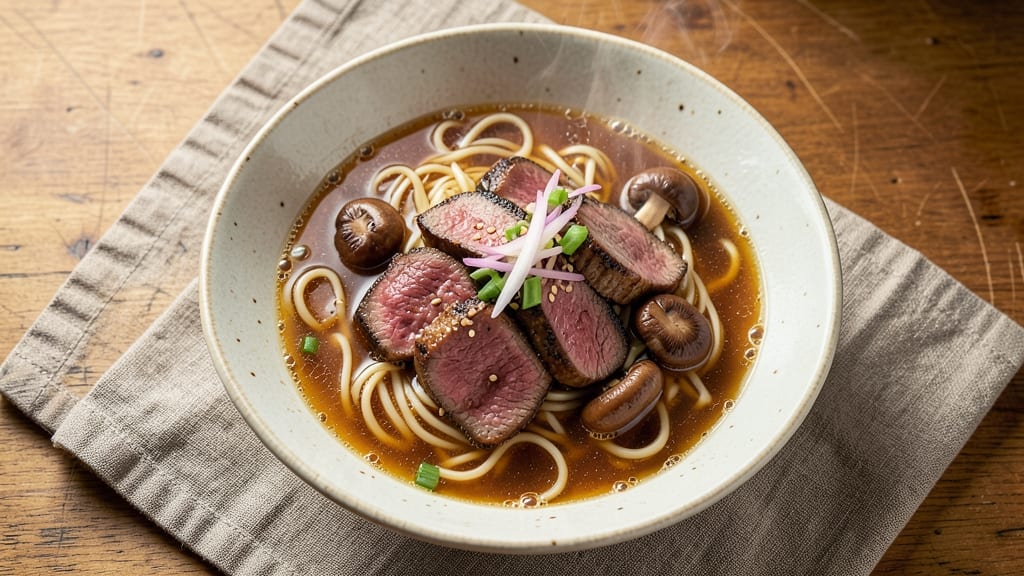
This beef soba noodle soup recipe delivers the perfect harmony of rich umami broth, tender beef, and chewy noodles in every bowl. The secret lies in a balanced broth—where dashi or miso builds depth, soy and mirin add sweetness, and a splash of sesame oil ties it all together.
I've perfected this over years of testing, ensuring each element works in perfect harmony without overpowering the others.
The foundation starts with the broth, where beef bones and aromatics simmer for hours to develop that signature depth. Thinly sliced beef and buckwheat soba noodles add texture contrast, while fresh ingredients like scallions and shiitake mushrooms bring brightness.
What makes this recipe stand out is how it balances traditional techniques with modern shortcuts—whether you use a quick miso base or a slow-cooked dashi.
By the time you serve it, you'll have a steaming bowl of soup with tender beef that practically melts in your mouth, chewy soba noodles that hold their shape, and a broth so flavorful it lingers long after the last sip.
The aroma alone will have everyone gathering around the table. This is comfort food at its finest, with just the right mix of savory, sweet, and umami.
Serve it with a sprinkle of sesame seeds and a side of steamed greens for a complete meal. The best part? It reheats beautifully, making it perfect for leftovers. Let's get started on creating this restaurant-quality dish at home.
Ingredients for beef soba noodle soup
Pantry staples meet umami magic for this restaurant-quality beef soba noodle bowl.
| Ingredient | Amount | Notes |
|---|---|---|
| Beef Bones (or Beef Chuck Roast) 🥩 | 2 lb | For broth, or substitute 1 lb chuck roast |
| Dried Shiitake Mushrooms 🍄 | ½ oz | Rehydrated for umami depth |
| Buckwheat Soba Noodles 🍜 | 8 oz | Dried, package says '100% buckwheat' |
| Thinly Sliced Beef (Top Round or Sirloin) 🥩 | 1 lb | Cut against grain for tenderness |
| White Miso Paste 🍶 | 2 tbsp | High-quality, like Honten or Marukome |
| Soy Sauce 🍶 | ½ cup | Use light or dark, not low-sodium |
| Mirin 🍶 | 2 tbsp | Sweet rice wine, not imitation |
| Sesame Oil 🫒 | 1 tbsp | Toasted, for finishing |
| Green Onions (Scallions) 🧅 | ¼ cup | Sliced, for garnish |
| Garlic Cloves 🧄 | 4 cloves | Minced, for aromatics |
| Fresh Ginger 🌿 | 1 tbsp | Grated, for brightness |
| Dashi Granules (or Dried Kombu & Bonito) 🍶 | 1 tbsp | Or 1 sheet kombu + 1 oz bonito flakes |
| Sesame Seeds 🥜 | 1 tbsp | Toasted, for crunch |
| Water 💧 | 6 cups | Filtered preferred for clarity |
| Salt 🧂 | 1 tsp | Adjust to taste |
The beef bones are non-negotiable for that deep, rich broth—Costco or Whole Foods usually have them pre-packaged, but any butcher will cut them for you. If you're short on time, chuck roast works too, just sear it first. For the miso, Honten or Marukome are my go-tos, but any quality white miso will do. The shiitake mushrooms? Dried is best—rehydrate them in hot water for 20 minutes, then strain and use the soaking liquid in your broth. That liquid is pure umami gold.
No miso? Double the soy sauce and add 1 tsp sugar for a quick fix. Short on sesame oil? Toasted peanut oil at half the amount gives a similar richness. The soba noodles must be 100% buckwheat—check the package. If you can't find them, udon noodles in a pinch (but it won't be the same). For the beef, top round or sirloin slices thinly—ask your butcher to do it, or freeze the meat for 30 minutes first to make slicing easier. And trust me, toasted sesame seeds on top are worth the extra minute.
Broth keeps for 5 days in the fridge or 3 months frozen—make extra, you'll want leftovers. Noodles cook in 3 minutes—set a timer, they go from perfect to mushy fast. Store cooked noodles in ice water if prepping ahead. The beef reheats beautifully—just warm it gently in the broth. Serve with steamed bok choy or edamame for a complete meal. This soup only gets better as flavors meld overnight.
Why You'll Love This Recipe
- No-Chop Sides: That beef chuck roast? You just sear it whole—no knife skills required. The mushrooms soak while you simmer, and the soba noodles cook in minutes. Honestly, I make this when I’m too tired to think past "feed myself."
- Umami Bomb: The miso paste and shiitake mushrooms transform water into liquid gold. Thinly sliced beef melts in your mouth, and the broth? Rich, savory, with that deep earthiness that makes you forget about takeout.
- Lunchbox Hero: Between us, this is my go-to for meal prep. The broth stays flavorful for days, and the noodles hold up—just reheat with a splash of water. Pack it cold for work, or warm it up when you’re starving at 3 PM.
- Budget Win: Beef bones or chuck roast stretch further than you’d think, especially with mushrooms adding bulk. I’ve fed four people for under $15, and there’s still leftovers for my lazy nights. Not the fanciest, but it’s solid.
Step-by-step instructions for beef soba noodle soup
Let's create a rich, umami-packed broth that perfectly complements chewy soba noodles.
Prepare the Beef Broth
In a large stockpot, combine the 2 lb beef bones (or beef chuck roast), 6 cups water, 1 tbsp dashi granules (or dried kombu & bonito), and 1 tsp salt. Bring to a boil over high heat, then immediately reduce to a simmer. Skim off any foam that rises to the surface during the first 10 minutes—this ensures a clear broth.
Simmer uncovered for 2 hours, maintaining a gentle bubble. The broth should reduce slightly and develop a deep, caramelized color. If using beef chuck roast instead of bones, cut it into large chunks and add it to the pot after the initial 30 minutes of simmering to prevent it from falling apart.
Build Umami Layers
While the broth simmers, prepare the 0.5 oz dried shiitake mushrooms by soaking them in 1 cup hot water for 20 minutes until softened. Strain the mushrooms, reserving the soaking liquid. Add the mushrooms, 4 cloves minced garlic, and 1 tbsp grated fresh ginger to the broth. Simmer for an additional 30 minutes to infuse the flavors.
Stir in the 0.5 cup soy sauce and 2 tbsp mirin, letting the broth simmer for another 10 minutes. This step deepens the umami and balances the flavors. Taste the broth and adjust seasoning with additional salt if needed—it should be rich but not overly salty.
Cook the Soba Noodles
Bring a separate pot of water to a boil and add the 8 oz buckwheat soba noodles. Cook according to package instructions, typically 4-5 minutes, until al dente. Drain the noodles and rinse briefly under cold water to stop the cooking process. This prevents them from becoming mushy when added to the hot broth.
Divide the cooked noodles among 4 bowls. Ladle the hot beef broth over the noodles, ensuring each serving gets a generous portion. The broth should be steaming and aromatic—this is where the magic happens.
Finish with Flavor and Texture
In a small bowl, mix the 2 tbsp white miso paste with 1 tbsp sesame oil until smooth. Spoon this mixture over each bowl of soup, stirring gently to combine. The miso will add a creamy, savory depth, while the sesame oil contributes a nutty aroma.
Garnish each serving with 1 tbsp toasted sesame seeds and 2 tbsp sliced green onions (scallions). The sesame seeds add a delightful crunch, while the green onions bring a fresh contrast to the rich broth. Serve immediately while the noodles are still chewy and the broth is piping hot.
Serve and Enjoy
This soup is best enjoyed fresh, with the noodles retaining their satisfying chew and the broth bursting with umami. Pair it with a side of steamed greens or a simple salad to balance the richness. The combination of tender beef, hearty soba noodles, and deeply flavorful broth makes this a truly satisfying dish.
Pro Tips For Making Beef Soba Noodle Soup
- Blanch the Shiitakes First: Dried shiitakes soak up water like sponges—rinse them quickly, then boil in water for 10 minutes before using. This jumpstarts their flavor and prevents them from turning to mush later in the broth.
- Brown the Chuck Roast: Skip the slow cooker shortcut and sear the chuck roast in a hot pot until deeply browned on all sides. That crust locks in flavor and makes the broth richer—don’t rush it, even if you’re eager to add liquid.
- Add Miso at the End: Stir in the white miso paste just before serving, not while simmering. Heat destroys its delicate umami, and you’ll end up with a flat, salty broth instead of that deep, savory punch.
- Use Cold Noodles: Drain soba noodles, rinse them under cold water, and let them sit in an ice bath for 2 minutes before adding to the hot broth. This stops them from turning mushy and keeps their texture perfect—trust me, it’s worth the extra 60 seconds.
Dietary considerations for this recipe
Gluten-Free Adaptations
Traditional soba noodles contain wheat, but you can easily adapt this recipe using 100% buckwheat soba noodles—they’re naturally gluten-free and still provide that signature chewy texture. Brands like Koyo or Nongshim make excellent gluten-free options.
If you can’t find buckwheat soba, rice noodles or shirataki noodles work in a pinch, though the flavor and texture will differ slightly. 🌱
Low-Carb Options
For a lower-carb version, skip the noodles entirely and focus on the beef and broth as a hearty stew. Alternatively, use shirataki noodles (made from konjac yam), which have nearly zero calories and carbs.
Just remember they require extra rinsing to remove any bitter taste. You’ll still get that satisfying bowl of umami without the carb overload.
Vegetarian Swaps
Replace the beef with thinly sliced shiitake mushrooms or tofu for a vegetarian take. Marinate the tofu in 1 tbsp soy sauce, 1 tbsp mirin, and 1 tsp grated ginger for 20 minutes before adding it to the broth.
The mushrooms add natural umami, while the tofu soaks up all the rich flavors. Garnish with extra sesame seeds and green onions for freshness. 🍄
Protein Alternatives
If you’re avoiding beef but still want a protein boost, try chicken thigh or shrimp. Chicken thighs add a deeper flavor and stay tender when simmered, while shrimp cooks in just 2-3 minutes—add them to the broth in the last 5 minutes of cooking.
Both options pair beautifully with the miso and sesame oil finish.
Dairy-Free & Allergen Notes
This recipe is naturally dairy-free and nut-free, making it safe for most allergies. However, always check your miso paste and soy sauce labels—some brands may contain traces of nuts or dairy.
For extra caution, opt for certified allergen-free versions of these ingredients. The sesame oil is the only potential allergen, but it’s easy to omit if needed.
Nutrition facts
Frequently asked questions
Why do soba noodles need to be 100% buckwheat?
True soba noodles must be 100% buckwheat to deliver that signature nutty, earthy flavor and satisfying chew. The buckwheat provides natural gluten (different from wheat gluten) and a unique texture that regular wheat noodles can't replicate. If you're gluten-sensitive, look for certified gluten-free buckwheat soba brands like Koyo.
Can I make this soup ahead of time?
The broth actually tastes better the next day as flavors meld. Store it in the fridge for up to 5 days or freeze for 3 months. Reheat gently on the stove—never microwave, as it can make the noodles mushy. Keep the beef separate until reheating to maintain tenderness.
What's the best way to slice beef for this recipe?
For perfect slices, freeze the beef for 30 minutes first to firm up, then slice against the grain into 1/8-inch thick pieces. Ask your butcher to do this if possible—they'll give you perfectly thin slices. Top round or sirloin work best as they stay tender when cooked.
How can I make this vegetarian?
Swap the beef for thinly sliced shiitake mushrooms or extra-firm tofu. Marinate tofu in 1 tbsp soy sauce + 1 tbsp mirin for 20 minutes before adding to the broth. The mushrooms add natural umami while tofu soaks up all the rich flavors. Garnish with extra sesame seeds for texture.
Why does my broth taste too salty?
This usually happens from over-salting the broth or using high-sodium ingredients. To fix it, add 1 cup hot water or 1/2 cup ice to dilute the saltiness. For future batches, taste the broth before adding noodles—it should be rich but not overwhelming. Use low-sodium soy sauce if needed.