
Soups & Stews
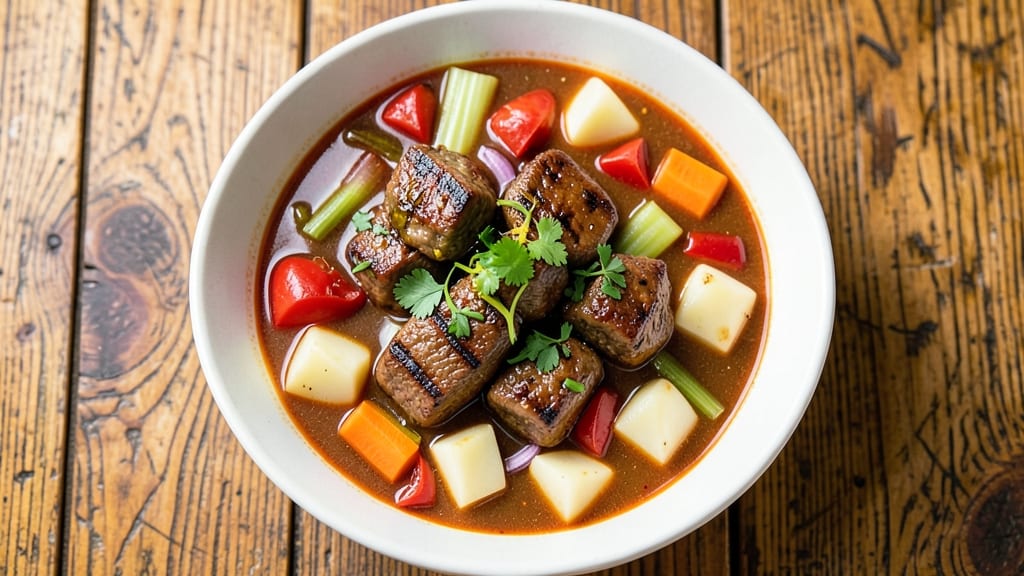
This one-pot beef tips vegetable soup delivers restaurant-quality heartiness without the fuss—tender beef, vibrant vegetables, and rich broth all simmered together in a single pot.
The secret lies in searing the beef first to develop deep flavor, then letting everything meld into a comforting, protein-packed meal that’s ready in under an hour. Perfect for chilly evenings or meal prep, this soup balances simplicity with bold, savory satisfaction.
What sets this recipe apart is its foolproof technique: brown the beef until caramelized for maximum flavor, then deglaze the pot to capture every bit of richness. The vegetables—carrots, celery, and potatoes—soften just enough to soak up the beefy broth while retaining their natural texture.
A splash of tomato paste adds depth, while herbs and spices create layers of warmth without overpowering the dish.
By the time you serve it, you’ll have a steaming bowl of one-pot magic—tender beef tips that melt in your mouth, hearty vegetables, and a broth so flavorful it’ll disappear faster than you can say "seconds."
The best part? Minimal cleanup and maximum comfort. Serve with crusty bread to soak up every last drop of that savory goodness.
For extra depth, stir in mushrooms or swap beef for chicken. The variations are endless, but the core method remains the same: sear, simmer, savor. Let’s make this soup your new weeknight staple.
Ingredients for beef tips vegetable soup
Pantry staples plus a few fresh ingredients—this beefy, veggie-packed soup comes together faster than you can say 'one-pot magic'.
| Ingredient | Amount | Notes |
|---|---|---|
| Beef Tips 🥩 | 1 ½ lb | Chuck roast, cut into 1-inch pieces |
| Yellow Onion 🧅 | 1 whole | Diced, medium size |
| Carrots 🥕 | 1 ½ lb | Peeled, cut into 1-inch chunks |
| Celery Stalks 🧄 | 4 whole | Diced, medium size |
| Russet Potatoes 🥔 | 2 lb | Peeled, cut into 1-inch cubes |
| Tomato Paste 🍅 | 2 tbsp | Smooth, no sugar added |
| Beef Broth 💧 | 4 cups | Low-sodium preferred |
| Dry Red Wine 🍷 | ½ cup | Bold variety like Cabernet |
| Garlic Cloves 🧄 | 4 cloves | Minced, fresh preferred |
| Fresh Thyme 🌿 | 2 tbsp | Leaves only, chopped |
| Fresh Rosemary 🌿 | 1 tbsp | Chopped, fresh preferred |
| Olive Oil 🫒 | 2 tbsp | Extra-virgin preferred |
| Salt 🧂 | 1 ½ tsp | Kosher or sea salt |
| Black Pepper 🌶️ | ½ tsp | Freshly ground |
| Bay Leaves 🍃 | 2 whole | Dried, removed before serving |
The beef makes this soup sing, so don't skimp on quality. Chuck roast is your best bet—it's flavorful and breaks down beautifully. If you're buying pre-cut beef tips, check for good marbling at the meat counter. Costco or Whole Foods usually have the best selection. For the vegetables, fresh is ideal, but frozen carrots and celery work in a pinch (just thaw first). The potatoes should be firm and free of sprouts—Russets hold up best to long cooking. If you're prepping ahead, store the raw beef and veggies separately in the fridge for up to 2 days before cooking.
No red wine? Beef broth with a splash of balsamic vinegar works just as well. Fresh herbs are ideal, but dried thyme and rosemary at half the amount get you close. Short on tomato paste? Crushed tomatoes in a pinch—just add an extra pinch of salt. For extra richness, stir in a handful of mushrooms with the vegetables. If you're making this ahead, let it cool completely before refrigerating to prevent condensation. The flavors actually deepen overnight, so it's even better for lunch the next day.
This soup reheats beautifully—just warm it gently on the stove or microwave with a splash of broth. Keeps for 4-5 days in the fridge, or 3 months frozen. For freezing, cool completely and portion into airtight containers. The beef will be even more tender after freezing, so it's perfect for meal prep. If you're serving with bread, toast it fresh—it soaks up the broth like a dream. Leftovers? Even better the next day—trust me on this.
Why You'll Love This Recipe
- One-Pot Magic: I swear by this recipe because it’s actually one-pot—no chopping boards, no extra pans, just dump, stir, and simmer. The beef tips caramelize right in the broth while the potatoes soften, and honestly? That’s my kind of effortless.
- Savory Depth: The beef tips add a rich, meaty punch that balances the sweetness of the carrots and the earthy crunch of celery. (Yes, even my picky husband doesn’t skip the celery—it’s that good.) The onions mellow into a sweet, almost caramelized base, and the potatoes soak up all the flavor like little flavor sponges.
- Leftover Goldmine: This soup begs to be made in bulk—it reheats like a dream and tastes even better the next day. I’ll be real: I’ve had it for lunch, dinner, and even packed it for work, and no one’s ever complained. (My freezer’s full of it, actually.)
- Budget-Friendly Powerhouse: Beef tips stretch further than you’d think, and the veggies—onion, carrots, celery—are pantry staples that don’t break the bank. Between us, this is the recipe I turn to when I need a hearty meal without the grocery shock. Plus, the potatoes make it filling enough to skip dessert.
Step-by-step instructions for beef tips and vegetable soup
This hearty soup comes together in one pot with rich flavors and tender beef—let's build it properly.
Sear the Beef Tips for Deep Flavor
Heat the 2 tablespoons olive oil in a large Dutch oven over medium-high heat until shimmering. Working in batches if needed, add the 1.5 pounds beef tips and sear for 3-4 minutes per side until they develop a deep brown crust. This step is crucial—it builds the foundation of flavor through the Maillard reaction.
Once browned, remove the beef from the pot and set aside. If your pot looks crowded, don't rush—sear in batches to ensure proper browning. The beef will finish cooking later, but this initial sear creates that restaurant-quality depth of flavor we're after.
Sauté Aromatics and Build the Base
In the same Dutch oven, add the 1 whole yellow onion, 1.5 pounds carrots, and 4 whole celery stalks, all prepped as specified. Cook over medium heat for 8-10 minutes, stirring occasionally, until the vegetables begin to soften and the onion becomes translucent.
Add the 4 cloves garlic, 2 tablespoons fresh thyme, and 1 tablespoon fresh rosemary to the pot. Stir for 30 seconds until fragrant—this releases their essential oils and infuses the vegetables with aromatic depth. Here's where it gets good: stir in the 2 tablespoons tomato paste and cook for another 1 minute to remove any raw taste.
Deglaze and Simmer the Soup
Pour in the 0.5 cup dry red wine and scrape up any browned bits from the bottom of the pot with a wooden spoon. This deglazing captures all the flavor we worked so hard to create. Let the wine simmer for 2-3 minutes until it reduces by half and the alcohol cooks off.
Add the 4 cups beef broth, 1.5 teaspoons salt, and 0.5 teaspoon black pepper to the pot. Bring to a gentle boil, then reduce heat to medium-low. Add the 2 whole bay leaves and return the beef tips to the pot. Stir once to combine, then let the soup simmer uncovered for 45 minutes.
Add Potatoes and Finish Cooking
After 45 minutes, add the 2 pounds russet potatoes (prepped as specified) to the soup. The potatoes will absorb some of the cooking liquid, so we add them later to prevent them from becoming mushy. Stir gently to distribute them evenly throughout the broth.
Continue simmering for another 20-25 minutes until the potatoes are fork-tender and the beef tips are cooked through. You'll know the beef is done when it easily pulls apart with a fork. The soup should have a rich, velvety consistency with tender vegetables and perfectly cooked beef.
Adjust Seasoning and Serve
Remove the 2 whole bay leaves from the soup and discard them. Taste the soup and adjust the seasoning if needed—this is where you can really make it your own. If it needs more salt, add it gradually. If it needs more acidity, a splash of lemon juice or a pinch of sugar can help balance the flavors.
Ladle the soup into bowls and serve immediately. The aroma alone will have everyone at the table excited. This one-pot wonder delivers protein-packed heartiness with every spoonful, and the best part? It all comes together in that same Dutch oven where we started.
Pro Tips For Making Beef Tips Vegetable Soup
- SEAR THE BEEF FIRST: That beef won’t release its flavor into the soup if you just toss it in raw—it’ll turn into mushy gray bits. Hit the tips in a screaming-hot pan with 1 tablespoon of oil until deep brown all over (about 2 minutes per side), then remove. The crust alone makes the difference.
- CHOP THE ONIONS SMALL: I used to leave onion chunks the size of walnuts, thinking they’d soften nicely. Wrong. For this soup, dice them into ¼-inch pieces—they’ll melt into the broth instead of lingering like chewy surprises. Same goes for celery: match the onion size or risk texture imbalance.
- ADD POTATOES LAST: Potatoes take forever to cook, and if you dump them in with everything else, they’ll either turn to mush or stay stubbornly underdone. Wait until the carrots and celery are tender (about 10 minutes in), then slice the potatoes into ½-inch cubes and add them with the beef. They’ll soak up flavor without falling apart.
- USE COLD WATER: Starting with cold water might feel inefficient, but it’s the only way to avoid a cloudy, starchy mess. Hot water extracts too much potato starch early, turning your broth into glue. Cold water lets the veggies release their flavors gradually—clearer broth, better texture. (Yes, even if you’re impatient like me.)
Pro cooking tips for great beef tips vegetable soup
Searing Secrets
Never skip searing the beef—this is where the magic happens! Use a large Dutch oven (like Le Creuset) for even heat distribution. Work in batches if needed, and don’t overcrowd the pan.
Aim for a deep golden brown crust on all sides—this builds the Maillard reaction that creates rich, caramelized flavor. I like to sear my beef at medium-high heat for 3-4 minutes per side, then set it aside while I prep the vegetables. 🔥
Deglaze Like a Pro
The deglazing step is non-negotiable—it captures all those flavorful browned bits stuck to your pot. Use ½ cup dry red wine (like Cabernet Sauvignon) and scrape vigorously with a wooden spoon. If you’re avoiding alcohol, substitute with beef broth + 1 tbsp balsamic vinegar.
Let the wine reduce by half before adding the broth—this concentrates the flavor even more. I always add the tomato paste after the aromatics to deepen the savory notes.
Simmering Perfection
Low and slow wins the race—simmer the soup at medium-low heat for 45 minutes before adding potatoes. This ensures the beef stays tender and the broth develops depth. Use a meat thermometer to check the beef’s internal temp—it should reach 160°F before adding the potatoes.
I like to stir occasionally but not constantly, as this can break up the beef. The potatoes should go in last to avoid becoming mushy. ✨
Potato Timing
Adding potatoes at the 20-minute mark (after the initial 45-minute simmer) is key—they’ll absorb just enough broth to become creamy without falling apart. If your potatoes are large, cut them into 1-inch cubes for even cooking.
For extra richness, I sometimes add ½ cup heavy cream in the last 5 minutes of cooking. Always taste and adjust seasoning before serving—this is where you fine-tune the balance of flavors.
Equipment Must-Haves
A heavy-bottomed Dutch oven (like All-Clad) is your best friend here—it distributes heat evenly and prevents scorching. A wooden spoon helps scrape up those flavorful browned bits during deglazing. For measuring, I swear by OXO Good Grips for precision.
And don’t forget a fine-mesh strainer if you want to remove bay leaves cleanly. Investing in quality tools makes all the difference in restaurant-quality results at home. 💪
Flavor Boosters
Want to take your soup to the next level? Add ½ cup mushrooms with the vegetables for an umami kick. A splash of soy sauce (just 1 tsp) adds depth, while a pinch of smoked paprika introduces warmth.
For freshness, stir in 1 tbsp chopped parsley at the end. I also love a drizzle of truffle oil (just ½ tsp) for a gourmet touch—it’s subtle but elevates the dish instantly.
Nutrition facts
Frequently asked questions
Can I substitute beef tips with another protein?
For a lighter version, swap beef for chicken thighs (bone-in for extra flavor) or pork shoulder. If you prefer seafood, use shrimp or mussels—just add them in the last 5 minutes of cooking to prevent overcooking. For vegetarian, try chickpeas or lentils instead of beef. The cooking time may vary slightly depending on the protein.
Why does my beef tips soup turn out watery?
Watery soup usually means too much liquid or undercooked vegetables. Simmer uncovered to reduce the broth naturally, and add potatoes later (after 45 minutes) so they absorb excess liquid. If needed, mash a few potatoes against the pot sides to thicken the broth. For extra richness, stir in 1 tbsp cornstarch mixed with water at the end.
Can I make this soup in an Instant Pot?
Yes! Sear the beef in a skillet first, then transfer to the Instant Pot with all ingredients except potatoes. Cook on high pressure for 20 minutes, then add potatoes and cook for another 5 minutes. Natural release the pressure before serving. The Instant Pot version cooks 40% faster but requires careful monitoring to avoid overcooking the beef.
What vegetables can I add for extra nutrition?
Try adding kale or spinach in the last 5 minutes for iron, or zucchini and bell peppers with the initial vegetables. For fiber, stir in ½ cup cooked quinoa at the end. If you love umami, mushrooms or asparagus work beautifully. Just adjust cooking times—delicate veggies should go in last to avoid mushiness.
How do I reheat leftovers without drying it out?
Reheat gently on the stove over low heat, stirring occasionally and adding 1-2 tbsp broth or water as needed. For microwave reheating, cover with a damp paper towel and heat in 30-second intervals, stirring between each. The soup actually tastes better the next day as flavors meld! Store leftovers in an airtight container for up to 4 days.