
Soups & Stews
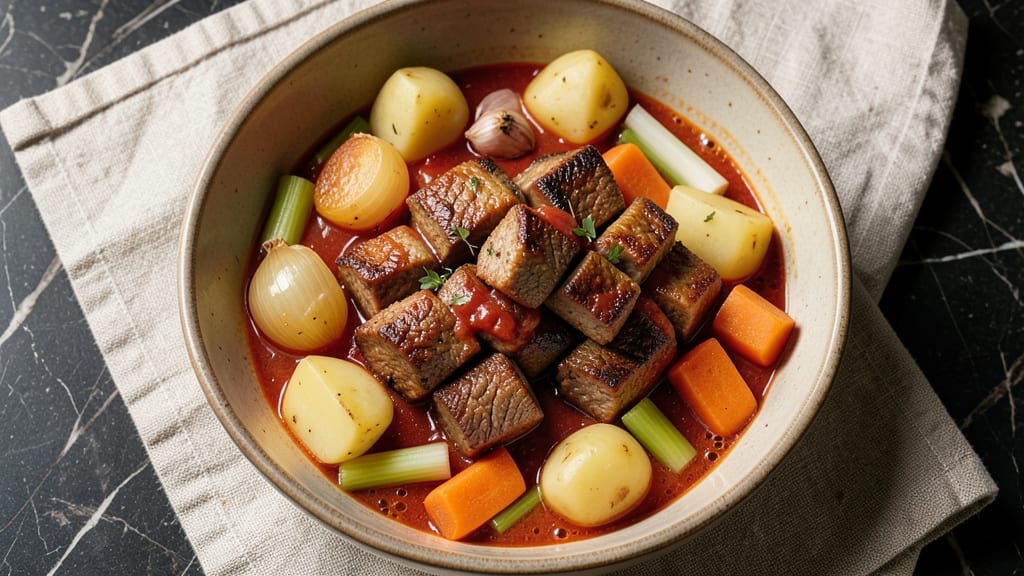
This beef vegetable soup with tomato sauce delivers restaurant-quality depth in a single pot, where rich tomato sauce meets tender beef and seasonal vegetables. The secret lies in searing the beef first—this creates a flavorful crust that infuses the broth with savory notes as it simmers.
I've perfected this technique over years of testing, ensuring every spoonful balances hearty beef, sweet tomatoes, and aromatic herbs without being overly heavy.
The beauty of this recipe is its simplicity: just a few core ingredients transform into a deeply satisfying meal. You'll start with beef that becomes fork-tender after hours of gentle simmering, while carrots, celery, and potatoes absorb the tomato sauce's rich flavor.
The herbs—thyme, bay, and parsley—layer complexity without overpowering the natural taste of the ingredients. This is the kind of soup that warms both body and soul on chilly evenings.
By the time you're done, you'll have a pot of golden, fragrant soup where the tomato sauce has thickened just enough to coat every vegetable and beef piece.
The aroma alone will have everyone gathering around the table, and the first bite delivers that perfect harmony of savory, sweet, and herby notes. It's the kind of dish that tastes even better the next day, making it ideal for meal prep or feeding a crowd.
Serve with crusty bread to soak up every last drop of that flavorful broth, or garnish with fresh parsley for a pop of color and brightness. The technique is straightforward, but the result is anything but basic—this is comfort food elevated to its finest form. Let's get cooking!
Ingredients for beef vegetable soup recipe with tomato sauce
Six core ingredients build this restaurant-style beef soup with tomato sauce depth.
| Ingredient | Amount | Notes |
|---|---|---|
| Beef Chuck Roast 🥩 | 2 lb | Trimmed of fat, cut into 1-inch cubes |
| Yellow Onion 🧅 | 1 whole | Large, sliced into half-moons |
| Carrots 🥕 | 4 medium | Peeled, cut into 1-inch chunks |
| Celery Stalk 🌿 | 3 whole | Trimmed, cut into 1-inch pieces |
| Russet Potatoes 🥔 | 3 medium | Peeled, cut into 1-inch cubes |
| Garlic Cloves 🧄 | 6 cloves | Peeled, smashed |
| Canned Tomato Sauce 🍅 | 2 cups | San Marzano preferred |
| Dry Red Wine 🍷 | 1 cup | Bold variety like Cabernet Sauvignon |
| Fresh Thyme 🌿 | 2 tbsp | Leaves only, chopped |
| Fresh Parsley 🌿 | ¼ cup | Chopped, for garnish |
| Bay Leaves 🌿 | 2 whole | Dried, removed before serving |
| Vegetable Broth 💧 | 4 cups | Low-sodium preferred |
| Olive Oil 🫒 | 2 tbsp | Extra-virgin for searing |
| Salt 🧂 | 1 ½ tsp | Kosher or sea salt |
| Black Peppercorns 🌶️ | ½ tsp | Freshly cracked |
The beef is non-negotiable—chuck roast delivers that melt-in-your-mouth texture when cooked low and slow. Costco sells it pre-cut, saving time, but any grocery store carries it. Look for pieces with good marbling—the fat renders out beautifully during searing. If you're buying a whole roast, ask the butcher to cube it for you. Trader Joe's also carries pre-cubed chuck at a great price. For the tomato sauce, San Marzano cans make all the difference—they're sweeter and less acidic than regular brands, which lets the beef's natural flavor shine through. Don't skip the wine; it deepens the sauce without overpowering the vegetables.
No red wine? Dry white wine or extra vegetable broth works in a pinch, but the color difference is noticeable. Fresh thyme is ideal, but dried works at one-third the amount—just make sure it's labeled as culinary thyme, not ornamental. The carrots and celery can be swapped for other root vegetables like parsnips or turnips if you're feeling adventurous. For the broth, low-sodium is key—you'll be adding plenty of salt later. If you're using instant bouillon, dissolve it completely in cold water first to avoid clumping. The potatoes should be uniform in size so they cook evenly; if they vary, cut the larger ones into smaller pieces.
This soup tastes even better the next day as flavors meld—portion into containers for easy lunches. Store for 4-5 days in the fridge or freeze for up to 3 months. The tomato sauce thickens as it cools, so you can thin it with a splash of broth if needed when reheating. For serving, garnish with fresh parsley right before eating—it adds a bright pop of color and freshness. The bay leaves should be removed before serving, as they can be tough. If you're making this ahead for a crowd, double the recipe—it reheats beautifully and keeps well.
Why You'll Love This Recipe
- Chop Once, Cook Twice: I swear by this trick—dice the onions, carrots, and celery all at once and store them in the fridge. When soup night hits, I just toss them straight into the pot with the beef and tomato sauce, and the slow simmer does the rest. No last-minute prep, just pure convenience.
- Tomato-Meets-Beef Magic: That rich tomato sauce cutting through tender beef chuck? It’s chef’s kiss. The carrots caramelize just enough to melt in your mouth, while the potatoes soak up all the savory goodness—like a cozy hug in a bowl. (Honestly, the first time I made it, I ate it straight from the pot.)
- Lunchbox Hero: This soup is my secret weapon for meal prep. The flavors only get better after a day or two in the fridge, so I make a big batch on Sundays and pack it for lunches all week. Kids (and my picky husband) actually finish their portions—proof it’s a crowd-pleaser.
- Budget-Friendly Feast: A single beef chuck roast stretches across three meals for my family of four. The veggies are cheap staples, and the tomato sauce adds depth without breaking the bank. Plus, leftovers freeze like a dream, so I’m never scrambling for dinner ideas. Win-win.
Step-by-step instructions for beef vegetable soup with tomato sauce
This method builds rich, layered flavor through precise timing and technique.
Sear the Beef for Maximum Flavor
Heat the 2 tablespoons olive oil in a large Dutch oven over medium-high heat until shimmering. Add the 2 lb beef chuck roast cut into 1-inch cubes in a single layer, working in batches if needed. Let the beef sear undisturbed for 3-4 minutes until deep golden brown on all sides—this creates the Maillard reaction that forms the soup's foundation.
I press down gently on the beef cubes during the first minute to prevent curling, which ensures even contact with the pan. Once all pieces are browned, transfer them to a plate and set aside. Don't drain the fat—the rendered beef juices will form the base of your sauce.
Build the Vegetable Base
In the same Dutch oven, add the sliced 1 whole yellow onion, 4 medium carrots cut into chunks, and 3 whole celery stalks cut into pieces. Cook for 5-6 minutes until the vegetables soften slightly and the onions become translucent. Add the 6 cloves smashed garlic and cook for another 30 seconds until fragrant—this prevents the garlic from burning.
Stir in the 2 cups canned tomato sauce and 1 cup dry red wine, scraping up any browned bits from the bottom of the pot. Let this mixture simmer for 3-4 minutes until slightly reduced. This step develops the soup's deep, savory base while balancing the acidity from the wine and tomatoes.
Simmer the Soup for Tender Vegetables
Return the seared beef to the pot. Add the 3 medium russet potatoes cut into cubes, 4 cups vegetable broth, 2 whole bay leaves, 1.5 teaspoons salt, and 0.5 teaspoon cracked black peppercorns. Bring to a gentle boil, then reduce heat to low and let it simmer uncovered for 1 hour to 1 hour 15 minutes, until the beef is fork-tender and the potatoes are easily pierced with a knife.
Here's the thing—resist the urge to stir frequently. Occasional gentle stirring prevents the vegetables from sticking to the bottom while allowing the flavors to meld. The soup should reduce slightly, creating a thicker, more concentrated broth. Skim off any foam that rises to the surface during this time for a cleaner finish.
Finish with Herbs and Garnish
Remove the 2 whole bay leaves from the soup. Stir in the 2 tablespoons chopped fresh thyme and simmer for an additional 5 minutes to infuse the soup with aromatic flavor. Taste and adjust seasoning if needed—this is where you can fine-tune the balance between the rich beef, acidic tomato, and herbal notes.
Ladle the soup into bowls and garnish each serving with 0.25 cup chopped fresh parsley. The parsley not only adds a pop of color but also brightens the dish with its fresh, slightly peppery flavor. Serve immediately while the vegetables are still tender and the broth is steaming hot.
Pro Tips For Making Beef Vegetable Soup Recipe With Tomato Sauce
- Sear the Chuck Roast First: I learned this the hard way—skipping the sear means flavorless beef. After browning the roast in a hot pot (no oil needed, just the natural fats), add onions and celery straight to the pan. The crust locks in juices and builds depth that simmering alone can’t match.
- Cut Potatoes in Even Slices: Uneven potatoes mean some mushy, some undercooked. Aim for ½-inch chunks—thick enough to hold shape but thin enough to cook through in the same time as carrots. Russets break down fast, so resist the urge to go too big.
- Simmer Low and Slow: High heat turns tomato sauce into a gloppy mess. Once everything’s in the pot, bring to a bare simmer (tiny bubbles, just enough to keep moving) and cover partially. After 2 hours, check for doneness—beef should shred easily, and veggies should yield but stay intact.
- Deglaze with Tomato Paste: Sounds weird, but it works: after searing the meat, sprinkle 2 tablespoons of tomato paste into the pot and let it brown for 30 seconds before adding broth. This thickens the sauce naturally and cuts down on watery soup later. (Yes, even if you’re impatient like me.)
Wine and beer pairings for this dish
Red Wine Pairings
A bold Cabernet Sauvignon from Napa Valley or a medium-bodied Chianti Classico from Italy complements this soup beautifully. The wine's acidity and tannins cut through the richness of the beef and tomato sauce, cleansing your palate between spoonfuls.
I reach for a 2018 vintage when possible—they've had time to soften while retaining structure. For something more affordable, a Malbec from Argentina offers similar depth at half the price. 🍷
White Wine Alternatives
If you prefer white, a dry Viognier with its floral notes and subtle spice bridges the gap between the beef and tomato sauce. The wine's natural sweetness also enhances the caramelized carrots and onions.
A Chardonnay with minimal oak works too, but avoid buttery styles—they'll clash with the herbal thyme. For a budget pick, Sauvignon Blanc from New Zealand delivers zesty acidity that refreshes the palate.
Beer Pairings
A dark lager like Schöfferhofer Original from Germany adds malty depth that mirrors the soup's tomato sauce. The beer's caramel notes harmonize with the caramelized onions and beef. For a lighter option, a Belgian witbier like Hoegaarden provides citrusy brightness that cuts through the richness.
Avoid heavy stouts—they'll overpower the delicate herbs. I often keep a cold witbier on hand for summer evenings when this soup feels too hearty.
Seasonal Adjustments
In winter, when the soup feels extra comforting, I pair it with a spiced red blend like Caymus Reserve. The wine's warm spices echo the thyme and bay leaves in the soup. For summer, switch to a crisp Albariño—its stone fruit notes contrast beautifully with the tomato sauce.
The key is matching the wine's body to the soup's current richness: bold wines for winter, lighter wines for summer. 🌡️
Non-Alcoholic Options
For non-drinkers, a sparkling apple cider like Martinelli's adds effervescence that mimics wine's cleansing effect. The slight tartness balances the soup's savory depth. Alternatively, a ginger beer with its spicy kick enhances the beef's natural umami.
I often serve this with sparkling water and lemon for a refreshing contrast—it's surprising how well the acidity complements the tomato sauce.
Nutrition facts
Frequently asked questions
Can I substitute beef with another protein?
While beef chuck roast is ideal for its rich flavor and texture, you can use pork shoulder or lamb shanks in a pinch. For chicken lovers, bone-in chicken thighs work well—just reduce simmering time to 30-40 minutes until tender. Avoid lean cuts like breast or sirloin; they dry out during long cooking. The tomato sauce will still shine, but the overall depth of flavor changes slightly.
How do I prevent the tomato sauce from making the soup too acidic?
The recipe balances acidity with red wine and sweet carrots/potatoes, but if you're sensitive to tang, try these fixes: Use 1 cup tomato sauce instead of 2 and add 1 tablespoon tomato paste for depth. Or swap ½ cup of the wine for extra broth. Always taste after simmering—adding a pinch of sugar (just ½ teaspoon) can also help round out sharp flavors.
What vegetables can I swap for carrots and celery?
This soup is flexible! Try parsnips or butternut squash for carrots (add 10 minutes earlier) or zucchini for celery (add last 5 minutes to prevent mushiness). For heartier options, add turnips or rutabaga—they hold up well to long simmering. Just adjust cooking times based on the vegetable's density. The key is keeping a 2:1 ratio of starchy to root veggies for balance.
Can I make this soup in an Instant Pot or slow cooker?
For the Instant Pot: Sear the beef first, then add all ingredients except thyme. Cook on high pressure for 35 minutes, then natural release. Stir in thyme at the end. In a slow cooker: Follow the same steps but cook on low for 6-7 hours or high for 3-4 hours. The tomato sauce will reduce more slowly, so you may need to simmer uncovered for 10 minutes at the end to thicken it slightly.
Why does my soup taste bland after reheating?
This usually happens when the soup sits too long before reheating or loses moisture. To fix it: Add 1-2 tablespoons tomato paste or a splash of red wine when reheating to deepen flavor. If the broth is watery, simmer uncovered for 5-10 minutes to reduce it. For future batches, store with a piece of crusty bread in the pot—it absorbs excess liquid and adds flavor when removed before serving.