
Soups & Stews
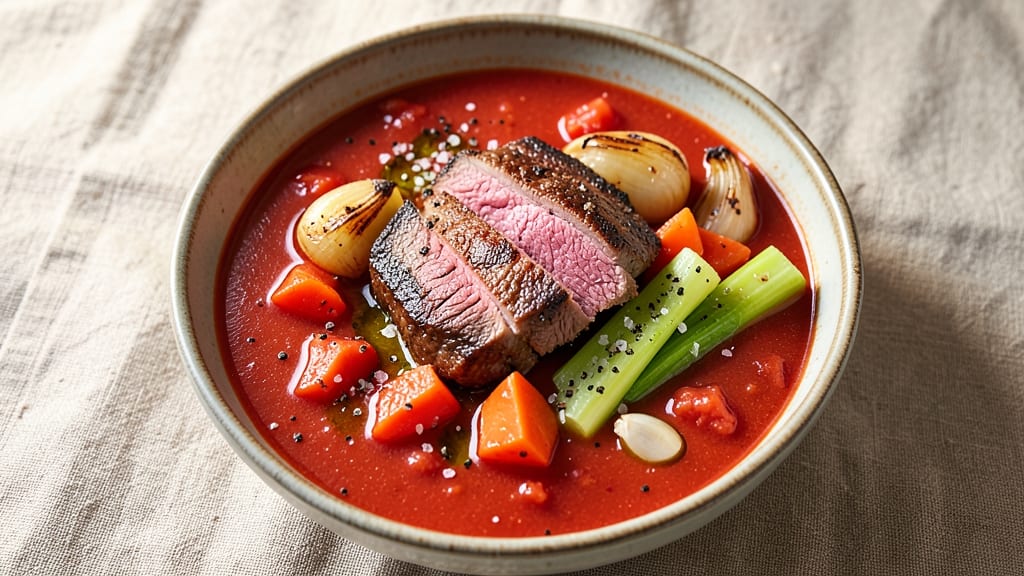
This beefsteak tomato soup transforms humble ingredients into a restaurant-worthy velouté with deep umami richness and tender beef chunks. The secret lies in slow-braising beefsteak until fork-tender, then blending it into a velvety tomato base that balances hearty meat with bright acidity.
Every spoonful delivers layers of flavor—caramelized onions, earthy celery, and herbs that elevate the soup beyond basic tomato broth.
The recipe begins with a proper sear on the beefsteak, locking in juices before simmering it low and slow until it practically melts in your mouth. Meanwhile, the tomato base builds through sautéed aromatics and crushed tomatoes, creating a foundation that's both rustic and refined.
Professional techniques—like deglazing the pan and reducing the broth—ensure depth without complexity.
What you'll end up with is a soup that's equal parts comforting and sophisticated: tender beef chunks suspended in a glossy, velvety sauce with just the right balance of acidity and richness. The celery crown garnish adds a satisfying crunch that contrasts beautifully with the creamy texture.
This isn't just tomato soup—it's a meal that feels special enough for company but simple enough for weeknights.
Perfect for chilly evenings or as a starter for dinner parties, this soup scales beautifully while maintaining its luxurious texture. The recipe delivers on its promise of meaty satisfaction without requiring advanced skills—just patience and attention to technique. Let's get started on creating this velouté masterpiece.
Ingredients for beefsteak tomato soup
The foundation of this velouté lies in premium ingredients that deliver restaurant-quality depth and texture.
| Ingredient | Amount | Notes |
|---|---|---|
| Beefsteak Tomato (Canned) 🍅 | 28 oz | San Marzano preferred for sweetness |
| Yellow Onion 🧅 | 1 whole | Medium, thinly sliced |
| Celery Stalk 🧄 | 3 whole | Trimmed, cut into 1-inch pieces |
| Carrot 🥕 | 2 whole | Medium, diced |
| Garlic Cloves 🧄 | 4 cloves | Fresh, peeled, smashed |
| Beefsteak Cut 🥩 | 1 ½ lb | Thinly sliced, 1/4-inch thick |
| Extra-Virgin Olive Oil 🫒 | ½ cup | For searing and finishing |
| Dry Red Wine 🍷 | 1 cup | Bold Cabernet Sauvignon preferred |
| Beef Broth 💧 | 4 cups | Homemade or high-quality store-bought |
| Heavy Cream 🥛 | ½ cup | Full-fat for velvety texture |
| Fresh Thyme 🌿 | ¼ cup | Leaves only, chopped |
| Fresh Basil 🌿 | ¼ cup | Leaves only, chopped |
| Salt 🧂 | 1 ½ tsp | Diamond Crystal kosher salt |
| Freshly Ground Black Pepper 🌶️ | ½ tsp | Cracked peppercorns preferred |
| Celery Crown 🧄 | 1 whole | For garnish, thinly sliced |
The beefsteak cut is non-negotiable here—look for well-marbled, thinly sliced steak at your local butcher or specialty market like Whole Foods. The San Marzano tomatoes are essential for their natural sweetness and low acidity, which you can find at Italian markets or well-stocked grocery stores. For the aromatics, fresh thyme and basil should be vibrant and fragrant; dried herbs won't cut it in this dish. The beef broth should be rich and homemade if possible, but high-quality store-bought brands like Pacific Foods work in a pinch. When selecting the celery, choose stalks that are crisp and free of brown spots—they should hold their crunch even after simmering.
No San Marzano tomatoes? Crushed plum tomatoes are a solid substitute, though they may require a touch more sugar to balance the acidity. Short on beefsteak? Chuck roast, thinly sliced and braised, delivers a similar tender texture. For the red wine, any bold dry variety like Merlot or Zinfandel will work if Cabernet isn't available. The heavy cream can be swapped for half-and-half for a lighter texture, though the soup will be slightly less velvety. Fresh herbs are ideal, but dried thyme at one-third the amount will suffice if needed. If you're using pre-sliced celery crowns, ensure they're fresh—they should snap when bent, not feel rubbery.
This soup develops deeper flavor the next day, so make a double batch if entertaining. Store in airtight containers in the fridge for up to 5 days, or freeze for 3 months by portioning into freezer-safe containers. When reheating, add a splash of broth or water to restore creaminess. The celery crown garnish should be added just before serving to maintain its crisp texture. For a make-ahead tip, prepare the base without the cream and store it separately—whisk in the cream when reheating for the smoothest texture.
Why You'll Love This Recipe
- Canned Tomato Magic: I swear by the beefsteak tomato—its meaty texture and deep sweetness turn this soup into something restaurant-worthy with zero fuss. No blender, no peeling mountains of tomatoes, just open, chop, simmer.
- Garlic-Kissed Depth: That first whiff of sautéed garlic and onions? It’s the secret weapon. The beefsteak tomatoes soak up the aroma like a sponge, giving every spoonful a rich, savory punch without needing fancy ingredients.
- Leftovers That Shine: This soup actually improves the next day. The flavors meld, the broth deepens, and it’s still just as satisfying—perfect for packing lunches or reheating with a sprinkle of cheese.
- Pantry Staple Power: Honestly, this recipe won’t break the bank. Onions, carrots, celery, garlic—basic stuff you already have. Plus, beefsteak tomatoes last forever, so you’re always ready for a quick, hearty meal.
Step-by-step instructions for beefsteak tomato velout
This rich tomato soup transforms simple ingredients into a velvety masterpiece with deep meaty flavor and vibrant celery crown garnish.
Sear the Beefsteak for Deep Flavor
Heat the 0.5 cup extra-virgin olive oil in a heavy Dutch oven over medium-high heat until shimmering. Pat the 1.5 lb beefsteak cut dry with paper towels and season generously with 1 tsp salt and 0.25 tsp freshly ground black pepper. Add the beef in a single layer and sear undisturbed for 3-4 minutes until deeply browned on one side. Flip and sear the other side for another 3-4 minutes.
Remove the beef from the pot and set aside. The goal is to develop a rich, caramelized crust that will infuse the soup with meaty depth. If the beef releases easily from the pan, it's ready. If it sticks, let it cook a bit longer—patience here prevents a bland soup. Reserve the browned beef for later use.
Build the Aromatic Base
In the same Dutch oven, reduce heat to medium and add the 1 whole yellow onion and 3 whole celery stalks (cut into 1-inch pieces). Cook for 5-6 minutes until softened and translucent. Add the 2 whole carrots (diced) and cook for another 3 minutes until they begin to caramelize slightly. Stir occasionally to prevent burning.
Push the vegetables to one side of the pot and add the 4 cloves garlic cloves (smashed) to the empty space. Cook for 30 seconds until fragrant—this releases the garlic's sweet, mellow flavor without bitterness. Stir everything together and cook for 1 minute to blend the aromatics. This foundational step ensures the soup develops complex layers of flavor.
Deglaze and Simmer the Tomato Base
Pour in the 1 cup dry red wine and scrape up any browned bits from the bottom of the pot with a wooden spoon. This deglazing step captures all the meaty, caramelized flavors that would otherwise be lost. Let the wine simmer for 3-4 minutes until reduced by half. Add the 28 oz beefsteak tomato (canned) and 4 cups beef broth, stirring to combine.
Bring the mixture to a gentle boil, then reduce heat to low and let it simmer uncovered for 25-30 minutes. The soup should reduce slightly, intensifying its flavor. Stir occasionally to prevent the tomatoes from sticking to the bottom. You're looking for a smooth, velvety consistency with deep, concentrated tomato flavor. If the soup becomes too thick, add a splash of water or broth to reach your desired texture.
Finish with Cream and Herbs
Return the seared beefsteak to the pot and simmer for another 10 minutes to allow the meat to tenderize and absorb the rich tomato flavors. Stir in the 0.5 cup heavy cream, 0.25 cup fresh thyme, and 0.25 cup fresh basil. Simmer for 5 minutes to blend the flavors without curdling the cream. Taste and adjust seasoning with the remaining 0.5 tsp salt and 0.25 tsp black pepper if needed.
The cream should create a luxurious, velvety texture while the herbs add bright, fresh notes that balance the richness. Remove the pot from heat and let the soup rest for 5 minutes to allow the flavors to meld. This resting period ensures a harmonious blend of ingredients, making each spoonful a perfect balance of meaty, tangy, and creamy flavors.
Garnish and Serve
Ladle the soup into bowls and garnish each serving with thinly sliced celery crown for a refreshing crunch. The celery crown not only adds visual appeal but also provides a crisp contrast to the velvety soup. Serve immediately while the celery remains crisp and the soup is piping hot. Each bite should deliver a rich, meaty tomato velout with a satisfying crunch from the celery crown garnish.
Pair this soup with crusty bread to soak up every last drop of the velvety sauce. The combination of the hearty beefsteak and the bright, fresh herbs creates a soup that's both comforting and sophisticated—perfect for any occasion.
Pro Tips For Making Beefsteak Tomato Soup
- Sweat, Don’t Burn: The onion and celery need to soften, not darken into something that looks like it’s been through a war. Use medium heat and stir every 30 seconds—if you see brown bits forming, you’re cooking too hot. I learned this the hard way when my first batch tasted like burnt caramel instead of savory base.
- Crush Those Tomatoes: Don’t just dump the canned beefsteak tomatoes in whole—give them a rough mash with your hands or a wooden spoon before adding them to the pot. This breaks down the skins and releases more juice, making your soup smoother and richer without extra effort. (Yes, even if you’re impatient like me.)
- Salt the Celery: Toss the chopped celery and carrot with a pinch of salt before adding them to the pot. This draws out moisture and helps them soften faster, so you’re not left with crunchy bits at the end. My grandmother swore by this, and she was right: it’s the thing that matters most when you’re in a hurry.
- Simmer Low and Long: Once everything’s combined, resist the urge to crank the heat to boil it fast. A gentle simmer (tiny bubbles, occasional skimming of foam) for at least 20 minutes deepens the flavors and makes the soup taste like it’s been simmering for hours. I skip this when I’m lazy, but the dish is noticeably better when I don’t.
Troubleshooting this recipe
Meaty Chunks Too Tough
The beefsteak might be overcooked if it's rubbery or chewy. This usually happens when the soup simmers too long at high heat. For tender results, sear the beef first, then return it to the pot only after the tomato base has simmered for 25 minutes.
Simmer the beef for just 10 minutes in the finished soup—any longer and it'll dry out. I've found that slicing the beef ¼-inch thick before cooking ensures even tenderness. 🥩
Soup Too Thin or Watery
If your soup lacks body, it's likely because the tomatoes weren't reduced enough. After adding the tomatoes and broth, simmer uncovered for 30-45 minutes to let the liquid evaporate.
For extra thickness, mash ½ cup of the cooked vegetables directly into the pot and let it simmer for another 5 minutes.
A splash of cornstarch slurry (1 tbsp cornstarch + 2 tbsp cold water) stirred in at the end can also help bind the soup without altering the flavor. 💧
Bland or One-Dimensional Flavor
This usually means the aromatics weren't cooked long enough or the deglazing step was skipped. Always sauté the onions, celery, and carrots until they're deeply caramelized—about 15 minutes total. Don't rush the wine reduction either; let it simmer until it's reduced by half to concentrate the flavors.
I like to add a pinch of sugar (1 tsp) when adding the tomatoes to balance acidity, especially if using regular crushed tomatoes instead of San Marzano. 🌶️
Cream Curdling or Breaking
Adding cold cream to a hot soup is the #1 cause of curdling. Always temper the cream by whisking it into a ladle of hot soup first, then returning it to the pot. Simmer gently for just 2-3 minutes after adding the cream—no longer, or it'll separate.
If it does curdle slightly, blend the soup for 10-15 seconds to create a silky texture. For extra insurance, I sometimes whisk the cream with a pinch of salt and pepper before adding it to the soup. 🥛
Celery Crown Losing Crunch
If your celery crown garnish turns limp, it's either overcooked or not fresh enough. Always use crisp celery stalks with green leaves still attached—they hold their crunch better. Add the celery crown to the soup only in the final 2 minutes of cooking, then remove it immediately before serving.
For extra crunch, chill the sliced celery crown in ice water for 10 minutes before using. I like to serve it on the side in a small bowl so guests can add it themselves. 🧄
Tomato Base Too Acidic
If your soup tastes overly tangy, it's likely from using regular crushed tomatoes or not balancing the acidity. Add 1 tsp sugar when adding the tomatoes, or a pinch of baking soda (⅛ tsp) to neutralize the acid.
For a creamier texture, stir in 2 tbsp tomato paste with the tomatoes to deepen the flavor without adding more acid. I've also had success using ½ cup tomato sauce instead of some of the crushed tomatoes to round out the flavor. 🍅
Nutrition facts
Frequently asked questions
Can I use fresh tomatoes instead of canned beefsteak tomatoes?
Fresh tomatoes work but require extra prep. Roast 4-5 large ripe tomatoes at 400°F for 20 minutes until softened, then blend with 1 tbsp tomato paste and 1 tsp sugar to mimic canned tomato flavor. Fresh tomatoes have more water content, so reduce the soup longer to achieve the same velvety texture.
How do I make this soup dairy-free?
Replace the heavy cream with ½ cup coconut milk (full-fat for richness) or ¼ cup cashew cream (blend soaked cashews with water). For extra body, stir in 1 tbsp nutritional yeast after simmering. The soup will still be creamy but with a slightly nutty undertone.
Can I prepare this soup ahead of time?
Yes! Make the soup up to 3 days ahead and store in an airtight container in the fridge. The flavors deepen overnight. Reheat gently on the stove, adding 1-2 tbsp broth if needed to restore creaminess. Hold off on adding the celery crown until serving to keep it crisp.
What's the best way to serve this rich soup?
Pair with crusty sourdough bread or garlic toast for dipping. For a complete meal, serve with grilled cheese sandwiches or a simple mixed green salad with lemon vinaigrette. The creamy soup balances well with acidic or bitter flavors.
Why does my soup taste different from the recipe?
Flavor variations come from ingredient quality and cooking techniques. Use high-quality beef broth and San Marzano tomatoes for authentic taste. Don't skip the wine reduction or proper searing—they're key to developing depth. If your soup tastes bland, try adding 1 tsp balsamic vinegar or ½ tsp smoked paprika at the end for complexity.