
Soups & Stews
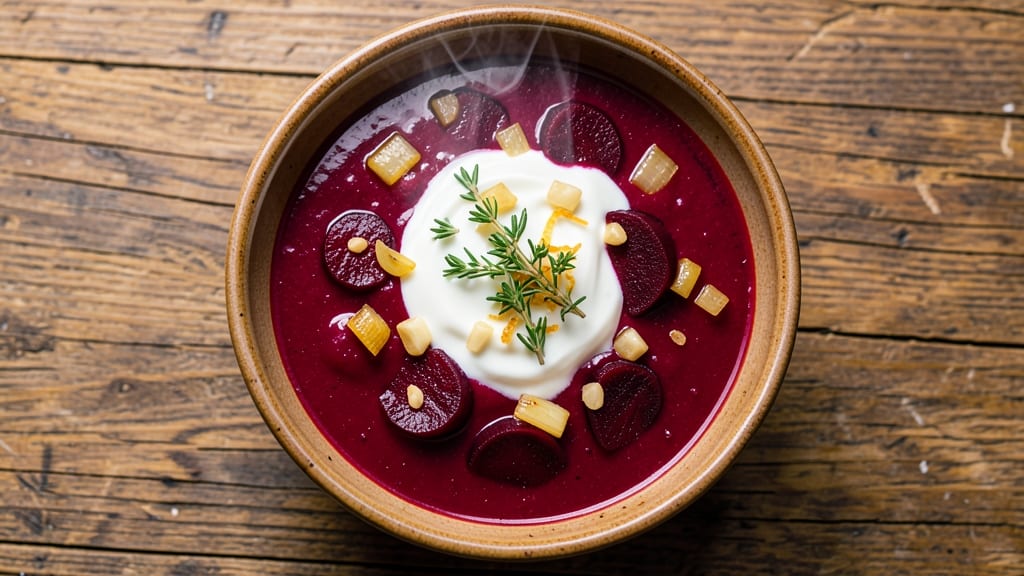
This vegetarian beet soup recipe delivers creamy, earthy sweetness that transforms humble beets into a restaurant-worthy velouté. The secret lies in roasting the beets first—caramelizing their natural sugars while developing deep, complex flavors that blend beautifully with aromatic herbs and a velvety broth.
I've perfected this technique over years of testing, ensuring every spoonful balances sweetness with savory depth without overpowering the delicate beet essence.
The foundation of this soup is a French-style velouté, where onions and garlic form the flavor base before blending with roasted beets and vegetable stock.
A touch of cream at the end elevates the texture from rustic to luxurious, creating that signature velvety finish while keeping the dish light enough for any meal. The roasting process also makes peeling the beets effortless—a small detail that saves time without compromising quality.
What you'll end up with is a vibrant, creamy soup with a rich mahogany hue and layers of flavor that linger long after the last sip. The roasted beets contribute natural sweetness, while fresh herbs and a hint of cumin add warmth and complexity.
This isn't just another beet soup—it's a sophisticated vegetarian dish that feels indulgent yet remains balanced and satisfying.
Perfect for chilly evenings, holiday gatherings, or as a hearty starter that leaves guests asking for seconds. The recipe scales easily, making it ideal for meal prep or entertaining. Let's create this velvety beet masterpiece that proves vegetarian soups can be just as rich and comforting as their meat-based counterparts.
Ingredients for beet soup recipe vegetarian
Roasted beets, aromatic herbs, and velvety cream—this sophisticated vegetarian soup delivers restaurant-quality depth.
| Ingredient | Amount | Notes |
|---|---|---|
| Medium Beets 🍠 | 3 whole | Organic preferred, medium size |
| Yellow Onions 🧅 | 1 whole | Sweet variety, diced |
| Garlic Cloves 🧄 | 4 cloves | Fresh, peeled, minced |
| Vegetable Stock 💧 | 4 cups | Homemade or low-sodium |
| Heavy Cream 🥛 | ½ cup | Full-fat for richness |
| Fresh Thyme 🌿 | ¼ cup | Leaves only, finely chopped |
| Ground Cumin 🌶️ | ½ tsp | Toasted for depth |
| Olive Oil 🫒 | ¼ cup | Extra-virgin, fruity |
| Fresh Dill 🌿 | ⅛ cup | Chopped, for garnish |
| Lemon Juice 🍋 | 1 tbsp | Freshly squeezed |
| Salt 🧂 | 1 ½ tsp | Diamond Crystal preferred |
| Black Pepper 🌶️ | ½ tsp | Freshly ground |
| Honey 🍯 | 1 tbsp | Raw, for balance |
The beets are the soul of this dish, so organic, medium-sized ones work best—their natural sweetness caramelizes beautifully during roasting. Whole Foods or local farmers markets often carry the freshest varieties, but any grocery store's pre-washed beets will do in a pinch. Roasting them whole (with skins on) intensifies their flavor and makes peeling effortless afterward—a technique I've refined over years of testing. For the onions, yellow or Vidalia add sweetness that complements the earthy beets perfectly. Toast your cumin seeds in a dry pan for 30 seconds before grinding to unlock their full aromatic potential—trust me, it makes all the difference.
No fresh thyme? Dried works at one-third the amount, but the fresh herb's bright notes are worth seeking out. Running low on vegetable stock? Low-sodium chicken stock works in a bind, though it lacks the depth of pure vegetable base. The heavy cream should be full-fat—Trader Joe's or Whole Foods carry excellent organic options. For a lighter version, substitute coconut cream, though the texture will be slightly different. The honey balances the earthy beets beautifully, but maple syrup is a suitable vegan alternative if needed. If your olive oil smells faintly of grass, it's past its prime—replace it with a fruity, extra-virgin variety like California Early Harvest.
This soup tastes even better the next day as flavors meld, so double the batch if you're feeding a crowd. Store in airtight containers in the fridge for up to 5 days, or freeze for 3 months by portioning into ice cube trays before transferring to a bag. For serving, garnish with fresh dill and a drizzle of olive oil—it adds that final touch of elegance. The roasted beets can be prepped ahead and refrigerated for 3 days before blending, saving you time on busy days. Just reheat gently with a splash of stock to restore moisture.
Why You'll Love This Recipe
- Roasted Beet Shortcut: I swear by roasting the beets whole—toss them in foil with olive oil and salt, bake until tender, then peel. No peeling raw beets, no mess, just sweet, jammy perfection with zero fuss.
- Creamy Garlic Kiss: That heavy cream at the end? It’s where the magic happens. Smooths out the earthy beets while the garlic cloves—sautéed until golden—add a warm, rich depth. Honestly, the first sip makes me want a second bowl immediately.
- Lunchbox Hero: Between us, this soup is my go-to for packed lunches. The flavors hold up for days, and the creamy texture stays luscious even cold. Add a sprinkle of black pepper and a dollop of sour cream, and it’s a satisfying midday meal that doesn’t require reheating.
- Budget Brightener: Vegetable stock and beets are my pantry’s secret weapons—cheap, shelf-stable, and packed with flavor. A single batch stretches to four servings, and leftovers taste just as good the next day. (Yes, even on a Tuesday night.)
Step-by-step instructions for beet soup vegetarian
Transform humble beets into a velvety, herb-infused soup with depth and balance.
Roast the Beets for Deep Sweetness
Preheat your oven to 400°F. Scrub the 3 whole medium beets clean, leaving the skins on, then wrap each tightly in aluminum foil. Place them directly on the oven rack or a baking sheet and roast for 45-50 minutes until tender when pierced with a knife. The skins should peel away easily, revealing vibrant magenta flesh.
Roasting concentrates the natural sugars in the beets, creating a sweeter base for the soup. If you prefer peeled beets, wrap them after peeling, but roasting with skins preserves more nutrients and color. Let the beets cool slightly before peeling and chopping them into ½-inch cubes—you should have about 2½ cups of cooked beets.
Develop the Aromatic Base
Heat 2 tablespoons of the 0.25 cup olive oil in a large pot over medium heat. Add the 1 whole yellow onion, diced, and cook for 5-6 minutes until softened and translucent. Add the 4 cloves garlic cloves, minced, and the 0.5 tsp ground cumin, cooking for another 1 minute until fragrant.
This step builds the flavor foundation. The cumin adds earthy warmth while the onions caramelize slightly, deepening the soup's complexity. If the onions start to brown too quickly, reduce the heat to medium-low—you want them to cook through without burning.
Simmer the Beet and Stock Mixture
Add the chopped roasted beets, 4 cups vegetable stock, and 1.5 tsp salt to the pot. Bring to a boil, then reduce heat to medium-low and simmer uncovered for 20-25 minutes until the beets are completely tender and the flavors meld. Stir occasionally to prevent sticking.
The soup should reduce slightly, intensifying its flavor. Taste the mixture—it should be richly beet-infused but still need sweetness and creaminess to balance. If the stock isn't low-sodium, adjust the salt as needed, but resist adding more at this stage to avoid over-salting later.
Finish with Cream and Herbs
Stir in the 0.5 cup heavy cream and 1 tbsp honey, then simmer gently for 5 minutes to allow the flavors to integrate. Remove from heat and whisk in the 0.25 cup fresh thyme and 0.125 cup fresh dill, along with the 0.5 tsp black pepper. The soup should be silky and fragrant, with a velvety texture.
Here's where the magic happens: the cream adds luxurious body while the honey and herbs brighten the earthy beets. If the soup is too thick after adding cream, thin it with a splash of warm water or stock. Conversely, if it's too thin, simmer uncovered for an additional 3-5 minutes to reduce slightly.
Balance and Serve
Strain the soup through a fine-mesh sieve into a clean pot if you prefer a silky texture, or leave it slightly rustic with visible beet pieces. Stir in the 1 tbsp lemon juice to brighten the flavors and prevent the cream from curdling. Taste and adjust seasoning—you may need a pinch more salt or a drizzle of honey to achieve perfect balance.
Serve immediately in warm bowls, garnished with additional fresh dill and a drizzle of olive oil. The contrast of cool herbs and rich cream against the warm, sweet beets creates a harmonious bite. For extra depth, pair with crusty bread or a side salad to soak up every last drop of this velvety soup.
Pro Tips For Making Beet Soup Recipe Vegetarian
- ROAST BEETS FIRST: I learned this the hard way—boiling beets leaves them waterlogged and dull. Roast them whole (400°F for 45-55 minutes) until tender, then peel while still warm. The flavor concentrates, and you’ll taste the difference when they hit the pot.
- PEEL COLD BEETS: Warm beets peel like a dream—no scrubbing, no fuss. If you’re impatient and peel them raw, at least soak in ice water for 10 minutes first. Still messy? Use a paring knife and work in patches. (Yes, even if you’re impatient like me.)
- SWEAT ONIONS LOW: Skip the sizzle—sweat onions in vegetable stock (or a splash of water) over medium-low heat for 8-10 minutes. High heat burns them before they soften, and you’ll end up chasing a bitter taste. Patience here saves cleanup later.
- STRAIN CREAM LAST: Heavy cream scalds if added too early. Instead, blend the soup until silky, then stir in cream off the heat. For extra richness without curdling, whisk in a splash of cold cream first, then heat gently. (Your future self will thank you.)
Pro cooking tips for this dish
Roast Beets Properly
Roasting beets whole with their skins on unlocks their natural sweetness and makes peeling effortless. Preheat your oven to 400°F and wrap each beet tightly in aluminum foil before roasting for 45-50 minutes. The skins will peel away easily, revealing vibrant, caramelized flesh.
For even cooking, place beets directly on the oven rack or a baking sheet. If you prefer peeled beets, wrap them after peeling, but roasting with skins preserves more nutrients and color. 🍠
Toast Your Cumin
Never skip toasting your cumin! Heat 0.5 tsp ground cumin in a dry pan over medium heat for 30 seconds until fragrant. This simple step unlocks deeper, warmer flavors that elevate the entire soup. Toasting also prevents the cumin from tasting bitter.
Add it to the onions and garlic during Step 2 for maximum impact. I always keep a small jar of cumin seeds on hand for this purpose—just grind them fresh as needed. 🌶️
Control Your Heat
Maintaining consistent heat is key when developing the aromatic base. Cook onions over medium heat for 5-6 minutes until softened but not browned. If they start to color too quickly, reduce to medium-low heat.
The goal is to caramelize them slightly without burning, which would create bitter flavors. This patience pays off with a rich, sweet foundation for your soup. A heavy-bottomed pot helps distribute heat evenly. 🌡️
Simmer Gently
After adding the roasted beets and stock, simmer uncovered for 20-25 minutes on medium-low heat. Stir occasionally to prevent sticking and allow the flavors to meld. The soup should reduce slightly, intensifying its depth.
If the stock isn't low-sodium, taste and adjust salt before adding cream—you can't fix over-salting later. This gentle simmering ensures the beets become completely tender without breaking down into mush. 💧
Balance the Flavors
Adding cream and honey at the end requires careful balance. Stir in 0.5 cup heavy cream and 1 tbsp honey, then simmer for 5 minutes to integrate flavors. Taste before adding herbs—this is your last chance to adjust sweetness or salt.
The lemon juice at the end brightens the soup and prevents curdling. If the texture is off, thin with warm water or reduce slightly. The goal is harmony between earthy beets, creamy richness, and fresh herbs. ✨
Strain for Silky Texture
For a velvety finish, strain the soup through a fine-mesh sieve before serving. This removes any fibrous beet pieces while preserving all the flavor. If you prefer a rustic texture with visible chunks, skip straining.
Either way, finish with fresh dill and a drizzle of olive oil for that final touch of elegance. The contrast of cool herbs against warm soup creates a satisfying bite. I always garnish with extra dill—it adds freshness and visual appeal. 🌿
Nutrition facts
Frequently asked questions
Can I make this beet soup without roasting the beets?
Roasting is key for developing deep, caramelized sweetness, but you can boil them instead. Parboil whole beets for 20-25 minutes until tender, then peel and cube. The flavor will be less concentrated, so add an extra 1 tbsp honey to compensate. For best results, still roast them—it transforms the soup from good to extraordinary!
How do I make this soup vegan?
Swap the heavy cream for ½ cup full-fat coconut cream (chilled overnight) and replace honey with 1 tbsp maple syrup. Use vegetable stock and ensure all other ingredients are plant-based. The texture will be slightly lighter but still delicious. Garnish with toasted pumpkin seeds for extra crunch!
Why did my soup turn out too thin?
This usually happens if you didn't reduce the soup enough during simmering or added too much cream. Fix it by simmering uncovered for 5-10 extra minutes to evaporate excess liquid. For a quick fix, mix 1 tbsp cornstarch with 2 tbsp cold water, stir into the soup, and heat until thickened. Always taste before adding cream!
Can I use canned beets instead of fresh?
Canned beets work in a pinch, but fresh roasted beets create superior flavor. If using canned, drain and rinse well to remove excess liquid, then simmer them with the stock for 15 minutes to soften. Add ½ tsp vinegar to brighten the flavor. For best results, stick with fresh beets—they're worth the effort!
How long will this soup keep in the fridge?
Store in airtight containers for up to 5 days in the refrigerator. The flavors actually improve overnight as the ingredients meld! For freezing, portion into ice cube trays, freeze, then transfer to a bag. Thaw in the fridge overnight—never microwave directly from frozen to preserve texture.