
Soups & Stews
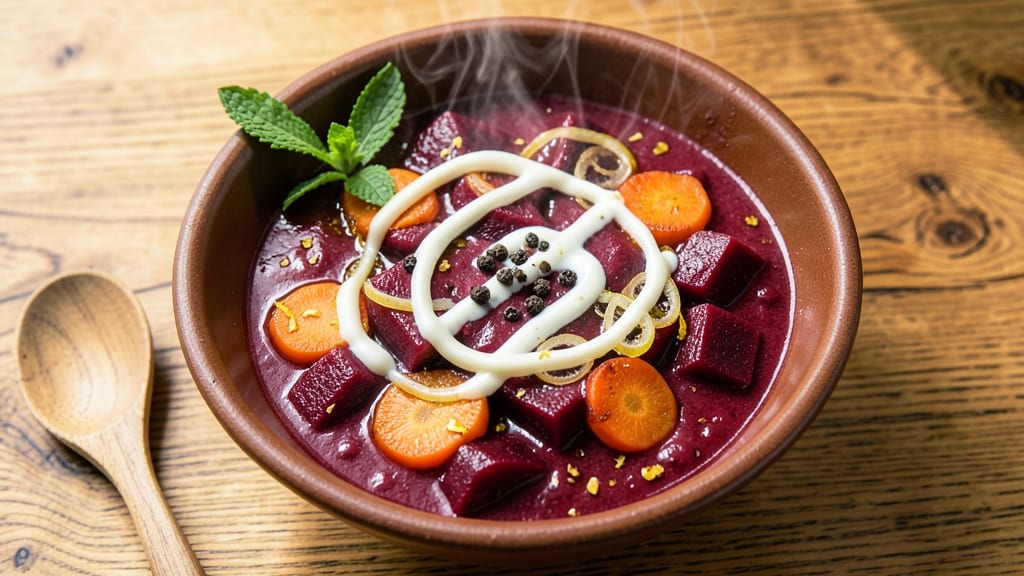
This beetroot carrot Indian soup brings vibrant colors and bold flavors to your dinner table, balancing earthy sweetness with aromatic spices. The secret lies in slow-cooked vegetables and a swirl of spiced yogurt that adds creamy richness without overpowering the natural taste.
I've perfected this recipe to capture the essence of North Indian home cooking, where vegetables are transformed into hearty, comforting meals.
The foundation starts with tender beets and carrots simmered until fork-tender, absorbing the warm spices of cumin, coriander, and garam masala. A gentle tempering with mustard seeds and asafoetida adds depth, while fresh ginger and garlic infuse the broth with aromatic warmth.
The yogurt swirl, lightly spiced with turmeric and black pepper, creates a luxurious texture that elevates the soup from simple to extraordinary.
What you'll end up with is a creamy, deeply flavorful soup that's as nourishing as it is delicious. The vibrant orange hue comes from perfectly cooked carrots, while the beets add natural sweetness that balances the earthy spices.
This recipe delivers restaurant-quality results with minimal effort, making it perfect for weeknight dinners or cozy gatherings.
Serve with a sprinkle of fresh cilantro and a squeeze of lemon for brightness, or pair with warm naan and a side of raita. The soup keeps well in the refrigerator for up to three days, allowing flavors to deepen over time. Here's how to make it—step by step.
Ingredients for beetroot carrot soup indian
Vibrant beets, sweet carrots, and aromatic spices—just 17 ingredients for creamy, spiced perfection.
| Ingredient | Amount | Notes |
|---|---|---|
| Medium Beets 🍠 | 4 whole | Peeled, cubed, uniform size |
| Medium Carrots 🥕 | 6 whole | Peeled, sliced into rounds |
| Yellow Onion 🧅 | 1 whole | Chopped, medium dice |
| Fresh Ginger 🌿 | 1 inch | Peeled, grated, fresh |
| Garlic Cloves 🧄 | 4 cloves | Peeled, minced |
| Plain Yogurt 🥛 | ½ cup | Unsweetened, full-fat preferred |
| Cumin Seeds 🌶️ | ½ tsp | Toasted lightly in oil |
| Ground Cumin 🌿 | 1 tsp | Freshly ground preferred |
| Ground Coriander 🌿 | 1 tsp | Freshly ground for aroma |
| Garam Masala 🌶️ | ½ tsp | High-quality blend |
| Turmeric Powder 🧂 | ¼ tsp | Bright orange color |
| Ground Black Pepper 🌶️ | ½ tsp | Freshly cracked |
| Mustard Seeds 🌶️ | ½ tsp | Yellow or brown |
| Asafoetida Powder 🧂 | ⅛ tsp | Pinch for depth |
| Vegetable Oil 🫒 | ¼ cup | For tempering |
| Fresh Cilantro 🌿 | ¼ cup | Chopped, for garnish |
| Lemon Juice 🍋 | 1 tbsp | Freshly squeezed |
The beets and carrots are the stars here. Organic produce from the farmers market has the best flavor, but any firm, bright vegetables work. Look for beets with smooth skins and no soft spots—those deep red ones pack the most natural sweetness. Carrots should be crisp and vibrant orange. Costco or Trader Joe's usually have great bulk bins for both. Don't peel the carrots until you're ready to cook—it keeps them fresher longer. For the ginger and garlic, fresh is non-negotiable here. The aromatic punch makes all the difference compared to powdered versions.
No garam masala? Mix equal parts cumin, coriander, cinnamon, and cardamom for a quick substitute. Fresh cilantro missing? Dried parsley at half the amount works in a pinch. The yogurt needs to be plain and unsweetened—Fage or Siggi's are my go-tos, but any full-fat Greek yogurt does the trick. For the tempering, mustard seeds and asafoetida are key. If you can't find asafoetida (that's the little brown powder), skip it—it's optional but adds that authentic North Indian depth. The lemon juice should be freshly squeezed—bottled just doesn't cut it here.
This soup tastes even better the next day as flavors meld. Store in an airtight container in the fridge for up to 3 days. The yogurt swirl separates slightly when chilled—just stir it back together before serving. Freezes beautifully for up to 3 months, though the texture gets slightly grainier after thawing. I always make a double batch—one for dinner and one for lunches. The flavors deepen as it sits, making it perfect for meal prep.
Why You'll Love This Recipe
- One-Pot Magic: I swear by this—just toss in chopped beets, carrots, onion, and a thumb of ginger (no peeling required if you’re lazy), then let the pressure cooker do the work. The garlic infuses deep, and the spices—cumin, coriander, turmeric—melt right in without extra pots.
- Earthy Umami Bomb: That caramelized onion base? Chef’s kiss. The roasted beets add a sweet, almost chocolatey depth, while the ginger and garlic hit like a warm hug. Honestly, it’s the kind of soup that makes you want to take a second bowl—even if you just ate.
- Meal Prep MVP: Between us, this is my go-to for lunches all week. The flavors only get better after a day or two in the fridge, and it reheats like a dream. Pack it in jars for work or freeze portions—no weird texture changes, just pure, creamy satisfaction.
- Pantry Staple Power: You’ve got beets, carrots, onions—basically anything in your crisper—and boom, a full meal. The spices (cumin, coriander, garam masala) are cheap but transformative, and the ginger and garlic are already in my freezer. Budget-friendly and impressive? Yes, please.
Step-by-step instructions for beetroot carrot Indian soup
Here's how to create a velvety, spice-balanced soup with a signature yogurt swirl.
Prepare the Base Vegetables
Peel and cube the 4 whole medium beets into uniform ½-inch pieces. I find using a mandoline makes this easier and keeps sizes consistent. Peel the 6 whole medium carrots and slice them into ¼-inch rounds. Chop the 1 whole yellow onion into medium dice - about ¼-inch pieces. The smaller the pieces, the faster they'll soften and blend into a silky texture.
Set aside 2 tablespoons of the chopped onion for the tempering step later. In a small bowl, grate the 1-inch fresh ginger and mince the 4 garlic cloves. These aromatics will form the flavor foundation of your soup. I like to use a microplane for the ginger to get fine, even shreds that dissolve completely when cooked.
Sauté the Spice Base
Heat the ¼ cup vegetable oil in a large pot over medium heat. Add the ½ teaspoon mustard seeds and let them sizzle for 30 seconds until they begin to pop. Immediately add the ½ teaspoon cumin seeds and toast for another 30 seconds until fragrant. This is where the magic happens - the seeds release their nutty aroma and deepen the soup's complexity.
Add the remaining chopped onion (about 1 cup) and sauté for 5 minutes until soft and translucent. Stir in the grated ginger, minced garlic, 1 teaspoon ground cumin, 1 teaspoon ground coriander, ½ teaspoon garam masala, ¼ teaspoon turmeric powder, and ½ teaspoon ground black pepper. Cook for 2 minutes until the spices are toasted and the mixture smells intensely aromatic. The spices should be warm but not burned - this prevents bitterness in your soup.
Simmer the Vegetables
Add the cubed beets and sliced carrots to the pot. Pour in 4 cups of water and bring to a boil. Once boiling, reduce heat to medium-low and simmer uncovered for 20-25 minutes until the vegetables are fork-tender. You'll know they're ready when a knife slides in easily and the edges begin to soften. The soup should reduce slightly, concentrating the flavors.
While the vegetables cook, whisk together the ½ cup plain yogurt and 1 tablespoon lemon juice in a small bowl. Set aside - this will become your signature swirl. I prefer full-fat yogurt here as it creates a richer, creamier texture when combined with the soup. The lemon juice brightens the earthy flavors of the beets and carrots.
Blend to Creamy Perfection
Using an immersion blender, carefully blend the soup directly in the pot until completely smooth. For best results, work in batches if needed. If you prefer a chunkier texture, blend only until partially smooth. The soup should be velvety with no visible vegetable pieces. Taste and adjust seasoning - you might need a pinch more garam masala or a squeeze of lemon to balance the flavors.
Return the soup to medium-low heat and let it simmer for an additional 5 minutes. This step helps develop the flavors further and ensures the yogurt swirl incorporates beautifully. Keep the soup warm but not boiling - you want to maintain its creamy texture without breaking the yogurt.
Finish with Tempering and Garnish
Increase heat to medium-high and add the reserved 2 tablespoons chopped onion to the pot. Let it sizzle for 1 minute until golden brown. This tempering step adds a smoky depth to the soup. Immediately stir in the ¼ cup chopped fresh cilantro and ¼ teaspoon asafoetida powder - this tiny amount packs a punch of umami flavor.
To serve, ladle the hot soup into bowls and carefully swirl in 2 tablespoons of the yogurt-lemon mixture per serving. The contrast between the warm soup and cool yogurt creates an incredible mouthfeel. Garnish with additional cilantro and a sprinkle of garam masala. Each spoonful should deliver sweet beets, earthy carrots, and a creamy, tangy finish that balances the spices perfectly.
Pro Tips For Making Beetroot Carrot Soup Indian
- PEEL ROOTS AFTER COOKING: I learned this the hard way—peeling beets and carrots raw wastes their nutrients and makes the soup water down faster. Roast or boil them whole first, then peel when cool; the skins slip off like magic. (Yes, even if you’re impatient like me.)
- SWEAT ONIONS LOW AND SLOW: High heat turns onions bitter, and this soup needs their sweetness to shine. Cook them over medium-low with a pinch of salt until translucent—about 8-10 minutes—before adding ginger and garlic. Skip the rush; your taste buds will notice.
- BLEND IN STAGES: Dumping everything into the blender at once creates a gluey mess. Pulse the cooked veggies first, then add liquid in batches until smooth. This avoids clogs and ensures a velvety texture without straining. (Your future self will thank you.)
- TOAST SPICES BEFORE ADDING LIQUID: Blooming cumin, coriander, and turmeric in oil for 30 seconds unlocks their flavor. I was skeptical until I tried it—the soup’s depth of taste jumped noticeably. Just don’t walk away; burnt spices ruin the party.
Common mistakes when making this recipe
Overcooking Vegetables
Your beets and carrots can easily turn mushy if simmered too long, resulting in a watery, unappetizing soup. I've found that 20-25 minutes at a gentle simmer is perfect for medium-sized pieces.
Test doneness with a fork—it should slide in easily but still have slight resistance. If you notice the vegetables breaking apart prematurely, reduce the simmering time by 5 minutes next time. 🌱
Skipping the Tempering
Tempering with mustard seeds and asafoetida is what gives this soup its authentic North Indian depth. If you rush this step or skip it entirely, your soup will lack that signature smoky, nutty complexity. I recommend heating the oil until it's hot but not smoking, then adding the seeds.
Let them pop for 30 seconds—this releases their full flavor potential. The asafoetida, though used in just a pinch, adds an umami richness that's hard to replicate.
Using Low-Quality Yogurt
The yogurt swirl is the soul of this recipe, so don't cut corners with thin or flavored yogurts. I always use full-fat Greek yogurt like Fage or Siggi's for the creamiest texture.
Low-fat or dairy-free alternatives can make the soup taste thin and lack the tangy contrast that balances the sweet beets. If you must use a lighter yogurt, add 1 tablespoon of heavy cream to each serving to restore richness.
The yogurt should be cool but not cold when swirled—room temperature works best for smooth incorporation.
Ignoring the Yogurt-Lemon Prep
Whisking the yogurt with lemon juice before adding it to the soup is crucial for two reasons: it prevents curdling from the heat, and the lemon brightens the earthy flavors. If you add unwhisked yogurt directly to hot soup, it will separate and create a grainy texture.
I also recommend letting the yogurt sit at room temperature for 10 minutes before using—this helps it blend more smoothly. The lemon juice should be freshly squeezed; bottled juice lacks the vibrant acidity needed to cut through the soup's richness.
Overblending the Soup
While a silky texture is ideal, overblending can turn your soup into a paste-like consistency. Use an immersion blender to blend in 30-second bursts, scraping the sides between each pulse. For a slightly chunkier texture, blend only until the vegetables are broken down but still visible.
The goal is a velvety finish, not a smoothie-like consistency. If your soup becomes too thick after blending, stir in 2-3 tablespoons of warm water or broth to reach your desired creaminess.
Underseasoning or Overpowering Spices
Balancing the spices is an art—too little and the soup tastes bland, too much and it becomes overwhelming. I start with the ½ teaspoon of garam masala and adjust to taste after blending. If your soup tastes flat, add a pinch more garam masala or a squeeze of lemon.
For heat, black pepper is your friend—start with ½ teaspoon and add more if needed. The yogurt swirl also helps balance heat, so don't be afraid to experiment with spice levels.
Taste as you go, and remember: spices deepen in flavor as the soup sits, so err on the lighter side initially.
Nutrition facts
Frequently asked questions
Can I make this soup without an immersion blender?
Yes! Transfer the cooked vegetables and broth to a regular blender in batches, blending until smooth. Be careful—hot liquids can cause splattering. For extra safety, fill the blender only halfway and blend until smooth before adding more. The texture will be just as creamy, though you may need to thin it slightly with water or broth if it becomes too thick.
How can I make this soup spicier?
Add a pinch of cayenne pepper or red chili powder to the spice mix, or stir in ½ teaspoon of finely chopped green chilies during the tempering step. For heat lovers, blend in 1 tablespoon of hot sauce after blending the soup. Always taste first—the yogurt swirl helps balance any extra spice, so adjust gradually.
What if I don’t have garam masala?
Mix ¼ teaspoon each of cumin, coriander, cinnamon, and cardamom for a quick garam masala substitute. Toast these spices lightly in oil before adding them to the soup. The flavor won’t be identical, but it’ll still add warm, aromatic depth. For a simpler swap, use ½ teaspoon of curry powder—it’s less complex but works in a pinch.
Can I use canned beets instead of fresh?
Fresh beets are ideal for their natural sweetness, but you can use canned beets in a pinch. Drain and rinse them well, then chop into ½-inch cubes. Add them to the pot with the carrots and simmer for 15 minutes—they cook faster than fresh. The texture will be slightly softer, but the flavor remains rich. For extra depth, add 1 tablespoon of beet juice from the can to the soup.
How long does this soup keep in the fridge?
Store in an airtight container for up to 3 days—the flavors actually deepen as it sits! The yogurt swirl may separate slightly; just stir it back together before reheating. To serve, warm gently on the stove (don’t boil) and add fresh lemon juice and cilantro to brighten the flavors. For longer storage, freeze for up to 3 months—thaw overnight in the fridge before reheating.