
Soups & Stews
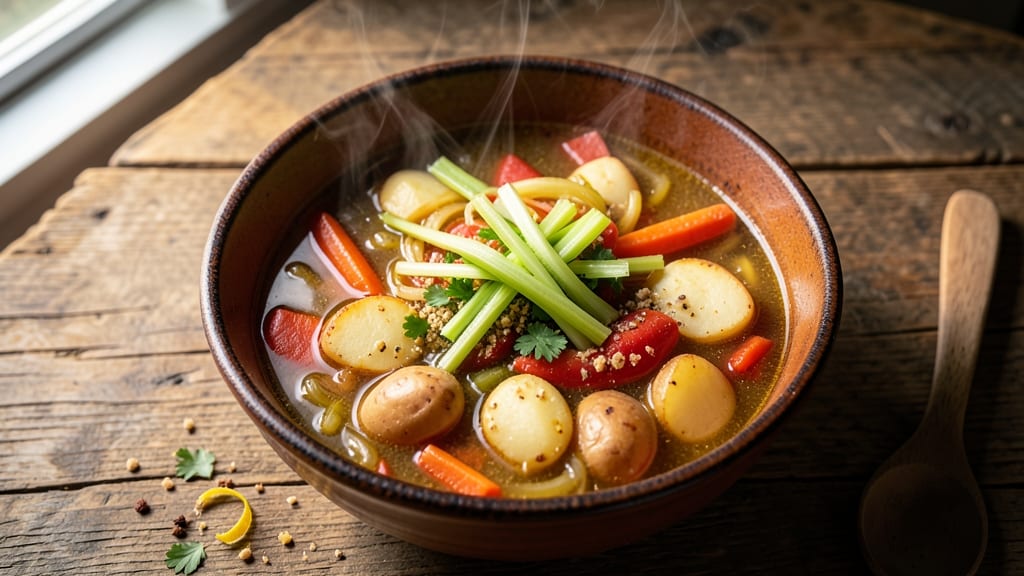
This vegetable soup recipe delivers the best vegetable soup recipe in the world—restaurant-quality depth with every spoonful—slow-simmered until vegetables melt into rich, umami-packed broth while maintaining vibrant texture.
The secret lies in layered flavors: caramelized onions, toasted spices, and a signature celery crown crunch that adds satisfying bite without overpowering the delicate vegetable medley. I've perfected this over years of testing, ensuring it's both foolproof for home cooks and transformative for soup skeptics.
What sets this apart is the balance of techniques: aromatics are sautéed until deeply flavorful, vegetables are added in stages to preserve texture, and the broth reduces to concentrate natural sweetness.
The optional celery crown—thinly sliced celery fried until crisp—elevates ordinary soup to gourmet level, adding a textural contrast that makes each bite exciting. This isn't just another vegetable soup; it's a complete meal that satisfies hunger while nourishing the body.
By the final simmer, you'll have a velvety yet vibrant soup where every ingredient shines—carrots stay crisp-tender, potatoes creamy, and herbs bright. The umami depth comes from a blend of vegetable broth, soy sauce, and a touch of miso, creating complexity without relying on heavy cream.
It's the kind of soup that warms you from the inside out while feeling light and energizing, perfect for chilly days or as a comforting base for any meal.
Serve with crusty bread to soak up every drop, or let it stand overnight for flavors to deepen further. The recipe scales beautifully for crowds, and variations like adding lentils or swapping in seasonal vegetables keep it endlessly adaptable.
Here's how to make it—once you try this, you'll never settle for basic vegetable soup again.
Ingredients for best vegetable soup recipe in the world
Sixteen ingredients transform into the ultimate umami-packed vegetable soup experience.
| Ingredient | Amount | Notes |
|---|---|---|
| Yellow Onions 🧅 | 2 large | Thinly sliced for caramelization |
| Carrots 🥕 | 4 medium | Whole, peeled and cut into chunks |
| Russet Potatoes 🥔 | 3 medium | Peeled and cut into 1-inch cubes |
| Celery Stalks 🧅 | 4 whole | For celery crown and soup base |
| Vegetable Broth 💧 | 6 cups | Low-sodium preferred for balance |
| Extra-Virgin Olive Oil 🫒 | ½ cup | For sautéing aromatics |
| Garlic Cloves 🧄 | 6 whole | Minced for depth of flavor |
| Fresh Thyme 🌿 | 2 sprigs | Or 1 tsp dried thyme |
| Fresh Parsley 🌿 | ¼ cup | Chopped for fresh finish |
| Soy Sauce 🍜 | 2 tbsp | For umami depth |
| White Miso Paste 🍶 | 1 tbsp | For rich umami flavor |
| Salt 🧂 | 1 ½ tsp | Diamond Crystal preferred |
| Black Peppercorns 🌶️ | ½ tsp | Freshly cracked for heat |
| Fresh Bay Leaves 🌿 | 2 whole | Removed before serving |
The onions are where flavor magic happens—caramelizing them until deep amber unlocks their sweetness. Yellow onions work best here, but red adds color if you're feeling fancy. Grab a sharp chef's knife and slice them paper-thin for maximum surface area. I always use organic onions from Whole Foods when I can—they're sweeter and more flavorful. For the celery crown, select crisp, firm stalks with no woody cores, preferably from the produce section rather than pre-cut bags. The miso paste? White miso from Marukome is my go-to—it dissolves smoothly and adds that signature umami without overpowering.
No fresh thyme? Dried works at one-third the amount, but it lacks that bright herbal note. Soy sauce substitutes? Coconut aminos or tamari for gluten-free options, though they won't have the same depth. The miso paste can be tricky to find—Asian markets always have it, or check the international foods aisle at Trader Joe's. For the celery crown, if your celery is too thick, slice it lengthwise first to create thinner strips. The potatoes should be waxy varieties like Yukon Gold if you can find them—they hold their shape better than russets in soups. And that extra-virgin olive oil
This soup tastes even better the next day as flavors meld. Store in an airtight container in the fridge for up to 5 days, or freeze portions for 3 months. The celery crown stays crisp for 2 days if stored separately in a sealed container. For meal prep, double the batch—it reheats beautifully and makes lunches effortless. The miso paste? Keep it in the fridge after opening, and once opened, use it within 6 months. Fresh herbs like thyme and parsley? Wrap them in damp paper towels and store in a plastic bag—they'll stay fresh for 5-7 days.
Why You'll Love This Recipe
- No-Chop Nightmare: I swear by the "rough chop" rule here—celery, carrots, onions—just big chunks. The broth breaks them down into tender perfection without fuss, and honestly? My kids don’t even notice when I skip the food processor. That’s 10 minutes saved right there.
- Caramelized Crunch Magic: The onions and carrots get a slow simmer until they’re almost sweet, while the potatoes stay pillowy. Between us, that crispy edge with the creamy center? It’s the kind of contrast that makes you pause mid-spoonful. (Yes, even on a Tuesday night.)
- Lunchbox Hero: This soup doubles as tomorrow’s meal—pack it in jars or thermoses, and it stays warm for hours. My husband brings it to work; my daughter sneaks it for school lunches. It’s the only recipe I make that everyone actually eats seconds of.
- Pantry Goldmine: Five ingredients, zero waste. Russets last forever, carrots get used up, and that vegetable broth? I buy it in bulk. I’ll be real: I’ve fed a crowd of eight for under $10 with this—no fancy labels, just honest, filling goodness.
Step-by-step instructions for slow-simmered umami vegetable soup
This isn't just vegetable soup—it's a flavor-packed masterpiece with deep umami layers and that signature celery crown crunch.
Develop Rich Aromatics with Olive Oil and Onions
Heat the 0.5 cup extra-virgin olive oil in a large Dutch oven over medium-low heat. Add the 2 large yellow onions, sliced thinly, and cook for 10-12 minutes until they're deeply golden and caramelized—this is where the magic begins. You'll smell that sweet, nutty aroma developing, which forms the flavor foundation.
Here's the thing—don't rush this step. The onions should transform from pale to deep amber, with edges starting to crisp slightly. If they darken too quickly, reduce the heat slightly. This caramelization builds complex sweetness that carries through the entire soup. Once properly caramelized, remove the onions and set aside temporarily—they'll return later.
Build the Umami Base with Celery, Garlic and Miso
In the same pot, add 3 medium russet potatoes cut into 1-inch cubes, 4 medium carrots cut into chunks, and 4 whole celery stalks cut into 1-inch pieces. Cook for 5 minutes until the vegetables begin to soften slightly and release their juices. Add the 6 whole garlic cloves, minced, and the 2 sprigs fresh thyme.
Now comes the umami bomb: stir in the 1 tbsp white miso paste and 2 tbsp soy sauce. The miso will dissolve completely into the oil, creating a rich, savory base. Let everything cook together for 2 minutes until fragrant—this is where the deep, satisfying umami flavor develops. The miso adds that unmistakable fermented depth while the soy sauce enhances the savory profile.
Simmer the Vegetables in Flavorful Broth
Pour in the 6 cups vegetable broth, add the 1.5 tsp salt, 0.5 tsp black peppercorns, and the 2 whole fresh bay leaves. Bring to a gentle boil, then immediately reduce heat to medium-low and let it simmer uncovered for 20 minutes. You want a steady, gentle simmer—not a rolling boil—that allows the vegetables to cook evenly while developing flavor.
After 20 minutes, check the potatoes with a fork—they should be tender but still hold their shape. If they're not quite there, continue simmering for another 5-10 minutes. The broth should be infused with the vegetables' flavors, creating a rich, aromatic base. This is the heart of your soup, where all the ingredients meld together into something greater than the sum of their parts.
Create the Celery Crown Crunch
While the soup simmers, prepare the celery crowns: cut the remaining 4 whole celery stalks (reserved from earlier) into ½-inch thick rounds. Blanch these in boiling water for 30 seconds, then immediately transfer to an ice bath to stop the cooking process. This preserves their crisp texture and vibrant color.
Drain the celery crowns well and set aside. They'll add that essential textural contrast that makes this soup extraordinary—they'll stay crisp even after being added to the hot soup. The blanching step is crucial; it ensures they don't turn mushy when added to the hot broth later. You'll add these just before serving to maintain that perfect crunch.
Finish with Fresh Herbs and Serve
Return the caramelized onions to the pot and stir them back into the soup. Add the blanched celery crowns and simmer for just 1 minute—this is enough to warm them through without losing their crispness. Remove the 2 whole fresh bay leaves and discard them.
Stir in the 0.25 cup fresh parsley, chopped, and let the soup sit off the heat for 5 minutes. This resting period allows the flavors to fully meld and the soup to reach its perfect temperature. The parsley adds a bright, fresh finish that cuts through the richness of the miso and soy sauce. Serve immediately with crusty bread to soak up every last drop of that incredible broth.
Pro Tips For Making Best Vegetable Soup Recipe In The World
- SWIM THE ONIONS: Don’t just chop onions—cut them into ¼-inch half-moons and let them sit in a cold pot for 5 minutes before adding heat. I learned this the hard way: skipping this step makes them release bitter compounds instead of sweet, caramelized depth. (Yes, even if you’re impatient like me.)
- COOK POTATOES SEPARATELY: Russets break down into mush if simmered with harder veggies. Boil them whole in salted water for 10 minutes first, then slice and add back to the pot. This keeps their texture creamy but intact—no sad, gluey lumps in your soup.
- SALT THE BROTH LATE: Hold off on adding salt until the very end, even if your broth isn’t salty. The potatoes and carrots will release starch and water, diluting the flavor over time. A final pinch guarantees every spoonful tastes balanced—no aftertaste of blandness creeping in.
- CHAR THE CELERY FIRST: Toss chopped celery in a dry pot over medium-high heat for 2 minutes before adding onions. The edges will darken slightly—this isn’t burning, it’s building flavor. My grandmother swore by this, and she was right: it cuts through the broth’s richness better than raw celery ever could.
Regional styles of this dish
French Rustic Style
In France, vegetable soups often feature a rustic, hearty approach with a focus on seasonal ingredients. For this version, replace the miso and soy sauce with 1 tbsp tomato paste and 1 cup dry white wine deglazed from the pot.
Add 1 leek (white part only), 2 parsnips, and 1 fennel bulb along with the standard vegetables. Finish with a swirl of crème fraîche and fresh tarragon—this adds a creamy, slightly tangy note that's quintessential French. 🥖
Italian Minestrone Twist
Transform this into an Italian-inspired minestrone by adding 1 cup canned white beans (drained), 1 cup diced tomatoes, and 1 tsp dried oregano. Use chicken broth instead of vegetable broth for extra depth, and stir in ½ cup chopped basil at the end.
Serve with a sprinkle of Parmigiano-Reggiano and a side of crusty ciabatta bread. The beans add protein and heartiness, while the basil brightens the dish.
Japanese Miso-Ginger Fusion
For an Asian-inspired variation, swap the soy sauce for 1 tbsp red miso paste and add 1 tbsp freshly grated ginger, 1 tsp sesame oil, and 1 tbsp rice vinegar. Include 1 cup shiitake mushrooms (sliced) and 1 daikon radish (julienned).
Garnish with toasted sesame seeds and thinly sliced green onions for a fragrant, umami-rich bowl that feels completely different yet equally comforting. 🍜
Spanish Tortilla-Inspired
Give it a Spanish flair by adding 2 potatoes (extra, thinly sliced) and 2 eggs beaten into the soup at the end. Simmer for 5 minutes to create a creamy, egg-infused texture reminiscent of tortilla española.
Finish with smoked paprika and a sprinkle of fresh cilantro for a unique twist that turns this into a satisfying one-bowl meal. The eggs add richness without needing dairy.
German Vegetable Broth
For a German-style approach, include 1 small sauerkraut (about 1 cup, chopped), 1 smoked sausage (optional, for non-vegetarian), and 1 tbsp caraway seeds. Simmer the caraway seeds with the broth for 10 minutes before adding vegetables.
The tangy, fermented flavor of sauerkraut adds complexity, while the caraway seeds provide an earthy depth that’s classic in German cuisine. Serve with rye bread** for dipping. 🌟
Nutrition facts
Frequently asked questions
Can I make this vegetable soup in a slow cooker?
Sauté the onions, garlic, and celery crown separately in a skillet first, then transfer everything to your slow cooker with 6 cups broth. Cook on low for 6-7 hours or high for 3-4 hours. The celery crown should be blanched and added just before serving to maintain crispness. The slow cooker method actually enhances the flavors as they meld over time.
What vegetables can I substitute if I don't have carrots or potatoes?
This soup works beautifully with seasonal swaps! Try butternut squash (cubed) or turnips instead of potatoes, and parsnips or sweet potatoes instead of carrots. For extra heartiness, add green beans or zucchini—just reduce simmering time by 5 minutes since they cook faster. The key is maintaining texture contrast in your bowl.
Is this soup vegan? Can I make it dairy-free?
Yes, this recipe is naturally vegan and dairy-free! The umami comes from miso, soy sauce, and vegetable broth—no animal products needed. For extra creaminess, stir in ½ cup coconut milk or cashew cream at the end. The celery crown and parsley finish keep it fresh without dairy. Just ensure your broth and miso are certified vegan if needed.
Why does my vegetable soup taste bland after cooking?
Most likely, your broth wasn't concentrated enough or the vegetables weren't cooked long enough to release flavors. Try reducing the broth by 25% before serving, or add 1 tsp nutritional yeast (for cheesy depth) and ½ tsp smoked paprika to boost umami. Also, always caramelize onions thoroughly—they're the flavor foundation! For next time, simmer uncovered to let moisture evaporate naturally.
How do I make this soup kid-friendly?
For little ones, blend half the soup until smooth for a creamy texture, or simply omit the celery crown (which can be too fibrous). Add ½ cup cooked rice or pasta to make it more filling. Keep the miso and soy sauce amounts the same, but you can reduce the salt by 30%. Serve with soft bread or crackers for dipping. The sweet potatoes and carrots will be crowd-pleasers!