
Soups & Stews
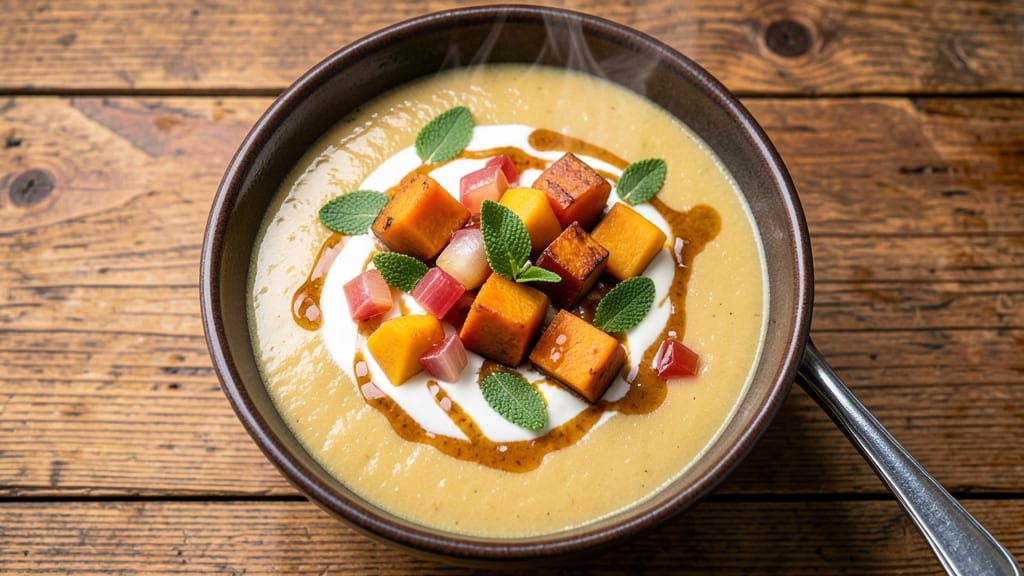
This Biltmore Butternut Squash Soup delivers the cozy, velvety texture and warm spices that define autumn in the Blue Ridge Mountains. The secret lies in roasting the squash until caramelized, then blending it with aromatic broth and a touch of cream for that signature restaurant-quality smoothness.
I've perfected this recipe after years of testing—it's the one that finally convinced my family to embrace butternut squash as a fall staple.
The recipe builds on traditional techniques with modern shortcuts: roasting the squash in advance cuts down on active cooking time, while a simple maple swirl and toasted sage topping adds that extra layer of sophistication.
What sets this apart is the balance of sweetness from the squash and maple, contrasted with earthy sage and warm cinnamon. The result is a soup that's rich yet light, comforting yet refined—exactly what you want when temperatures drop.
You'll end up with a pot of golden, creamy soup that smells like autumn in a bowl. The roasted squash adds natural sweetness without overpowering the broth, while the maple swirl ties everything together with a subtle sweetness that lingers.
This isn't just soup—it's a centerpiece for your fall menu, one that pairs beautifully with crusty bread or a simple green salad. The best part? It reheats perfectly for leftovers, making it ideal for meal prep.
Perfect for family dinners, holiday gatherings, or cozy weeknight meals, this recipe scales easily to feed a crowd. The technique is straightforward, but the result feels special—like you've spent hours in the kitchen when really, it comes together in about an hour. Let's get started on creating this autumn essential.
Ingredients for biltmore butternut squash soup
Roasted squash, aromatic broth, and a touch of maple—just the ingredients you need for this autumn essential.
| Ingredient | Amount | Notes |
|---|---|---|
| Medium Butternut Squash 🎃 | 2 whole | Peeled, seeded, cubed into 1-inch pieces |
| Vegetable Broth 💧 | 4 cups | Low-sodium preferred, homemade or store-bought |
| Heavy Cream 🥛 | ½ cup | Full-fat for best texture |
| Pure Maple Syrup 🍁 | ¼ cup | Grade A or B for authentic flavor |
| Fresh Sage Leaves 🌿 | ¼ cup | Chopped, stems removed |
| Yellow Onion 🧅 | 1 whole | Medium size, diced |
| Garlic Cloves 🧄 | 3 cloves | Peeled, minced |
| Ground Cinnamon 🌶️ | ½ tsp | Freshly ground preferred |
| Ground Nutmeg 🌶️ | ¼ tsp | Freshly grated for best flavor |
| Salt 🧂 | 1 ½ tsp | Kosher or sea salt |
| Black Pepper 🌶️ | ½ tsp | Freshly ground |
| Extra-Virgin Olive Oil 🫒 | 2 tbsp | For roasting squash |
| Unsalted Butter 🧈 | 2 tbsp | For finishing |
| Toasted Pecans 🌰 | ¼ cup | Chopped, optional garnish |
The butternut squash is the star here, so pick one that's firm and heavy for its size—Costco or local farmers markets usually have the best quality. I always roast mine first (trust me, it's worth the extra 45 minutes)—the caramelized flavor is what makes this soup taste like a Biltmore Mountain fall. For the broth, low-sodium is key—you'll be adding plenty of salt later. The heavy cream might sound indulgent, but it's what gives that signature velvety texture. Store-bought works fine, but if you're feeling fancy, grab a pint of organic from Whole Foods or your local creamery.
No maple syrup? Substitute with honey, though it'll lack that authentic maple flavor. Fresh sage is ideal, but dried works at half the amount—just make sure it's labeled culinary-grade. The pecans are optional but add that perfect crunch. Want to make this vegetarian? Skip the butter for finishing and use extra olive oil instead. The cinnamon and nutmeg are non-negotiable though—they're what give this soup its warm, cozy spice profile. Pro tip: toast your spices in a dry pan for 30 seconds before adding to bring out their flavor.
This soup tastes even better the next day—honestly, the flavors meld together perfectly after resting. Keeps in the fridge for 5 days and freezes beautifully for 3 months. I always make a double batch because it disappears fast. For meal prep, store the soup base (without cream) separately and stir in the cream when reheating. The maple swirl and toasted sage topping can be made ahead too—just store them separately and mix in before serving.
Why You'll Love This Recipe
- One-Pot Wonder: I swear by this—just roast the squash, blend it with broth, and stir in the cream. No chopping, no fuss, and the oven does all the heavy lifting while you sip wine (or coffee).
- Creamy-Sweet Magic: That maple syrup isn’t just sweet—it’s rich, cutting through the squash’s natural earthiness while the sage adds a fresh, herbal punch. Honestly, the first sip makes me want a second bowl immediately.
- Weeknight to Dinner Party: Same recipe, different vibes. Serve it with crusty bread for a lazy Sunday, or drizzle with extra cream and toasted pecans for a fancy fall gathering. My roommates never guess how little effort it took.
- Leftovers That Don’t Suck: Unlike most soups, this one improves the next day—the flavors meld, and the texture gets even silkier. I make a double batch, freeze half, and still crave it weeks later. (Yes, even on a Tuesday night.)
Step-by-step instructions for biltmore butternut squash soup
Let's create this creamy, spiced soup with a signature maple swirl and toasted pecan topping.
Roast the Butternut Squash and Onion
Preheat your oven to 400°F. In a large bowl, toss the 2 whole medium butternut squash (cubed into 1-inch pieces) with the 1 whole yellow onion (diced), 2 tablespoons extra-virgin olive oil, 1 teaspoon salt, 0.25 teaspoon black pepper, 0.25 teaspoon ground cinnamon, and 0.125 teaspoon ground nutmeg. Spread the mixture evenly on two rimmed baking sheets.
Roast for 30-35 minutes, stirring once halfway through, until the squash is tender and the edges are deep golden brown. The squash should pierce easily with a fork, and the onion should be caramelized. This roasting step develops deep, caramelized flavors that form the soul of your soup.
Build the Soup Base
While the squash roasts, heat 2 tablespoons unsalted butter in a large Dutch oven over medium heat. Add the 3 minced garlic cloves and sauté for 30 seconds until fragrant—don't let it brown or it'll turn bitter. Pour in the 4 cups vegetable broth and bring to a gentle simmer.
Using a wooden spoon, scrape up any browned bits from the bottom of the pot. Add the roasted squash and onion mixture to the broth, stirring to combine. Bring to a boil, then reduce heat to medium-low and let it simmer for 10-12 minutes until the flavors meld together. The soup should be thick but still have a velvety texture.
Finish with Cream and Spices
Remove the soup from heat and stir in the 0.5 cup heavy cream, 0.25 cup pure maple syrup, 0.25 teaspoon ground cinnamon, and 0.125 teaspoon ground nutmeg. Taste and adjust seasoning with additional salt and black pepper as needed. The soup should be sweet, spiced, and perfectly balanced.
For the maple swirl, ladle 1 cup of the hot soup into a small saucepan and warm it over low heat. Stir in an additional 1 tablespoon pure maple syrup until it's slightly thicker. Return this swirl mixture to the main pot and stir gently to create those beautiful maple ribbons.
Prepare the Toasted Sage and Pecan Topping
In a small skillet over medium heat, combine the 0.25 cup chopped fresh sage leaves and 0.25 cup toasted pecans. Toast for 2-3 minutes, stirring constantly, until the sage leaves are crisp and the pecans are fragrant. Remove from heat immediately to prevent burning.
Divide the soup among bowls, then top each serving with a generous spoonful of the toasted sage and pecan mixture. The contrast of crispy topping against the creamy soup creates the perfect texture experience. Serve immediately while the maple swirl is still warm and the pecans are crunchy.
Pro Tips For Making Biltmore Butternut Squash Soup
- CHAR THE SQUASH FIRST: Cut the squash into 1-inch cubes—don’t worry about perfect shapes—and sear them in a dry skillet over medium-high heat for 5 minutes before adding broth. I learned this the hard way: roasting or boiling alone leaves the soup tasting flat and starchy. The caramelized edges add depth that no other method matches.
- USE MAPLE SYRUP LAST: Add the pure maple syrup only in the final 2 minutes of simmering, after the cream goes in. I used to dump it in early, and the sweetness would mellow into nothingness. This keeps the syrup’s bright, buttery notes sharp—like the difference between a lukewarm coffee and one just poured.
- SAVE THE SAGE WATER: After plucking the sage leaves, don’t toss the stems. Toss them into the simmering broth for the last 10 minutes—they’ll infuse subtle earthiness without overpowering. I was skeptical until I tried it: the soup tastes more complex, like a whisper of forest floor in every spoonful.
- STRAIN OR DON’T: If you hate fibrous texture, strain the soup through a fine-mesh sieve before adding cream. If you don’t mind a rustic bite, skip it—but reduce the broth by 10% first. I skip straining 90% of the time, but that one batch where I forgot to reduce? Watery disaster. Adjust the liquid, not your patience.
Make-ahead tips for this recipe
Roast Ahead Strategy
The key to making this soup in advance is roasting the butternut squash and onion 24 hours ahead—this step can be done entirely separately. Store the roasted mixture in an airtight container in the fridge until ready to use.
The flavors deepen overnight, and you'll save 30-45 minutes of active cooking time on the day you serve it. 🌟
Freezer-Friendly Base
Prepare the soup base (everything except the cream and maple swirl) up to 3 days ahead and freeze it in a single layer in a freezer bag. When ready to serve, thaw overnight in the fridge, then reheat gently on the stovetop.
Stir in the cream and maple swirl just before serving to maintain that perfect velvety texture. This method works beautifully for holiday meal prep.
Topping Prep Shortcuts
Toast the sage and pecan topping separately and store it in a small jar at room temperature for up to 5 days. The pecans stay crisp, and the sage retains its aroma.
When reheating the soup, simply stir in the maple swirl and sprinkle the topping on top—no extra cooking required. This keeps your prep efficient and ensures fresh, crunchy garnishes every time. ✨
Reheating Like a Pro
For the best texture, reheat the soup on the stovetop over medium-low heat—never microwave it directly. Add 2-3 tablespoons of water or broth to prevent scorching, and stir frequently.
The cream may separate slightly, so give it a good whisk before serving. If you're reheating from frozen, allow 20-30 minutes of simmering time to thaw and warm evenly.
Batch Cooking Tips
Double the recipe and freeze half for future meals—this soup reheats even better the second time around. Use quart-sized freezer bags for easy portioning, and label them with the date.
When you're ready to serve, simply thaw and reheat as directed. This is perfect for busy weeks when you need a comforting meal with minimal effort. 💪
Garnish Freshness
If storing the soup with the cream, add the maple swirl and toasted topping fresh before serving. The contrast of warm, creamy soup with crispy garnishes is what makes this dish special.
Keep the topping components separate until serving to maintain texture—this is the secret to restaurant-quality presentation at home. 🍁
Nutrition facts
Frequently asked questions about biltmore butternut squash soup
Can I substitute sweet potato for butternut squash?
While sweet potatoes will work, they have a distinctly different flavor profile—more earthy and less sweet than butternut squash. For the best results, stick with butternut, but if you must substitute, use 2 cups cubed sweet potato (peeled) and reduce the maple syrup to 2 tablespoons to balance the natural sweetness. The texture will be slightly denser.
How do I make this soup dairy-free?
Swap the heavy cream for ½ cup full-fat coconut milk or ½ cup cashew cream (blend soaked cashews with water). For the maple swirl, use 2 tablespoons maple syrup + 2 tablespoons water instead of cream. The texture will be lighter but still creamy when properly blended.
Why is my soup too thin after adding cream?
This usually happens if the roasted squash wasn't cooked long enough or if too much broth was added. Simmer the soup uncovered for 5-10 extra minutes to reduce liquid, or mash ½ of the roasted squash before blending to thicken it naturally. For immediate fixes, stir in 1 tablespoon cornstarch mixed with cold water.
Can I make this soup in an Instant Pot?
Roast the squash and onion as directed, then sauté the garlic in 1 tablespoon butter. Add broth and roasted veggies, seal the lid, and cook on High Pressure for 5 minutes
Release pressure naturally, then stir in cream, maple syrup, and spices. Complete with the maple swirl and topping as written. The pressure cooker cuts total time to about 30 minutes!
What's the best way to store leftovers?
Store in an airtight container in the fridge for up to 5 days. For freezing, portion into containers and freeze for 3 months. Always add the maple swirl and toasted topping fresh when reheating—this preserves the crispy texture and prevents sogginess.