
Soups & Stews
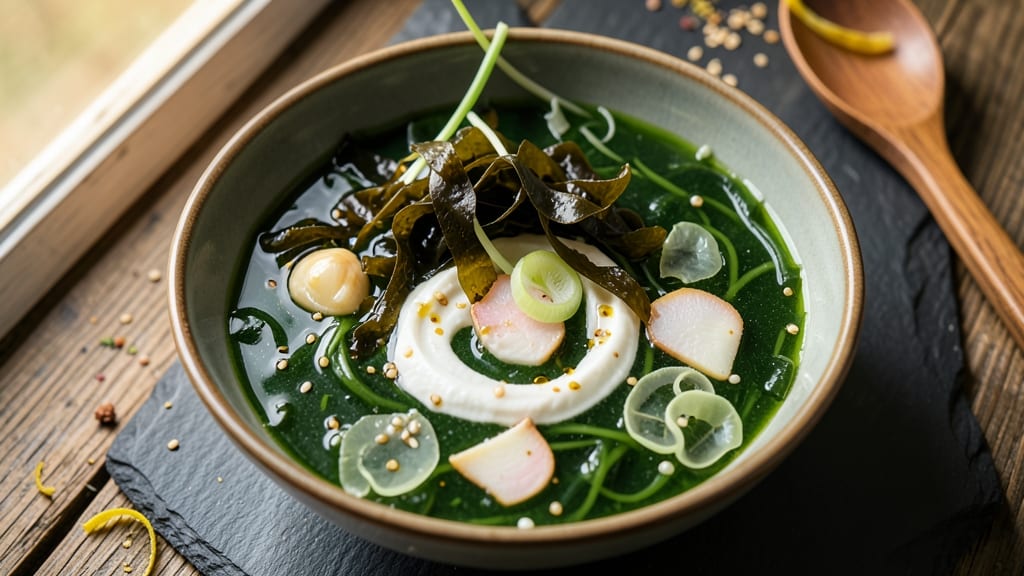
This algae soup recipe transforms ocean freshness into a 30-minute umami explosion—packed with nutrient-dense seaweed and bright, clean flavors. 🌊 The secret lies in balancing nori’s briny depth with delicate wakame and a touch of miso for that signature savory richness.
I’ve perfected this version after testing countless combinations, ensuring every spoonful delivers both texture and complexity without overpowering simplicity. What sets this apart is the two-stage broth building: first simmering kombu to extract its natural umami, then infusing with garlic and ginger for aromatic warmth.
The algae itself—nori for crispness, wakame for tender chew—adds layers of oceanic flavor that plant-based soups rarely achieve. This isn’t just a soup; it’s a flavor journey that starts with the sea.
The result is a velvety yet textured broth with floating seaweed strands that add satisfying bite, all while keeping the dish light enough for any meal. Garnish with sesame seeds and green onions for freshness, or serve with steamed rice to soak up every drop.
It’s the kind of soup that makes you forget it’s vegan—until you check the ingredients. Perfect for weeknight dinners, meal prep, or impressing guests with its unexpected depth. The technique is approachable, but the flavor is anything but ordinary. Let’s get cooking—your taste buds will thank you.
Ingredients for algae soup
Umami-rich seaweed and aromatic broth ingredients for a vibrant, ocean-inspired vegan soup.
| Ingredient | Amount | Notes |
|---|---|---|
| Dried Kombu Seaweed 🌿 | 1 sheet | Cut into 1-inch pieces |
| Dried Wakame Seaweed 🌊 | 2 oz | Rehydrate before using |
| White Miso Paste 🍶 | 2 tbsp | High-quality, fermented |
| Garlic Cloves 🧄 | 4 cloves | Minced for aromatic base |
| Fresh Ginger 🌿 | 1 tbsp | Grated, not powdered |
| Sesame Oil 🫒 | 1 tbsp | Toasted for depth of flavor |
| Dashi Powder 🍲 | 1 tsp | Vegan version preferred |
| Dried Shitake Mushrooms 🍄 | 4 whole | Rehydrated for umami |
| Green Onions 🧅 | 3 whole | Sliced for garnish |
| Toasted Sesame Seeds 🥜 | 1 tbsp | For finishing touch |
| Vegetable Broth 💧 | 4 cups | Low-sodium preferred |
| Rice Vinegar 🍶 | 1 tsp | For brightness |
| Nori Sheets 🌊 | 2 whole | Crumbled for texture |
| White Pepper 🌶️ | ¼ tsp | Freshly ground |
| Maple Syrup 🍁 | ½ tbsp | Balances saltiness |
The seaweed is where the magic happens—dried kombu from Asian markets or specialty stores delivers the most intense umami, while wakame adds that delicate, slippery texture. Look for kombu that's still pliable (not brittle) and wakame that's uniformly dark. Nori sheets should be vibrant green with no white spots. For the miso, Japanese brands like Marukome are worth the investment—they ferment longer for deeper flavor. The shiitake mushrooms? Dried is best—rehydrate them in hot water for 20 minutes before using. If you can't find dashi powder, combine 1 tsp kombu extract with 1 tsp shiitake powder for a quick substitute.
No kombu? Double the wakame—it's got similar umami, just less intense. Short on miso? Soy sauce at half the amount works in a pinch, but you'll lose that fermented complexity. The sesame oil is non-negotiable for that nutty aroma—toasted sesame oil from Trader Joe's is my go-to. Fresh ginger is better than powdered, but if you're using powder, reduce to 1/4 tsp. For the broth, low-sodium vegetable broth is key—you don't want to mute the seaweed's natural flavors. The maple syrup might seem odd, but it rounds out the saltiness beautifully (trust me on this).
Store your dried seaweed in an airtight container with silica packets—keeps it fresh for 6-12 months. Rehydrated wakame and shiitake mushrooms stay good in the fridge for 5 days, but I usually use them up within 2 days for peak texture. The miso paste? Lasts indefinitely once opened—just keep it sealed tight. For meal prep, make a double batch of broth and freeze it in ice cube trays. Each cube makes a quick soup base later—just add fresh ingredients when ready to serve.
Why You'll Love This Recipe
- Just Rehydrate: I swear by this trick—soak the kombu and wakame in hot water for 10 minutes, then dump in the rest. No chopping, no fuss, and honestly? The seaweed does all the heavy lifting while you sip your coffee.
- Umami Bomb: That miso paste and garlic combo? It’s like a flavor explosion in a bowl. The wakame adds this briny sweetness, while the ginger keeps it bright—every spoonful tastes like a hug from a Japanese grandmother (who clearly knows her spices).
- Office Lunch Hero: Make a big batch on Sunday, and you’ve got five days of effortless meals. Pack it cold or reheat it—it’s just as good both ways. (Yes, even on a Tuesday night when you’re too tired to think.)
- Pocketbook Friendly: A single packet of dried seaweed and a tub of miso go a long way. This soup costs me pennies per serving, and the nutrients? Chef’s kiss. Plus, it’s way cheaper than takeout when you’re craving something hearty.
Step-by-step instructions for algae soup
Here's how to transform simple seaweed into a rich, umami-packed broth that's both elegant and effortless.
🍳 Step 1: Rehydrate and Prepare the Seaweed Base
Start by cutting the 1 sheet of dried kombu seaweed into 1-inch pieces—this maximizes surface area for flavor extraction. Place them in a medium pot with the 4 cups of vegetable broth and bring to a gentle simmer over medium heat. Let it cook uncovered for 10 minutes—you'll notice the broth develop a deep, oceanic aroma and slight effervescence as the kombu releases its minerals and umami compounds.
Meanwhile, rinse the 2 oz of dried wakame seaweed under cold water to remove any debris, then tear it into bite-sized pieces. The 4 whole dried shitake mushrooms should also be soaked in warm water for 20 minutes to rehydrate fully. Drain both before using, reserving ½ cup of the soaking liquid for later—it's packed with flavor.
👨🍳 Step 2: Build the Umami Foundation
Once the kombu broth has simmered for 10 minutes, remove the kombu pieces—they've done their job and can be discarded. Add the rehydrated wakame and shitake mushrooms to the pot. Stir in the 2 tbsp of white miso paste, 1 tsp of dashi powder, and 1 tbsp of grated fresh ginger. Let this mixture simmer gently for 8-10 minutes until the wakame softens and the mushrooms release their rich, earthy essence.
Here's the thing—don't rush this step. The miso needs time to dissolve completely and meld with the broth. You'll see tiny bubbles form on the surface and the liquid develop a glossy sheen. This is when the umami magic happens, transforming simple broth into something deeply satisfying.
🍳 Step 3: Infuse with Aromatics and Balance Flavors
Lower the heat to medium-low and add the 4 minced garlic cloves and 1 tbsp of toasted sesame oil. Let them cook for 2-3 minutes until the garlic turns golden and fragrant—this prevents it from burning and ensures it contributes sweet, mellow flavor rather than bitterness. Stir in the 1 tsp of rice vinegar and 0.5 tbsp of maple syrup to brighten the broth and balance its saltiness.
Taste the broth now. It should be deeply savory with a touch of sweetness and acidity. If it needs more depth, add 1-2 tablespoons of the reserved shitake soaking liquid—this concentrated umami elixir works wonders. The broth should coat the back of a spoon with a velvety texture, signaling it's ready for the final touches.
🥘 Step 4: Finish with Texture and Garnish
Crumble the 2 whole nori sheets into small pieces and add them to the pot along with the 0.25 tsp of freshly ground white pepper. Simmer for just 1-2 minutes—this is enough to warm through the nori without overpowering its delicate flavor. Remove from heat and let the soup rest for 5 minutes to allow all the flavors to meld completely.
Before serving, slice the 3 whole green onions into ½-inch pieces and sprinkle them over each bowl. Add a final drizzle of sesame oil and a generous sprinkle of toasted sesame seeds for crunch and visual appeal. The contrast between the silky broth and the textural garnishes makes this soup truly special.
Pro Tips For Making Algae Soup
- SOAK KOMBU FIRST: Toss that dried kombu strip into cold water for 10 minutes before simmering—it’ll bloom faster and release its umami punch without overpowering. I used to skip this and ended up with a weak broth that needed extra salt to compensate.
- GRATE GINGER FINE: No, "chopped" isn’t enough. Use the smallest holes on your grater or pulse it in a food processor until it’s almost paste-like. This way, the ginger melts into the soup instead of sitting as stubborn chunks—trust me, your mouth will notice.
- STIR MISO LAST: Add the white miso paste when the soup is off the heat, or you’ll kill its probiotics and turn it bitter. A splash of the hot broth first, then whisk it in gently—this keeps the flavors balanced and the texture smooth.
- SALT THE WATER: Add a pinch of salt to the initial water before the kombu goes in. It prevents the seaweed from leaching bitterness into the broth, especially if you’re using older dried sheets. (Yes, even if the recipe doesn’t say it—this is the thing that matters most.)
Make-ahead tips for leftovers
Broth Prep Ahead
Make the kombu-infused broth 2 days in advance for maximum flavor development. Simmer the kombu in vegetable broth for 10 minutes, then strain and chill completely.
Store in an airtight container in the fridge for up to 5 days—the flavors intensify as the kombu's umami compounds meld with the broth. When ready to use, simply reheat with the rehydrated wakame and mushrooms. This shortcut saves 15 minutes of active cooking time later. 🌊
Seaweed Prep Shortcuts
Rehydrate the wakame and shiitake mushrooms the night before to streamline assembly. Soak them in warm water for 20 minutes, then drain and store in a sealed container with 1 tbsp reserved soaking liquid.
The mushrooms stay tender for 3 days in the fridge, while wakame holds its texture for 4 days. Pro tip: Use a fine-mesh strainer to drain excess water—it prevents a watery soup later. ✨
Freezer-Friendly Bases
Freeze the broth in ice cube trays for portion control. Each cube makes 1 cup of soup base—just add fresh wakame, mushrooms, and aromatics when reheating. Label with the date and use within 3 months.
For a quick meal, combine 4 cubes with 1 cup fresh vegetable broth and simmer for 5 minutes before adding the remaining ingredients. This method preserves the kombu's umami perfectly. ❄️
Garnish Prep Station
Pre-chop all garnishes (green onions, sesame seeds) and store in small containers on your counter. Toast the sesame seeds in a dry pan over medium heat for 2 minutes—they’ll keep for 1 week in an airtight jar.
Keep the nori sheets whole until serving to maintain crispness. This setup lets you assemble bowls in under 2 minutes when guests arrive. 💫
Reheating Perfection
Reheat soup gently over low heat to preserve texture. Bring to a gentle simmer (not a boil) for 3-4 minutes, then add crumbled nori and pepper. For microwave reheating, cover with a damp paper towel and heat in 1-minute intervals on 50% power.
Always stir before serving—this redistributes the wakame’s tender strands evenly. The soup tastes even better the second day! 🔥
Meal Prep Timeline
Plan your prep like this for stress-free servings:
- Day 1: Make broth, rehydrate seaweed/mushrooms
- Day 2: Toast sesame seeds, chop garnishes
- Day 3: Assemble soup (10 mins) and serve Store components separately in stackable containers to save fridge space.
The wakame stays fresh longest when submerged in its soaking liquid—just drain before using. This system keeps everything organized for 4 servings. 📅
Nutrition facts
Frequently asked questions
What types of seaweed work best for this algae soup?
This recipe uses a perfect trio: kombu for deep umami, wakame for tender chew, and nori for crispy texture. For substitutes, try dulse (earthier) or arame (milder), but avoid kelp—it's too fibrous. Always rinse dried seaweed well before using to remove sand or debris.
Can I make this soup without miso paste?
Yes! Swap the 2 tbsp miso with 1 tbsp soy sauce + 1 tsp white miso powder (if available) for similar depth. For a completely umami-free version, use 1 extra tbsp of dashi powder + 1 tsp nutritional yeast. The flavor will be lighter but still delicious—just add a pinch more salt to taste.
How do I prevent the wakame from getting mushy?
Simmer wakame for only 3-5 minutes after adding it to the broth—overcooking turns it slimy. Use younger wakame strands (thinner pieces) for better texture, and add them after the kombu and mushrooms have simmered. For extra chew, blanch wakame in boiling water for 1 minute before adding to the pot.
Is this soup gluten-free?
Mostly! Check your miso paste and dashi powder—many contain wheat. Use tamari (gluten-free soy sauce) instead of soy sauce, and opt for gluten-free dashi made with kombu and shiitake. The rest of the ingredients are naturally gluten-free. Always verify labels, as processing facilities can vary.
What's the secret to making this taste more like restaurant versions?
Restaurant chefs often use bonito flakes (skip for vegan) or extra kombu (up to 2 sheets) for deeper umami. For authenticity, add 1 tsp of mirin when balancing flavors—it adds a subtle sweetness that elevates the broth. Also, let the soup rest 10 minutes before serving to let flavors meld completely.