
Soups & Stews
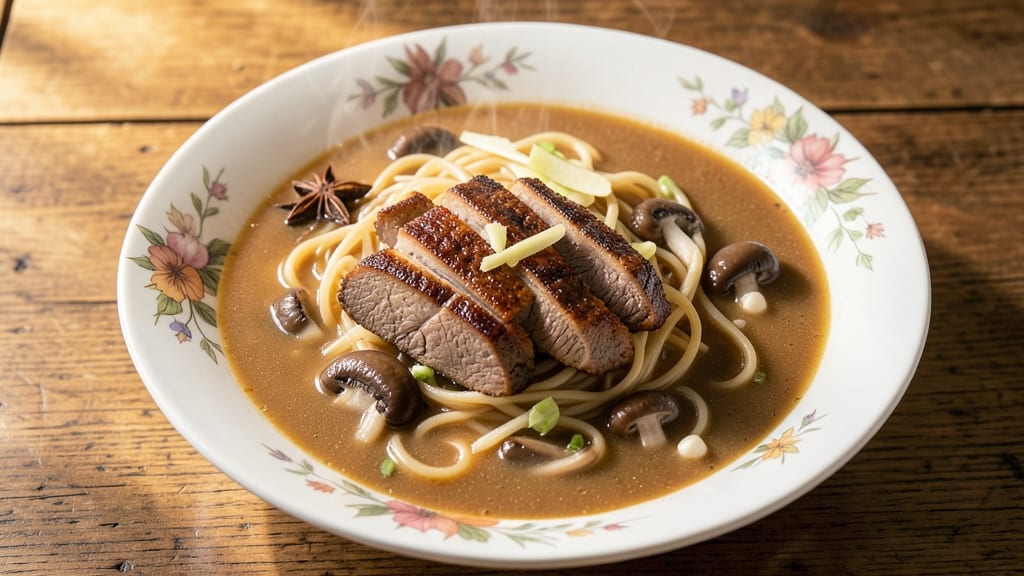
This beef egg noodle soup recipe delivers the comforting, umami-rich broth and silky noodles that make it a classic. The secret lies in a slow-simmered beef base infused with aromatics and a touch of soy sauce for depth—creating a clear, flavorful broth that feels like a warm embrace.
I've perfected this version to balance traditional techniques with modern shortcuts, so you can achieve restaurant-quality results without spending hours in the kitchen.
The foundation starts with a rich beef broth, built by simmering beef bones and meat with ginger, garlic, and star anise until the flavors meld. Fresh egg noodles add that signature chewy texture, while poached eggs swirled into each bowl create a luxurious finish.
This version keeps the broth clear and vibrant, just like in the best Asian eateries, but with a method that works for home cooks.
What sets this recipe apart is the harmony of textures—tender beef, silky noodles, and delicate eggs—all bathed in a savory broth that's neither too heavy nor too light.
The result is a bowl of soup that's both comforting and elegant, perfect for chilly days or when you need a quick, nourishing meal. Garnish with green onions and a drizzle of chili oil for an extra layer of flavor.
Whether you're making it for a weeknight dinner or a special occasion, this beef egg noodle soup delivers on tradition while offering flexibility. The broth can be made ahead and reheated, and the noodles and eggs are quick to prepare once the broth is ready.
Serve it with crusty bread to soak up every last drop of that umami-packed goodness.
Ingredients for beef egg noodle soup
Here's what transforms a simple pot into restaurant-style beef egg noodle soup.
| Ingredient | Amount | Notes |
|---|---|---|
| Beef Bones (chuck or marrow) 🦴 | 2 lb | For rich broth base |
| Beef Chuck Roast 🥩 | 1 ½ lb | Cut into 1-inch cubes |
| Fresh Ginger Root 🌿 | 2 tbsp | Finely grated, peeled |
| Garlic Cloves 🧄 | 6 cloves | Smashed, not minced |
| Star Anise Pods 🌟 | 2 whole | For aromatic depth |
| Dried Shiitake Mushrooms 🍄 | 4 whole | Rehydrated in hot water |
| Light Soy Sauce 🥢 | 2 tbsp | For umami depth |
| Sesame Oil 🫒 | 1 tbsp | For finishing touch |
| Egg Noodles 🍜 | 12 oz | Fresh or dried, wide |
| Large Eggs 🥚 | 6 whole | Fresh, cold for poaching |
| Green Onions 🧅 | 4 whole | Sliced, for garnish |
| Chili Oil 🌶️ | 2 tbsp | For serving |
| Water 💧 | 12 cups | For broth base |
| Salt 🧂 | 1 ½ tsp | Adjust to taste |
| Black Peppercorns 🌶️ | 10 whole | Crushed lightly |
The beef bones are non-negotiable for that deep, clear broth—Costco or Whole Foods sell them pre-cut, but any butcher will slice them for you. Look for chuck or marrow bones with good meat still clinging. Fresh ginger and star anise are worth hunting down at an Asian market (or H Mart if you're near one)—they make all the difference. The shiitake mushrooms? Soak them in hot water for 20 minutes, then use that water in the broth. Don't skip the soy sauce—it's what gives that authentic umami punch. For the beef chuck, Trader Joe's sells pre-cubed chuck that's perfect for this.
No fresh ginger? Powdered works at half the amount, but it's not the same. Star anise hard to find? Anise seeds are a decent swap. The egg noodles can be dried (like Martini brand) or fresh—just cook them al dente. For the eggs, cold eggs poach better—stick them in the fridge for 30 minutes before poaching. Want extra richness? Add a splash of oyster sauce with the soy sauce. The chili oil? Trader Joe's has a great one, or make your own with chili flakes and oil.
This broth tastes even better the next day—make a double batch if you can. Store it in the fridge for 4-5 days or freeze for up to 3 months. The noodles and eggs cook in minutes once the broth is hot, so you can prep ahead and finish quickly. For leftovers, keep the broth separate from the noodles and eggs so everything stays fresh. Serve with warm crusty bread—it soaks up all that flavor like a dream.
Why You'll Love This Recipe
- One-Pot Wonder: I swear by this recipe because it’s all in one pot—no chopping up a storm or juggling multiple pans. Just toss in the beef bones and chuck roast, let them simmer, and the broth builds itself while you prep the rest.
- Deep Umami Magic: That marrow bone? Absolute game-changer. The slow simmer unlocks rich, gelatinous broth that coats every noodle and egg like a hug. Star anise and fresh ginger add layers of warmth that make this soup ridiculously satisfying.
- Leftovers That Beg for More: Between us, this soup tastes even better the next day—if you can resist eating it all in one sitting. I make a big batch on Sundays, and by Wednesday, I’m reheating it because it’s just that good. (Yes, even on a Tuesday night.)
- Budget-Friendly Bone Broth: Honestly, this is my go-to for stretching meals without breaking the bank. Beef bones and chuck roast are affordable, and the broth makes the rest of the ingredients feel like a bonus. Plus, you end up with extra broth for future soups or grains—win-win.
Step-by-step instructions for beef egg noodle soup
Here's how to build a soup so rich and flavorful it'll have everyone asking for seconds.
🍳 Step 1: Build the Umami-Packed Broth
In a large stockpot, combine the 2 lb beef bones (chuck or marrow) and 12 cups water. Bring to a boil over high heat, then reduce to a simmer. Skim off any foam that rises to the surface during the first 10 minutes—this ensures clarity in your broth. The bones should simmer uncovered for 2 hours to extract maximum flavor and collagen.
After 2 hours, add the 1.5 lb beef chuck roast (cut into 1-inch cubes), 2 tbsp fresh ginger root (finely grated), 6 cloves garlic (smashed), 2 whole star anise pods, and 4 whole dried shiitake mushrooms. Return to a simmer and cook for another 1.5 hours. You'll know it's ready when the broth has a deep golden color and the beef falls apart easily. The aroma should be intensely savory—this is where all the magic happens.
🍳 Step 2: Season and Strain the Broth
Remove the beef and vegetables with tongs, discarding the bones and star anise. Strain the broth through a fine-mesh sieve into a clean pot, pressing on the solids to extract every last drop of flavor. Return the broth to the pot and stir in the 2 tbsp light soy sauce and 1.5 tsp salt. Taste and adjust seasoning—you want it to be deeply savory but not salty. Keep the broth warm over low heat while you prepare the noodles and eggs.
Here's the thing—this broth is your foundation. If it tastes amazing now, your soup will be extraordinary. If it needs more depth, add a splash of light soy sauce or a pinch of salt. Don't rush this step; proper seasoning makes all the difference.
🍳 Step 3: Cook the Noodles and Prepare Eggs
While the broth simmers, bring a separate pot of salted water to a boil. Add the 12 oz egg noodles and cook according to package instructions until al dente—usually about 8-10 minutes. Drain and set aside, reserving 1 cup of pasta water. The noodles should be tender but still have a slight bite to them.
In a separate bowl, whisk together the 6 whole large eggs with 1 tbsp sesame oil and a pinch of salt. This creates a silky, flavorful base for your poached eggs. Keep the eggs at room temperature while you finish assembling the soup—cold eggs poach better and hold their shape.
🥘 Step 4: Assemble and Finish the Soup
Return the cooked noodles to the pot of warm broth. Stir gently to combine, adding a splash of the reserved pasta water if needed to help the noodles absorb the broth. The soup should be rich but not sloppy—you want each bite to be hearty and satisfying.
To poach the eggs, carefully lower each one into the simmering broth (not boiling—just a gentle simmer) and cook for 3-4 minutes until the whites are set but the yolks remain runny. Use a slotted spoon to transfer the eggs to individual bowls. Ladle the hot broth and noodles over the eggs, distributing them evenly. Drizzle with 2 tbsp chili oil and garnish with 4 sliced green onions. Serve immediately while everything is hot.
Pro Tips For Making Beef Egg Noodle Soup
- Char the Bones First: Blister those beef bones in a dry pot over medium-high heat for 5-7 minutes until deeply browned—this isn’t just for flavor, it’s the foundation. I used to skip this and wondered why my broth never had that rich, caramelized depth everyone talks about.
- Slice Ginger Thin: Use a mandoline or sharp knife to shave ginger into paper-thin slivers, not chunks. Thin slices infuse flavor without turning the broth bitter, and they dissolve cleanly—no one wants to fish out chewy ginger later.
- Don’t Overcrowd the Pot: Add beef chuck in batches if needed, giving each piece space to sear before adding more. Crowding steams the meat instead of browning it, and that’s how you end up with gray, watery broth instead of golden, flavor-packed liquid.
- Save Time with Parboiled Noodles: Cook your egg noodles just until al dente (about 2 minutes less than package instructions), then shock them in ice water. Toss them in a bowl with a splash of broth and a pat of butter while you finish the soup—this keeps them from turning mushy when added later.
Pro cooking tips for this dish
Broth Clarity Secrets
For that crystal-clear, restaurant-style broth, skim aggressively during the first 10 minutes of simmering—use a fine-mesh skimmer or large spoon to remove all foam. The key is gentle simmering: if your broth boils hard, it’ll turn cloudy.
I use a large stockpot with a lid (like All-Clad) to maintain even heat distribution. After 2 hours, add aromatics and beef—this prevents overcooking and keeps the broth bright. 💧
Egg Perfection
Cold eggs poach best, so pop them in the fridge for 30 minutes before cooking. Whisk them with 1 tbsp sesame oil—this creates a silky membrane that holds their shape. Poach in gentle simmering broth (not boiling) for 3-4 minutes—the whites should set while yolks stay runny.
I use a slotted spoon to transfer them to bowls, then ladle hot broth over them. Pro tip: Room-temperature broth poaches eggs more evenly. 🥚
Noodle Texture
Cook noodles al dente (1-2 minutes less than package instructions) to prevent mushiness. Reserve 1 cup pasta water—it’s liquid gold for adjusting broth consistency later. For extra richness, toss cooked noodles with 1 tsp sesame oil before adding them back to the broth.
I use wide egg noodles (like Martini brand) for better texture retention. 🍜
Umami Boost
Don’t skimp on the soy sauce—it’s what elevates the broth from good to extraordinary. For deeper flavor, add 1 tbsp oyster sauce with the soy. The shiitake mushrooms (rehydrated in hot water) contribute earthy umami, and their soaking liquid should be strained into the broth.
I also add 1 tsp fish sauce for complexity—trust me, it disappears into the broth without overpowering. 🌟
Garnish Like a Pro
Fresh green onions (thinly sliced) add brightness, while chili oil (2 tbsp) brings heat. For extra flair, sprinkle toasted sesame seeds or crushed black pepper. I like to finish with a drizzle of high-quality olive oil (like California Extra Virgin) to add another layer of richness.
Presentation matters—serve immediately while everything is hot. ✨
Time-Saving Shortcuts
No time to make broth from scratch? Use high-quality store-bought beef broth (like Kettle & Fire or Imagine) and boost it with 1 tbsp soy sauce, 1 tsp fish sauce, and 1 crushed star anise pod.
For eggs, use pre-poached eggs (from the grocery store) and gently reheat them in the broth for 1-2 minutes. The noodles can be cooked ahead and reheated in broth for 2-3 minutes before serving. 💡
Nutrition facts
Frequently asked questions
Can I use dried egg noodles instead of fresh?
Dried egg noodles work perfectly—just check the package for cooking time and aim for al dente texture (about 2-3 minutes less than recommended). Reserve 1 cup pasta water to help thicken the broth later if needed. Brands like Martini or De Cecco are great choices.
How do I fix broth that's too cloudy?
If your broth turns cloudy, strain it through a cheesecloth-lined sieve for a silky texture. For extra clarity, chill the broth overnight—fat will solidify on top, and you can skim it off before reheating. A splash of ice water before serving also helps brighten the color.
Can I make this soup ahead of time?
Yes! Prepare the broth up to 3 days ahead and store it in the fridge. Reheat gently on the stove, then add fresh noodles and poached eggs just before serving. For the eggs, poach them fresh or use store-bought pre-poached ones—reheat in the broth for 1-2 minutes to keep them warm.
What if my poached eggs turn out rubbery?
Rubbery eggs usually mean the broth was too hot. Keep it at a gentle simmer (not boiling) and use cold eggs (chilled for 30 minutes). Whisk them with 1 tbsp sesame oil before poaching—this helps them hold their shape. If they still turn out tough, try poaching in room-temperature broth instead.
Can I add vegetables to this soup?
Stir in baby bok choy, shiitake mushrooms, or spinach during the last 2 minutes of cooking to keep them crisp. For heartier options, add bamboo shoots or water chestnuts when simmering the broth. Just avoid overcooking—they should stay vibrant.