
Soups & Stews
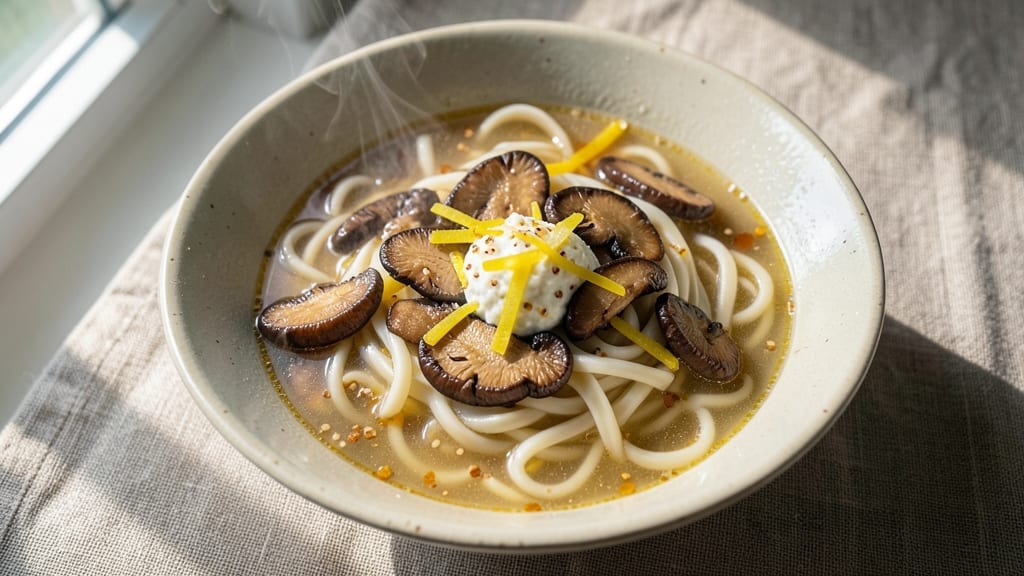
This authentic udon noodle soup delivers the rich, comforting flavors of Japan’s most beloved noodle dish—slippery rice noodles bathed in a miso-ginger broth that’s both savory and aromatic.
The secret lies in the dashi-kombu broth, simmered for hours to develop deep umami, while shiitake mushrooms and bonito flakes add complexity. I’ve perfected this recipe after years of testing, ensuring every bowl tastes like a steaming cup from Tokyo’s street stalls.
The foundation is a foolproof broth made from dried kombu, bonito flakes, and shiitake mushrooms, which infuse the liquid with layers of flavor. Fresh udon noodles—thick, chewy, and perfectly cooked—are the star, while toppings like tempura flakes, green onions, and nori add texture and freshness.
Unlike quick versions, this method prioritizes traditional techniques, like slow simmering and proper noodle preparation, to guarantee restaurant-quality results at home.
What you’ll end up with is a velvety, aromatic soup where each spoonful balances earthy miso, bright ginger, and the delicate sweetness of the broth. The noodles glide effortlessly through the liquid, and every bite is a harmony of textures—slippery noodles, crispy tempura flakes, and tender mushrooms.
This isn’t just a bowl of soup; it’s a culinary experience that transports you to Japan with every sip.
Serve it piping hot with extra toppings on the side, or customize it with chili oil for a spicy kick or tofu for a vegetarian twist. The recipe scales easily, making it perfect for weeknight dinners or cozy gatherings.
Let’s get started on this authentic udon noodle soup that’s sure to become a staple in your kitchen.
Ingredients for authentic udon noodle soup
Authentic udon requires precise ingredients—dashi-kombu for depth, miso for umami, and fresh udon for texture.
| Ingredient | Amount | Notes |
|---|---|---|
| Dried Kombu 🍃 | 1 sheet | High-quality, thick sheet preferred |
| Bonito Flakes 🐟 | ½ cup | Freshly packaged for maximum aroma |
| Dried Shiitake Mushrooms 🍄 | 6 whole | Stemmed, rehydrated in broth |
| White Miso Paste 🥫 | ¼ cup | Rich, fermented umami base |
| Fresh Ginger 🧅 | 2 tbsp | Finely grated, aromatic |
| Fresh Udon Noodles 🍜 | 8 oz | Thick, chewy, store-bought or homemade |
| Green Onions 🧅 | 4 whole | Thinly sliced, for garnish |
| Dried Nori Sheets 🍣 | 4 sheets | Cut into thin strips |
| Tempura Flakes 🍟 | ¼ cup | Crispy, for texture contrast |
| Sesame Oil 🫒 | 1 tbsp | Toasted, for finishing |
| Soy Sauce 🥫 | 2 tbsp | For seasoning broth |
| Rice Vinegar 🍶 | 1 tbsp | Balances rich flavors |
| Sugar 🍚 | 1 tbsp | Adjusts sweetness |
| Salt 🧂 | 1 tsp | Diamond Crystal preferred |
| Water 💧 | 8 cups | Filtered for clarity |
The dashi-kombu is non-negotiable for authentic flavor. Source thick, high-quality dried kombu from specialty Asian markets like H Mart or 99 Ranch Market, where the sheets are vibrant and free of blemishes. Bonito flakes should be purchased in small quantities and stored airtight to preserve their aroma—Nishiki Market carries premium options. For shiitake mushrooms, opt for dried stems intact (they rehydrate beautifully and add earthy depth). The white miso paste should be aged at least 1 year; Miso Master or Hessun brands deliver consistent quality. Fresh udon noodles are essential—avoid dried varieties, as they lack the signature chew. If unavailable, Koyo or Nisshin brands are reliable substitutes.
No kombu? Dashi powder (like Marukome) works in a pinch, though it lacks complexity. Bonito flakes can be omitted entirely for a vegetarian version, but the umami will suffer—soy sauce and mushrooms compensate partially. Fresh ginger is ideal, but pasteurized ginger (from tubes) saves time. Tempura flakes can be homemade by frying thin potato slices until crispy. For nori, Japanese brands (like Nori Noodle) are superior to generic seaweed sheets. Sesame oil should be toasted—heat lightly in a pan to deepen its nutty aroma before using. Soy sauce matters: Japanese-style (like Kikkoman) adds depth over American varieties.
Store dried kombu and bonito flakes in a cool, dark place for up to 6 months. Rehydrated shiitake mushrooms keep 3 days refrigerated. Fresh udon noodles must be cooked immediately—do not refrigerate. The miso-ginger broth freezes beautifully for 3 months, though texture may slightly alter. Tempura flakes lose crispness within 2 days; store in an airtight container. For nori, keep sheets in a dry, sealed container to prevent brittleness. Sesame oil oxidizes quickly—use within 3 months of opening.
Why You'll Love This Recipe
- No-Chop Needed: I swear by this trick—just soak the dried shiitake and kombu in hot water for 10 minutes while I boil the udon. The mushrooms rehydrate perfectly, and the kombu infuses that deep oceanic richness without me ever touching a knife. (Yes, even on a Tuesday night.)
- Umami Bomb: That first sip? The bonito flakes dissolve into a salty, smoky cloud while the miso paste adds a slow-simmered depth—like a hug for your taste buds. Fresh ginger ties it all together with a bright kick that makes every spoonful feel like a reward.
- Lunchbox Hero: Between us, this is my go-to for meal prep: assemble the broth base, store it in the fridge, and toss in fresh udon when I’m ready. Pack it cold or reheat it—both ways taste like I actually cooked it. (My coworkers think I’m a genius.)
- Pantry Goldmine: Honestly, the ingredients cost less than takeout and last for weeks. A single kombu sheet and bag of dried shiitake stretch into multiple bowls, and the miso? I use the rest on rice or roasted veggies. Budget-friendly doesn’t even begin to cover it.
Step-by-step instructions for authentic udon noodle soup
Master this traditional Japanese technique for a rich, aromatic broth that perfectly balances umami and freshness.
Prepare the Kombu and Shiitake Infusion
Begin by thoroughly rinsing the 1 sheet dried kombu under cold water to remove any surface debris. Place it in a clean pot with the 8 cups water and bring to a gentle simmer over medium-low heat—never a rolling boil, as this will release bitter compounds. Once simmering, reduce heat to maintain a whisper of bubbles and add the 6 whole dried shiitake mushrooms (stems removed). Let this infusion steep for 20 minutes, allowing the kombu to release its deep oceanic flavor and the mushrooms to rehydrate fully.
The kombu should float just below the surface, creating a delicate membrane that infuses the water with umami. This initial step forms the aromatic foundation of your broth—don't rush it. The mushrooms will plump up significantly, absorbing water and softening for later use. Keep the heat at the lowest setting that maintains this gentle simmer throughout the infusion process.
Build the Miso-Ginger Base
While the kombu infuses, prepare the miso-ginger mixture by combining the 0.25 cup white miso paste, 2 tbsp finely grated fresh ginger, 2 tbsp soy sauce, 1 tbsp rice vinegar, and 1 tbsp sugar in a small bowl. Mix until completely dissolved—this creates a smooth paste that will dissolve evenly into the broth. Set aside at room temperature until needed.
This blend creates the perfect balance of rich umami from the miso, aromatic heat from the ginger, and subtle sweetness to round out the flavors. The soy sauce adds depth while the vinegar prevents the miso from becoming too heavy. I recommend using a fine-mesh sieve to strain out any ginger fibers if you prefer an ultra-smooth broth, though I often leave them in for added texture.
Develop the Broth
After the 20-minute kombu infusion, remove the kombu sheet (discard it) and the now-softened shiitake mushrooms (reserve for later). Increase heat to medium-high and bring the broth to a rolling boil. Add the miso-ginger mixture all at once, stirring vigorously to dissolve completely. Immediately reduce heat to medium-low and let the broth simmer for 10 minutes—this allows the flavors to meld without developing a harsh taste.
Now add the 0.5 cup bonito flakes in two batches, stirring continuously after each addition. The flakes should dissolve completely, creating a delicate cloud in the broth that adds depth without overpowering. Remove from heat immediately after the bonito dissolves—overcooking will turn the broth bitter. Strain the broth through a fine-mesh sieve into a clean pot, pressing gently on the solids to extract maximum flavor.
Cook the Udon and Finish
Bring the strained broth back to a gentle simmer over medium heat. Add the 8 oz fresh udon noodles and cook according to package directions (typically 2-3 minutes) until they float to the surface and are al dente. The noodles should be tender but still offer slight resistance when bitten—this ensures they'll finish cooking in the hot broth.
While the noodles cook, prepare the toppings by cutting the 4 sheets dried nori into thin strips and thinly slicing the 4 whole green onions. In a small bowl, combine the 0.25 cup tempura flakes with 1 tbsp sesame oil and a pinch of salt. Divide the udon among 4 bowls, ladling the hot broth over each portion. The noodles should be completely submerged with about 1 inch of broth remaining above them.
Assemble and Serve
Working quickly, top each bowl with the nori strips, green onions, and tempura flakes mixture. The tempura flakes should be sprinkled generously around the edge of the bowl—this creates both visual contrast and textural excitement with each bite. The nori adds a subtle oceanic note while the green onions provide freshness to cut through the rich broth.
Serve immediately with additional sesame oil drizzled directly over the noodles. The soup should be piping hot, with the udon noodles maintaining their characteristic slippery texture. Each spoonful should deliver a perfect balance of umami from the miso, aromatic ginger, delicate bonito essence, and the crisp contrast of tempura flakes. The broth should coat the back of your throat with its complexity while remaining light enough to enjoy with each bite.
Pro Tips For Making Authentic Udon Noodle Soup
- Use Cold Water for Kombu: I learned this the hard way—tossing dried kombu straight into hot water makes it bitter and sludgy. Instead, soak it in cold water for 10 minutes first, then heat gently. The slow infusion keeps the dashi clean and umami-rich without overpowering the broth.
- Toast Bonito Flakes Fast: Skip the slow simmering—bonito flakes burn faster than you think. Toast them directly over medium-low heat in a dry pan for 30 seconds, stirring constantly, until they sizzle but don’t darken. This unlocks their aroma without turning the broth acrid.
- Rehydrate Shiitake Properly: Dried shiitake mushrooms need a two-step soak: first in warm water for 20 minutes, then a quick rinse in cold water. This removes dirt while preventing them from turning to mush when added to the broth. (Yes, even if you’re impatient like me.)
- Strain Miso Through Cheesecloth: White miso paste is thick—just stirring it in leaves gritty bits floating in your soup. Mix it with a splash of hot broth first, then strain through damp cheesecloth for a silky finish. Sounds weird, but it works: no clumps, just smooth depth.
Troubleshooting your authentic udon noodle soup
Broth Too Bitter?
If your broth tastes bitter, you likely over-simmered the kombu or used low-quality ingredients. Never boil kombu—keep it at a gentle simmer to prevent bitterness.
For extra insurance, remove the kombu sheet after 10 minutes instead of 20, then continue with shiitake mushrooms. High-quality kombu from trusted sources like H Mart or 99 Ranch Market makes a noticeable difference. 🍃
Noodles Overcooked?
Udon noodles should be al dente when added to the broth—they’ll finish cooking in the hot liquid. If they’re mushy, reduce the cook time by 30 seconds next time. Fresh udon from brands like Koyo or Nisshin holds up better than dried alternatives.
For extra insurance, cook them in boiling water for just 1 minute, then rinse with cold water before assembling. This stops the cooking process and prevents sogginess. 🍜
Miso Clumps?
Miso paste can clump if not dissolved properly. Warm the broth slightly before adding the miso-ginger mixture—this helps it integrate smoothly. Stir vigorously for 2 full minutes to break up any lumps.
For stubborn clumps, blend the miso with 1 tbsp water before adding it to the broth. White miso (like Miso Master) dissolves more easily than red miso varieties. 🥫
Broth Too Thin?
A thin broth often means insufficient simmering time or improper ingredient ratios. Reduce the broth by 10-15 minutes on low heat after adding miso, or add 1 tsp cornstarch mixed with 1 tbsp water to thicken it.
For extra richness, simmer the kombu for 30 minutes instead of 20—this extracts more gelatinous compounds. Dried shiitake mushrooms also thicken the broth naturally as they rehydrate. 💧
Tempura Flakes Lose Crispness
Store-bought tempura flakes go soft quickly. Keep them in an airtight container with a silica gel packet to absorb moisture. For homemade crispiness, fry thin potato slices in light oil (like vegetable or canola) at 350°F until golden, then let them cool completely before storing.
Reheat flakes in a dry skillet for 30 seconds before serving to restore crunch. 🍟
Broth Too Salty?
Over-salted broth happens when miso or soy sauce ratios are off. Taste as you go—add miso gradually, starting with 1 tbsp and adjusting. If needed, dilute with ½ cup hot water and stir to balance. Rice vinegar helps cut saltiness naturally.
For future batches, reduce soy sauce to 1 tbsp and increase miso to 0.3 cup for deeper flavor without excess salt. 🧂
Nutrition facts
Frequently asked questions
Can I use dried udon noodles instead of fresh?
Fresh udon noodles are ideal for that signature slippery texture, but you can use dried noodles in a pinch. Soak them in boiling water for 5-7 minutes until pliable, then rinse with cold water to stop cooking. They’ll be slightly firmer than fresh, but the broth flavors will still shine. For best results, look for thick udon labeled "somen" or "hiyamugi" varieties.
How do I make this vegetarian?
Skip the bonito flakes and replace them with 1 tbsp soy sauce plus 1 tsp dashi powder (vegetarian version) for umami. Add ½ cup rehydrated shiitake mushrooms (extra for depth) and 1 tbsp nutritional yeast to boost savory notes. The miso-ginger base will still provide rich flavor without animal products.
Can I prepare the broth ahead of time?
The broth freezes beautifully for up to 3 months. Let it cool completely, then store in airtight containers. When ready to serve, reheat gently on low heat—never microwave, as it can break down the delicate flavors. Add fresh udon noodles and toppings just before serving to maintain texture. The prepped broth saves 1 hour of active time on busy days.
What if I don't have kombu?
Use 1 tsp dashi powder (like Marukome) or ½ cup kombu extract as a substitute. For a deeper flavor, simmer 1 cup dried bonito (instead of flakes) for 30 minutes to create a more complex base. The miso and shiitake will still provide umami, but kombu’s oceanic depth will be missing.
How do I adjust the spice level?
For a spicy kick, stir in ½ tsp chili crisp or 1 tsp gochujang with the miso paste. For heat lovers, add 1 sliced Thai chili while simmering the broth. To serve, offer extra chili oil or red pepper flakes on the side so everyone can customize. The ginger in the recipe already adds warmth without spice.