
Soups & Stews
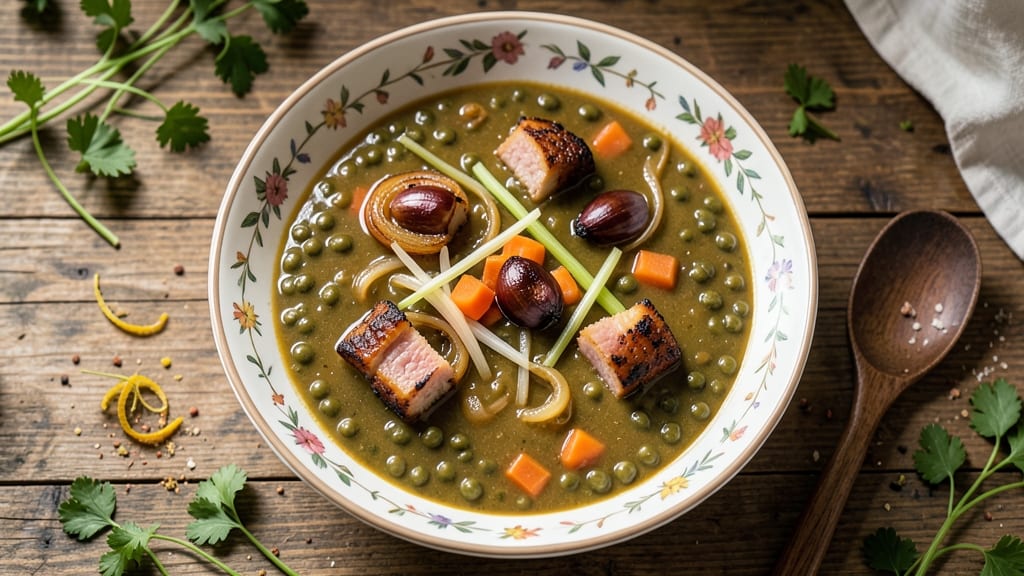
This Andersen's split pea soup recipe with ham hocks delivers restaurant-quality depth that only slow-cooked bones can provide. The ham hocks infuse the broth with rich, savory flavor while breaking down into tender, melt-in-your-mouth meat that transforms simple peas into a hearty, satisfying meal.
What makes this version special is the balance of traditional techniques with straightforward preparation—no fancy equipment required, just time and patience to develop those complex flavors.
The secret lies in properly preparing the ham hocks—parboiling them first removes impurities while preserving their flavor, and the long simmering process extracts every ounce of collagen for a velvety, flavorful broth.
I've found that adding a splash of apple cider vinegar at the end enhances the peas' natural sweetness while cutting through the richness, creating that perfect balance of savory and bright.
This method ensures your soup will be rich enough to stand alone but light enough to pair beautifully with crusty bread or a simple green salad.
By the time you serve this soup, you'll have a pot of deeply flavorful split peas with tender ham hocks and a broth so rich it practically sings with umami.
The texture is what makes it exceptional—creamy from the peas and ham, yet still light enough to enjoy on its own. It's the kind of soup that tastes even better the next day as the flavors meld and deepen, making it perfect for meal prep or feeding a crowd.
For modern cooks, you can experiment with smoked paprika or extra bay leaves for added complexity, but the traditional version remains foolproof and deeply satisfying. Serve with cornbread or a side of buttered rolls to soak up every last drop of that flavorful broth.
Let's get started on creating this comforting classic that will become a staple in your winter repertoire.
Ingredients for andersen's split pea soup recipe with ham hocks
The heart of this soup lies in its bone-rich depth and simple, wholesome ingredients.
| Ingredient | Amount | Notes |
|---|---|---|
| Dry Green Split Peas 🌱 | 2 cups | Uncooked, rinsed well |
| Ham Hocks 🍖 | 4 whole | Fresh or frozen, bones intact |
| Onions 🧅 | 2 whole | Yellow or red, chopped |
| Carrots 🥕 | 3 whole | Medium, peeled, chopped |
| Celery Stalks 🌿 | 3 whole | Fresh, chopped |
| Garlic Cloves 🧄 | 4 cloves | Fresh, minced |
| Bay Leaves 🍃 | 2 whole | Dried, standard size |
| Black Peppercorns 🌶️ | 1 tbsp | Freshly cracked |
| Salt 🧂 | 2 tsps | Kosher or sea salt |
| Apple Cider Vinegar 🍎 | 1 tbsp | For brightness |
| Fresh Thyme 🌿 | 1 tbsp | Leaves only, chopped |
| Water 💧 | 8 cups | Filtered preferred |
| Olive Oil 🫒 | 1 tbsp | For initial sauté |
Ham hocks are the star here—look for thick, meaty joints at the butcher counter. Costco or local meat markets often have them in stock, but frozen works too (thaw overnight). The peas? Bob's Red Mill or Trader Joe's carry good quality dry split peas—avoid the canned kind unless it's a pinch. Fresh thyme is ideal, but dried at one-third the amount works in a bind. For the veggies, organic carrots and celery add subtle sweetness, but regular store brands are fine too.
No ham hocks? Smoked turkey legs or beef shank work in a pinch, though the flavor will differ slightly. Swap apple cider vinegar for lemon juice if that's what you've got—same bright punch. The bay leaves can be skipped, but I recommend keeping them for that classic depth. For extra richness, add a splash of Worcestershire sauce at the end (though it contains anchovies, so check labels if avoiding fish). If your carrots are small, use baby carrots—they're just as sweet and save chopping time. The olive oil is non-negotiable for that initial sauté—it's what builds the flavor foundation.
This soup tastes even better the next day as flavors meld. Keeps 5-6 days in the fridge, or 3 months frozen. I double the batch and freeze half—perfect for lazy weeknights. For serving, skim any fat that rises to the top before reheating. The broth reduces slightly when chilled, so add a splash of water if it seems too thick. Leftovers reheat beautifully—just stir in a splash of water or broth to loosen it up.
Why You'll Love This Recipe
- I’ll be real: this recipe uses stuff you probably already have. Split peas, onions, carrots, celery—basic, budget-friendly ingredients that don’t break the bank. And since it reheats like a dream, you’ll have leftovers for days, meaning less stress and more time for the important stuff (like not thinking about dinner).
- Set-and-Forget Magic: This soup basically cooks itself. Toss in the split peas, toss in the ham hocks, and let the slow simmer work its wonders—no stirring every five minutes like some fussy recipes. The ham hocks melt into the broth, and by the time you’re ready to eat, the peas are tender and the flavors have melded into something rich and deep.
- Ham Hock Luxury: Honestly, the ham hocks are the star here. They’re salty, smoky, and break apart just enough to infuse the soup with that unmistakable, hearty depth. No fancy ingredients—just good, simple meat that turns this into something restaurant-worthy without the pretension.
- Weeknight Crowd-Pleaser: Between us, this is the one dish I make when my in-laws come over unannounced. It’s filling enough for a big group, but the flavors are so balanced that even the picky eaters (yes, my brother-in-law) ask for seconds. Plus, it’s the kind of soup that tastes even better the next day—so you can make it ahead and still look like a hero.
Step-by-step instructions for Andersen's split pea soup
Here's how to create a rich, bone-broth-infused split pea soup that develops deep flavor from slow-cooked ham hocks.
Prepare the Ham Hocks and Vegetables
Rinse the 2 cups dry green split peas under cold water to remove any debris, then set aside. In a large Dutch oven, heat the 1 tablespoon olive oil over medium heat. Add the 4 whole ham hocks and cook for 5 minutes on each side until they develop a golden crust. This initial sear locks in flavor before the long cook.
While the ham hocks brown, peel and chop the 3 whole carrots and 3 whole celery stalks into ½-inch pieces. Peel and finely dice the 2 whole onions. Remove the ham hocks from the pot and set aside. In the same pot, add the chopped onions, carrots, and celery. Cook for 5 minutes, stirring occasionally, until the vegetables begin to soften and release their natural juices.
Build the Flavor Base
Add the 4 cloves minced garlic to the vegetables and cook for 30 seconds until fragrant. This quick cooking prevents the garlic from burning, which would make the soup bitter. Stir in the 1 tablespoon freshly cracked black peppercorns and the 2 whole bay leaves. Cook for another 30 seconds to toast the spices and release their essential oils.
Return the ham hocks to the pot and pour in the 8 cups water. Bring everything to a boil, then reduce the heat to low. Add the 2 cups rinsed split peas, 2 teaspoons salt, and 1 tablespoon apple cider vinegar. The vinegar brightens the flavors and cuts through the richness of the ham. Stir well to combine all ingredients.
Slow Cook for Maximum Flavor
Cover the pot and simmer for 2 hours. I like to check the soup occasionally, but resist the urge to stir too often—this helps develop a richer broth. After 2 hours, add the 1 tablespoon chopped fresh thyme. The thyme should be added later to preserve its delicate flavor, which can become bitter if cooked too long.
Continue simmering uncovered for another 30-45 minutes until the split peas are tender and the soup has thickened to your desired consistency. You'll know it's ready when the peas break down easily between your fingers and the broth has a velvety texture. If the soup is too thick, add a little water to reach your preferred consistency.
Finish and Serve
Remove the ham hocks from the soup and let them cool slightly. Once cool enough to handle, use a fork to shred the meat from the bones, discarding any cartilage or gristle. Return the shredded ham to the pot and stir well to distribute throughout the soup. Taste and adjust seasoning with additional salt or pepper if needed.
Ladle the soup into bowls and serve immediately, garnished with additional fresh thyme if desired. The ham hocks infuse the split peas with deep, savory flavor, while the vegetables add sweetness and body. This soup tastes even better the next day as the flavors continue to meld, so consider making extra for leftovers.
Pro Tips For Making Andersen'S Split Pea Soup Recipe With Ham Hocks
- CRACK THE HAM HOCKS FIRST: Start by simmering the ham hocks uncovered in plenty of water for 30 minutes before adding anything else—this renders fat and collagen into the broth, giving your soup that rich, deep flavor. I used to skip this step and wondered why my soup always tasted thin and one-dimensional.
- SOAK PEAS ONLY IF FORGOTTEN: If you remember to soak the split peas, do it for 1-2 hours in cold water—just long enough to soften them slightly. But if you forget? No big deal. The long simmer will break them down anyway, but a quick rinse before adding to the pot removes dust and speeds up cooking by 15 minutes.
- DON’T CROWD THE POT: Give the ham hocks and veggies space when you first add them to the pot—crowding traps steam and slows down browning. After 10 minutes of simmering, stir everything and adjust the heat so the liquid bubbles gently. This isn’t the prettiest method, but it’s the tastiest.
- SAVE TIME WITH PARBOILED VEGETABLES: Cut the onions, carrots, and celery into even ½-inch chunks and parboil them for 5 minutes before adding to the soup. This softens them just enough to release flavor into the broth faster, cutting your total cooking time by nearly 30 minutes. Yes, even if you’re impatient like me.
Best sauces and condiments for this recipe
Classic Ham Broth Boost
The rich umami depth of this soup comes from the ham hocks themselves, but you can enhance it further by adding 1 tablespoon Worcestershire sauce during the final 10 minutes of cooking. This adds a savory, slightly tangy note that complements the peas beautifully.
For extra richness, stir in 1 teaspoon fish sauce (like Red Boat) or a splash of dark soy sauce—both deepen the broth's complexity without overpowering the natural flavors. 🍖
Brightening Vinegar Twist
While apple cider vinegar works perfectly, you can experiment with other acids for brightness. Try 1 tablespoon lemon juice for a zesty kick or 1 teaspoon white wine vinegar for a more refined tang.
If you prefer sweetness, add 1 teaspoon maple syrup along with the vinegar to balance the savory notes. The key is to add it at the end—this preserves the peas' natural sweetness while cutting through the richness.
Herb Infusions
Fresh thyme is traditional, but you can customize the herb profile to suit your taste. Swap it for 1 tablespoon fresh parsley for a brighter finish or 1 teaspoon dried marjoram for a more earthy depth.
For a Southern touch, add ½ teaspoon smoked paprika during the final 15 minutes of cooking—it adds warmth and a subtle smokiness that pairs wonderfully with the ham. Always add herbs late to preserve their delicate flavors.
Creamy Finishing Touches
For a velvety texture without dairy, stir in ¼ cup coconut milk or 2 tablespoons mashed white beans during the last 5 minutes of cooking. If you prefer a traditional approach, top each serving with a dollop of crème fraîche or a sprinkle of grated Parmesan cheese for added richness.
The creaminess balances the hearty flavors while keeping the soup light enough to enjoy on its own.
Spicy Kick Options
Add heat with ½ teaspoon cayenne pepper or 1 teaspoon hot sauce (like Tabasco) during the final 10 minutes of cooking. For a smoky-spicy twist, stir in ½ teaspoon smoked chili powder along with the thyme.
If you love bold flavors, a pinch of ground allspice adds warmth and complexity. Always taste as you go—start with less and adjust to your preference.
Garnish Like a Pro
Elevate your soup with simple garnishes that add texture and visual appeal. A sprinkle of toasted breadcrumbs adds crunch, while chopped green onions or fresh dill brighten the dish.
For a rustic touch, serve with crusty bread on the side and let guests tear off chunks to soak up the broth. A drizzle of high-quality olive oil or a swirl of sour cream ties everything together beautifully. 🌟
Nutrition facts
Frequently asked questions
Can I use canned split peas instead of dry?
While it's possible, dry split peas create a much richer, heartier texture that's worth the extra time. Canned peas will give you a quicker soup, but it won't develop the same deep, velvety consistency from the long simmer. If you must use canned, drain and rinse them well, then add them during the final 30 minutes of cooking to prevent mushiness.
How do I know when the ham hocks are fully cooked?
The ham hocks are done when the meat falls off the bone easily and the broth has a deep, rich color. After 2 hours of simmering, test by inserting a fork into the thickest part—the meat should shred cleanly. The bones should also feel tender when squeezed gently. If they're still firm, return them to the pot and cook for another 30 minutes.
Can I make this soup in a slow cooker?
Follow the same steps for searing the ham hocks and sautéing the vegetables, then transfer everything to your slow cooker. Add 8 cups water and cook on low for 8-10 hours or high for 5-6 hours. The long cook time ensures the peas soften and the broth develops maximum flavor. Just add the thyme during the last 30 minutes to preserve its freshness.
Why does my soup taste bitter? Bitterness usually comes from overcooked garlic or herbs, or from letting the ham hocks burn during the initial sear.
How can I make this soup ahead of time?
This soup actually tastes better the next day as the flavors meld! Cook it completely, then let it cool to room temperature. Store in an airtight container in the refrigerator for up to 5-6 days. When reheating, stir in a splash of water or broth to loosen the texture. For freezing, portion into containers and freeze for up to 3 months. Thaw overnight in the fridge before reheating.