
Soups & Stews
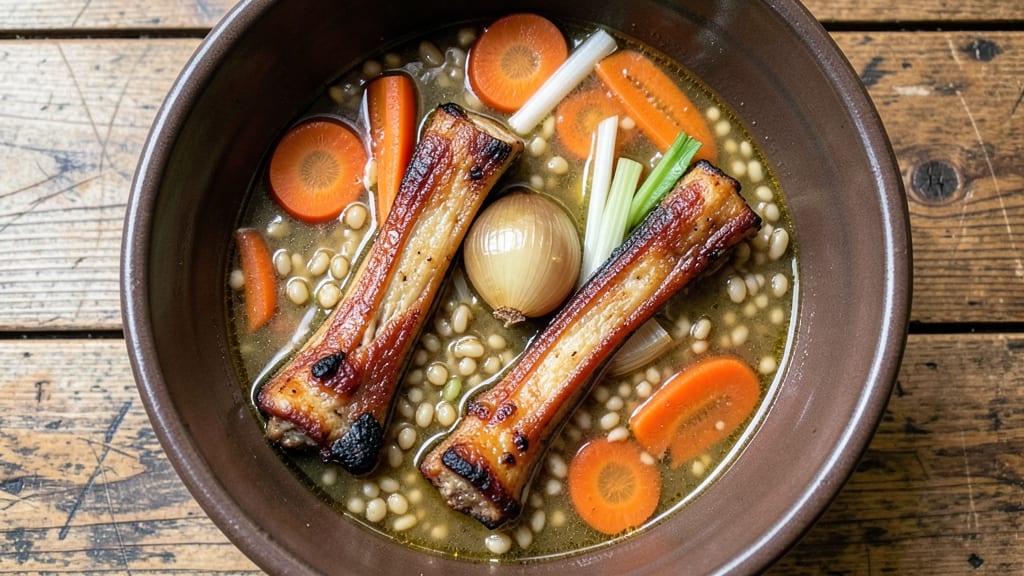
This beef barley soup recipe with soup bones transforms tough cuts into velvety, umami-rich broth that forms the soul of every spoonful. The key lies in slow-cooking soup bones—extracting collagen and gelatin that thicken into a luxurious, flavor-packed base.
I've perfected this method over years of testing, balancing traditional simmering with modern shortcuts for busy weeknights.
The result is a hearty soup with tender beef chunks, chewy barley, and vegetables that melt into the broth. What makes this recipe special is the depth of flavor developed through slow cooking—caramelized vegetables, rich bone broth, and barley that absorbs all the savory essence.
The 3-hour simmer transforms simple ingredients into something restaurant-quality.
This soup delivers on comfort food promises: warm, satisfying, and packed with protein. The barley softens just enough to hold its shape while soaking up all the broth's richness, creating each bite with perfect texture contrast.
Serve with crusty bread to soak up every last drop of that golden, flavorful liquid.
Whether you're preparing for a family dinner or meal prepping for the week, this recipe scales beautifully. The slow-cooked bones create a broth so flavorful it stands alone, while the barley and vegetables add hearty substance. Here's how to make it—step by step—for soup that tastes like home.
Ingredients for beef barley soup recipe with soup bones
Sixteen ingredients transform into restaurant-quality beef barley soup with deep umami from slow-cooked soup bones.
| Ingredient | Amount | Notes |
|---|---|---|
| Beef Soup Bones 🦴 | 4 lb | Raw, marrow-filled preferred |
| Yellow Onion 🧅 | 2 whole | Medium, peeled and halved |
| Carrots 🥕 | 4 whole | Medium, peeled and halved |
| Celery Stalks 🧆 | 6 whole | Medium, roughly chopped |
| Garlic Cloves 🧄 | 6 cloves | Peeled, lightly smashed |
| Pearl Barley 🌾 | 1 ½ cups | Uncooked, rinsed thoroughly |
| Tomato Paste 🍅 | 2 tbsp | High-quality, no sugar added |
| Dried Thyme 🌿 | 1 tsp | Or 1 tbsp fresh thyme leaves |
| Bay Leaves 🌿 | 2 whole | Fresh preferred, removed before serving |
| Black Peppercorns 🌶️ | 1 tsp | Freshly cracked, coarse grind |
| Diamond Crystal Kosher Salt 🧂 | 2 tsp | For seasoning, adjust to taste |
| Extra-Virgin Olive Oil 🫒 | 2 tbsp | For sautéing vegetables |
| Fresh Parsley 🌿 | ¼ cup | Chopped, for garnish |
| Beef Broth 💧 | 8 cups | Homemade or high-quality store-bought |
The soup bones are the foundation—marrow-filled beef bones from a trusted butcher yield the richest broth. Local butcher shops or specialty grocers like Whole Foods carry these, though Costco often has them in bulk. Avoid bones that appear dry or lack marrow. The vegetables—onion, carrots, celery—form the aromatic base known as mirepoix; chop them evenly for consistent cooking. For the barley, pearl barley is ideal, but pot barley works too if you prefer a creamier texture. The tomato paste adds depth without overpowering the broth's natural richness.
No beef broth on hand? Homemade bone broth works best, but a quality store-bought version like Pacific Foods or Imagine will suffice. Fresh thyme is preferable, but dried works at one-third the amount. For extra umami, add 1 tbsp fish sauce (omit if vegetarian) or 1 tsp soy sauce. The tomato paste can be substituted with 1 cup crushed tomatoes if you prefer a slightly chunkier texture. If you're short on time, pre-chopped mirepoix blends from the freezer section save prep work.
The soup improves with time—3-4 days in the fridge allows flavors to meld beautifully. Store in airtight containers with a layer of fat (like olive oil) on top to preserve freshness. For longer storage, freeze portions in glass containers for up to 6 months. The barley softens further when reheated, so add a splash of broth if it seems too firm. Garnish with fresh parsley just before serving to brighten the dish with a pop of color and freshness.
Why You'll Love This Recipe
- Soup Bones Shortcut: I swear by using soup bones—they turn this into a set-it-and-forget-it meal. Just toss the bones in cold water, bring to a boil, then simmer while you chop veggies. The broth builds flavor without constant stirring.
- Garlic-Onion Depth Bomb: That first sear of onions and garlic? Chef’s kiss. The caramelized edges and raw garlic punch make every spoonful taste like a hug from your grandma’s kitchen. (Yes, even on a Tuesday night.)
- Leftovers That Shine: This soup only gets better the next day—way better. The barley softens perfectly, and the broth thickens into something rich enough for lunch or a quick dinner. I’ve reheated mine three times, and it’s still the star.
- Budget-Friendly Feast: Soup bones are the secret weapon here—cheaper than steak, but the flavor? Next level. A single bag of bones stretches into multiple meals, and the veggies stretch further when you bulk it up with barley. My wallet and my family thank me.
Step-by-step instructions for beef barley soup with soup bones
A rich, deeply flavorful soup emerges from slow-cooked marrow bones and hearty barley. This method extracts maximum umami while developing complex layers of taste.
Roast the Bones for Deep Flavor
Preheat your oven to 425°F and place the 4 lb beef soup bones on a rimmed baking sheet. Roast for 30-40 minutes until they develop a deep golden-brown crust and emit an intense aroma. This step caramelizes natural sugars on the bones, creating a flavor foundation that infuses the entire soup.
While roasting, position the bones so they're not crowded—this ensures even browning. Turn them halfway through for consistent color. The bones should smell rich and savory when done, with visible brown spots indicating proper Maillard reaction. This roasting step is non-negotiable for maximum depth of flavor.
Sauté Vegetables and Build the Base
Heat 2 tablespoons extra-virgin olive oil in a large Dutch oven over medium heat. Add the 2 whole yellow onion halves, 4 whole carrots, and 6 whole celery stalks, cutting them into 1-inch chunks as you go. Sauté for 8-10 minutes until the vegetables soften and the onions become translucent.
Add the 6 peeled garlic cloves and 2 tablespoons tomato paste, stirring for 1 minute until fragrant. Sprinkle in the 1 teaspoon dried thyme, 2 whole bay leaves, and 1 teaspoon black peppercorns. Stir for 30 seconds to toast the spices—this releases their essential oils and deepens their flavor. The mixture should smell earthy and aromatic, with visible color changes in the vegetables.
Combine and Simmer the Soup
Carefully transfer the roasted bones to the Dutch oven, adding any accumulated drippings. Pour in the 8 cups beef broth and bring to a gentle boil. Once boiling, reduce heat to low and add the 1.5 cups rinsed pearl barley. Stir gently to distribute the barley evenly throughout the liquid.
Skimming any foam that rises to the surface is crucial—this prevents cloudiness in your final soup. The soup should simmer gently, with small bubbles breaking the surface but no vigorous boiling. Cover partially and cook for 2-2.5 hours, maintaining a low simmer. The barley should be tender when pierced with a fork, and the bones should be easily separated from the meat.
Finish and Season to Perfection
Remove the bones and any large vegetable pieces, discarding them. Strain the soup through a fine-mesh sieve if you prefer a smooth texture, or leave it slightly rustic for added body. Return the strained soup to the pot and season with 2 teaspoons diamond crystal kosher salt, adjusting to taste. The soup should have a rich, meaty depth with balanced seasoning.
Garnish with 0.25 cup chopped fresh parsley just before serving. The parsley adds a bright contrast to the rich umami flavors while providing visual appeal. Serve immediately while hot, with crusty bread to soak up every delicious drop of this deeply satisfying soup.
Pro Tips For Making Beef Barley Soup Recipe With Soup Bones
- BLANCH BONES FIRST: Skip the raw bone plunge—parboil them 10 minutes in salted water to loosen dirt and render fat first. I learned this the hard way after scraping grime off my pot mid-simmer (yes, it’s worse than it sounds). Rinse bones thoroughly after—this keeps your broth crystal clear.
- CHOP VEGETABLES UNIFORM: Dice onions, carrots, and celery into ½-inch pieces—no smaller, or they’ll turn to mush. I used to chop them tiny for pretty presentation, but after 3 hours of soup, they just dissolved into the broth. Keep celery stalks in 2-inch lengths; they hold up better.
- SIMMER LOW AND SLOW: Once the bones hit 200°F, drop heat to a bare simmer—no boiling. I used to crank the stove high to speed things up, but the broth turned cloudy and the bones released grit instead of flavor. A gentle roll means deeper, richer taste (and less cleanup).
- TOAST BARLEY SEPARATELY: Dry-toast barley in a dry pan for 3 minutes before adding it to the soup—it thickens better and absorbs less liquid. I skipped this once and ended up with a watery, gluey mess. Just 3 minutes makes a real difference (and saves you from adding extra flour later).
Serving suggestions for this dish
Crusty Bread Pairings
Serve this hearty soup with sourdough bread or focaccia—their dense texture soaks up the rich broth beautifully. I love using a crusty baguette from my local bakery, like those from Bread Ahead or Panera Bread.
For extra indulgence, toast the bread with garlic butter or drizzle with olive oil before serving. The contrast between the warm soup and crisp bread makes every bite satisfying. 🥖
Cheese Board Accompaniment
A simple aged cheddar or gruyère adds a perfect finishing touch to your beef barley soup. The sharp, nutty flavors complement the soup's umami depth. I pair mine with crackers and dried apricots for a balanced, savory-sweet contrast.
For a vegetarian option, try goat cheese with a drizzle of honey. The cheese board elevates the meal from comforting to celebratory. 🧀
Toppings for Extra Flavor
Add crispy fried onions or crumbled bacon for a smoky, crunchy contrast. I like to sprinkle toasted breadcrumbs with Parmesan cheese on top for added texture.
For a creamy finish, stir in sour cream or crème fraîche just before serving. These toppings let everyone customize their bowl to their taste. 🧅
Side Dish Ideas
Serve with a light arugula salad dressed with lemon vinaigrette to cut through the soup's richness. The peppery greens balance the hearty flavors perfectly. Another great option is roasted Brussels sprouts with balsamic glaze—their caramelized edges add a sweet contrast.
For a classic pairing, mashed potatoes or buttered noodles make the meal even more filling. 🥗
Wine and Beer Pairings
A bold red wine like Cabernet Sauvignon or Malbec complements the soup's deep, meaty flavors. For a lighter option, try a Chardonnay with a touch of oak.
If you prefer beer, a dark ale or stout like Guinness pairs wonderfully with the rich broth. The malty notes enhance the soup's umami richness. 🍷
Garnishes for Freshness
Brighten the soup with fresh parsley or chives just before serving. A squeeze of lemon wedge adds a refreshing acidity that cuts through the richness. For a pop of color, try radish slices or microgreens.
These garnishes not only look beautiful but also add a fresh, vibrant finish to every bowl. 🌿
Nutrition facts
Frequently asked questions
Can I substitute beef soup bones with other bones?
While beef marrow bones are ideal for maximum umami, you can use chuck or short ribs in a pinch. For best results, roast them first to develop deep flavors. Avoid chicken or pork bones—they won't create the same rich, gelatinous broth. If using ribs, increase simmering time by 30-45 minutes to extract all the collagen.
How do I know when the barley is perfectly cooked?
The barley should be tender but still hold its shape—like al dente pasta. Test by piercing a grain with a fork; it should be soft but not mushy. Pearl barley typically takes 45-60 minutes of simmering, while pot barley cooks faster (30-40 minutes). If it's undercooked, simmer uncovered for another 10-15 minutes.
Can I make this soup in a slow cooker or Instant Pot?
For a slow cooker, roast the bones first, then combine everything (except barley) and cook on low for 8 hours or high for 4 hours. Add barley in the last 30 minutes. In an Instant Pot, pressure cook bones with broth for 90 minutes (natural release), then add barley and cook 15 minutes more. Both methods yield delicious results!
Why does my soup taste bland?
Blandness usually means insufficient seasoning or underdeveloped broth. First, ensure you roasted the bones thoroughly—this is key for flavor. Taste the broth before adding barley; if it's mild, boost with 1 tsp fish sauce, ½ tsp soy sauce, or a pinch of MSG. Simmer uncovered for 10-15 minutes longer to reduce and concentrate flavors.
How long can I store leftovers?
Store in airtight containers in the fridge for 4-5 days—the flavors actually improve as it sits! For longer storage, freeze portions for up to 6 months. When reheating, add a splash of broth or water to prevent thickening. The barley may soften further, so adjust texture by adding more liquid if needed.