
Soups & Stews
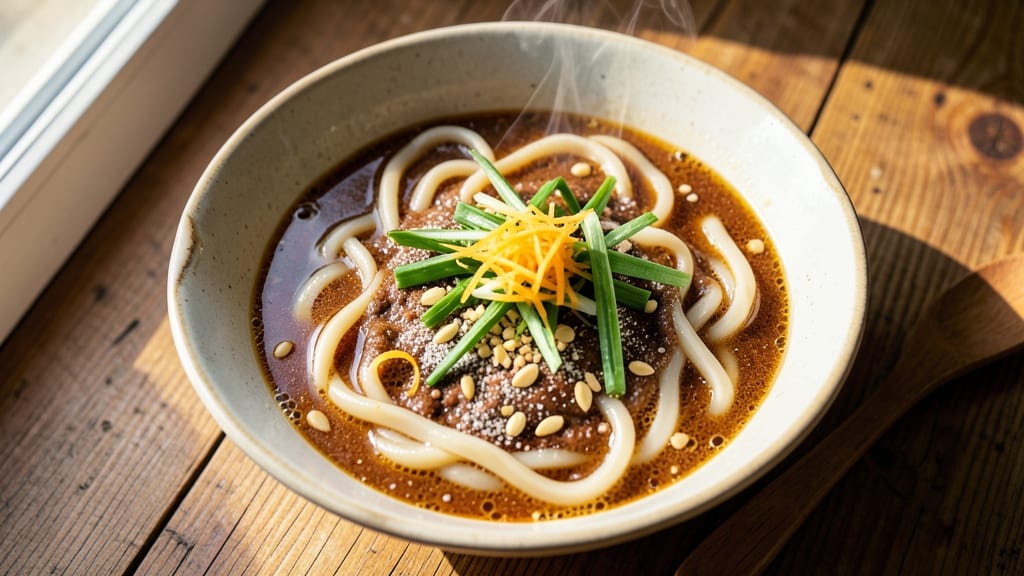
This Asian udon noodle soup recipe delivers restaurant-quality comfort in a steaming bowl—slippery, chewy udon noodles floating in a rich miso-ginger broth that balances umami, heat, and brightness. 🌟 The secret lies in simmering the broth just right, where miso paste deepens into savory complexity while fresh ginger and garlic infuse warmth without overpowering.
I developed this version after years of testing, blending traditional Japanese techniques with modern shortcuts that still honor the dish's soul.
The beauty of udon lies in its versatility—this recipe works as a foolproof base for customization. Start with a savory miso-ginger broth that builds flavor through slow simmering, then add your choice of proteins (tofu, shrimp, or chicken) and fresh toppings like green onions, sesame seeds, or nori strips.
The noodles cook in just 3 minutes, so timing is your friend here. For extra depth, toast the udon before boiling to enhance its natural chewiness.
What you'll end up with is a bowl that's warm, aromatic, and deeply satisfying—each sip of broth delivering layers of ginger's zing, miso's earthiness, and the subtle sweetness of scallions. The noodles maintain their signature slippery texture while absorbing just enough broth to make every bite cohesive.
This is the kind of soup that feels like a hug on a chilly evening, yet comes together in under 45 minutes with minimal effort.
Serve with classic accompaniments like pickled ginger, chili oil for heat, or a side of steamed greens to round out the meal.
The broth keeps well for 3 days, so double it for leftovers—perfect for busy weeknights when you crave something hearty but don't want to slave over the stove. Let's get cooking!
Ingredients for asian udon noodle soup
Slippery udon noodles and aromatic broth—just these essentials transform into restaurant-quality comfort.
| Ingredient | Amount | Notes |
|---|---|---|
| Dried Udon Noodles 🍜 | 8 oz | Thick or thin variety preferred |
| White Miso Paste 🧈 | ½ cup | High-quality, fermented |
| Fresh Ginger 🧅 | ½ cup | Peeled, thinly sliced |
| Garlic Cloves 🧄 | 6 cloves | Minced for aromatic depth |
| Green Onions 🧅 | ¼ cup | Thinly sliced, white and green parts |
| Dashi Powder 🍲 | 1 tbsp | Instant or homemade blend |
| Soy Sauce 🥢 | ¼ cup | Light or regular preferred |
| Sesame Oil 🫒 | 1 tbsp | Toasted for nutty aroma |
| Toasted Sesame Seeds 🌰 | 1 tbsp | For garnish and crunch |
| Nori Strips 🍣 | 4 whole | Crumbled for garnish |
| Water 💧 | 6 cups | Filtered preferred for clarity |
| Tofu (optional) 🍲 | ½ lb | Silken or firm, cubed |
| Vegetable Oil 🫒 | 1 tbsp | For tofu toasting |
| Salt 🧂 | 1 tsp | Adjust to taste |
The miso paste is the heart of this broth—Honten or Marukome brands deliver that deep, fermented richness. Grab the white miso for a cleaner flavor profile (red miso adds intensity). Fresh ginger and garlic are non-negotiable here—they infuse warmth without overpowering. Look for plump, firm ginger roots at Asian markets, and use the whole root for maximum flavor. The udon noodles? Koyo or Nisshin brands are my go-to for that signature chewiness. If you can't find dried udon, fresh udon works but requires quicker cooking—just halve the simmering time. Toast your udon noodles in a dry pan for 30 seconds before boiling to enhance their natural texture.
No miso paste? Soy sauce plus a dash of mirin gets you close, though it won’t have that same umami depth. Fresh ginger too pungent? Ginger powder at half the amount works in a pinch, but trust me on the fresh stuff. The dashi powder can be swapped for 1/2 cup kombu broth plus 1 tsp bonito flakes if you're feeling ambitious. For the tofu, silken tofu absorbs broth beautifully while firm tofu holds its shape—press it for 15 minutes to remove excess water. The sesame oil should be toasted, not the cheap supermarket kind—look for dark, aromatic bottles at Asian markets. And nori? Any brand works, but the thicker sheets hold up better when crumbled.
Broth keeps for 3 days in the fridge, and the noodles can be prepped ahead—just store them dry in an airtight container. Double the batch and freeze portions for up to 3 months. I always make extra broth because it’s the star—use it for rice bowls or as a base for stir-fries. The tofu? Toast it in the same pan you use for the broth—the residual oil adds flavor. Garnishes like pickled ginger or chili oil can wait until serving, but the sesame seeds and nori should go in right before eating to keep them crisp. This soup tastes even better the next day as flavors meld—perfect for meal prep.
Why You'll Love This Recipe
- Pantry-Friendly Magic: I swear by this recipe when my fridge is bare. Just dried udon, miso, and a few fresh staples—no fancy ingredients, no stress. That white miso paste alone transforms water into something rich and savory in minutes.
- Umami Bomb: Between the miso’s deep funk and fresh ginger’s zing, this broth hits different. The garlic cloves caramelize just enough to add a toasty edge, while green onions bring that bright finish. It’s the kind of flavor that makes you reach for a second bowl.
- Cold or Hot Hack: Honestly, I make this twice as often in summer as winter. Chilled with a splash of soy sauce and extra ginger? Instant refreshing meal. Or simmer it hot for a cozy night in. Same ingredients, two moods covered.
- Budget Bowl: Udon noodles and miso paste last forever, and ginger/garlic are cheap staples. A single pot feeds four for under $5—no takeout needed. My wallet and I both love this. (Yes, even on a Tuesday night.)
Step-by-step instructions for Asian udon noodle soup
Here's how to create silky udon noodles in a rich, aromatic miso-ginger broth that balances umami and freshness.
🍳 Step 1: Toast the Aromatics for Deep Flavor
Heat a large pot over medium heat and add the 1 tablespoon vegetable oil. Once shimmering, add the 6 cloves minced garlic cloves and 0.5 cup thinly sliced fresh ginger. Sauté for 2-3 minutes until fragrant and just beginning to turn golden—this builds the aromatic foundation of your broth.
Here's the thing—don't rush this step. You'll know it's ready when the ginger becomes translucent and releases its essential oils. The garlic should smell pungent but not burn. If it starts to darken too quickly, reduce the heat slightly. These aromatics form the soul of your soup, so give them the attention they deserve.
🥘 Step 2: Build the Miso-Ginger Broth
Add the 1 tablespoon dashi powder and stir for 30 seconds to bloom the umami. Pour in the 6 cups water and bring to a gentle simmer over medium-low heat. Once simmering, whisk in the 0.5 cup white miso paste and 0.25 cup soy sauce until completely dissolved.
Simmer uncovered for 10 minutes to allow the miso to develop its rich, fermented depth. You'll notice the broth darken slightly and become more aromatic—this is when the magic happens. If you're using the 0.5 lb tofu, cube it and set aside for toasting later. The broth should be smooth with no visible miso paste—this indicates proper dissolution.
🔥 Step 3: Prepare the Udon Noodles
While the broth simmers, prepare the 8 oz dried udon noodles according to package instructions. Most varieties cook in 3-5 minutes of boiling water, but always check the package for precise timing. The noodles are done when they float to the surface and are tender but still slightly firm to the bite—this prevents them from becoming mushy in the soup.
Drain the noodles immediately and rinse briefly under cold water to stop the cooking process. This step is crucial—overcooked noodles turn to paste in the hot broth. Divide the noodles among bowls, reserving some broth for serving. The noodles should be slippery to the touch, with just a hint of resistance—this is the perfect texture for udon.
🍽️ Step 4: Assemble and Garnish
Return the broth to a simmer and ladle it generously over the prepared noodles. If using tofu, heat the 1 tablespoon vegetable oil in a separate pan until shimmering, then add the tofu cubes and cook until golden brown on all sides—about 3-4 minutes per side. Divide the tofu among the bowls.
Finish each serving with 1 tablespoon sesame oil, 1 tablespoon toasted sesame seeds, and crumbled nori strips. Drizzle with the 0.25 cup sliced green onions, reserving some for garnish. The sesame oil should add a nutty aroma, while the nori provides a satisfying crunch. Taste and adjust seasoning with the 1 teaspoon salt if needed—this broth should be savory but balanced, with the miso's umami shining through.
Pro Tips For Making Asian Udon Noodle Soup
- Boil Noodles Separately: I learned this the hard way—udon turns mushy if you toss it straight into the simmering broth. Cook the noodles in salted boiling water for 2-3 minutes less than the package says (they’ll finish cooking in the soup), then drain and rinse briefly with cold water to stop the cooking. Trust me, your soup will thank you.
- Bloom Miso Properly: Don’t just dump that white miso paste into the pot like it’s an afterthought. First, dissolve it in a splash of hot (not boiling) water or light broth to create a smooth paste—this prevents clumps that ruin the texture. Let it sit for 30 seconds while you prep the aromatics, and you’ll get that deep, savory flavor without grit.
- Sear Aromatics First: Skip the slow simmering of raw garlic and ginger—it makes the soup taste dull. Instead, dry-toast sliced garlic and julienned ginger in oil over medium-high heat for 30 seconds until fragrant (but not brown). This builds flavor layers that dissolve beautifully into the miso broth, giving your soup real depth.
- Save Time with Prepped Greens: Chop all your green onions and any other garnishes (like cilantro or chives) before you start cooking. Store them in a small container by the stove—when the broth is ready, just grab and toss. Sounds simple, but I used to waste 10 minutes chopping at the end, and the noodles would get cold waiting.
Storing and reheating this recipe
Broth Storage Secrets
The miso-ginger broth is the star—store it in an airtight glass container in the fridge for up to 3 days. I like using Pyrex storage jars because they keep the broth's clarity and allow me to reheat it directly.
For longer storage, freeze the broth in 1-cup portions—this makes it perfect for quick meals later. Just thaw overnight in the fridge before reheating. 💧
Noodle Prep Ahead
Cook your 8 oz udon noodles just before serving, but you can prep them ahead by storing them dry in an airtight container at room temperature for up to 2 days.
If you want to cook them in advance, rinse them in cold water immediately after boiling to stop the cooking process, then store them submerged in ice water for up to 4 hours. This keeps them from sticking together. 🍜
Reheating Like a Pro
For the broth, reheat it gently over low heat on the stovetop—never microwave it directly, as this can make it taste flat. If the broth seems too thick after reheating, add 1-2 tablespoons of water to restore its consistency.
For the noodles, add them to the reheated broth just before serving and cook for 1-2 minutes—this ensures they stay al dente. 🔥
Freezer-Friendly Tips
Freeze the broth in silicone ice cube trays for portion control—each cube equals roughly 1/4 cup. Once frozen, transfer the cubes to a freezer bag and flatten to save space. When ready to use, thaw the cubes in the fridge overnight, then reheat in a pot.
The tofu can also be frozen—toast it fresh when reheating for the best texture. ❄️
Garnish Freshness
Store sesame seeds, nori strips, and green onions separately in the fridge for up to 5 days. Toast the sesame seeds fresh before garnishing to keep them crisp.
The sesame oil should be stored in the fridge after opening to preserve its flavor—add it last to your reheated soup for maximum aroma. 🌰
Make-Ahead Meal Plan
Double the broth and freeze half for up to 3 months. On busy nights, simply reheat the broth, cook fresh noodles, and assemble with prepped toppings.
I often make a big batch on Sundays and use it for lunches all week—just add a protein like tofu or shrimp when reheating. This saves time without sacrificing flavor. 📅
Nutrition facts
Frequently asked questions
What's the difference between udon and ramen noodles?
Udon noodles are thicker, chewier, and made with wheat flour and water—no eggs like ramen. They have a smooth, slippery texture and are typically served in lighter broths, while ramen noodles are thinner, more springy, and often paired with richer, oil-based tonkotsu or shoyu broths. Udon is a Japanese staple, while ramen originated in China but became iconic in Japan.
Can I make this udon soup vegetarian or vegan?
Skip the tofu or use firm tofu for a vegetarian version. For vegan, replace the dashi powder with 1/2 cup kombu broth> and 1 tbsp soy sauce> (check for vegan labels). The miso paste is typically vegan, but verify the brand—some contain fish-based additives. Use vegetable oil instead of sesame oil if needed.
Why does my udon broth taste too salty?
Miso paste is naturally salty, so taste as you go! If your broth is too strong, dilute it with 1/4 cup hot water> and adjust with a pinch of sugar or a splash of rice vinegar to balance. The key is simmering the miso for 10 minutes>—this lets its flavors meld without overpowering. Start with 0.3 cup miso> if you're unsure, then add more to taste.
How do I prevent udon noodles from turning mushy?
Cook them just until they float> (usually 3-4 minutes>) and rinse immediately in cold water to stop cooking. Never overcrowd the pot when boiling—use a large pot with plenty of water. For extra texture, toast the dried noodles in a dry pan for 30 seconds> before boiling. Serve them in hot broth for 1-2 minutes> max to maintain their chew.
What are some great toppings for udon soup?
Classic toppings include soft-boiled eggs>, tempura scraps>, green onions>, and crispy fried shallots>. For heat, add chili oil> or red pepper flakes>. Try pickled ginger> for tang, shredded nori> for umami, or sesame seeds> for crunch. Pro tip: Toast sesame seeds fresh before adding to keep them crisp!