
Soups & Stews
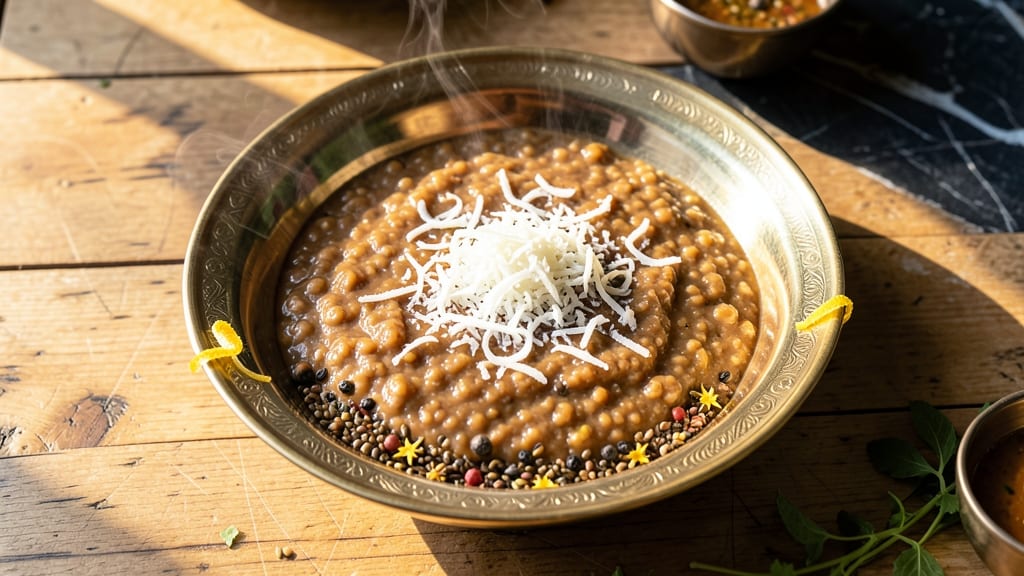
This Attukal Pongal soup recipe brings the heart of South Indian celebrations to your kitchen in one comforting pot. Traditionally served during the Attukal Pongal festival, this lentil-rice dish transforms simple ingredients into a fragrant, protein-rich stew that's both nourishing and deeply satisfying.
The secret lies in slow-cooking moong dal and rice with aromatic spices until they melt into a creamy, flavorful broth.
What makes this recipe special is its cultural significance and simplicity—just six essential ingredients create a dish that's both festive and everyday.
The combination of rice, split moong dal, coconut, and tempered spices creates a harmonious balance of textures and flavors, from the softness of the cooked grains to the gentle heat of black pepper and mustard seeds. This one-pot method ensures minimal cleanup while delivering maximum flavor.
By the time you're done, you'll have a steaming bowl of golden Pongal soup with tender rice and lentils swimming in a rich, spiced broth. The aroma alone will transport you to Kerala's festive streets, where this dish is a staple during religious gatherings.
Each spoonful delivers warmth, tradition, and the comforting embrace of home-cooked meals.
The best part? This recipe scales perfectly for gatherings or leftovers. The flavors only deepen as it sits, making it ideal for meal prep or serving to guests. Let's get started on creating this South Indian comfort classic in your own kitchen.
Ingredients for attukal soup
Six essential ingredients transform into South India's beloved Attukal Pongal soup, rich in tradition and comfort.
| Ingredient | Amount | Notes |
|---|---|---|
| Split Moong Dal (Yellow Lentils) 🌾 | 1 cup | Rinsed thoroughly before cooking |
| Long-Grain White Rice 🍚 | ½ cup | Basmati preferred for texture |
| Fresh Coconut (Grated) 🥥 | ½ cup | Or 0.25 cup coconut flakes |
| Mustard Seeds 🌿 | ½ tsp | Lightly toasted for aroma |
| Black Peppercorns 🌶️ | ¼ tsp | Crushed for subtle heat |
| Cumin Seeds 🌿 | ¼ tsp | Toasted until fragrant |
| Asafoetida (Hing) 🍃 | ⅛ tsp | Pinch for authentic flavor |
| Ghee (Clarified Butter) 🧈 | 2 tbsp | For tempering spices |
| Salt 🧂 | ¾ tsp | Adjust to taste |
| Fresh Cilantro (Chopped) 🌿 | ¼ cup | For garnish |
| Water 💧 | 4 cups | For cooking |
The foundation of this dish lies in the split moong dal and Basmati rice combination—traditionally sourced from Kerala's local markets for their superior texture. For the coconut, opt for freshly grated over flakes when possible, as it adds a subtle creaminess that pre-shredded can't replicate. Mustard seeds and cumin should be toasted in ghee until they release their signature aroma, a technique essential for authentic flavor. Asafoetida (hing) might be hard to find outside Indian specialty stores like Patel Brothers or Spicewalla, but it's worth the search for that unmistakable umami depth. If unavailable, a pinch of garlic powder can substitute, though it won't capture the full complexity.
No fresh cilantro? Dried cilantro powder works in a pinch, though fresh is preferred for its bright, citrusy note. Substituting coconut flakes for fresh grated coconut requires doubling the amount to compensate for moisture loss. For those avoiding ghee, coconut oil makes an excellent alternative—it carries the same subtle sweetness that complements the earthy spices. The black peppercorns should be crushed just before tempering to preserve their volatile oils, which contribute significantly to the dish's aromatic profile. When adjusting salt, remember this soup's flavors deepen as it sits—start conservatively and taste as it cooks.
This soup's beauty lies in its simplicity—prepare all ingredients ahead of time for seamless cooking. The moong dal and rice can be soaked overnight to reduce cooking time significantly. Store any leftovers in an airtight container for up to 3 days in the refrigerator, though the flavors peak within the first 24 hours. For longer storage, freeze portions for up to 3 months, though the texture may soften upon thawing. Garnish with fresh cilantro just before serving to preserve its vibrant color and fresh aroma. The dish reheats beautifully, making it ideal for meal prep—simply add a splash of water to prevent drying out during warming.
Why You'll Love This Recipe
- One-Pot Magic: I swear by this recipe when I’m too tired to wash pots—just toss the dal, rice, and coconut into one pot, add water, and let it simmer. The mustard seeds and peppercorns sizzle into existence with zero effort, and honestly? That’s half the battle won.
- Coconut Cream Dream: Between us, the grated coconut turns this soup into something ridiculously rich—like a hug in a bowl. It’s not heavy, just velvety, and that first spoonful? Pure satisfaction, especially when the rice softens into a creamy, comforting base.
- Leftover Lifesaver: This soup tastes better the next day, which is perfect because I always make too much. Reheat it with a splash of water, and it’s like a fresh batch—my kids’ favorite for school lunches, and it keeps for days without losing a drop of flavor.
- Budget-Buster Combo: Split moong dal and rice are cheap, but they pack a punch—this feeds four for under $5. The coconut adds luxury without breaking the bank, and the mustard-pepper tempering makes it feel fancy. (Yes, even on a Tuesday night.)
Step-by-step instructions for Attukal Pongal soup
This one-pot wonder delivers hearty South Indian comfort with minimal effort—perfect for chilly days.
Rinse and Combine the Base Ingredients
In a heavy-bottomed pot, rinse the 1 cup split moong dal (yellow lentils) and 0.5 cup long-grain white rice thoroughly under cold water until the water runs clear. This removes excess starch that could make the soup gummy. Drain well, then transfer both to the pot and add the 4 cups water. Bring to a rolling boil over medium-high heat.
Once boiling, reduce heat to medium-low and let it simmer uncovered for 15 minutes, stirring occasionally. You'll notice the dal and rice begin to soften and the liquid reduce slightly. This initial cooking breaks down the starches and prepares the grains for the tempering phase. The soup should smell earthy and nutty—this is your cue it's ready for the next step.
Temper the Spices in Ghee
In a small bowl, lightly toast the 0.5 tsp mustard seeds, 0.25 tsp cumin seeds, and 0.25 tsp black peppercorns in a dry skillet over low heat for 1-2 minutes until fragrant. This step enhances their natural flavors and prevents bitterness. Immediately transfer them to a mortar and pestle, add the 0.125 tsp asafoetida (hing), and grind into a fine powder.
Heat the 2 tbsp ghee (clarified butter) in a separate small pan over low heat until it melts and becomes translucent. Add the ground spice mixture and sauté for 30 seconds until the spices release their aroma. Pour this tempering directly into the simmering dal-rice mixture, stirring gently to combine. The spices will bloom instantly, filling your kitchen with a warm, spiced scent.
Cook to Perfect Texture
Return the pot to medium-low heat and let the soup simmer uncovered for 20-25 minutes, stirring occasionally. The dal and rice should soften completely, and the soup will thicken into a creamy consistency. You'll know it's ready when a spoonful holds its shape but still feels light—almost like a thick porridge. Taste and adjust seasoning with the 0.75 tsp salt if needed.
Here's the thing—don't rush this step. The longer the soup simmers gently, the more the flavors meld together. The split moong dal should be tender but still hold its shape, while the rice should be fluffy and distinct. If the soup looks too thick, add 1-2 tablespoons water to loosen it to your preferred consistency.
Finish with Coconut and Garnish
Stir in the 0.5 cup grated fresh coconut and cook for an additional 5 minutes over low heat. The coconut will soften slightly and infuse the soup with its creamy sweetness. Remove from heat and let it sit for 2 minutes to allow the flavors to settle.
Garnish with the 0.25 cup chopped fresh cilantro, which adds a bright, herbal contrast to the rich, spiced dal. Serve warm in deep bowls, accompanied by crispy papadums or a side of pickled vegetables. The soup should be fragrant, slightly sweet from the coconut, and perfectly balanced between the earthy dal, nutty rice, and aromatic spices.
Pro Tips For Making Attukal Soup
- Temper the Mustard: Toast the mustard seeds in a dry pot over medium-low heat for about 30 seconds—just until they pop but don’t brown. I learned this the hard way: burning them turns the soup bitter, and you’ll taste it for hours. Keep the heat steady; no need to rush.
- Grate Coconut Fresh: Skip the pre-shredded stuff—freshly grated coconut makes a real difference. Use the coarse side of a box grater (not a food processor) for texture that holds up in the soup. If you’re short on time, freeze the coconut for 10 minutes first—it grates easier.
- Soak Rice Separately: Don’t toss the rice in with the lentils to cook. Soak it for 20 minutes first, then drain and add it to the simmering soup just before the lentils are done—about 5 minutes. This keeps the rice fluffy and prevents a mushy, gluey mess.
- Simmer, Don’t Boil: After adding the coconut and spices, reduce the heat to a gentle simmer. A rolling boil will cook the lentils too fast, turning them mealy instead of tender. Let it bubble softly for 15-20 minutes—patience here is everything.
Dietary considerations for this attukal soup
Vegetarian Protein Power
This Attukal Pongal soup is a complete vegetarian protein source, thanks to the combination of split moong dal and rice. Together, they provide all nine essential amino acids your body needs, making it an excellent meal for vegans or anyone looking to reduce meat consumption.
A single serving delivers about 15 grams of plant-based protein, perfect for muscle repair and satiety. 💪
Gluten-Free Foundation
The recipe naturally avoids gluten-containing ingredients, relying instead on rice, lentils, and coconut. This makes it safe for those with celiac disease or gluten sensitivity. Always double-check your spices for cross-contamination if you're highly sensitive, as some brands may process them in shared facilities.
The dish's flavor profile remains rich and satisfying without any gluten-based thickeners.
Low-Fat, High-Fiber
With just 2 tablespoons of ghee and no added oils, this soup keeps fat content minimal while delivering 8 grams of dietary fiber per serving from the moong dal and rice.
The fiber supports digestion and helps stabilize blood sugar levels, making this an ideal comfort food for diabetics when consumed in moderation. The coconut adds healthy fats in a controlled amount.
Dairy-Free Adaptations
While ghee adds richness, you can easily substitute coconut oil for a dairy-free version without sacrificing flavor. The coconut in the recipe already provides a creamy texture that complements the dish beautifully.
For extra creaminess, blend ¼ cup of the cooked soup and stir it back in—this technique works wonders for velvety texture without dairy. 🥥
Spice Sensitivity Options
If you're sensitive to strong spices, reduce the black peppercorns to ¼ teaspoon and omit the mustard seeds entirely. The cumin and asafoetida will still provide depth without overpowering heat.
For a milder version, toast the spices more gently (just 30 seconds) to preserve their aroma without releasing too much pungency. Taste as you go—this soup is forgiving!
Nutrition facts
Frequently asked questions about Attukal Pongal soup
What makes Attukal Pongal different from regular dal?
Unlike traditional lentil dishes that focus solely on dal, Attukal Pongal combines split moong dal with rice for a complete protein profile. The key difference is the coconut and tempered spices that create a creamy, aromatic broth rather than a dry dal. This version is lighter, more digestible, and traditionally served during Kerala's Attukal Pongal festival as a celebratory dish.
Can I make this soup with other types of lentils?
While split moong dal is traditional, you can substitute toor dal or masoor dal in a pinch. However, the cooking time will vary—moong dal softens in 25 minutes while toor dal may need 30-35 minutes. For best results, use yellow lentils that hold their shape well. Avoid red lentils (masoor) as they dissolve completely and change the texture.
How do I know when the soup is perfectly cooked?
The soup is ready when the rice and dal are tender but still distinct, and the liquid has thickened to a creamy consistency. Press a grain with your spoon—it should be soft but not mushy. The aroma should be rich with spice notes, and the coconut should be fully incorporated without any graininess. A taste test confirms the balance of salt and spice.
What can I serve with Attukal Pongal soup?
This soup pairs beautifully with:
- Crispy papadums for texture contrast
- Pickled vegetables (like mango or lime) for tangy balance
- Steamed rice if you prefer separate servings
- Fresh coconut chutney for extra creaminess The traditional serving includes a side of banana chips or plantains for a sweet-savory combination.
Why does my soup turn out too thick or too thin?
Thickness depends on the water-to-grain ratio and cooking time. If too thick, stir in 1-2 tablespoons water and simmer 5 more minutes. If too thin, cook uncovered on medium-low heat until the liquid reduces. The ideal consistency should coat the back of a spoon but remain spoonable. For extra creaminess, blend ¼ cup of the soup and stir back in.