
Soups & Stews
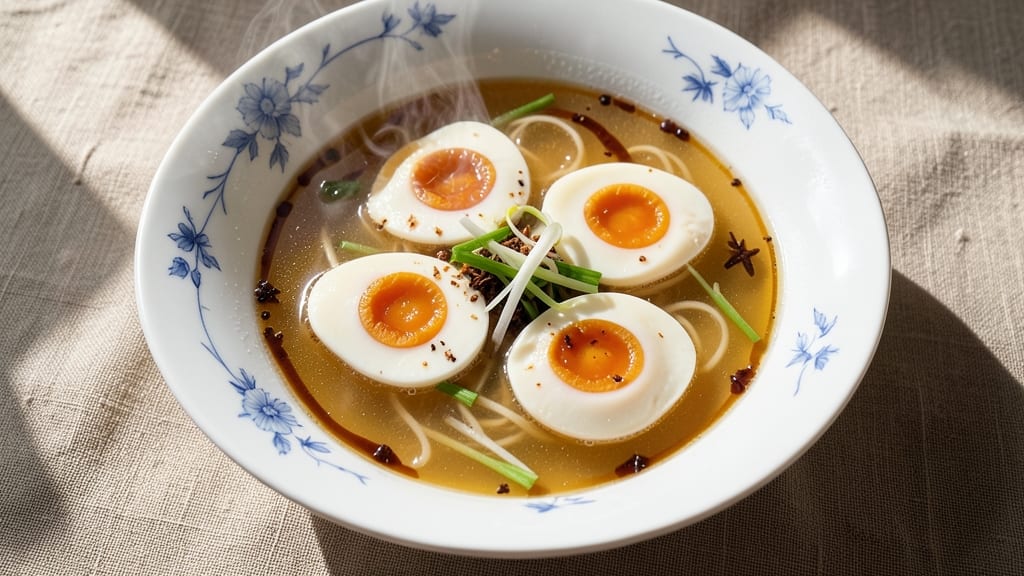
This authentic Chinese egg drop soup recipe brings the comforting essence of home-style Chinese cuisine to your kitchen. The secret lies in the silky egg ribbons and fragrant star anise-infused broth, a dish that balances simplicity with deep flavor.
I’ve perfected the technique to achieve that signature wok hei aroma—just a whisper of smokiness that makes every spoonful irresistible.
The beauty of this soup is in its three core components: a rich, aromatic broth, delicate egg ribbons, and traditional garnishes. The broth simmers with star anise, ginger, and a touch of soy sauce, while the eggs are whisked with cornstarch for that signature stretchy texture.
No shortcuts here—this is the real deal, crafted to transport you to a bustling Chinese kitchen.
By the time you’re done, you’ll have a bowl of golden, fragrant soup with tender egg ribbons floating in a velvety broth. The star anise adds warmth, the ginger brings brightness, and the egg provides that satisfying, melt-in-your-mouth texture.
It’s the kind of dish that feels like a hug in a bowl—light yet deeply satisfying.
Perfect for chilly evenings or as a starter for a Chinese feast, this soup comes together in under 30 minutes. The key is patience—letting the broth develop its depth and the eggs cook just enough to hold their shape. Let’s make it.
Ingredients for authentic chinese egg drop soup
Four eggs, star anise, and ginger—just enough to craft a bowl of restaurant-quality comfort.
| Ingredient | Amount | Notes |
|---|---|---|
| Large Eggs 🥚 | 4 whole | Freshly beaten for ribbons |
| Chicken Broth 🍲 | 4 cups | Homemade or high-quality store-bought |
| Fresh Ginger 🧄 | 1 tbsp | Finely grated, aromatic |
| Star Anise 🌿 | 2 whole | For deep aromatic flavor |
| Light Soy Sauce 🥄 | 1 tbsp | For umami depth |
| Cornstarch 🌾 | 1 tsp | For silky egg texture |
| Green Onions 🧅 | 2 whole | Thinly sliced for garnish |
| Sesame Oil 🫒 | ½ tsp | For finishing aroma |
| Salt 🧂 | ½ tsp | Adjust to taste |
| White Pepper 🌶️ | ¼ tsp | Freshly ground preferred |
| Vegetable Oil 🫒 | 1 tbsp | For light frying |
| Dried Shiitake Mushrooms 🍄 | 1 whole | Rehydrated for depth |
The star anise is non-negotiable here—it’s what gives that signature warmth. Buy whole pods from the Asian market or bulk spice aisle, not the ground version (it loses potency fast). Trader Joe’s and H Mart carry them fresh, and they’ll last for months in a sealed jar. Fresh ginger is a must too—peel it with a spoon, then grate it fine. That bright, zesty flavor is what cuts through the richness of the broth. For the broth, homemade is best, but if you’re short on time, Kitchen Basics or Swanson brands work in a pinch.
No star anise? Anise seeds or fennel seeds work at half the amount, but you’ll lose that distinct Chinese aroma. Short on eggs? Duck eggs give richer ribbons, but chicken eggs work fine. The shiitake mushrooms? Rehydrate in hot broth for 20 minutes—they’ll soak up flavor and add umami. No soy sauce? Coconut aminos is a good vegan swap, though it’s slightly sweeter. The cornstarch is key for those silky ribbons—don’t skip it. And if you’re worried about the sesame oil being too strong, start with half and add more later.
This soup tastes even better the next day—let the flavors meld overnight. Store in the fridge for 3-4 days, or freeze portions for up to 3 months. I like to make a big batch and reheat it slowly on the stove, adding a splash of water to keep it velvety. The eggs? Whisk them with the cornstarch right before cooking—they’ll thicken when they hit the hot broth. And if you’ve got leftover broth, save it for another round—it’s even more flavorful after the first use.
Why You'll Love This Recipe
- No-Chop Necessary: I swear by this—just slice the ginger thin, not dice it. That’s it. No mincing, no prep frenzy. The broth simmers while I’m still deciding what to watch on TV.
- Umami Bomb: That star anise and light soy sauce combo? It’s the secret weapon. The broth develops this deep, savory warmth, and when you swirl in the eggs, the silky ribbons just melt—like a hug in a bowl.
- Sick Day Savior: Honestly, this is my go-to when I’m under the weather or need something light but filling. The ginger’s zing cuts through congestion, and the broth feels like medicine. (Yes, even on a Tuesday night.)
- Budget Comfort: A few eggs, a bag of broth, and a tiny piece of ginger stretch into days of lunches. I make a big batch on Sunday, and by Wednesday, it’s still my favorite thing to reheat—no waste, all flavor.
Step-by-step instructions for authentic Chinese egg drop soup
Here's how to craft this comforting classic with restaurant-quality egg ribbons and fragrant depth.
Prepare the Broth Base
Combine the 4 cups chicken broth with the 2 whole star anise and 1 tbsp finely grated fresh ginger in a clean pot. Bring to a gentle boil over medium-high heat while stirring occasionally. Once boiling, reduce heat to medium-low and let it simmer for 5 minutes—this infuses the broth with aromatic depth.
Watch for small bubbles breaking the surface but not a rolling boil. The star anise should release its warm, licorice-like aroma. Remove the star anise after simmering (you can strain them out or simply fish them with tongs). This step builds the foundational flavor that makes the soup authentically comforting.
Season and Thicken the Broth
Add the 1 tbsp light soy sauce, 0.5 tsp salt, and 0.25 tsp white pepper to the simmering broth. Stir well to combine and let it cook for an additional 3 minutes while maintaining a gentle simmer. This balances the flavors and ensures the seasoning penetrates fully.
In a small bowl, whisk together the 4 whole large eggs with the 1 tsp cornstarch. This creates a smooth, ribbon-friendly mixture that will give your soup its signature silky texture. The cornstarch acts as a natural thickener, preventing the egg from curdling while creating those delicate strands when added to hot broth.
Rehydrate and Prepare the Shiitake
Place the 1 whole dried shiitake mushroom in a small bowl and cover it with hot water. Let it soak for 10 minutes until softened. Drain, then finely chop the rehydrated mushroom. This adds a meaty, umami-rich element that's essential for authentic depth—don't skip this step!
Heat 1 tbsp vegetable oil in a small pan over medium heat. Add the chopped shiitake and cook for 2-3 minutes until fragrant and slightly golden. Remove from heat and set aside. The shiitake should contribute a savory, earthy note that complements the egg ribbons beautifully.
Create the Signature Egg Ribbons
Return the seasoned broth to a gentle simmer. Slowly drizzle the egg mixture into the broth while stirring continuously with a pair of chopsticks or a fork. The key is to create thin, delicate ribbons—this requires patience and steady stirring. You'll see the egg transform from liquid to silky strands as it cooks.
Add the cooked shiitake back to the pot and stir gently. Let the soup simmer for an additional 2 minutes—this allows the flavors to meld together perfectly. The egg should be fully set but still tender, with those beautiful ribbons suspended throughout the broth.
Finish and Serve
Remove the soup from heat and stir in the 0.5 tsp sesame oil. This adds a final aromatic touch that enhances all the flavors. Thinly slice the 2 whole green onions and divide them among 4 bowls. Ladle the hot soup over the green onions, creating a beautiful presentation.
Serve immediately while the egg ribbons maintain their delicate texture. Each spoonful should deliver a perfect balance of silky egg, fragrant broth, and umami-rich shiitake. The green onions add a fresh contrast that brightens the dish. This is the kind of soup that warms both body and soul—authentic, comforting, and full of restaurant-quality flavor.
Pro Tips For Making Authentic Chinese Egg Drop Soup
- Boil Broth to Ripple: The soup’s soul lives in the broth’s movement—bring it to a rolling boil, then lower to a gentle simmer where bubbles break the surface like tiny waves. I learned this the hard way: a lazy simmer makes the egg strands turn to mush instead of silky ribbons. (Yes, even if you’re impatient like me, resist the urge to rush this.)
- Julien Ginger Like Snow: Skip the mincer—slice ginger into matchsticks, then freeze for 10 minutes before adding. This makes it release aroma without bitterness. My grandmother swore by this, and she was right: thin, frozen ginger melts into the broth like a whisper, not a shout.
- Crack Eggs High, Drop Slow: Hold eggs 3 inches above the pot and let them fall in one piece—no shaking. Then, wait 10 seconds before stirring. I was skeptical until I tried it: the heat cooks the outer shell first, creating a protective barrier so the egg doesn’t break into chunks. (Your future self will thank you.)
- Toast Star Anise First: Dry-toast the star anise in a clean, empty pan for 30 seconds until fragrant—this unlocks its flavor without overpowering. I skip this when I’m lazy, but the dish is noticeably better when I don’t. (Pro move: crush it lightly with a spoon before adding to the broth.)
Regional styles of this dish
Northern Chinese Style
In Beijing and Tianjin, egg drop soup often features a lighter, clearer broth with a focus on delicate egg ribbons. The key difference here is the use of dried tangerine peel (instead of star anise) to brighten the broth while keeping it crisp.
I like to add 1 tsp of dried tangerine peel with the ginger—it adds a subtle citrus note that cuts through the richness. The soup is typically served with a sprinkle of toasted sesame seeds instead of just sesame oil, adding texture. 🌿
Southern Chinese Twist
In Cantonese-style egg drop soup, you’ll find a slightly thicker broth with added chinkiang wine (a Chinese yellow wine). I recommend adding 1 tbsp chinkiang wine to the simmering broth along with the soy sauce—it deepens the flavor with a nutty, fermented complexity.
The egg ribbons here are often slightly thicker, almost like delicate noodles. Some versions also include a pinch of white peppercorn instead of ground white pepper for extra aroma. 🍶
Hong Kong-Inspired Version
Hong Kong-style egg drop soup often incorporates dried shrimp for a briny, oceanic depth. I like to add 2 dried shrimp (soaked and chopped) to the broth along with the shiitake. The shrimp dissolve into the broth, adding umami without overpowering the delicate egg texture.
This version also commonly includes a splash of Shaoxing wine (about ½ tbsp) to enhance the overall complexity. The soup is often finished with a drizzle of chili oil for a subtle kick. 🌶️
Taiwanese Home-Style
In Taiwanese households, egg drop soup is often a heartier dish with soft tofu cubes and bok choy. I add ½ cup cubed silken tofu and 1 cup chopped bok choy to the broth after the egg ribbons form.
The tofu soaks up the flavorful broth, while the bok choy adds a fresh, slightly bitter contrast. Taiwanese versions also frequently include a dash of black pepper instead of white pepper, giving it a distinct warmth. 🥬
Modern Fusion Adaptation
For a contemporary twist, I’ve experimented with adding a handful of baby spinach to the broth just before serving. The spinach wilts beautifully, adding a vibrant green color and mild earthiness.
Another fun fusion idea is to swap the shiitake for mushroom duxelles (finely chopped cremini mushrooms sautéed with garlic and thyme). This keeps the umami while adding a Western touch. Perfect for those who want to blend tradition with creativity! 💡
Nutrition facts
Frequently asked questions
Why does my egg drop soup turn out rubbery instead of silky?
The key is the egg-to-cornstarch ratio and heat control. Always whisk 4 eggs with 1 tsp cornstarch until completely smooth, then drizzle into broth at a gentle simmer (not boiling). Overheating causes rubbery texture—keep stirring constantly until the ribbons form. The broth should be hot but not rolling!
Can I make this soup vegetarian?
Swap the chicken broth for vegetable broth and replace dried shiitake with rehydrated mushrooms or tofu cubes. Use coconut aminos instead of soy sauce for umami. The egg ribbons remain the star—just ensure your broth is rich enough to carry their delicate texture.
How do I store and reheat leftovers?
Store in an airtight container for 3-4 days in the fridge or 3 months frozen. To reheat, warm over low heat and add 1-2 tbsp water to prevent thickening. Never microwave—it breaks the egg ribbons. For best results, reheat gently until just hot, then finish with a drizzle of sesame oil.
What’s the secret to restaurant-quality egg ribbons?
Three things: cornstarch (1 tsp per 4 eggs), slow drizzling while stirring constantly, and a gentle simmer (not boiling). The ribbons form when the egg hits hot broth—stirring creates thin strands. Pro tip: Use a whisk for the egg mixture to avoid lumps, and keep the broth at 180°F (not boiling).
Can I use frozen eggs for this recipe?
No—fresh eggs are essential for the silky texture. Frozen eggs contain ice crystals that disrupt the delicate ribbon formation. If you must use thawed eggs, let them sit at room temperature for 10 minutes before whisking to ensure even consistency. The cornstarch still works, but freshness is key for that restaurant-quality mouthfeel.